Understanding the Concept of Pressure
Pressure, in its most fundamental form, is the force applied over a specific area. It’s a ubiquitous concept, experienced in everyday life from the air in a balloon to the water at the bottom of a swimming pool. The way we measure and describe this pressure, however, can vary significantly depending on the context. This variation leads to the distinction between two primary types of pressure measurement: gauge pressure and absolute pressure. While both relate to the force exerted by a fluid (liquid or gas), they differ in their reference point, which is crucial for accurate understanding and application in various scientific and engineering disciplines.
Defining Pressure: Force Per Unit Area
At its core, pressure (P) is mathematically defined as the force (F) acting perpendicularly on a surface divided by the area (A) over which that force is distributed. This can be expressed as:
P = F / A
The units of pressure are derived from this definition. In the International System of Units (SI), force is measured in Newtons (N) and area in square meters (m²), resulting in pressure being measured in Pascals (Pa). One Pascal is equal to one Newton per square meter. Other common units include pounds per square inch (psi) in the Imperial system, bar, and atmospheres (atm). The fundamental relationship between force, area, and pressure remains constant regardless of the unit system used. Understanding this basic definition is the bedrock upon which the distinctions between gauge and absolute pressure are built. Without a clear grasp of what pressure represents physically, differentiating between its various measured forms becomes a semantic exercise rather than a practical one.
The Medium Exerting Pressure
The “medium” exerting pressure can be a gas, a liquid, or even a solid, although typically in fluid mechanics discussions, it refers to liquids and gases. The pressure exerted by a fluid is due to the cumulative effect of the collisions of its constituent particles with a surface. In gases, the particles are in constant, random motion, and their collisions with the walls of a container generate pressure. In liquids, gravity plays a significant role in creating hydrostatic pressure; the weight of the fluid above a certain point pushes down, resulting in pressure. The density of the fluid and the height of the fluid column are key factors in determining this hydrostatic pressure.
Factors Influencing Fluid Pressure
Several factors influence the pressure exerted by a fluid. Temperature is a critical factor, especially for gases. As temperature increases, gas molecules move faster, leading to more frequent and forceful collisions with surfaces, thus increasing pressure, assuming volume is constant (as per the ideal gas law). For liquids, temperature can affect density, which in turn influences hydrostatic pressure. Another significant factor is gravity. The gravitational pull on the fluid molecules is what causes hydrostatic pressure to build up with depth. Altitude also plays a role, particularly for atmospheric pressure. As altitude increases, the column of air above a point decreases, leading to lower atmospheric pressure. Finally, the presence of external forces, such as a piston pushing down on a liquid in a cylinder, can also create or alter pressure.
Understanding the difference between gauge pressure and absolute pressure is crucial in various scientific and engineering applications. Gauge pressure measures the pressure relative to atmospheric pressure, while absolute pressure includes atmospheric pressure in its measurement. For a more in-depth exploration of these concepts, you can refer to a related article that provides detailed explanations and examples. Check it out here: Freaky Science.
Delving into Gauge Pressure
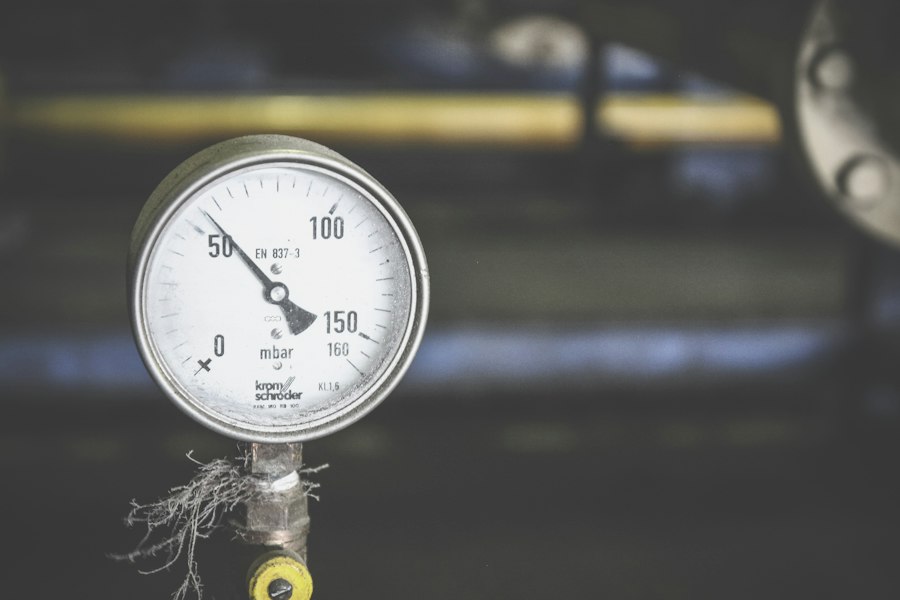
Gauge pressure is a measure of pressure relative to the ambient atmospheric pressure. It’s the pressure indicated by most common pressure gauges, such as those found on tires, HVAC systems, or simple manometers. When a gauge reads zero, it means the pressure being measured is equal to the surrounding atmospheric pressure. Any pressure above atmospheric pressure is registered as a positive value, while any pressure below atmospheric pressure is registered as a negative value.
The Role of Atmospheric Pressure as a Reference
Atmospheric pressure, also known as barometric pressure, is the force exerted by the weight of the Earth’s atmosphere on its surface. At sea level, standard atmospheric pressure is approximately 101,325 Pascals (Pa), 1 atmosphere (atm), or 14.7 pounds per square inch (psi). This pressure is not constant and varies with altitude, temperature, and weather conditions. Gauge pressure utilizes this ever-present atmospheric pressure as its zero point. Imagine a balloon; when it’s just sitting on a table, the air pressure inside is slightly higher than the atmospheric pressure outside. A pressure gauge attached to the balloon would indicate this difference, not the total pressure inside the balloon.
How Gauge Pressure is Measured
Many instruments are used to measure gauge pressure, each operating on different principles. Simple U-tube manometers, for instance, measure the difference in liquid levels between two connected tubes, one exposed to the pressure being measured and the other to atmospheric pressure. The difference in height of the liquid column directly correlates to the gauge pressure. Bourdon gauges, a common type of mechanical pressure gauge, utilize a curved, flattened tube that tends to straighten when subjected to internal pressure. This straightening motion is linked to a needle on a dial, indicating the gauge pressure. Strain gauge transducers convert the deformation of a diaphragm or other sensing element due to pressure into an electrical signal, which is then processed to display the gauge pressure.
Practical Applications of Gauge Pressure
Gauge pressure is widely used in applications where the difference in pressure from the atmosphere is the critical factor. Tire pressure gauges are a prime example; they measure the excess pressure of the air inside the tire compared to the outside atmosphere, which is essential for optimal vehicle performance and safety. In plumbing and HVAC systems, gauge pressure is used to monitor water or air pressure within pipes and ducts. Refrigeration systems also rely on gauge pressure measurements to ensure proper operation of refrigerants. Even in simple laboratory experiments, measuring the pressure within a flask relative to the room pressure is often sufficient and practical.
Exploring Absolute Pressure
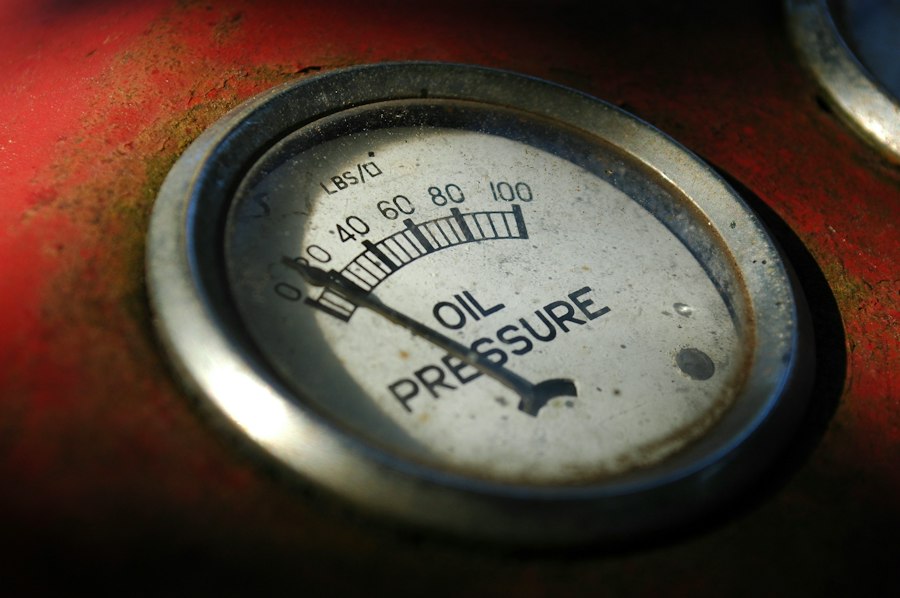
Absolute pressure, in contrast to gauge pressure, is measured relative to a perfect vacuum. A perfect vacuum is a space devoid of all matter, and therefore, it exerts zero pressure. Absolute pressure accounts for both the atmospheric pressure and any additional pressure present. When a gauge reads zero absolute pressure, it signifies a true vacuum.
The Significance of a Perfect Vacuum as a Reference
A perfect vacuum represents the theoretical lowest possible pressure. In reality, achieving a perfect vacuum is extremely difficult, but the concept serves as a crucial reference point. Absolute pressure is the total pressure exerted by a fluid, encompassing the pressure exerted by the molecules present and the pressure exerted by the surrounding environment, typically the atmosphere. If you were to measure the pressure inside a sealed container that had been evacuated to its best possible vacuum, and then exposed it to the atmosphere, the absolute pressure inside would be the sum of the residual pressure (however small) and the atmospheric pressure.
Calculating Absolute Pressure from Gauge Pressure
The relationship between absolute pressure (P_abs), gauge pressure (P_gauge), and atmospheric pressure (P_atm) is straightforward:
P_abs = P_gauge + P_atm
This equation highlights that absolute pressure is the sum of the pressure indicated by a gauge and the prevailing atmospheric pressure. If a gauge reads a positive value, it means the absolute pressure is higher than atmospheric pressure. If a gauge reads a negative value (indicating a partial vacuum), it means the absolute pressure is lower than atmospheric pressure. For example, if a tire has a gauge pressure of 32 psi and the atmospheric pressure is 14.7 psi, the absolute pressure inside the tire is 32 psi + 14.7 psi = 46.7 psi.
When Absolute Pressure is Essential
Absolute pressure is crucial in scientific and engineering fields where the total pressure is significant. In vacuum technology, for instance, it’s vital to know the absolute pressure to understand the degree of vacuum achieved. In high-altitude aviation, absolute pressure is used to determine air density and lift. Thermodynamics and fluid dynamics calculations often require absolute pressure to ensure accurate modeling and predictions. For example, when calculating the boiling point of a liquid, absolute pressure is a key determinant, as boiling occurs when the vapor pressure of the liquid equals the absolute external pressure.
Key Differences and Their Implications
The fundamental distinction between gauge and absolute pressure lies in their reference points. This difference has significant implications for how pressure is understood and applied in various contexts. Recognizing these differences is paramount for accurate measurements, calculations, and system design.
Reference Point: The Core Distinction
As established, gauge pressure uses atmospheric pressure as its zero point, while absolute pressure uses a perfect vacuum as its zero point. This single difference dictates how readings are interpreted. A gauge pressure reading of 0 psi means the pressure is equal to the atmosphere. An absolute pressure reading of 0 psi means there is a perfect vacuum. This distinction is not merely academic; it directly impacts the outcome of calculations and the performance of systems. Misunderstanding this can lead to incorrect assumptions and potentially hazardous situations.
Application Contexts: Where Each is Preferred
Gauge pressure is prevalent in everyday applications where the relative pressure is important, such as tire inflation, water pressure in domestic systems, and HVAC. It’s intuitive because it tells you how much “extra” pressure is present beyond the normal atmospheric pressure. Absolute pressure, on the other hand, is favored in scientific and industrial settings that deal with extreme pressures or vacuums, or where the total pressure itself is a critical parameter. This includes aerospace, chemical processing, vacuum systems, and any field where the behavior of fluids is governed by their total energy state rather than just their relative pressure.
Potential for Misinterpretation and Errors
The most significant implication of the difference between gauge and absolute pressure is the potential for misinterpretation and errors. If a system is designed based on gauge pressure, but atmospheric pressure changes significantly, the absolute pressure will also change, potentially affecting system performance or safety. Conversely, if absolute pressure is assumed when gauge pressure is intended, calculations can be wildly inaccurate. For instance, assuming a pump is delivering a certain absolute pressure when it’s actually designed for a gauge pressure can lead to underperformance or over-pressurization. Always clarifying which pressure reference is being used is crucial in any technical discussion or documentation.
Understanding the distinction between gauge pressure and absolute pressure is crucial in various scientific and engineering applications. Gauge pressure measures pressure relative to atmospheric pressure, while absolute pressure accounts for atmospheric pressure, providing a complete picture of the pressure in a system. For a deeper exploration of this topic, you can read a related article that delves into the nuances of pressure measurements and their implications in real-world scenarios. This insightful piece can be found here.
Practical Scenarios Illustrating the Concepts
| Parameter | Gauge Pressure | Absolute Pressure | Difference |
|---|---|---|---|
| Definition | Pressure measured relative to atmospheric pressure | Pressure measured relative to a perfect vacuum (zero pressure) | Absolute Pressure = Gauge Pressure + Atmospheric Pressure |
| Reference Point | Atmospheric pressure (approx. 101.3 kPa at sea level) | Vacuum (0 kPa) | Gauge pressure excludes atmospheric pressure, absolute includes it |
| Typical Units | psi gauge (psig), kPa gauge | psi absolute (psia), kPa absolute | Units are the same but reference differs |
| Zero Reading | Zero when pressure equals atmospheric pressure | Zero at perfect vacuum | Gauge pressure can be negative (vacuum), absolute cannot |
| Example | Gauge pressure = 50 psig (pressure above atmosphere) | Absolute pressure = 50 psig + 14.7 psi (atmospheric) = 64.7 psia | Absolute pressure is always atmospheric pressure higher than gauge pressure |
| Use Cases | Common in tire pressure, boiler pressure | Used in scientific calculations, vacuum systems | Choice depends on application and reference needed |
To solidify the understanding of gauge and absolute pressure, examining practical scenarios where each is applied is beneficial. These real-world examples highlight the importance of choosing the correct pressure measurement for the task at hand.
Scenario 1: Inflating a Car Tire
When checking and inflating a car tire, a standard tire pressure gauge is used. This gauge measures gauge pressure. If the gauge reads 32 psi, it means the pressure inside the tire is 32 psi above the atmospheric pressure. The absolute pressure inside the tire would be the gauge pressure plus the ambient atmospheric pressure (approximately 14.7 psi at sea level). This gauge pressure is what’s important for tire performance and safety, as it directly relates to the tire’s stiffness and ability to support the vehicle’s weight.
Scenario 2: Vacuum Sealing Food
In a vacuum sealer, the machine removes air from the packaging. The goal is to reduce the pressure inside the bag to a very low level, effectively creating a partial vacuum. The pressure inside the bag is measured as absolute pressure. While the machine might have internal pressure sensors, the critical outcome is the absolute pressure achieved, as this inhibits spoilage by reducing oxygen availability and preventing microbial growth. A very low absolute pressure is desired.
Scenario 3: Measuring Atmospheric Pressure
Meteorologists use barometers to measure atmospheric pressure. These instruments typically measure absolute pressure. A standard barometer reading at sea level is around 101.3 kPa or 1 atm. This measurement is crucial for weather forecasting, as changes in atmospheric pressure are directly linked to weather patterns. It’s the total pressure exerted by the column of air above the measurement point.
Scenario 4: Monitoring a Pressurized Tank
Consider a large storage tank containing a pressurized gas. The pressure inside the tank is often monitored using a gauge. This gauge will likely display gauge pressure, indicating the pressure above atmospheric pressure. If the tank needs to withstand a specific maximum internal pressure, this is usually specified in terms of absolute pressure to ensure safety regardless of the ambient atmospheric conditions. Therefore, engineers would need to convert the gauge reading to absolute pressure for critical safety calculations.
Scenario 5: Studying Fluid Dynamics at High Altitudes
In aerospace engineering, when studying how aircraft wings generate lift, the density of the air is a critical factor. Air density is directly related to absolute pressure (as well as temperature). Therefore, sensors on experimental aircraft or in wind tunnels would measure absolute pressure to accurately determine air density at various altitudes and speeds, which is crucial for aerodynamic calculations and performance predictions. Gauge pressure alone would not provide the complete picture.

Why This Water Doesn’t Boil at 100°C
FAQs
What is gauge pressure?
Gauge pressure is the pressure measured relative to the atmospheric pressure. It does not take into account the atmospheric pressure and starts at zero. For example, if a tire gauge reads 30 psi, it means the pressure inside the tire is 30 psi higher than the atmospheric pressure.
What is absolute pressure?
Absolute pressure is the total pressure exerted by a fluid, including both the gauge pressure and the atmospheric pressure. It is measured relative to a perfect vacuum, which is considered to have zero pressure. Absolute pressure values are always positive.
What is the key difference between gauge pressure and absolute pressure?
The main difference between gauge pressure and absolute pressure is that gauge pressure is measured relative to atmospheric pressure (starting at zero), while absolute pressure is measured relative to a perfect vacuum (always positive).
How are gauge pressure and absolute pressure related?
The relationship between gauge pressure and absolute pressure is given by the formula: Absolute Pressure = Gauge Pressure + Atmospheric Pressure. This formula shows how the two pressure measurements are connected and how they differ in their reference points.
When is it important to distinguish between gauge pressure and absolute pressure?
It is crucial to differentiate between gauge pressure and absolute pressure in applications where accurate pressure measurements are required, such as in engineering, aviation, and industrial processes. Using the correct pressure reference point is essential for ensuring the safety and efficiency of systems and equipment.