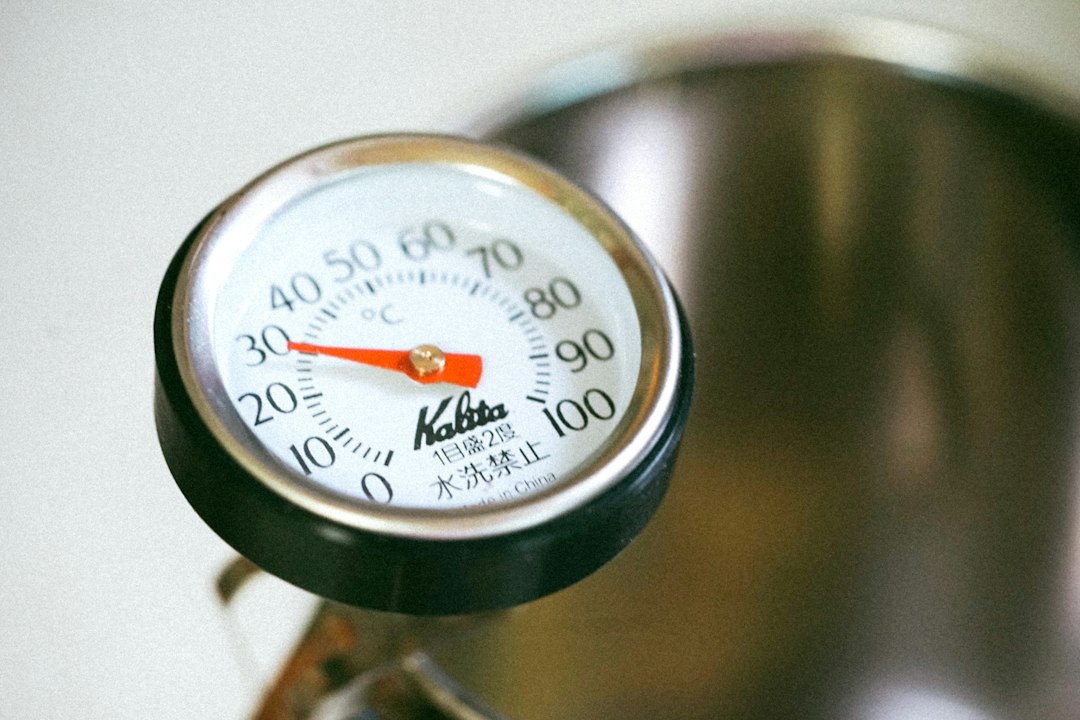
The ubiquitous open pot, a staple in kitchens worldwide, often inspires culinary creativity and comforting meals. From simmering sauces to boiling pasta, its versatility is undeniable. However, a common observation for anyone who has used an open pot is that there seems to be a natural upper limit to the temperature it can achieve, particularly when dealing with boiling liquids. This isn’t an arbitrary culinary convention but a fundamental aspect governed by physics and dictated by crucial safety considerations. Understanding why open pots have this temperature ceiling is key to both efficient cooking and preventing potential hazards.
The Unseen Boundary: Why Boiling Liquids Top Out
The fundamental reason an open pot of liquid, like water, cannot significantly exceed a certain temperature is the phenomenon of boiling. Boiling is not simply about reaching a high temperature; it’s a phase transition where the liquid transforms into a gas. This transition occurs when the vapor pressure of the liquid equals the surrounding atmospheric pressure.
Vapor Pressure: The Liquid’s Inner Push
Every liquid possesses a certain vapor pressure, which is the pressure exerted by its gaseous phase when it is in equilibrium with its liquid phase. As a liquid is heated, its molecules gain kinetic energy and move faster. This increased molecular motion allows more molecules to escape from the liquid’s surface and enter the gaseous state, thus increasing the vapor pressure. When the vapor pressure reaches the point where it can overcome the external pressure acting on the liquid, the liquid boils. For water at standard atmospheric pressure (approximately 1 atmosphere or 101.3 kilopascals), this boiling point is 100 degrees Celsius (212 degrees Fahrenheit).
Latent Heat of Vaporization: The Energy Hog
The process of boiling is energy-intensive. To change from a liquid to a gas, a substance requires a significant amount of energy, known as the latent heat of vaporization. This energy is used to break the intermolecular bonds that hold the liquid molecules together, allowing them to disperse as a gas. In an open pot, as the liquid boils, it continuously absorbs heat from the heat source. However, a substantial portion of this incoming heat energy is immediately consumed by the vaporization process. This means that even if more heat is applied, the energy is primarily used to convert more liquid into steam rather than increasing the temperature of the remaining liquid beyond its boiling point. Imagine it as trying to fill a leaky bucket; no matter how much water you pour in, a significant amount will escape, and the water level will be limited unless the leaks are addressed. In the case of boiling, the “leaks” are the molecules escaping as steam.
Heat Loss Through Evaporation and Convection: The Escape Routes
Beyond the energy consumed by boiling itself, an open pot is inherently susceptible to significant heat loss to its surroundings. Even below the boiling point, evaporation occurs at the liquid’s surface, a process that also draws heat from the liquid. As the liquid approaches its boiling point, evaporation intensifies. Furthermore, once boiling begins, vigorous convection currents are established within the liquid. These currents bring hotter liquid to the surface, where it can readily transfer heat to the surrounding air through convection and radiation. In an open pot, this means that as soon as heat is added, a significant portion of it is lost back to the environment, further limiting the maximum achievable temperature of the liquid itself. This continuous battle between heat input and heat loss is a key reason why the temperature plateaus at the boiling point.
The phenomenon of why an open pot has a temperature limit can be better understood by exploring the principles of boiling and evaporation. When water is heated in an open pot, it reaches a point where the rate of evaporation equals the rate of heat input, preventing the temperature from rising any further. For a deeper dive into this topic, you can read a related article that discusses the science behind boiling and heat transfer in open systems. Check it out here: Freaky Science.
The Influence of External Factors: Pressure and Altitude
While the inherent properties of the liquid and the laws of thermodynamics are primary drivers, external factors, most notably atmospheric pressure, play a crucial role in determining the boiling point.
Atmospheric Pressure’s Dominance
The boiling point of a liquid is directly dependent on the pressure exerted upon its surface. At higher atmospheric pressures, more force is needed to overcome the external pressure and allow the vapor to escape as gas. Consequently, a higher temperature is required for the vapor pressure to equal the external pressure, resulting in a higher boiling point. Conversely, at lower atmospheric pressures, less force is needed, and the liquid will boil at a lower temperature. This is why cooking at high altitudes, where atmospheric pressure is lower, often requires adjustments to cooking times. Foods will boil and cook at a lower temperature, meaning they need to be exposed to the heat for longer durations.
Altitude’s Impact on Boiling
The relationship between altitude and atmospheric pressure is well-established. As altitude increases, the column of air above becomes shorter and less dense, leading to a decrease in atmospheric pressure. For every 500 feet (approximately 152 meters) of elevation increase, water’s boiling point drops by about 1 degree Fahrenheit (0.56 degrees Celsius). For example, at sea level (0 feet), water boils at 212°F (100°C). At an altitude of 5,000 feet (1,524 meters), water boils at approximately 203°F (95°C). This reduction in boiling temperature at higher altitudes directly impacts cooking. For instance, when baking a cake, the lower boiling point of water in the batter means it will cook at a lower temperature, potentially leading to a denser, less risen product if recipes aren’t adjusted. Similarly, boiling meats or vegetables will take longer as the heat transfer rate is lower at a reduced boiling temperature.
Sealed Pots and Pressure Cookers: Breaking the Ceiling
The concept of a temperature limit in an open pot is fundamentally challenged by the invention of sealed cooking vessels, such as pressure cookers. By design, a pressure cooker traps steam, increasing the internal pressure significantly above atmospheric pressure. This elevated pressure requires a much higher temperature for the liquid within to reach its boiling point. As a result, pressure cookers can reach temperatures far exceeding the standard boiling point of water, often between 240-250°F (115-121°C). This higher temperature leads to much faster cooking times and is particularly effective for tenderizing tough cuts of meat or cooking dried beans and grains. The controlled release of pressure through a safety valve is crucial to prevent the vessel from exploding.
Safety First: Dangers of Exceeding the Boiling Point
While the physics of boiling naturally impose a limit, attempts to force temperatures beyond this natural ceiling in an open pot can lead to severe safety hazards. These dangers stem from uncontrolled energy transfer and the potential for sudden, violent reactions.
Superheating: A Recipe for Disaster
One significant risk associated with trying to push the temperature of a liquid beyond its boiling point in an open container is superheating. Superheating occurs when a liquid is heated above its boiling point without actually boiling. This can happen if the liquid is exceptionally pure and free from nucleation sites – tiny imperfections on the container’s surface or within the liquid itself that provide a point for bubbles to form. Without these sites, the formation of vapor bubbles is suppressed, and the liquid can become unstable. A sudden disturbance, such as a slight jostle of the pot or the introduction of an object, can trigger the rapid and violent formation of a large bubble of vapor, causing the superheated liquid to erupt explosively. This phenomenon, often referred to as a “boil-over,” can scald individuals with hot liquid and steam, leading to severe burns.
Steam Burns and Scalds: The Invisible Threat
Even within the normal boiling range, steam generated in an open pot poses a significant burn risk. Steam is a gas at temperatures far exceeding boiling water and carries a tremendous amount of thermal energy (its latent heat of vaporization is still present). When steam comes into contact with cooler skin, it condenses, releasing this stored energy as heat, causing severe burns. In an open pot, steam rises freely, and it is easy to accidentally lean over the pot or reach across it, exposing oneself to this intensely hot vapor. The rapid transfer of heat from steam is far more damaging than from boiling water at the same temperature. This is why using pot holders and avoiding direct inhalation of steam is paramount when working with boiling liquids.
Fire Hazards and Over-Concentration: The Unintended Consequences
When cooking with fats and oils in an open pot, exceeding safe temperatures can quickly escalate into a fire hazard. Oils have flash points and smoke points, temperatures at which they will begin to smoke and then ignite. If an open pot of oil is overheated, it can spontaneously combust, leading to a dangerous grease fire. In an open pot, this fire can spread rapidly. Furthermore, when liquids are heated for extended periods in an open pot, especially those containing dissolved solids like sugar or salt, the solvent (water) can evaporate, leaving behind a more concentrated solution. This can lead to undesirable changes in flavor, texture, and even create safety issues if the concentrated substance becomes corrosive or unstable. For example, concentrating sugar solutions can lead to caramelization and burning, while concentrating acidic solutions can increase their corrosive potential.
Beyond Water: Boiling Points of Other Liquids
While water is the most common liquid encountered in everyday cooking, the principles governing temperature limits apply to other liquids as well, each with its unique boiling point and associated considerations.
Oils and Fats: A Lower Boiling Point and Different Risks
Fats and oils, common in cooking, have significantly lower boiling points than water. For example, vegetable oil typically boils around 320°F (160°C), while butter can begin to break down and burn at even lower temperatures. This lower boiling point means that oils can reach their smoking and ignition points much faster than water. As mentioned earlier, this makes them a significant fire hazard if overheated in an open pot. The increased surface area of an open pot allows for rapid heat absorption by the oil, and the lack of containment means that any ignition can quickly spread. Therefore, extreme caution and constant monitoring are necessary when heating oils in open containers.
Alcohol and Sugary Solutions: Unique Behaviors
Alcoholic beverages, such as wine or spirits, have even lower boiling points than water due to their smaller molecular size and weaker intermolecular forces. For instance, ethanol boils at around 173°F (78°C). This means that when cooking with alcohol, it can readily evaporate, contributing to its flavor and aroma. However, it also means that a significant flammability risk is present if the vapors are exposed to an open flame. Sugary solutions behave differently. As water evaporates from a sugar solution, the concentration of sugar increases, raising the boiling point of the remaining liquid. This is why candy making, which involves boiling sugar solutions to high temperatures, requires careful control and specific equipment to manage these rising temperatures and avoid burning. The sticky, caramelized residue left behind after overheating sugary liquids can also be difficult to clean and can pose a burn risk in itself.
The Importance of Knowing Your Liquid
Understanding the specific properties of the liquid being heated in an open pot is crucial for safe and effective cooking. Each liquid has its own boiling point, flash point, and potential reactivity. Using a thermometer to monitor temperatures, especially when dealing with substances other than water, can provide an extra layer of safety. Paying attention to visual cues, such as smoke or sudden bubbling, is also essential. In essence, the “temperature limit” is not a single number but a range of conditions and properties that need to be respected for each substance.
When cooking with an open pot, it is important to understand that there is a temperature limit due to the evaporation of water, which plays a crucial role in regulating heat. This phenomenon is explained in detail in a related article that explores the science behind boiling points and heat transfer. For those interested in delving deeper into this topic, you can read more about it in this insightful piece on Freaky Science. Understanding these principles can enhance your cooking techniques and help you achieve better results in the kitchen.
Practical Applications and Safe Cooking Practices
| Factor | Description | Impact on Temperature Limit |
|---|---|---|
| Evaporation Rate | Open pots allow liquid to evaporate, which removes heat energy. | Limits maximum temperature to the boiling point of the liquid. |
| Heat Loss | Heat is lost to the surrounding air through convection and radiation. | Prevents temperature from rising significantly above boiling point. |
| Atmospheric Pressure | Boiling point depends on atmospheric pressure; lower pressure lowers boiling point. | Sets the maximum temperature achievable in an open pot at given altitude. |
| Surface Area Exposure | Large surface area increases evaporation and heat loss. | Further restricts temperature rise beyond boiling point. |
| Heat Source Power | Amount of heat supplied to the pot. | Cannot raise temperature above boiling point due to phase change energy requirements. |
The understanding of why open pots have temperature limits translates directly into practical cooking techniques and essential safety measures that every home cook should observe.
Mastering Temperature Control in Open Pots
For liquids that are meant to boil, like water for pasta or soup, the natural boiling point is often the desired state. The key is to maintain this consistent temperature through careful heat adjustment. For example, if water is boiling too vigorously, one can reduce the heat to achieve a gentler simmer, which still cooks effectively but reduces splattering and energy waste. For sauces or stews that need to cook slowly at a temperature just below boiling, a gentle simmer is achieved by maintaining a lower heat setting, ensuring that only small bubbles occasionally break the surface. This controlled simmering prevents scorching and allows flavors to meld gradually.
Preventing Boil-Overs and Splattering
Boil-overs are a common and messy problem in open pots. They occur when vigorous boiling causes the liquid to rise and spill over the sides. To prevent this, avoid overfilling the pot, as this leaves less room for expansion. Stirring the contents periodically can also help to break up surface tension and prevent the formation of large, unstable bubbles. If a liquid is prone to foaming, like when cooking grains or certain vegetables, using a larger pot than initially seems necessary can provide ample space. For particularly foamy liquids, a small amount of fat or a specialized anti-foaming agent can also be added. Splattering, especially when adding ingredients to hot liquids, can be minimized by adding ingredients slowly and carefully.
The Role of Lids and Ventilation
While the article focuses on open pots, it’s important to note the role of lids. Placing a lid on a pot, even a partially opened one, significantly alters the heat dynamics. A lid traps steam, increasing the internal pressure slightly and reducing heat loss through evaporation and convection. This can lead to faster cooking times and potentially higher internal temperatures within the pot, though still generally limited by atmospheric pressure unless it’s a sealed vessel. Proper ventilation is also crucial. Ensuring good airflow in the kitchen helps to dissipate steam and cooking odors, contributing to a more comfortable and safer cooking environment. Exhaust fans above stovetops are designed precisely for this purpose, removing steam and airborne grease particles before they can accumulate.
When to Seek Specialized Equipment
For recipes that require temperatures significantly above the boiling point of water, such as those involving deep-frying or certain confectioneries, open pots are generally not the safest or most effective tool. Deep fryers, with their controlled heating elements and baskets, are designed to manage high oil temperatures safely. Candy thermometers are essential for precise temperature control when making candies. For everyday cooking, however, the open pot, used with an understanding of its inherent limitations and with proper safety precautions, remains an indispensable and beloved kitchen implement. Respecting the physics that dictate its temperature ceiling is the foundation of safe and successful culinary endeavors.
Why This Water Doesn’t Boil at 100°C
FAQs
1. Why does an open pot have a temperature limit?
An open pot has a temperature limit because as the temperature increases, the liquid inside the pot will eventually reach its boiling point and start to evaporate. This evaporation process will continue until all the liquid has turned into vapor, which can lead to the pot boiling dry and potentially causing damage or creating a safety hazard.
2. What happens if the temperature of an open pot exceeds its limit?
If the temperature of an open pot exceeds its limit, the liquid inside will continue to heat up and eventually reach its boiling point. This can cause the liquid to evaporate rapidly, leading to the pot boiling dry. Boiling a pot dry can not only damage the pot but also pose a fire hazard if left unattended.
3. How can one determine the temperature limit of an open pot?
The temperature limit of an open pot can vary depending on factors such as the type of liquid being heated, the material of the pot, and the heat source. One way to determine the temperature limit is to refer to the manufacturer’s guidelines or instructions that may provide information on the maximum temperature the pot can safely withstand.
4. Are there any safety concerns associated with exceeding the temperature limit of an open pot?
Exceeding the temperature limit of an open pot can pose several safety concerns. Boiling a pot dry can not only damage the pot but also create a fire hazard if the heat source is left unattended. Additionally, overheating the pot can cause the liquid inside to splatter or boil over, potentially causing burns or other injuries.
5. How can one prevent exceeding the temperature limit of an open pot?
To prevent exceeding the temperature limit of an open pot, it is important to monitor the heat source and adjust the temperature as needed. Using a thermometer to gauge the temperature of the liquid inside the pot can help prevent overheating. Additionally, avoiding leaving the pot unattended and following the manufacturer’s guidelines for safe use can help prevent exceeding the temperature limit.