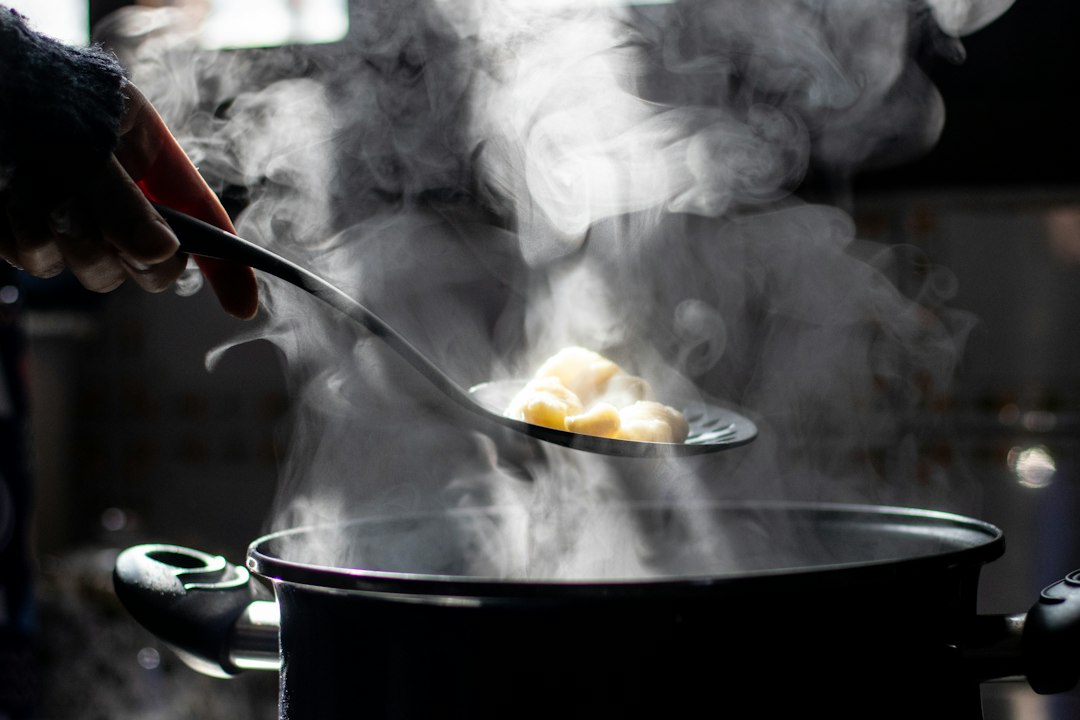
The sizzle of a steak, the gentle simmer of a sauce, the satisfying puff of steam from a freshly baked loaf – these are all sensory cues deeply ingrained in the culinary experience. Beyond the immediate appeal to our senses, these phenomena are governed by fundamental physical principles, and chief among them is vapor pressure. For the home cook and the professional chef alike, understanding vapor pressure unlocks a deeper appreciation for why food behaves the way it does in the kitchen, leading to more successful and delicious outcomes. It’s not just about heat; it’s about the dance between liquid and gas, a constant tug-of-war happening at the surface of our food and in our cooking vessels.
The Evaporation Equation: Liquid to Gas Dynamics
At its core, vapor pressure is the pressure exerted by a vapor in thermodynamic equilibrium with its condensed phases (solid or liquid) at a given temperature in a closed system. In simpler terms, it’s the tendency of a liquid to turn into a gas. This process, evaporation, is happening all the time, even at room temperature. Molecules within a liquid are in constant motion, possessing a range of kinetic energies. Some molecules at the surface have enough energy to overcome the intermolecular forces holding them in the liquid state and escape into the air as vapor.
What Drives Molecular Escape?
The rate at which a liquid evaporates and the resulting vapor pressure are directly influenced by temperature. As temperature increases, the kinetic energy of the molecules rises. More molecules possess the energy required to break free from the liquid’s surface, leading to a higher concentration of vapor in the surrounding space. This, in turn, increases the vapor pressure. Imagine a pot of water on the stove. Initially, at room temperature, a small amount of water evaporates. As the heat is applied, the water molecules move faster, and the evaporation rate accelerates. The air above the water becomes saturated with water vapor more quickly, and the pressure exerted by this vapor increases.
Intermolecular Forces: The Invisible Barriers
The strength of intermolecular forces within a liquid also plays a crucial role in determining its vapor pressure. Liquids with weak intermolecular forces, like diethyl ether, have a high vapor pressure because their molecules can escape into the gas phase with relative ease. Conversely, liquids with strong intermolecular forces, such as water, have lower vapor pressures at the same temperature. Water’s hydrogen bonding creates a robust network that requires significant energy to disrupt, making it less volatile than many other liquids. This is why spilled water might linger for a while, while spilled rubbing alcohol evaporates almost instantly. In cooking, this translates to how quickly ingredients dry out or how readily certain liquids boil.
Vapor pressure plays a crucial role in cooking, particularly when it comes to understanding how liquids behave at different temperatures. When heating a liquid, its vapor pressure increases, which can affect cooking times and methods. For a deeper exploration of this concept and its implications in culinary practices, you can read the related article on vapor pressure in cooking by visiting this link: Vapor Pressure in Cooking. This article delves into how vapor pressure influences boiling points and the overall cooking process, providing valuable insights for both amateur cooks and culinary professionals.
Boiling Point: A Vapor Pressure Threshold
The concept of boiling point is inextricably linked to vapor pressure. A liquid boils when its vapor pressure equals the surrounding atmospheric pressure. At this point, vapor bubbles can form not just at the surface but also within the bulk of the liquid, rising and escaping as steam. This equilibrium is a critical factor in many cooking processes.
The Altitude Adjustment: Pressure’s Impact on Boiling
Atmospheric pressure is not constant; it varies with altitude. At sea level, atmospheric pressure is approximately 1 atmosphere (atm). As altitude increases, atmospheric pressure decreases. This means that at higher elevations, a liquid will reach its boiling point at a lower temperature because its vapor pressure needs to equal a lower external pressure to boil. For instance, water boils at 100°C (212°F) at sea level, but at an altitude of 5,000 feet, it boils at around 95°C (203°F). This has significant implications for cooking times. Foods cooked at higher altitudes will take longer to cook because the lower boiling temperature means less thermal energy is transferred to the food per unit of time. Chefs in mountainous regions must adjust recipes accordingly, often increasing cooking times or using pressure cookers to compensate.
Beyond Water: The Boiling Points of Other Culinary Liquids
While water is the most common liquid encountered in cooking, other liquids also have their own vapor pressure curves and boiling points. Fats and oils, for instance, have significantly higher boiling points than water due to their molecular structure and intermolecular forces. This is why frying is often done at temperatures well above the boiling point of water. The lower vapor pressure of these fats at typical cooking temperatures means they don’t readily turn into gas, allowing them to transfer heat efficiently to the food without excessive evaporation. Understanding the boiling points of different ingredients can help in selecting appropriate cooking methods and temperatures for optimal results.
Vapor Pressure and Evaporative Cooling in the Kitchen
Evaporation is a cooling process. When molecules escape from a liquid, they take kinetic energy with them, leaving the remaining liquid cooler. This phenomenon, known as evaporative cooling, plays a subtle yet important role in various kitchen scenarios.
The Damp Cloth Advantage
A classic example is the damp cloth used to keep beverages cool. When a cloth is dampened and wrapped around a bottle, the water in the cloth evaporates. As it evaporates, it draws heat from the bottle and its contents, thus cooling them. This is the same principle behind how our bodies cool down through perspiration. In a culinary context, this can be useful for rapidly chilling certain ingredients or for maintaining a cool environment for delicate items like doughs.
The Impact on Moisture Content
The rate of evaporation directly influences the moisture content of food. When cooking meats, the escape of water vapor is a significant factor in how the meat cooks and develops its texture. A rapid evaporation from the surface of a roast can lead to a drier exterior, while slower evaporation in a braise contributes to tenderness and moisture retention. Understanding how to control evaporation through techniques like searing (initially encouraging rapid surface evaporation) versus simmering (allowing for controlled moisture release and absorption) is key to achieving desired results. For baked goods, controlled evaporation of water from dough contributes to crust formation and the development of crispness.
Steam Cooking and the Power of Latent Heat
Steam is water in its gaseous state, and its presence in cooking is a powerful force. The formation of steam is intimately related to vapor pressure and involves a significant transfer of energy. When water boils, it undergoes a phase change from liquid to gas, and this process requires a substantial amount of energy, known as latent heat of vaporization.
The Efficiency of Steam
Steam cooking methods, such as steaming or pressure cooking, are highly effective because steam carries a large amount of thermal energy. When steam comes into contact with cooler food, it condenses back into liquid water, releasing its latent heat. This rapid transfer of heat cooks food quickly and efficiently, often preserving nutrients and vibrant colors better than other methods. The higher temperature at which steam can cook (especially under pressure) also contributes to faster cooking times. For instance, a steamer basket placed over boiling water utilizes the steam’s energy to cook vegetables. A pressure cooker traps steam, increasing the pressure and thus the boiling point of water, allowing food to cook at even higher temperatures.
The Consequences of Vapor Escape in Baking
In baking, the role of water vapor is multifaceted. During the initial stages of baking, water within the dough or batter turns to steam. This steam can cause the dough to rise, creating lift and creating the airy structure of bread and cakes. The escape of this vapor also contributes to the drying and crisping of the crust. If the vapor is trapped too effectively, it can lead to a doughy or gummy texture. Conversely, excessive escape of vapor in certain baked goods can lead to a dry or crumbly product. The careful balance of moisture within baked goods, influenced by vapor pressure and its subsequent escape, is a delicate art.
Vapor pressure plays a crucial role in cooking, particularly when it comes to understanding how liquids behave at different temperatures. For instance, when boiling water, the vapor pressure increases until it equals the atmospheric pressure, allowing the water to transition into steam. This concept is essential for various cooking techniques, such as steaming and pressure cooking, where the manipulation of vapor pressure can significantly affect cooking times and food texture. To delve deeper into the science behind vapor pressure and its implications in the kitchen, you can read this insightful article on Freaky Science.
Controlling Vapor Pressure for Culinary Mastery
| Metric | Description | Typical Value/Range | Relevance in Cooking |
|---|---|---|---|
| Vapor Pressure | The pressure exerted by a vapor in equilibrium with its liquid at a given temperature | Varies with temperature; e.g., water at 100°C has vapor pressure of 1 atm (760 mmHg) | Determines boiling point and evaporation rate of liquids during cooking |
| Boiling Point | Temperature at which vapor pressure equals atmospheric pressure | Water boils at 100°C at 1 atm; lower at higher altitudes | Impacts cooking time and temperature control |
| Atmospheric Pressure | External pressure exerted by the atmosphere | Approximately 1 atm (760 mmHg) at sea level | Influences vapor pressure needed for boiling |
| Evaporation Rate | Rate at which liquid molecules escape into vapor phase | Increases with temperature and vapor pressure | Affects moisture loss and texture in cooking |
| Pressure Cooking Pressure | Increased pressure inside a pressure cooker | Typically 1.5 to 2 atm (15 to 30 psi) above atmospheric pressure | Raises boiling point, reducing cooking time |
Understanding the principles of vapor pressure empowers cooks to manipulate cooking outcomes intentionally. By controlling temperature, atmospheric pressure, and the composition of liquids, one can influence evaporation rates, boiling points, and the overall cooking process.
The Role of Lid Placement and Venting
The presence or absence of a lid on a cooking vessel is a direct manipulation of the system’s ability to contain vapor. A tightly lidded pot will trap steam, increasing the vapor pressure above the liquid. This can lead to a faster cooking time and a more moist final product, as seen in braising or steaming. Conversely, an uncovered pan allows for unimpeded evaporation, which is desirable for reducing sauces or crisping surfaces. Venting a lid, or leaving it slightly ajar, offers a middle ground, allowing some vapor to escape while still retaining a degree of moisture and heat. This is often used when simmering to prevent boiling over while still allowing for some evaporation.
The Science Behind Deglazing and Reduction
Deglazing, the process of adding liquid to a hot pan to loosen browned bits (fond), is an interplay of heat, vapor pressure, and solubility. The hot pan creates a high vapor pressure, and the added liquid (often wine or stock) rapidly evaporates some of its volume, assisting in dissolving the flavorful fond. Sauce reduction relies heavily on controlled evaporation. By simmering a sauce uncovered, the water content is reduced, concentrating the flavors and thickening the sauce. This process is driven by the vapor pressure of water exceeding the surrounding atmospheric pressure, allowing it to escape and leave behind a more potent liquid. The rate of this reduction can be influenced by the heat applied and the surface area of the pan, both of which affect the rate of evaporation.
Pressure Cookers: Harnessing Elevated Vapor Pressure
Pressure cookers are ingenious devices that directly exploit the relationship between pressure and boiling point. By sealing the cooking vessel, they trap steam, significantly increasing the internal pressure. This elevated pressure raises the boiling point of water well above 100°C (212°F), allowing food to cook much faster than it would at atmospheric pressure. The intense steam environment also ensures that food remains moist. Understanding that a pressure cooker is essentially creating an environment of superheated steam, driven by elevated vapor pressure, is key to appreciating its efficiency and the resulting textural changes in food.
In conclusion, vapor pressure is not merely an abstract scientific concept but a fundamental force at play in every kitchen. From the simple act of boiling water to the complex techniques of pressure cooking and sauce reduction, the dynamics of liquid turning into gas profoundly influence how our food cooks, its texture, and its flavor. By grasping these principles, cooks can move beyond rote recipe following and begin to intuitively understand and manipulate the forces that shape their culinary creations, leading to a more nuanced and ultimately more delicious experience.
Why This Water Doesn’t Boil at 100°C
FAQs
What is vapor pressure in cooking?
Vapor pressure in cooking refers to the pressure exerted by the vapor of a liquid when it is in equilibrium with its solid or liquid form. In simple terms, it is the pressure created by the evaporation of liquids during the cooking process.
How does vapor pressure affect cooking?
Vapor pressure affects cooking by influencing the boiling point of liquids. As vapor pressure increases, the boiling point decreases, allowing liquids to evaporate more quickly. This can lead to faster cooking times and changes in the texture and flavor of the food being cooked.
What role does vapor pressure play in the cooking of food?
Vapor pressure plays a crucial role in the cooking of food by affecting the rate of evaporation of liquids. This can impact the tenderness, juiciness, and overall cooking time of various ingredients. Understanding vapor pressure can help chefs and home cooks achieve desired results in their dishes.
How can vapor pressure be controlled during cooking?
Vapor pressure can be controlled during cooking by adjusting the temperature and pressure within the cooking environment. For example, using a lid on a pot can increase vapor pressure by trapping steam, while increasing the heat can raise the pressure inside a pressure cooker, resulting in faster cooking times.
What are some practical tips for utilizing vapor pressure in cooking?
To make the most of vapor pressure in cooking, consider using techniques like steaming, braising, or pressure cooking. These methods can help retain moisture, enhance flavors, and tenderize tough cuts of meat by leveraging the effects of vapor pressure during the cooking process.