The Silent Transformation: Water’s Journey Within a Sealed Pot
A sealed pot, seemingly a simple vessel, becomes a miniature laboratory when filled with water and subjected to heat. Within its confines, a dynamic and continuous process unfolds, a testament to the fundamental principles of physics governing the states of matter. The water, initially in its liquid form, embarks on a journey of transformation, driven by the subtle yet powerful forces of evaporation and condensation. This silent ballet of molecules, unseen by the naked eye, shapes the environment inside the pot, creating a self-sustaining cycle that can persist as long as the energy source remains. Understanding this intricate dance provides not only a glimpse into the behavior of water but also illuminates broader concepts in thermodynamics and atmospheric science.
In exploring the behavior of water in a sealed pot, one can gain valuable insights into the principles of pressure and boiling points. A related article that delves into these concepts is available on Freaky Science, which discusses the fascinating effects of heat on liquids in confined spaces. For more information, you can read the article here: Freaky Science. This resource provides a deeper understanding of how water behaves under various conditions, making it an excellent complement to the topic at hand.
The Genesis of Vapor: Unveiling the Evaporation Process
The transformation of liquid water into its gaseous state, vapor, is the initial and most visually apparent phenomenon within the sealed pot. This process, known as evaporation, is not a sudden event but a gradual conversion driven by the kinetic energy of water molecules. Even at room temperature, water molecules are in constant motion, vibrating and colliding with each other. Some molecules, particularly those near the surface, possess enough kinetic energy to overcome the intermolecular forces that bind them to their liquid neighbors. These high-energy molecules break free from the liquid surface and ascend into the space above, becoming water vapor. The addition of heat significantly accelerates this process. When a sealed pot containing water is placed on a heat source, energy is transferred to the water molecules. This increased energy causes them to move faster and more vigorously. Consequently, a larger proportion of molecules gain the necessary kinetic energy to escape the liquid phase and transition into the gaseous state.
Molecular Motion and Energy Transfer
The fundamental driver of evaporation is the inherent kinetic energy possessed by all molecules. In a liquid, these molecules are relatively close together and are held by attractive forces. However, they are not static; they constantly move and collide. The temperature of the water is a direct measure of the average kinetic energy of its molecules. As heat is applied, energy is absorbed by the water molecules, increasing their average kinetic energy. This means they move faster, and the collisions between them become more energetic. Crucially, there is a distribution of kinetic energies among the molecules; some will always have higher energy than others. Evaporation occurs when a molecule at the surface happens to gain enough kinetic energy, through collisions or direct absorption of heat, to overcome the cohesive forces holding it within the liquid. It is then ejected from the liquid surface as a gas molecule. The rate of evaporation is therefore directly proportional to the temperature of the water; higher temperatures lead to more energetic molecules and thus a higher rate of evaporation.
The Influence of Surface Area and Pressure
While the sealed nature of the pot limits some factors, surface area still plays a role in the initial stages of evaporation. A larger surface area of water exposed to the air-vapor interface allows more molecules to escape at any given moment. However, in a sealed pot, this effect is somewhat mitigated as the vapor begins to accumulate. Atmospheric pressure also influences evaporation. In an open container, a lower atmospheric pressure would allow water to evaporate more readily because there is less external force pushing down on the liquid surface. In a sealed pot, however, the pressure builds up as water vapor accumulates. This increasing vapor pressure acts as a counterforce, resisting further evaporation. Eventually, a state of equilibrium can be reached where the rate of evaporation equals the rate of condensation. The sealed environment, therefore, creates a unique dynamic where pressure plays a critical role in regulating the evaporation rate.
The Ascending Cloud: Water Vapor’s Rise and Accumulation
As water molecules escape the liquid surface and transform into vapor, they rise into the air space above the water. This rising vapor is essentially invisible, forming a gaseous phase that gradually fills the upper portion of the sealed pot. The heat source continues to supply energy, driving more liquid water to evaporate. Consequently, the concentration of water vapor in the air space increases over time. This accumulation of vapor is a key step in the cyclical process. If the pot were not sealed, this water vapor would dissipate into the surrounding atmosphere. However, the sealed lid traps the vapor, leading to a measurable increase in the humidity within the pot. The molecules of water vapor, now in a gaseous state, move more freely and are more spread out than they were in the liquid. They collide with each other and with the walls of the pot, exerting a pressure on the container.
The Invisible Gas: Characteristics of Water Vapor
Water vapor, the gaseous form of water, is a colorless and odorless gas. Unlike liquid water or ice, its molecules are far apart and move randomly at high speeds. Each water vapor molecule possesses kinetic energy, contributing to the overall temperature of the gas. As more water evaporates, the number of water vapor molecules in the air space increases. This doesn’t make the air “wetter” in the way one might feel moisture in a humid room; rather, it means there are more H₂O molecules present as a gas. The presence of this vapor is crucial for the next stage of the cycle. The rate at which vapor accumulates is directly related to the rate of evaporation, which, as discussed, is influenced by temperature and the eventual build-up of vapor pressure. The confined space of the sealed pot ensures that this accumulating vapor remains contained, setting the stage for the reverse process.
Building Pressure: Vapor Pressure Dynamics
The accumulation of water vapor within the sealed pot leads to an increase in the internal pressure. This pressure, exerted by the water vapor molecules colliding with the walls of the pot and the surface of the liquid water, is known as vapor pressure. Initially, the vapor pressure is low. However, as more water evaporates, the concentration of vapor molecules increases, leading to more frequent and forceful collisions. This results in a rising vapor pressure. The vapor pressure continues to climb until it reaches a point where it is equal to the saturation vapor pressure for the given temperature. Saturation vapor pressure is the maximum amount of water vapor that the air can hold at a specific temperature. Beyond this point, the rate of condensation will begin to match the rate of evaporation, leading to a dynamic equilibrium. The sealed nature of the pot is critical here; in an open system, the vapor would escape, and the pressure would not build up to this extent.
The Return to Liquid: Understanding Condensation
As the water vapor accumulates and the temperature within the pot fluctuates, the process of condensation begins. Condensation is the reverse of evaporation, where water vapor molecules lose kinetic energy and transition back into the liquid state. This typically occurs when the air space within the pot becomes saturated with water vapor, or when the temperature of the vapor decreases. In the sealed pot, the vapor molecules, in their constant random motion, collide with the cooler inner surfaces of the pot, particularly the lid. When a vapor molecule strikes a surface that is cooler than its own temperature, it loses some of its kinetic energy. If it loses enough energy, it will slow down sufficiently to be captured by the attractive intermolecular forces of other water molecules, forming a liquid droplet. This is why condensation often appears on the underside of a cold lid or the upper walls of the pot.
Energy Loss and Molecular Bonding
The core mechanism behind condensation is the loss of kinetic energy by water vapor molecules. In the gaseous state, molecules are energetic and widely spaced. When these molecules come into contact with a cooler surface, they transfer some of their energy to that surface. This energy loss causes the molecules to slow down. As their speed decreases, the attractive forces between water molecules become more dominant. When these forces are strong enough to overcome the remaining kinetic energy of the molecules, they coalesce, forming tiny liquid water droplets. This process can be visualized as vapor molecules “sticking” to the cool surface and to each other. The presence of nucleation sites – small imperfections or dust particles on the surface – can also facilitate condensation by providing a surface for the vapor molecules to gather around.
Droplet Formation and the Cycle’s Renewal
The formation of visible condensation begins with the formation of these tiny liquid droplets. As more and more vapor molecules condense, these droplets grow larger. They may start as microscopic specks, but eventually, they become large enough to be seen and even to be felt if one were to touch the surface. In the sealed pot, these droplets will typically form on the coolest surfaces, which are often the lid and the upper parts of the pot’s interior. Once these droplets become sufficiently large and heavy, gravity will cause them to detach from the surface and fall back into the body of liquid water below. This falling of condensed water is often observed as “rain” or “dripping” within the sealed environment. This return of liquid water to the main reservoir is essential for the continuation of the evaporation cycle.
When water is heated in a sealed pot, it undergoes a fascinating transformation, as the pressure inside the pot increases and the boiling point of water rises. This phenomenon can lead to some interesting culinary results, especially when cooking foods that require steam. For a deeper understanding of the science behind this process, you can explore a related article that delves into the principles of pressure cooking and its effects on water. Check it out here to learn more about how these concepts apply in everyday cooking.
The Interplay: Dynamic Equilibrium and the Cycle’s Persistence
| Parameter | Observation | Explanation |
|---|---|---|
| Temperature | Increases until boiling point | Heat causes water molecules to move faster, raising temperature |
| Pressure | Increases inside the sealed pot | Steam generated from boiling water increases pressure in the sealed environment |
| State of Water | Liquid and vapor coexist | Water evaporates and condenses within the sealed pot, creating equilibrium |
| Volume of Water | Remains constant | No water escapes the sealed pot, so total water volume is unchanged |
| Condensation | Forms on pot lid and walls | Steam cools upon contact with cooler surfaces, turning back into liquid |
| Boiling Point | May increase | Increased pressure raises boiling point above 100°C |
The phenomena of evaporation and condensation do not occur in isolation within the sealed pot. Instead, they exist in a dynamic equilibrium, a state where both processes are happening simultaneously, and the rates are balanced. This balance is what allows the cycle to persist. As long as there is a heat source providing energy, liquid water will continue to evaporate, and as long as there is a temperature difference or saturation, water vapor will condense. The sealed nature of the pot ensures that the water molecules are contained, allowing for this continuous exchange between liquid and vapor phases. This self-contained system effectively mimics natural processes like the water cycle on a much smaller scale, demonstrating the fundamental principles at play.
The Saturation Point and Equilibrium
The concept of saturation is central to understanding the dynamic equilibrium. As evaporation increases the amount of water vapor in the air space, the air approaches its saturation point – the maximum amount of water vapor it can hold at a given temperature. Once saturation is reached, the rate of evaporation is exactly matched by the rate of condensation. This doesn’t mean that evaporation and condensation stop; rather, it means that for every molecule that leaves the liquid phase, another molecule from the vapor phase returns to it. The vapor pressure within the pot will stabilize at this point, known as the equilibrium vapor pressure, which is dependent on the temperature. If the temperature of the water increases, the saturation vapor pressure also increases, leading to more evaporation until a new equilibrium is established.
Mimicking Nature: The Sealed Pot as a Microcosm
The sealed pot serves as an excellent, albeit simplified, model of Earth’s water cycle. The heat source represents solar energy, driving evaporation from bodies of water like oceans and lakes. The accumulating water vapor in the air space is analogous to the humidity in the atmosphere. Condensation, occurring on the cooler surfaces of the pot, mirrors the formation of clouds in the atmosphere when moist air rises and cools. The dripping of condensed water back into the main body of liquid is akin to precipitation, such as rain or snow, replenishing the Earth’s water sources. This continuous cycle of evaporation, transport of vapor, condensation, and precipitation is what sustains life on our planet, and it is all driven by the same fundamental principles observed within the confines of a sealed pot.
Factors Influencing the Cycle: Temperature, Volume, and Impurities
While the core processes of evaporation and condensation are constant, several factors can influence the speed and intensity of the cycle within the sealed pot. Temperature, as previously emphasized, is a primary driver, directly affecting the rate of evaporation and the capacity of the air to hold vapor. The volume of the pot also plays a role. A larger volume of air above the water provides more space for vapor to accumulate before saturation is reached, potentially slowing down the rate at which equilibrium is established. The presence of impurities in the water can also have subtle effects. Dissolved salts or minerals can slightly alter the vapor pressure of the water, affecting the rate of evaporation and condensation. In a truly sealed, pure water system, the cycle is more predictable, but real-world scenarios often involve minor deviations due to these additional influences.
The Dominant Role of Temperature
Temperature is the most influential factor in the sealed pot’s water cycle. A higher temperature means more energy available for molecules to escape the liquid phase, thus increasing the rate of evaporation. This, in turn, leads to a more rapid accumulation of water vapor and a faster build-up of vapor pressure. Consequently, the temperature of the water directly impacts how quickly condensation can begin to occur. A significant temperature difference between the water and the lid, for example, will promote more vigorous condensation. Conversely, if the temperature within the pot is low, evaporation will be slow, and the accumulation of vapor will be minimal, leading to less observable condensation. Maintaining a consistent temperature is key to observing a stable, ongoing cycle.
Volume and Surface Area Considerations
The physical dimensions of the sealed pot influence the dynamics of the water cycle. The volume of the air space above the water determines how much vapor can accumulate before the air becomes saturated. A larger air volume can accommodate more vapor, meaning it might take longer for the vapor pressure to reach saturation levels and for condensation to become pronounced. Conversely, a smaller air volume will lead to quicker saturation and more rapid condensation. While the initial rate of evaporation is influenced by the water’s surface area exposed to the air, in a sealed system, the overall volume and the efficiency of condensation on the cooler surfaces become more significant in determining the long-term equilibrium.
The Subtle Impact of Impurities
While water’s fundamental properties remain, impurities within the water can slightly alter the evaporation and condensation processes. Dissolving substances like salt into water lowers its vapor pressure. This means that at a given temperature, impure water will evaporate slightly slower than pure water because the solute particles interact with the water molecules, making it harder for them to escape into the vapor phase. This reduced evaporation rate will, in turn, slow down the accumulation of vapor and the subsequent condensation. While these effects are generally minor in typical household pots, they are significant in industrial applications and in understanding natural phenomena where water is not perfectly pure. The presence of dissolved substances can thus fine-tune the balance of the evaporation-condensation cycle.
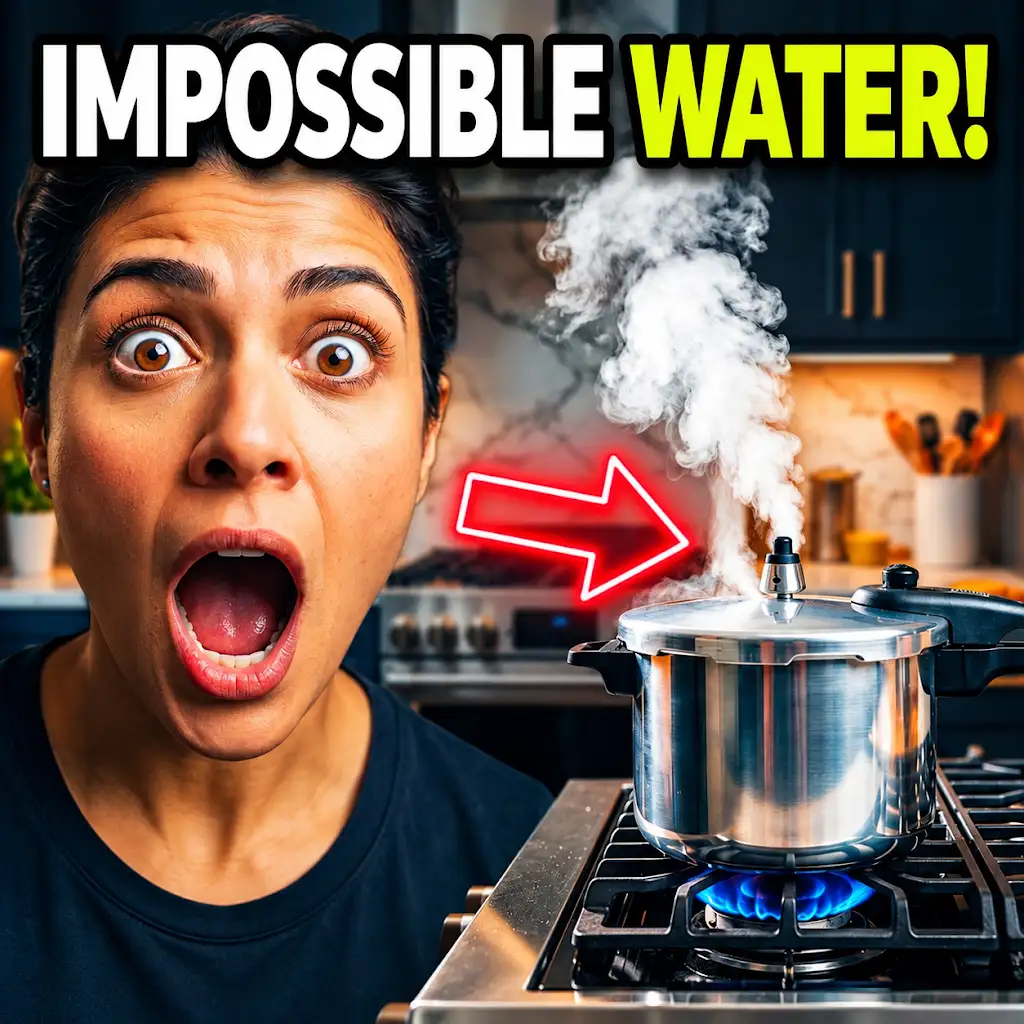
Why This Water Doesn’t Boil at 100°C
FAQs
1. What happens to water in a sealed pot when it is heated?
When water in a sealed pot is heated, it begins to evaporate and turn into steam. The steam builds up pressure inside the pot, causing the temperature of the water to rise above its boiling point.
2. Can the pressure inside a sealed pot increase as the water is heated?
Yes, as the water in a sealed pot is heated, the pressure inside the pot increases due to the buildup of steam. This increase in pressure allows the water to reach higher temperatures without boiling off completely.
3. What happens if the pressure inside a sealed pot becomes too high?
If the pressure inside a sealed pot becomes too high, it can lead to a dangerous situation where the pot may explode. To prevent this, many modern pressure cookers have safety features to regulate and release excess pressure.
4. How does food cook differently in a sealed pot compared to an open pot?
Food cooks faster in a sealed pot compared to an open pot due to the higher temperature and pressure inside. The steam created in a sealed pot helps to transfer heat more efficiently to the food, resulting in quicker cooking times.
5. Is it safe to open a sealed pot immediately after cooking?
No, it is not safe to open a sealed pot immediately after cooking, especially if it was under pressure. Doing so can release hot steam and cause burns. It is important to follow the manufacturer’s instructions for releasing pressure and opening the pot safely.