The familiar hiss and gentle rumble of a pot of water coming to a boil on the stovetop is a domestic symphony many have come to associate with cooking. It’s a process that appears so fundamental, so immutable, that one rarely stops to question it. Water boils at 100 degrees Celsius (212 degrees Fahrenheit) at standard atmospheric pressure – a seemingly unshakeable scientific fact ingrained in our educational journeys and daily lives. However, introducing a pressure cooker into the kitchen fundamentally alters this perception, transforming a seemingly fixed point into a dynamic variable, and revealing a deeper, more nuanced understanding of the physical world. The pressure cooker, a seemingly simple piece of cookware, acts as a powerful, albeit unintentional, physics lesson, demonstrating how external forces can dramatically influence seemingly intrinsic properties of matter.
The Conventional Wisdom of Boiling Water
The common understanding of boiling point is deeply rooted in the atmospheric pressure we experience daily. At sea level, where the air is densest, this pressure is approximately one atmosphere. This pressure exerts a downward force on the surface of any liquid, including water. For water to transform from a liquid to a gas (steam), its molecules need to gain enough kinetic energy to overcome the intermolecular forces holding them together and, crucially, to push back against this external pressure. Boiling occurs when the vapor pressure of the liquid – the pressure exerted by its own gaseous molecules – equals or exceeds the surrounding atmospheric pressure. At 100 degrees Celsius, water’s vapor pressure reaches one atmosphere, allowing bubbles of steam to form and rise freely through the liquid. This is the threshold at which liquid water transitions into its gaseous state in our everyday experience.
The Role of Atmospheric Pressure
Atmospheric pressure is the weight of the air column above us pressing down on everything at the Earth’s surface. This pressure isn’t constant; it decreases with altitude because there is less air above. Consequently, water boils at a lower temperature at higher elevations. For instance, in Denver, Colorado, which is over a mile above sea level, water boils at approximately 95 degrees Celsius (203 degrees Fahrenheit). This observation, while often encountered, might not fully impress upon us the direct relationship between pressure and boiling point. It’s a subtle shift, one that can be attributed to the “thinner” air. The pressure cooker, however, amplifies this effect dramatically and in the opposite direction, offering a much more striking demonstration of this principle.
The Physics of Vapor Pressure
Vapor pressure is a fundamental property of liquids. As temperature increases, the kinetic energy of liquid molecules increases, leading to more molecules escaping the liquid surface and entering the gaseous phase above it. This creates a pressure exerted by these gas molecules, which is the vapor pressure. At the boiling point, the liquid’s own vapor pressure is sufficient to overcome the external pressure. Imagine the surface of the water as a battlefield. The molecules within the liquid are trying to break free and become gas. The external pressure is like an opposing army, holding them down. Boiling is the point where the internal force (vapor pressure) becomes strong enough to push back the external force (atmospheric pressure).
A pressure cooker fundamentally alters our understanding of boiling by demonstrating how increased pressure can raise the boiling point of water, allowing food to cook faster and more efficiently. This concept is explored in greater detail in the article found at Freaky Science, which delves into the science behind pressure cooking and its effects on food preparation. By utilizing a pressure cooker, we can not only save time in the kitchen but also enhance the flavors and nutritional value of our meals, showcasing the transformative power of this cooking method.
The Pressure Cooker’s Transformative Mechanism
A pressure cooker operates on a simple yet profound principle: it traps steam, thereby increasing the internal pressure within the sealed vessel. This is achieved through a tightly fitting lid, often equipped with a gasket, and a safety valve. As the liquid inside heats up, it begins to produce steam. In a regular pot, this steam would simply escape into the atmosphere. In a pressure cooker, however, the steam is contained. As more steam is generated, the volume available for the gas molecules decreases, and the pressure inside the cooker begins to rise significantly above atmospheric pressure. This elevated pressure is the key to the pressure cooker’s efficiency and its ability to alter the boiling point of water.
Containment and the Rise of Pressure
The sealed nature of the pressure cooker is paramount. The lid forms an airtight seal with the pot, preventing any significant escape of steam. When heat is applied, water starts to evaporate and turn into steam. This steam occupies a larger volume than the liquid water from which it came. However, within the confined space of the pressure cooker, this expansion is restricted. According to the ideal gas law (PV=nRT, where P is pressure, V is volume, n is the number of moles of gas, R is the ideal gas constant, and T is temperature), if the volume (V) is decreased and the temperature (T) is increased, the pressure (P) must increase. Thus, as the water heats up and produces steam, the pressure inside the cooker builds up.
The Role of the Safety Valve
While the primary function of the pressure cooker is to increase pressure, safety is of utmost importance. The safety valve is a critical component designed to prevent the pressure from reaching dangerous levels. It is typically a weighted or spring-loaded mechanism that will release excess steam if the internal pressure exceeds a predetermined safe limit. This audible release of steam is a characteristic sound of a pressure cooker in operation and serves as a constant reminder of the elevated pressures at play. The regulated release of steam also helps to maintain a consistent cooking pressure, ensuring uniform results.
The Science Behind Enhanced Cooking Speeds
The increased pressure inside a pressure cooker directly translates to a higher boiling point for water. With the external pressure significantly elevated (typically between 15 and 25 psi above atmospheric pressure, which corresponds to internal pressures of around 2 to 3 atmospheres), water needs to reach a much higher temperature for its vapor pressure to equal the internal pressure. This means water inside a pressure cooker can reach temperatures of 120-125 degrees Celsius (248-257 degrees Fahrenheit) or even higher, depending on the specific cooker and the pressure it is designed to achieve. This elevated temperature dramatically accelerates the cooking process for several reasons.
Higher Temperatures, Faster Molecular Motion
At these higher temperatures, the water molecules have significantly more kinetic energy. This translates into faster molecular motion and increased collision frequency within the food being cooked. Heat transfer to the food is more efficient. Furthermore, the increased temperature itself directly impacts the rate of chemical reactions involved in cooking, such as the breakdown of connective tissues in meat and the softening of vegetables. Essentially, the food is being subjected to a more intense thermal environment, allowing it to cook in a fraction of the time it would take at the conventional boiling point.
Accelerated Chemical Reactions and Food Softening
The softening of foods, particularly fibrous ingredients like meats and root vegetables, relies on the breakdown of complex molecules like collagen and starches. These chemical processes are temperature-dependent. By raising the cooking temperature, the pressure cooker speeds up these reactions considerably. For example, collagen, a tough protein in meat, breaks down into gelatin at higher temperatures, making the meat tender. Similarly, starches gelatinize more rapidly at elevated temperatures, contributing to the softening of vegetables and grains. This dual effect of faster heat transfer and accelerated chemical reactions is the cornerstone of the pressure cooker’s efficiency.
Re-evaluating the Concept of “Boiling”
The pressure cooker experience forces a re-evaluation of the simplistic definition of boiling as “100 degrees Celsius.” It demonstrates that boiling is not an intrinsic property of water at a fixed temperature, but rather a point dictated by the balance between the liquid’s vapor pressure and the surrounding pressure. When one alters the external pressure, the boiling point shifts accordingly. This realization can be a profound shift in understanding for many, moving from a fixed, absolute value to a dynamic, conditional one. It highlights the interconnectedness of physical properties and the influence of external factors.
Boiling as a Pressure-Dependent Phenomenon
The most significant takeaway from using a pressure cooker is the understanding that boiling point is not an absolute. It is a direct consequence of the ambient pressure. The pressure cooker acts as a laboratory where one can experimentally observe this principle in action. By increasing the pressure, the boiling point is elevated. Conversely, if one were able to create a vacuum, the boiling point would decrease. This practical demonstration solidifies the scientific concept in a way that abstract explanations often cannot. It transforms a memorized fact into an observable reality.
A Shift from Absolute to Relative Understanding
The pressure cooker encourages a shift from a rigid, absolute understanding of scientific facts to a more relative and contextual one. Instead of thinking “water boils at 100°C,” one begins to think “water boils at 100°C at sea-level atmospheric pressure.” This subtle change in perspective opens the door to understanding other scientific phenomena that are influenced by environmental conditions. It fosters a more critical and inquisitive approach to scientific knowledge, recognizing that many principles are not immutable truths but rather statements that hold true under specific conditions.
Using a pressure cooker can significantly alter your perception of boiling, as it allows food to cook at higher temperatures than traditional boiling methods. This change in cooking dynamics not only enhances flavors but also reduces cooking times, making it a valuable tool in any kitchen. For a deeper exploration of this topic, you might find the article on the science of cooking particularly enlightening, as it delves into the principles behind pressure cooking and its effects on food. You can read more about it in this related article.
Beyond the Kitchen: Broader Scientific Implications
| Aspect | Traditional Boiling | Pressure Cooker Boiling | Impact on Understanding |
|---|---|---|---|
| Boiling Point of Water | 100°C (212°F) at 1 atm pressure | Up to ~121°C (250°F) at increased pressure (~15 psi above atmospheric) | Boiling point is not fixed; it increases with pressure, showing boiling is pressure-dependent. |
| Cooking Time | Longer due to lower boiling temperature | Shorter because higher temperature cooks food faster | Higher pressure raises boiling point, speeding up cooking processes. |
| Energy Efficiency | Less efficient; heat lost to environment over longer cooking time | More efficient; sealed environment retains heat and pressure | Pressure cookers demonstrate how controlling pressure can conserve energy. |
| Phase Change Understanding | Boiling occurs at fixed temperature at atmospheric pressure | Boiling temperature varies with pressure inside cooker | Boiling is a dynamic process influenced by environmental conditions. |
| Safety Considerations | Open boiling with risk of splashes | Sealed vessel with pressure release valves to prevent explosions | Understanding pressure’s role is critical for safe cooking practices. |
The principles at play within a pressure cooker extend far beyond the confines of culinary applications. Understanding how pressure influences the boiling point of liquids is fundamental in various scientific and industrial fields. From chemical engineering to meteorology, the relationship between pressure and phase transitions is a critical concept with far-reaching implications. The pressure cooker, in its humble domestic role, serves as an accessible and tangible illustration of these complex scientific realities.
Industrial Applications and Chemical Processes
In chemical industries, pressure vessels are commonplace for controlling reactions and separations. Many chemical processes involve heating liquids or reactions under pressure to achieve desired outcomes or to increase efficiency. For example, in the oil refining industry, crude oil is often distilled under vacuum to separate its components at lower temperatures, preventing degradation. Conversely, certain chemical synthesis reactions require high pressures and temperatures to proceed effectively. The pressure cooker, with its contained high-pressure steam, mimics these industrial processes on a much smaller scale, offering a relatable analogy for complex engineering.
Meteorology and Atmospheric Science
The concept of boiling point and its dependence on pressure is also central to meteorology. Atmospheric pressure plays a crucial role in weather patterns. While not directly related to boiling liquids in the same way as a pressure cooker, the underlying principle of pressure influencing physical states is similar. For instance, the formation of clouds and precipitation involves changes in temperature and pressure that lead to condensation and evaporation of water vapor. Understanding how pressure affects the phase of water, even in its gaseous state, is a fundamental aspect of atmospheric science. The pressure cooker provides a practical, hands-on way to grasp the fundamental physics that underpins these larger-scale phenomena.
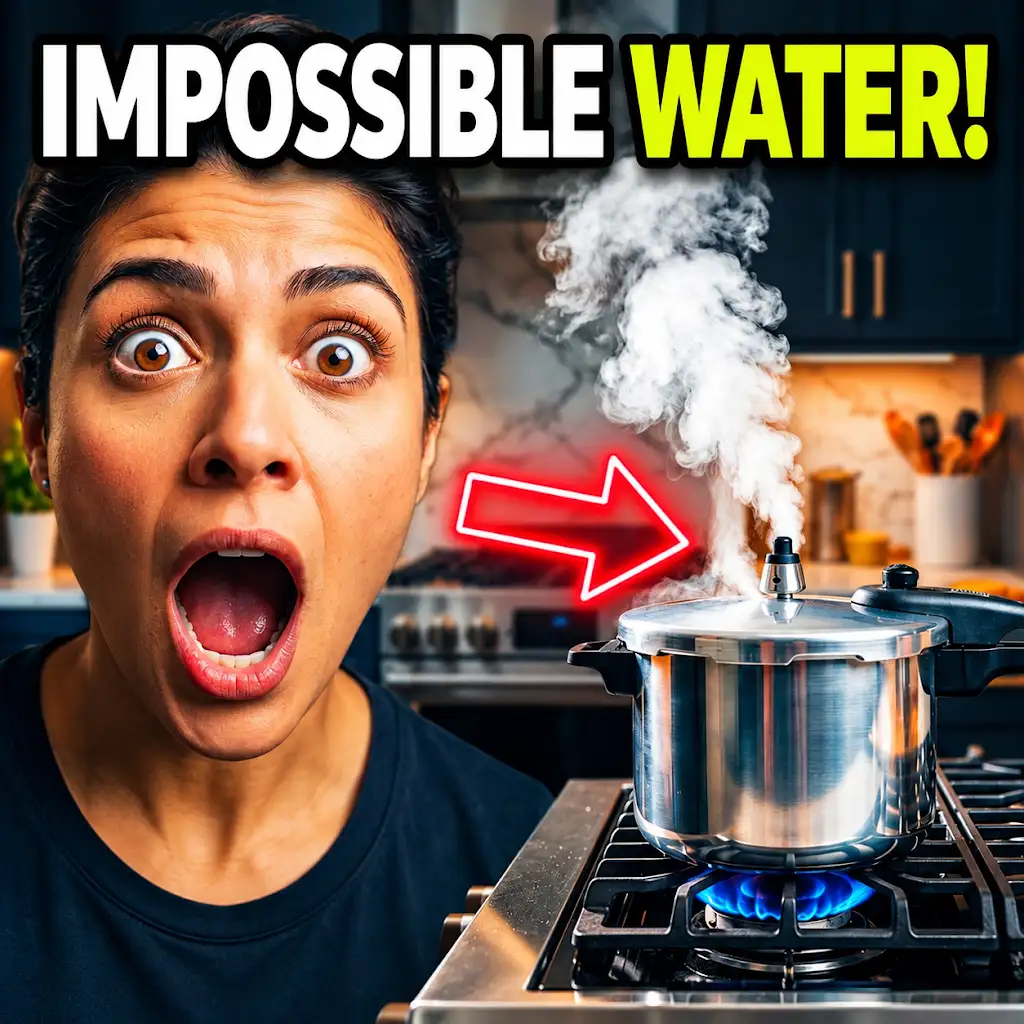
Why This Water Doesn’t Boil at 100°C
FAQs
1. How does a pressure cooker affect the boiling point of water?
A pressure cooker increases the boiling point of water by raising the pressure inside the cooker. This higher pressure allows the water to reach a higher temperature before boiling, which can cook food faster.
2. Does using a pressure cooker change the cooking time compared to traditional boiling methods?
Yes, using a pressure cooker can significantly reduce cooking time compared to traditional boiling methods. The higher temperature inside the pressure cooker allows food to cook faster, saving time and energy.
3. How does a pressure cooker impact the texture and flavor of food compared to boiling?
A pressure cooker can help retain more nutrients, texture, and flavor in food compared to boiling. The shorter cooking time and sealed environment help preserve the natural taste and texture of ingredients.
4. Are there any safety concerns when using a pressure cooker for boiling food?
While pressure cookers are generally safe to use, there are some safety concerns to be aware of. It is important to follow the manufacturer’s instructions carefully, release the pressure before opening the cooker, and avoid overfilling the cooker to prevent accidents.
5. Can a pressure cooker be used for tasks other than boiling food?
Yes, a pressure cooker can be used for a variety of cooking tasks beyond boiling food. It can be used for steaming, braising, stewing, and even baking certain dishes. The versatility of a pressure cooker makes it a valuable kitchen tool for many cooking methods.