The Invisible Hand: How Atmospheric Pressure Dictates Cooking Temperatures
The seemingly simple act of preparing a meal is a complex dance of chemistry and physics, with temperature playing a starring role. While most home cooks intuitively understand that turning up the heat cooks food faster, fewer consider the subtler influences that can alter the very definition of “hot.” Among these influences, atmospheric pressure stands out as a powerful, albeit often overlooked, factor. From the dizzying heights of mountain kitchens to the pressurized environments of modern ovens, understanding how pressure affects cooking temperature unlocks a deeper appreciation for the culinary arts and offers practical solutions for achieving perfect results regardless of altitude or equipment. This article delves into the fundamental principles governing pressure and temperature in cooking, exploring their interplay and offering insights for the discerning cook.
Understanding how changing pressure affects cooking temperature is crucial for achieving the perfect dish, especially in pressure cooking. For a deeper exploration of this topic, you can refer to the article on Freaky Science, which delves into the science behind pressure cooking and its effects on food preparation. This resource provides valuable insights into how varying pressure levels can alter cooking times and temperatures, making it an essential read for both novice and experienced cooks. To learn more, visit Freaky Science.
The Boiling Point Paradox: Pressure’s Grip on Water
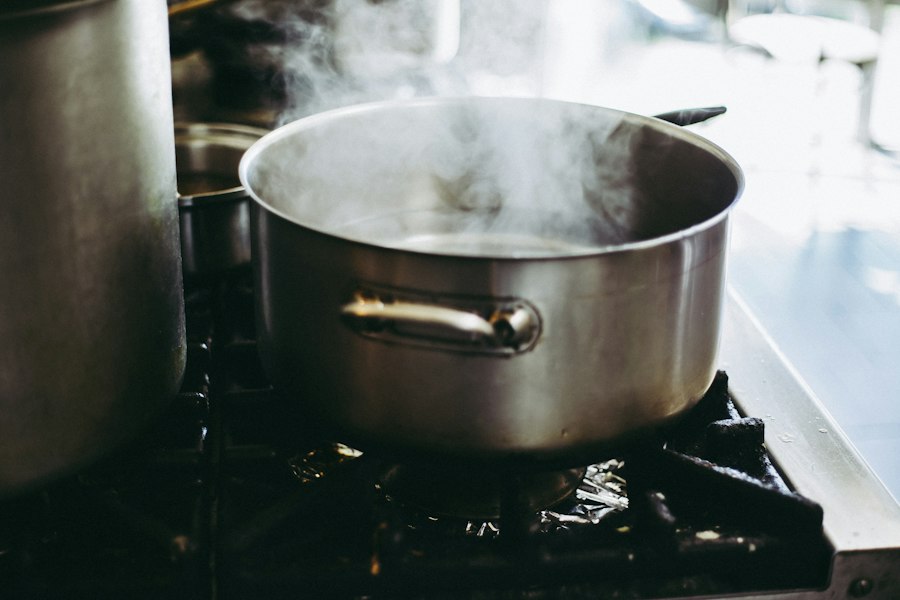
Water, the ubiquitous solvent and essential ingredient in countless dishes, serves as an excellent example to illustrate the relationship between pressure and temperature. The familiar 100 degrees Celsius (212 degrees Fahrenheit) boiling point of water is a constant only at standard atmospheric pressure, typically measured at sea level. However, this benchmark is far from universal. As altitude increases, atmospheric pressure decreases. Imagine a vast ocean of air pressing down on the Earth’s surface. At higher elevations, this ocean is shallower, and the weight of the air above is less. This reduced pressure has a direct impact on the boiling point of water.
Why Lower Pressure Lowers the Boiling Point
The phenomenon of boiling occurs when the vapor pressure of a liquid equals the surrounding atmospheric pressure. Vapor pressure is the pressure exerted by the gas phase of a substance in equilibrium with its liquid phase. When the atmospheric pressure is high, water molecules need to gain more kinetic energy – and thus reach a higher temperature – to overcome the external pressure and escape into the gaseous state as steam. Conversely, when the atmospheric pressure is lower, fewer energy is required for water molecules to transition from liquid to gas. The intermolecular forces holding the water molecules together are easier to break when there’s less external force pushing them down. Consequently, water will boil at a lower temperature.
For every 1,000 feet (approximately 305 meters) increase in altitude, the boiling point of water drops by about 1 degree Celsius (1.8 degrees Fahrenheit). This seemingly small change can have a significant impact on cooking times. At high altitudes, where atmospheric pressure is considerably lower, water boils at temperatures well below 100 degrees Celsius. For instance, at an altitude of 5,000 feet (approximately 1,524 meters), water boils at around 95 degrees Celsius (203 degrees Fahrenheit). At 10,000 feet (approximately 3,048 meters), it drops to approximately 90 degrees Celsius (194 degrees Fahrenheit). This reduced boiling temperature means that foods requiring simmering or boiling will take longer to cook. The heat transfer is less intense, and the chemical reactions that break down food components proceed at a slower pace.
Practical Implications for High-Altitude Cooking
The lowered boiling point of water at high altitudes necessitates adjustments to cooking methods and times. Recipes that rely on boiling or simmering, such as pasta, rice, stews, and vegetables, will require longer cooking durations. For example, if a recipe calls for boiling pasta for 10 minutes at sea level, a cook at 5,000 feet might need to extend that time by a few minutes to achieve the desired al dente texture. Similarly, bread baked at high altitudes may not rise as well due to the lower atmospheric pressure, and adjustments to leavening agents or baking temperatures might be required. The increased rate of evaporation at high altitudes also means that liquids can be lost more quickly during cooking, so cooks may need to add more liquid to dishes to prevent them from becoming too dry. Understanding these principles allows for successful adaptation of recipes and ensures that high-altitude cooks can achieve the same delicious results as their sea-level counterparts.
Beyond the Kettle: Pressure in Ovens and Pressure Cookers
The influence of pressure on cooking temperature is not limited to open pots of boiling water. Modern cooking appliances often manipulate pressure to achieve specific results, and the fundamental principles remain the same. Ovens, while not directly operating under vacuum or high pressure like some industrial processes, are still subject to the ambient atmospheric pressure. However, the more dramatic applications of pressure in cooking are evident in specialized equipment like pressure cookers and the controlled environments of commercial kitchens.
The Science of Pressure Cookers: Accelerating the Cook
Pressure cookers are perhaps the most direct and effective demonstration of how increasing pressure can elevate cooking temperatures. These sealed vessels are designed to trap steam generated during cooking, thereby increasing the internal pressure. As the pressure inside the cooker rises, the boiling point of water is pushed to significantly higher temperatures. In a typical stovetop pressure cooker, the internal pressure can reach about 15 pounds per square inch (psi) above atmospheric pressure. This elevated pressure raises the boiling point of water to approximately 121 degrees Celsius (250 degrees Fahrenheit).
This substantial increase in cooking temperature has a profound effect on cooking times. Foods cook much faster under pressure because the higher temperature accelerates the chemical reactions responsible for tenderizing and cooking. For example, tough cuts of meat that might take hours to braise in a conventional oven can become fork-tender in a pressure cooker in a fraction of the time. The rapid cooking also helps to retain more nutrients and flavor, as the food is exposed to heat for a shorter duration. However, the precision required with pressure cookers is crucial. Overcooking can quickly lead to mushy textures, so cooks must adhere strictly to recommended cooking times, which are often significantly shorter than those for conventional methods.
Convection Ovens and Subtle Pressure Dynamics
While not as dramatic as pressure cookers, convection ovens also play with air circulation, which indirectly relates to pressure dynamics. In a standard oven, hot air rises due to convection currents, creating some natural circulation. However, in a convection oven, a fan is introduced to force the hot air to circulate more vigorously. This forced circulation leads to more even heat distribution throughout the oven cavity. While the primary effect is improved heat transfer, the continuous movement of air can create minor localized pressure variations. More importantly, the increased efficiency of heat transfer means that food cooks at a rate that might be perceived as if the temperature were slightly higher, even if the thermostat setting is the same. This is because the moving air carries heat to the surface of the food more rapidly, speeding up the cooking process. Therefore, recipes designed for conventional ovens often require a slight reduction in temperature or cooking time when using a convection oven to prevent overcooking.
The Molecular Dance: How Heat and Pressure Transform Food
The impact of pressure on cooking temperature is not merely a matter of how quickly water boils; it directly influences the molecular transformations that occur within food itself. Proteins, starches, fats, and carbohydrates all undergo changes when subjected to heat and pressure, and the rate at which these changes occur is dictated by the thermal environment, which is in turn influenced by pressure.
Protein Denaturation and Coagulation: A Pressure-Sensitive Process
Proteins, the building blocks of muscle and essential components of many foods, are particularly sensitive to heat and pressure. When heated, proteins undergo a process called denaturation, where their complex, folded structures begin to unravel. This is followed by coagulation, where the denatured protein molecules link together, changing the texture and opacity of the food. Think of a raw egg white, which is translucent and liquid, transforming into a firm, white solid when cooked. The rate at which denaturation and coagulation occur is temperature-dependent.
In environments with higher pressure, where cooking temperatures can be elevated, protein denaturation and coagulation happen more rapidly. This explains why meats become tender faster in a pressure cooker. The higher temperatures break down the tough connective tissues and muscle fibers more efficiently. Conversely, at lower pressures, where boiling points are reduced, these protein transformations occur more slowly. This is why boiling an egg at a high altitude takes longer than at sea level to achieve the same level of firmness. The heat energy is simply not sufficient to drive the protein changes at the same speed.
Starch Gelatinization: The Role of Heat and Hydration
Starches, found in grains, potatoes, and other vegetables, are another class of molecules significantly affected by cooking. When heated in the presence of water, starch granules absorb water and swell, a process known as gelatinization. This process transforms them from hard, indigestible granules into a soft, digestible form. The temperature at which gelatinization occurs is also influenced by pressure.
Higher temperatures, achievable under increased pressure, will cause starch granules to gelatinize more quickly. This is beneficial in many cooking applications, such as thickening sauces or cooking grains. However, it also means that overcooking can lead to a mushy texture if the starch granules break down too much. At lower temperatures, such as those experienced at high altitudes, gelatinization will take longer. This is why cooking rice or pasta at high altitudes may require a longer simmering time to ensure that the starches are fully hydrated and tender. The availability of water and the kinetic energy of the molecules, both influenced by pressure and temperature, are critical for this process.
Understanding how changing pressure affects cooking temperature can significantly enhance your culinary skills. When cooking at high altitudes, for example, the lower atmospheric pressure can lead to a decrease in boiling point, which means food may take longer to cook. For a deeper exploration of this topic, you might find it interesting to read a related article that discusses various scientific principles behind cooking methods. You can check it out here: Freaky Science. This resource provides insights that can help you adapt your cooking techniques based on the pressure conditions you encounter.
High Altitude Cooking: Adapting Recipes for Thin Air
| Pressure (atm) | Boiling Point of Water (°C) | Effect on Cooking Temperature | Common Cooking Application |
|---|---|---|---|
| 0.5 | 81 | Lower boiling point, lower cooking temperature | High-altitude cooking (e.g., mountains) |
| 1 (sea level) | 100 | Standard boiling point and cooking temperature | Typical boiling and steaming |
| 1.5 | 112 | Higher boiling point, higher cooking temperature | Pressure cooking for faster cooking |
| 2 | 120 | Significantly higher boiling point and cooking temperature | Pressure canning and sterilization |
The most common practical application of understanding pressure’s effect on cooking temperature is in high-altitude cooking. As previously discussed, the reduced atmospheric pressure at higher elevations leads to lower boiling points, requiring adjustments to cooking times and sometimes ingredient ratios. Mastering high-altitude cooking involves a conscious adaptation of techniques learned at sea level.
Adjusting Simmering and Boiling Times
The most straightforward adjustment for high-altitude cooks is to increase the cooking time for foods that are boiled or simmered. This includes everything from pasta and rice to vegetables and slow-cooked dishes. A general rule of thumb is to add approximately 5 minutes to the cooking time for every 1,000 feet above sea level for methods that rely on boiling or simmering. However, this is a guideline, and sensory evaluation – tasting and observing the food – remains the ultimate arbiter of doneness. For dishes that require precise textures, such as al dente pasta, experimentation may be necessary to find the perfect cooking time for a specific altitude.
Baking at Altitude: Leavening and Moisture Control
Baking presents a unique set of challenges at high altitudes due to the combined effects of lower pressure and reduced humidity. Lower atmospheric pressure can cause baked goods, particularly cakes and breads, to rise too quickly and then collapse, resulting in a dense or crumbly texture. This is because the gases produced by leavening agents (like baking powder or yeast) expand more readily in the lower-pressure environment. To counteract this, bakers often reduce the amount of leavening agent and increase the density of the batter or dough.
Furthermore, the lower atmospheric pressure also increases the rate of evaporation. This means that moisture is lost from baked goods more quickly during the cooking process, potentially leading to dry results. Bakers at high altitudes may need to increase the liquid content of their recipes, use ingredients that retain moisture better, such as eggs or fats, and sometimes reduce oven temperatures to prevent excessive evaporation and ensure that the baked goods cook through before drying out. Understanding these nuances allows for the creation of perfectly risen and moist baked goods, even in the thinnest of air.
Beyond Earth: Pressure and the Future of Culinary Exploration
The principles governing how pressure affects cooking temperature extend far beyond terrestrial kitchens. As humanity ventures into space, the unique environments encountered present novel culinary challenges and opportunities. The vacuum of space and the controlled atmospheric pressures of spacecraft and habitats offer a fascinating glimpse into the future of culinary exploration.
Space Cooking: Challenges and Innovations
In the microgravity environment of the International Space Station (ISS), the concept of “boiling” is drastically altered. Without the familiar downward pull of gravity, convection currents, which are essential for efficient heat transfer in boiling liquids, are largely absent. This means that water can become superheated without visibly boiling, posing a safety hazard. Furthermore, the pressure within the ISS is maintained at a level close to sea level, so the basic boiling point of water remains around 100 degrees Celsius. However, the lack of convection means that cooking methods need to be adapted. Foods are often rehydrated with carefully controlled amounts of hot water, and specialized ovens are used to ensure even heating.
The development of food for space missions also considers the impact of pressure. Freeze-dried foods are common, as they are lightweight and have a long shelf life. Rehydrating these foods in space requires careful consideration of the available water and the desired texture. As space travel becomes more advanced and longer-duration missions are planned, the development of more sophisticated cooking technologies that can manipulate pressure and temperature in novel ways will be crucial for providing astronauts with safe, nutritious, and palatable meals. This could involve compact, high-pressure cooking systems or even bio-regenerative food systems that mimic terrestrial cooking processes.
The Pursuit of Perfection: Advanced Culinary Applications
Beyond extreme environments, the controlled manipulation of pressure is increasingly being explored in advanced culinary applications. Techniques such as sous vide, where food is vacuum-sealed and cooked in a precisely temperature-controlled water bath, benefit from the exclusion of air. While not directly about pressure changing the boiling point, the vacuum sealing prevents oxidation and ensures even heat penetration, leading to superior texture and flavor.
Furthermore, research into hyperbaric cooking, which involves cooking food under significantly elevated pressures, is exploring new possibilities for transforming ingredients. These techniques can accelerate chemical reactions, alter food textures in novel ways, and potentially lead to more energy-efficient cooking methods. As our understanding of the intricate relationship between pressure, temperature, and molecular transformation deepens, the culinary landscape will undoubtedly continue to evolve, offering exciting new ways to prepare and enjoy food. The invisible hand of pressure, once a subtle influence, is becoming a deliberate tool in the hands of innovative chefs and scientists, pushing the boundaries of what is possible in the kitchen and beyond.
Why This Water Doesn’t Boil at 100°C
FAQs
1. How does changing pressure affect cooking temperature?
Changing pressure affects cooking temperature by altering the boiling point of water. As pressure increases, the boiling point of water also increases, which means that food will cook at a higher temperature than it would at normal atmospheric pressure.
2. What is the relationship between pressure and cooking time?
The relationship between pressure and cooking time is inverse. As pressure increases, cooking time decreases because the higher temperature reached under pressure allows food to cook faster. Conversely, lower pressure requires longer cooking times due to the lower temperature.
3. How does a pressure cooker utilize pressure to cook food faster?
A pressure cooker utilizes pressure to cook food faster by trapping steam generated from boiling water inside the sealed pot. This increases the pressure inside the cooker, raising the boiling point of water and allowing food to cook at a higher temperature, thus reducing cooking time.
4. Can changing pressure affect the texture of food during cooking?
Yes, changing pressure can affect the texture of food during cooking. Higher pressure can help break down tough fibers in meat more quickly, resulting in tender meat. However, overcooking at high pressure can also lead to mushy textures in some foods.
5. Are there safety considerations to keep in mind when cooking under pressure?
Yes, there are safety considerations when cooking under pressure. It is important to follow the manufacturer’s instructions for your pressure cooker to prevent accidents. Always release pressure before opening the cooker, and be cautious of steam burns when handling the hot pot.