The quest for more sustainable and user-friendly electronic devices has been a persistent drive in technological innovation. At the forefront of this pursuit stands E Ink, a company whose groundbreaking low-power display technology has quietly, yet profoundly, begun to revolutionize how we interact with screens. Unlike the glowing, power-hungry displays that dominate our digital landscape, E Ink’s electrophoretic displays (EPDs) mimic the appearance of ink on paper, offering a remarkably different and often superior user experience, particularly in terms of energy efficiency. This technology is not merely an alternative; it is a paradigm shift, paving the way for a future where displays are less of a drain on battery life and a burden on the environment, while simultaneously enhancing readability and accessibility.
The Electrophoretic Principle: How E Ink Achieves Its Paper-Like Magic
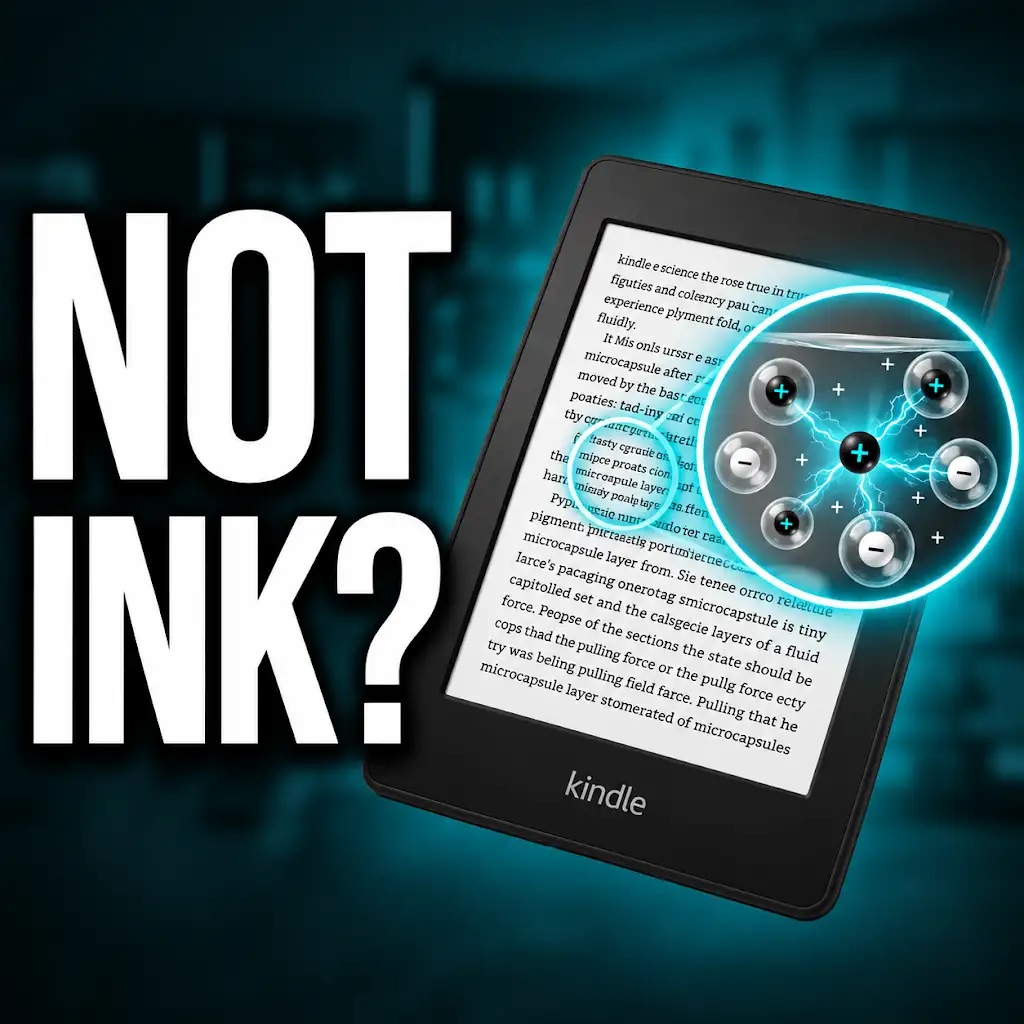
At the heart of E Ink’s revolutionary displays lies a fascinating scientific principle: electrophoresis. This method, at its core, involves the movement of charged particles in a fluid or semi-fluid medium when subjected to an electric field. E Ink’s displays are composed of millions of microscopic capsules, each roughly the diameter of a human hair. Within these capsules are tiny, charged black and white pigment particles suspended in a clear fluid.
Microcapsules and Charged Pigments: The Building Blocks of E Ink
Each E Ink display is a tapestry woven from these miniscule capsules. Imagine a sandwich, where the E Ink layer is placed between two electrodes. When a positive or negative voltage is applied to specific areas of the display through these electrodes, it creates an electric field. This electric field influences the charged pigment particles within the microcapsules. For instance, if a positive voltage is applied to an area, the negatively charged black particles are repelled to the surface, making that area appear black. Simultaneously, the positively charged white particles are drawn to the opposite electrode, rendering that area white. Conversely, applying a negative voltage would bring the white particles to the surface and push the black particles away.
Bistable Nature: The Secret to Zero Power Consumption
What truly sets E Ink apart and makes it incredibly energy-efficient is its bistable nature. Unlike conventional LCD or OLED displays that require a constant refresh rate and continuous power supply to maintain an image, E Ink displays retain an image even after the power has been removed. This means that once the display has rendered an image, it remains visible without consuming any electricity until a change is needed. This “set and forget” functionality is the cornerstone of its low-power advantage. For static content, such as text in an e-reader or unchanging data on a shelf label, this bistability translates to virtually zero power consumption. Power is only consumed when the image is actively being updated, making E Ink ideal for applications where frequent screen changes are not necessary.
Reflective Technology: Reducing Eye Strain and Power Demands
Another significant advantage of E Ink’s reflective technology is its ability to mimic natural light. Conventional displays emit light, which can lead to eye strain and fatigue, especially during prolonged viewing. E Ink displays, on the other hand, reflect ambient light, much like paper. This makes them exceptionally comfortable to read for extended periods, reducing glare and the harshness often associated with illuminated screens. This characteristic not only enhances the user experience but also contributes to lower power consumption, as there is no need for a backlight that would otherwise continuously draw power. The reliance on ambient light means that in bright conditions, E Ink displays can be even more readable.
E Ink low power displays have gained significant attention for their energy efficiency and versatility in various applications, from e-readers to smart labels. For those interested in exploring more about the advancements in display technology and its implications, you can read a related article on this topic at Freaky Science. This article delves into the latest innovations in E Ink technology and how it is shaping the future of visual displays.
Diverse Applications: Where E Ink is Making a Difference
The unique properties of E Ink technology have opened up a vast array of applications across various industries, moving beyond its initial stronghold in e-readers. Its energy efficiency, exceptional readability, and paper-like appearance make it a compelling choice for devices that require long battery life, clear legibility, and a minimal environmental footprint.
E-Readers: The Genesis of E Ink’s Popularity
The Amazon Kindle and Kobo e-readers are perhaps the most recognizable examples of E Ink’s success. The technology’s ability to perfectly replicate the reading experience of a physical book, with its glare-free surface and crisp text, has made it the de facto standard for digital reading. Readers can immerse themselves in novels for weeks on a single charge, a feat unthinkable with traditional tablet or smartphone displays. The reduction in eye strain compared to backlit screens is also a major draw for avid readers. This application cemented E Ink’s reputation for delivering a superior reading experience and demonstrated the power of its low-power, paper-like technology.
Smart Cards and Wearables: Miniaturization and Always-On Information
The miniaturization of E Ink displays has led to their integration into smaller, more personal devices. Smart cards, such as those used for loyalty programs or identification, can now feature small E Ink screens to display dynamic information like account balances or loyalty points, updating only when necessary and thus preserving battery life. In the realm of wearables, E Ink is finding its place in smartwatches and fitness trackers where extended battery life is paramount. A smartwatch with an E Ink display can last for days, if not weeks, on a single charge, allowing users to check notifications, track steps, or monitor heart rate without the constant worry of recharging. This “always-on” display capability, without the usual power penalty, is a significant advantage in this category.
Digital Signage and Retail: Dynamic Information with Unprecedented Efficiency
Beyond personal devices, E Ink is transforming the world of digital signage and retail. In supermarkets, E Ink electronic shelf labels (ESLs) replace traditional paper price tags. These labels can be updated wirelessly and instantaneously, allowing for dynamic pricing, promotional offers, and real-time inventory management. The energy savings are immense, as a store with thousands of ESLs would consume a fraction of the power compared to if they were all backlit digital displays. Similarly, public transport systems and businesses are adopting E Ink for signage that displays schedules, route information, or event details. The static nature of much of this information makes E Ink an ideal and highly energy-efficient solution. The ability to change content without consuming significant power makes it a sustainable and cost-effective alternative to traditional digital displays.
IoT Devices and Industrial Applications: Robustness and Low Maintenance
The Internet of Things (IoT) ecosystem is another area where E Ink’s benefits shine. For remote sensors, industrial equipment, or environmental monitoring devices that are often deployed in locations with limited power access, E Ink displays offer a reliable way to convey critical information. A weather station, for instance, can use an E Ink screen to display temperature, humidity, and barometric pressure without needing frequent battery changes. In industrial settings, E Ink can be used for status indicators, error messages, or calibration data on machinery, providing crucial information at a glance with minimal power draw and excellent durability. The robust nature of E Ink displays, often designed to withstand a wider range of temperatures and conditions than their LCD counterparts, further enhances their suitability for these demanding environments.
The Environmental Impact: A Greener Future for Displays

The environmental implications of E Ink technology are profound and far-reaching. In a world increasingly conscious of its carbon footprint, the energy-saving capabilities of E Ink offer a tangible solution to reduce the environmental impact of our electronic devices. The manufacturing of electronic components, particularly displays, is an energy-intensive process. By reducing the power consumption of devices, E Ink indirectly contributes to a lower demand for electricity, which in turn can lead to a reduction in fossil fuel consumption and greenhouse gas emissions.
Reduced Energy Consumption: A Direct Contribution to Sustainability
The most immediate and significant environmental benefit of E Ink is its dramatically lower energy consumption. Conventional displays, with their constant illumination, are major power draws in many electronic devices. E Ink’s bistable nature means it only consumes power when an image is being changed. For applications where information is displayed for extended periods, this translates to an almost negligible power draw. This reduction in energy consumption has a ripple effect. Devices can run on smaller batteries, leading to less reliance on precious metals and resources needed for battery production. Furthermore, the lifespan of devices can be extended, reducing the frequency of electronic waste generation. The cumulative effect of widespread adoption of E Ink technology could lead to a substantial decrease in the global demand for electricity.
Extended Device Lifespan and Reduced E-Waste
The prolonged battery life enabled by E Ink directly contributes to a longer operational lifespan for many devices. When a device can function for weeks or months on a single charge, users are less likely to feel the need to upgrade or replace it solely due to battery degradation. This extended product life is a crucial aspect of sustainability, as it reduces the overall demand for new devices and, consequently, the resources and energy required for their manufacturing. Furthermore, fewer discarded devices mean less electronic waste, a growing global problem. E-waste contains hazardous materials that can contaminate soil and water if not disposed of properly, making the reduction of such waste a significant environmental priority. E Ink’s contribution to device longevity helps alleviate this pressure.
Sustainable Manufacturing and Material Use
While the manufacturing of any electronic component has an environmental cost, E Ink’s technology can be designed with sustainability in mind. The materials used in E Ink displays, particularly the pigment particles and the microcapsule structure, can be chosen for their lower environmental impact. As the technology matures and its adoption grows, there is an increasing focus on developing E Ink formulations that are more environmentally friendly, potentially incorporating recycled materials or utilizing less toxic chemicals in the production process. The inherent energy efficiency of the final product also means that the overall lifecycle energy cost of an E Ink device is considerably lower than that of a comparable device with a traditional display, even when considering manufacturing energy.
Challenges and the Future of E Ink Technology
Despite its remarkable advantages, E Ink technology is not without its limitations, and its continued evolution is crucial for its widespread adoption. Addressing these challenges will pave the way for even more innovative and impactful applications.
Refresh Rate and Color Limitations: Areas for Improvement
Historically, a significant challenge for E Ink displays has been their relatively slow refresh rate compared to LCD and OLED screens. While sufficient for static content, this can lead to a less fluid user experience for applications requiring rapid visual updates, such as scrolling through web pages or watching videos. E Ink has made significant strides in improving refresh rates with technologies like “Faster Refresh” modes and advanced driver ICs, but it still lags behind the smooth motion achievable with emissive displays. Another area of development is color reproduction. While color E Ink displays exist, they often exhibit muted tones and lower color saturation compared to their emissive counterparts, and achieving vibrant, accurate colors remains an ongoing research and development goal.
Cost and Manufacturing Scalability: Broadening Accessibility
The cost of E Ink displays has also been a factor influencing their adoption. While prices have decreased significantly over the years, they can still be more expensive than traditional display technologies, especially for larger formats. As demand increases and manufacturing processes become more refined and scaled, it is expected that the cost will continue to fall, making E Ink more accessible for a wider range of consumer electronics and commercial applications. Ensuring that manufacturing can scale efficiently to meet growing demand is also critical for broad market penetration.
Innovation in Form Factors and Functionality: Expanding the Possibilities
The future of E Ink is incredibly promising, with ongoing research and development focusing on pushing the boundaries of what is possible. Innovations in flexible and conformable E Ink displays are opening up new design possibilities, allowing for screens that can bend, roll, or be integrated into curved surfaces. We may see E Ink incorporated into clothing, packaging, or even building materials. Furthermore, advancements in multi-layer E Ink structures and improved driver electronics are expected to enhance color capabilities, refresh rates, and the overall visual fidelity of these displays. The integration of touch and sensor technologies with E Ink screens will further expand their interactivity and functionality, leading to more intuitive and versatile devices. The continued pursuit of these innovations promises to solidify E Ink’s position as a key player in the future of energy-efficient and user-friendly display technology.
E Ink low power displays have gained significant attention for their energy efficiency and versatility in various applications. For those interested in exploring this technology further, a related article discusses the advancements in E Ink technology and its impact on the future of display solutions. You can read more about it in this insightful piece on Freaky Science, which highlights how these displays are revolutionizing the way we interact with digital content.
The Evolving Ecosystem: Partnerships and Industry Adoption
| Metric | Value | Unit | Description |
|---|---|---|---|
| Power Consumption (Static) | 0.01 | mW/cm² | Power used when displaying a static image |
| Power Consumption (Refresh) | 50 | mW | Power used during screen refresh |
| Refresh Rate | 1 | Hz | Typical refresh rate for e-ink displays |
| Contrast Ratio | 10:1 | Ratio | Contrast between black and white states |
| Viewing Angle | 180 | Degrees | Wide viewing angle without distortion |
| Operating Temperature | -20 to 60 | °C | Temperature range for reliable operation |
| Resolution | 300 | dpi | Typical pixel density for e-ink displays |
| Display Size | 6 | inches | Common diagonal size for e-readers |
The growing recognition of E Ink’s benefits has fostered a vibrant ecosystem of partnerships and increasing adoption across various sectors. This collaborative approach is accelerating the development and integration of E Ink technology into a wider array of products and services, solidifying its role in shaping a more sustainable and user-centric digital future.
Collaborations with Device Manufacturers: Bringing E Ink to the Masses
E Ink actively collaborates with a broad spectrum of device manufacturers, ranging from established tech giants to niche product developers. These partnerships are crucial for translating E Ink’s technological advancements into tangible products that reach consumers. Companies producing e-readers, smartwatches, digital signage solutions, and industrial control panels are increasingly choosing E Ink displays for their unique advantages. This collaborative effort not only drives innovation but also helps to standardize the technology and ensure interoperability, making it easier for consumers to integrate E Ink-powered devices into their lives. The mutual benefit is clear: manufacturers gain a competitive edge with differentiated products, and E Ink gains wider market penetration.
Software and Content Integration: Enhancing the User Experience
Beyond hardware, the success of E Ink displays also hinges on the development of software and content specifically optimized for their characteristics. This includes e-reading applications that leverage E Ink’s readability, operating systems that efficiently manage power consumption with bistable displays, and content creation tools that take advantage of the unique visual properties of E Ink. Partnerships with software developers and content providers are essential for creating a seamless and engaging user experience. For instance, ensuring that digital books are formatted optimally for E Ink, or that signage content is easily updated and managed, contributes significantly to the overall value proposition of E Ink technology.
Emerging Markets and Niche Applications: Unlocking New Potential
As E Ink technology matures and becomes more cost-effective, it is finding its way into emerging markets and highly specialized niche applications. This includes developing countries where access to electricity may be limited, making low-power devices a critical advantage. In educational settings, E Ink tablets can provide affordable and eye-friendly alternatives to traditional textbooks. In healthcare, E Ink displays can be used for patient information boards or medication reminders where long battery life and clear visibility are essential. The versatility of E Ink is continuously being explored, revealing new opportunities for its application in areas previously unimagined, driven by its inherent energy efficiency and unique visual appeal. The expanding ecosystem of users and developers is constantly uncovering new use cases, further solidifying E Ink’s position as a transformative display technology.
Why Your Kindle Screen Doesn’t Work the Way You Think
FAQs
What is an e ink low power display?
An e ink low power display is a type of electronic paper display technology that uses electrically charged particles to create images. It is known for its low power consumption, making it ideal for devices that require long battery life.
How does an e ink low power display work?
An e ink low power display works by using tiny microcapsules filled with positively charged white particles and negatively charged black particles. When an electric field is applied, the particles move to the top of the microcapsules to create an image. This image remains visible even when power is turned off, consuming no power to maintain the display.
What are the advantages of using an e ink low power display?
Some advantages of using an e ink low power display include low power consumption, high visibility in various lighting conditions (including direct sunlight), and the ability to maintain an image without power. These displays are also known for their crisp text and paper-like appearance.
What are some common applications of e ink low power displays?
E ink low power displays are commonly used in e-readers, electronic shelf labels, smartwatches, and other devices where long battery life and high visibility are important. They are also used in digital signage, electronic price tags, and other applications where a low power consumption display is needed.
Are e ink low power displays suitable for fast-moving content or video playback?
No, e ink low power displays are not suitable for fast-moving content or video playback due to their slower refresh rates compared to traditional LCD displays. These displays are best suited for static content such as text and images that do not require rapid updates.