
The retail landscape is in constant flux, driven by technological advancements that aim to enhance customer experience, streamline operations, and boost profitability. For decades, static printed signage has been the ubiquitous presence in brick-and-mortar stores, communicating everything from product information and prices to promotions and store navigation. However, this traditional approach, while familiar, suffers from significant drawbacks: it’s inflexible, costly to update, and environmentally taxing. Enter E Ink, a display technology traditionally associated with e-readers, which is now revolutionizing in-store signage solutions, offering a dynamic, sustainable, and cost-effective alternative that promises to reshape the retail environment.
The Limitations of Traditional Retail Signage
For years, the retail industry has relied heavily on printed materials for its in-store communication needs. This includes everything from large format posters and shelf-edge labels to price tags and promotional banners. While these printed signs have served their purpose, their inherent limitations have become increasingly apparent in the face of evolving consumer expectations and the relentless pursuit of operational efficiency. The rigidity of printed materials translates directly into operational challenges for retailers. Changing a price, updating a promotion, or correcting an error requires a multi-step process. This often involves designing new artwork, sending it to a printer, waiting for production, and then physically replacing the old signage across potentially hundreds or thousands of locations. The time lag can be substantial, meaning that sales opportunities might be missed due to outdated information, or customers could be frustrated by inaccurate pricing. Furthermore, the cost associated with this process is not insignificant. The expense of printing, shipping, and labor for frequent updates can quickly accumulate, especially for large retail chains. This financial burden can be particularly challenging for smaller businesses or during periods of economic uncertainty. Beyond the immediate financial costs, the environmental impact of such a high volume of printed materials is also a growing concern. Paper production consumes vast amounts of resources, including trees, water, and energy, and the disposal of outdated signage contributes to landfill waste. In an era where sustainability is no longer a niche concern but a mainstream expectation, retailers are under increasing pressure to adopt more environmentally friendly practices. The static nature of printed signs also fails to capitalize on the potential for dynamic and engaging customer interactions. In a digital age, consumers are accustomed to personalized experiences and real-time information. Printed signs, by their very definition, are static and unable to adapt to changing circumstances or provide interactive elements. This disconnect can lead to a less engaging and less informative shopping experience, potentially driving customers to seek alternatives.
The Inflexibility of Static Materials
The fundamental characteristic of printed signage is its immutability. Once a sign is printed, its content is fixed. This immobility presents a significant hurdle for retailers needing to respond quickly to market dynamics. Price changes, for instance, are a constant in retail. Whether due to competitor actions, supply chain fluctuations, or promotional events, prices need to be updated frequently. With printed price tags, this process is cumbersome and time-consuming, often requiring manual intervention at each individual item or shelf. Similarly, promotional campaigns, which are crucial for driving sales and attracting customers, often have specific start and end dates. If a promotion is extended or shortened, or if a new, more compelling offer arises, the entire stock of printed promotional materials may need to be replaced. This not only incurs immediate costs but also creates logistical nightmares. The time it takes to design, print, and distribute new signage means that retailers can lose valuable selling days, or worse, alienate customers with outdated or incorrect promotional information. In the fast-paced world of retail, where agility is a key competitive advantage, this inherent inflexibility of printed signage can be a significant handicap. It restricts a retailer’s ability to adapt to evolving consumer preferences, capitalize on fleeting market opportunities, or even correct errors in a timely manner.
The Cost Burden of Printing and Distribution
The financial implications of traditional signage are substantial and often underestimated. Beyond the initial design costs, the actual printing of signs can be a significant expense. The volume of signage required for even a moderately sized retail store is considerable, encompassing everything from aisle markers and department signs to product labels and special offer displays. As stores scale up in size or become part of a larger chain, these printing costs escalate dramatically. Furthermore, the process doesn’t end with the printing. The distribution of these physical signs to individual store locations adds another layer of expense. Shipping, handling, and the labor required to place the new signage all contribute to the overall cost. For retailers with multiple branches spread across different geographic regions, these logistical challenges can be particularly complex and expensive to manage. The need for frequent updates, as discussed previously, amplifies these costs. Every time a price changes or a promotion is altered, the entire cycle of design, print, and distribution must be repeated. This recurrent expenditure can represent a significant portion of a retailer’s operational budget, diverting resources that could otherwise be invested in product development, marketing, or customer service. The financial pressure intensifies during periods of economic volatility, where every dollar counts. Retailers are constantly seeking ways to optimize their spending, and the significant, often recurring, cost of traditional signage presents an obvious area for potential savings.
Environmental Concerns of Paper Waste
The environmental footprint of traditional retail signage is a growing concern for both consumers and businesses. The vast quantities of paper consumed in printing signs contribute to deforestation, water pollution, and greenhouse gas emissions associated with paper production. Once printed, these signs have a limited lifespan, especially those advertising time-sensitive promotions or prices. When outdated, they are typically discarded, adding to landfill waste. This cycle of production and disposal is unsustainable in the long run. As environmental consciousness becomes more prevalent, consumers are increasingly favouring businesses that demonstrate a commitment to sustainability. Retailers who continue to rely heavily on disposable printed signage may find themselves at a disadvantage, perceived as less responsible or forward-thinking. The pressure to adopt greener practices is mounting from various stakeholders, including investors, regulators, and customers themselves. Moving away from paper-based signage is not just an ethical imperative but also a strategic move that can enhance a brand’s reputation and appeal to a more environmentally aware consumer base. The sheer volume of printed materials generated by the retail sector, from shelf tags to promotional posters, represents a significant waste stream. Finding more sustainable alternatives is therefore crucial for the industry’s long-term viability and its contribution to a healthier planet.
E-ink technology has been making waves in the retail signage industry, offering dynamic and energy-efficient solutions for displaying information. For an in-depth exploration of how e-ink is transforming retail environments, you can read this insightful article on the topic. It discusses the benefits of e-ink displays, including their ability to update content in real-time and their low power consumption. To learn more, visit this article.
The Emergence of E Ink Technology for Signage
Electronic Ink, or E Ink, has emerged as a transformative technology poised to address the shortcomings of traditional retail signage. Initially popularized by its use in e-readers like the Kindle, E Ink displays offer a unique combination of low power consumption, excellent readability in bright light, and a paper-like appearance. These characteristics, once confined to personal reading devices, are now being leveraged to create dynamic, intelligent, and sustainable signage solutions for the retail environment. The core of E Ink technology lies in its bistable nature, meaning it retains an image without requiring continuous power. This is achieved through microscopic capsules containing charged black and white particles that move when an electric field is applied, creating a visible image. Once the particles are in place, they remain there, consuming no power until the image needs to be updated. This fundamental property makes E Ink displays incredibly energy-efficient, a stark contrast to traditional LCD or LED screens that require constant power to maintain an image. The visual qualities of E Ink are also a significant advantage. The displays mimic the appearance of printed paper, offering high contrast and excellent readability even in direct sunlight, a common challenge for conventional digital displays in retail settings. This eliminates glare and improves the viewing experience for customers. Furthermore, E Ink’s low refresh rate, while not suitable for video, is perfectly adequate for static information like prices, product details, and promotional messages. The ability to update these displays remotely and wirelessly opens up a world of possibilities for retailers, allowing for real-time adjustments to pricing, promotions, and inventory information. This dynamic capability not only enhances operational efficiency but also creates new opportunities for customer engagement and personalized experiences.
The Principles of Electronic Ink Display
At its heart, E Ink is a form of electrophoretic display technology. It comprises millions of tiny microcapsules, each roughly the diameter of a human hair. Within each microcapsule are suspended black and white charged particles in a clear fluid. When an electrical charge is applied to the display’s electrodes, these charged particles migrate to the surface of the microcapsule, creating an image. For example, to display black text on a white background, a positive charge is applied to the electrodes beneath the text area, causing the black particles to move to the front. Conversely, to display white, a negative charge is applied, attracting the white particles. The remarkable aspect of this technology is its bistability. Once the particles have moved to form an image, they remain in that position even after the electric field is removed. This means that E Ink displays only consume power when the image is being updated, drastically reducing energy consumption compared to traditional emissive displays like LCD or OLED, which require constant power to emit light. This “always-on” display capability without continuous power draw is a game-changer for battery-powered devices and, as applied to retail signage, leads to significant energy savings and reduced operational costs. The refresh rate of E Ink displays is slower than that of conventional screens, typically taking a few seconds to complete an update. This makes them unsuitable for fast-moving video content but perfectly adequate for the static or semi-static information typically found on retail signage, such as prices, product descriptions, and promotional banners.
Energy Efficiency and Sustainability Advantages
The E Ink technology’s inherent energy efficiency translates directly into significant sustainability benefits for retail operations. Unlike traditional digital displays that consume substantial amounts of electricity to maintain their illumination, E Ink displays draw power only when an image is changed. This means that once a price or a promotional message is displayed, it remains visible indefinitely without consuming any further energy. This drastically reduces the overall electricity consumption of in-store signage, contributing to lower operational costs and a reduced carbon footprint for the retailer. This is particularly impactful for large retail chains with thousands of displays across numerous locations. The cumulative energy savings can be substantial, aligning with corporate sustainability goals and appealing to environmentally conscious consumers. Furthermore, the reduction in energy consumption also means less reliance on fossil fuels for power generation, further contributing to environmental protection. Beyond energy, the shift from paper-based signage to E Ink also addresses the issue of waste. The constant need to print and dispose of paper signs is eliminated. E Ink displays are durable and can be reprogrammed countless times, offering a long-term, reusable solution. This eliminates the waste associated with paper production, printing inks, and landfill disposal, making E Ink a fundamentally more sustainable option for in-store communication. This aligns with the growing consumer demand for brands that prioritize environmental responsibility and can enhance a retailer’s brand image as a conscientious and forward-thinking organization. The long lifespan of E Ink displays also means fewer manufacturing cycles and associated resource consumption over time, further bolstering their sustainability credentials.
Readability and Aesthetic Appeal
One of the most compelling advantages of E Ink displays in a retail environment is their exceptional readability, often described as being similar to paper. This high contrast and glare-free surface ensures that information is easily legible from various viewing angles and under diverse lighting conditions, including bright sunlight. This is a significant improvement over traditional LCD or LED screens, which can suffer from reflections and poor visibility in direct light, often requiring special backlighting that further increases power consumption. The paper-like appearance of E Ink also contributes to a more pleasant and less intrusive visual experience within the store. Instead of the harsh, glowing effect of conventional digital screens, E Ink signage blends more harmoniously with the store’s aesthetic, creating a more natural and inviting atmosphere. This can be particularly important for retailers aiming for a sophisticated or minimalist store design. The visual comfort afforded by E Ink also enhances the customer experience by making it easier and more pleasant to access information. Customers are less likely to struggle to read prices or product details, leading to a smoother and more satisfying shopping journey. This subtle yet significant improvement in visual experience can contribute to increased customer satisfaction and dwell time within the store. The ability to dynamically change the content while maintaining this appealing aesthetic provides retailers with a powerful tool to engage customers without sacrificing the visual ambiance of their store.
Implementing E Ink in Retail Signage Solutions
The integration of E Ink technology into retail signage is not a futuristic concept but a rapidly developing reality. Retailers are exploring and implementing E Ink solutions across various touchpoints within the store, from electronic shelf labels (ESLs) to larger format digital displays. The benefits are multi-faceted, impacting everything from pricing accuracy and operational efficiency to marketing agility and customer engagement. The implementation process typically involves deploying E Ink displays strategically throughout the store, connected to a central management system. This system allows for remote updates, scheduling, and content control, providing retailers with unprecedented flexibility. The adoption of E Ink is paving the way for truly dynamic retail environments, where information can adapt instantaneously to meet the demands of the market and the preferences of customers. This shift represents a significant evolution in how retailers communicate with their audience, moving from static pronouncements to dynamic, responsive conversations.
Electronic Shelf Labels (ESLs)
Electronic Shelf Labels (ESLs) are arguably the most widespread application of E Ink in retail today. These small, digital displays are replacing traditional paper price tags on shelves, offering a multitude of advantages. ESLs can be updated remotely and wirelessly in real-time, ensuring that prices displayed are always accurate and synchronized with the store’s point-of-sale system. This eliminates the costly and time-consuming process of manually changing paper price tags, a significant operational saving for retailers. Beyond price updates, ESLs can also display additional product information, such as ingredients, origin, nutritional facts, or even small promotional messages. This enriches the customer’s shopping experience by providing readily accessible details at the point of decision. Furthermore, ESLs can be used to highlight special offers, clearance items, or new arrivals, drawing customer attention to key products. The ability to dynamically change the appearance of the shelf edge in response to promotions or inventory levels allows for more targeted and effective merchandising. For instance, a retailer could program ESLs to flash a different color or display a special icon when an item is on sale, making it instantly identifiable to shoppers. The energy efficiency of E Ink makes ESLs ideal for battery-powered operation, with some labels lasting for several years on a single battery. This further reduces maintenance requirements and operational costs. The adoption of ESLs also contributes to a cleaner and more organized store appearance, as the clutter of multiple paper tags is replaced by sleek, uniform digital displays.
Interactive Store Directories and Wayfinding
Beyond the shelf edge, E Ink technology is also being deployed for larger format interactive displays, particularly for store directories and wayfinding. In large supermarkets or department stores, navigating can be a challenge for shoppers. E Ink-powered directories can provide dynamic maps of the store layout, allowing customers to locate specific products, departments, or services with ease. These directories can be updated to reflect temporary changes, such as aisle closures or relocated departments, ensuring that the information provided is always current. The interactive nature of these displays allows customers to search for products by name or category, with the system then highlighting the shortest route to their desired location on the map. This not only enhances the customer experience by reducing frustration and saving time but also can indirectly increase sales by guiding shoppers to more areas of the store. The readability of E Ink in ambient store lighting makes these directories user-friendly, avoiding the glare issues common with traditional touchscreens. Furthermore, the low power consumption of E Ink makes these larger displays more sustainable and cost-effective to operate compared to their LED or LCD counterparts. Some E Ink directory solutions can also integrate with mobile applications, allowing customers to plan their shopping trip on their phones and then access detailed directions once inside the store, creating a seamless omni-channel experience. The ability to display promotional messages or featured products on these directories further adds to their marketing value.
Promotional and Informational Displays
E Ink’s versatility extends to a wide range of promotional and informational displays throughout the store. This includes larger format screens positioned at store entrances, end caps, or within specific departments to communicate key messages. These displays can showcase brand advertising, highlight seasonal promotions, provide details about loyalty programs, or convey important store announcements. The ability to change content remotely and schedule updates allows retailers to be highly responsive to market trends and customer behavior. For example, during a sudden heatwave, a retailer could quickly update E Ink displays to promote summer beverages or air conditioning units. Conversely, during colder months, the same displays could be repurposed for winter apparel or heating solutions. This agility in content management is a significant advantage over static printed signage. The paper-like aesthetic of E Ink also lends itself well to in-store brand storytelling. Retailers can use these displays to share information about product origins, sustainability initiatives, or the craftsmanship behind their products, creating a more engaging and informative shopping experience. The low power consumption ensures that these displays can remain on and visible throughout store hours without a significant impact on energy bills. Furthermore, the ability to update content without the need for printing and physical replacement translates into substantial cost savings and reduced waste, aligning with the growing demand for sustainable retail practices. The visual clarity and non-emissive nature of E Ink also make it ideal for sharing detailed product specifications or comparison charts, empowering customers to make informed purchasing decisions.
Benefits and Advantages of E Ink Signage
The adoption of E Ink technology in retail signage brings forth a compelling array of benefits that extend across operational efficiency, cost savings, environmental sustainability, and enhanced customer experience. These advantages collectively contribute to a more agile, responsive, and modern retail environment, positioning businesses that embrace this technology for greater success in a competitive market. By moving away from outdated and resource-intensive methods, retailers can unlock new potentials for growth and customer engagement. The transformative impact of E Ink on the retail sector is multifaceted, offering solutions that address long-standing challenges while opening up new avenues for innovation.
Increased Operational Efficiency
The primary driver for many retailers adopting E Ink signage is the significant boost in operational efficiency it provides. The ability to update prices, promotions, and product information wirelessly and remotely from a central location eliminates the labor-intensive and time-consuming tasks associated with manual updates of printed signage. This real-time control allows for immediate adjustments to pricing strategies in response to competitor actions, inventory levels, or promotional effectiveness. For example, if a product is running low in stock, its price could be automatically reduced on ESLs to encourage sales and clear inventory. Similarly, during peak hours, prices could be dynamically adjusted for certain items to manage demand. The reduction in manual labor required for signage management frees up store associates to focus on customer service, inventory replenishment, and other value-adding activities, thereby improving overall store productivity. Furthermore, the elimination of paper signage drastically reduces the logistical complexities of managing, distributing, and replacing printed materials across multiple store locations. This streamlining of processes leads to fewer errors, reduced downtime, and a more responsive retail operation. The ability to schedule content changes in advance also allows for proactive campaign management, ensuring that promotions are launched precisely when intended. This level of control and agility is invaluable in today’s fast-paced retail environment.
Significant Cost Reductions
The cost savings associated with E Ink signage are substantial and accrue over time. While the initial investment in E Ink displays may be higher than traditional printed signs, the long-term operational cost savings are undeniable. The elimination of recurring printing and distribution costs for paper labels and promotional materials represents a significant reduction in expenditure. Retailers no longer need to account for the expenses of paper, ink, printing services, and the logistics of physically transporting signage to individual stores. The reduced labor costs associated with manual price changes and signage updates further contribute to overall savings. Moreover, the energy efficiency of E Ink displays leads to lower electricity bills. While not as significant as the savings from eliminating printing, the cumulative reduction in energy consumption across a large retail network can be substantial. The durability and long lifespan of E Ink displays also mean that they do not require frequent replacement, unlike printed materials which can be easily damaged or become outdated. This reduces the need for ongoing capital expenditure on signage hardware. The ability to repurpose E Ink displays for various campaigns without needing to reprint content also offers inherent cost-effectiveness. For example, a display used for a summer promotion can easily be reprogrammed for a fall sale, maximizing its utility and return on investment.
Enhanced Customer Experience and Engagement
E Ink signage contributes to a more positive and engaging customer experience in several ways. Accurate and up-to-date pricing is paramount for customer trust. ESLs eliminate price discrepancies between the shelf and the checkout, reducing customer frustration and potential disputes. The clarity and readability of E Ink displays, even in challenging lighting conditions, ensure that product information and pricing are easily accessible, empowering customers to make informed purchasing decisions. Interactive directories and wayfinding systems powered by E Ink help customers navigate the store more efficiently, saving them time and reducing stress. The ability to display dynamic promotional messages and highlight special offers can capture customer attention and drive impulse purchases. Furthermore, the clean and modern aesthetic of E Ink displays can contribute to a more pleasant shopping environment. As retailers increasingly embrace personalization, E Ink can be a platform for delivering targeted promotions or product recommendations based on customer loyalty data or real-time store traffic. This moves beyond a one-size-fits-all approach to signage, creating a more tailored and engaging experience. The enhanced information availability also caters to the growing consumer desire for transparency regarding product sourcing, ingredients, and sustainability efforts.
Improved Merchandising and Marketing Agility
The dynamic nature of E Ink signage offers retailers unprecedented agility in their merchandising and marketing efforts. Prices can be adjusted in real-time to match competitor pricing, respond to inventory levels, or implement dynamic pricing strategies based on demand. Promotions can be launched, modified, or terminated with immediate effect across all locations, allowing retailers to capitalize on fleeting market opportunities or react quickly to competitor campaigns. This agility enables retailers to create more responsive and effective sales strategies. For example, if a particular product is underperforming, its price or promotional messaging can be instantly altered to boost sales. Similarly, if a new product is launched, its introduction can be accompanied by immediate and eye-catching signage changes. The ability to schedule content changes in advance also allows for sophisticated campaign planning, ensuring that the right messages are displayed at the right time to maximize impact. This dynamic approach to merchandising moves away from rigid, long-term campaigns towards more fluid and data-driven strategies. Retailers can use E Ink displays to test different promotional messages or pricing strategies and quickly analyze their effectiveness, iterating and optimizing their approach in near real-time. This level of responsiveness is a significant competitive advantage in the ever-evolving retail landscape.
E Ink technology is revolutionizing retail signage by providing dynamic and eye-catching displays that can easily be updated in real-time. This innovation not only enhances customer engagement but also streamlines inventory management and pricing updates. For a deeper understanding of how E Ink is transforming the retail landscape, you can explore this insightful article on Freaky Science, which delves into the various applications and benefits of this cutting-edge technology in stores.
Challenges and Future Outlook of E Ink Signage
| Metric | Value | Notes |
|---|---|---|
| Power Consumption | 0.01 W (static display) | Consumes power only when updating content |
| Display Size | 6″ to 32″ | Common sizes used in retail signage |
| Resolution | 200 – 300 dpi | High enough for clear text and images |
| Update Speed | 1 – 3 seconds | Time taken to refresh the display |
| Operating Temperature | -20°C to 50°C | Suitable for indoor and some outdoor environments |
| Battery Life | Up to 5 years (with typical updates) | Depends on update frequency and size |
| Visibility | Excellent in direct sunlight | No backlight required |
| Color Options | Black, White, Red (limited) | Some models support limited color |
| Cost per Unit | Varies by size and features | Generally higher initial cost but lower maintenance |
While the benefits of E Ink technology for retail signage are compelling, its widespread adoption is not without its challenges. Addressing these hurdles and understanding the future trajectory of this technology will be crucial for its continued growth and impact on the retail sector. The evolution of E Ink, coupled with advancements in supporting software and hardware, promises an even more integrated and intelligent future for in-store communication.
Implementation Hurdles and Cost Considerations
Despite the long-term cost savings, the initial investment in E Ink hardware, such as ESLs and larger display units, can be a barrier for some retailers, particularly small to medium-sized businesses. The cost of the displays themselves, coupled with the necessary networking infrastructure and management software, requires careful budgetary planning. Ensuring seamless integration with existing point-of-sale (POS) systems and inventory management software can also present technical challenges, requiring significant IT resources and expertise. The development of user-friendly management platforms is crucial to ensure that retailers can effectively leverage the technology without requiring highly specialized technical skills. Furthermore, the limited color capabilities of current E Ink technology, while improving, may still be a consideration for retailers who rely heavily on vibrant, full-color graphics for certain types of promotions or branding. While monochrome or limited color options are sufficient for most pricing and informational needs, some marketing campaigns might benefit from richer visual palettes. The maintenance and potential repair of E Ink displays, although generally robust, also need to be factored into the overall cost of ownership.
Technological Advancements and Future Potential
The future of E Ink in retail signage is incredibly promising, driven by continuous technological advancements. E Ink is actively working on improving color rendering capabilities, with new generations of color E Ink displays offering more vibrant and wider color gamuts, making them suitable for a broader range of applications. The refresh rates are also gradually improving, although they are unlikely to rival traditional displays for video content. Innovations in battery technology and power management are also extending the lifespan of battery-powered E Ink displays, further reducing maintenance requirements and operational costs. Furthermore, the integration of E Ink with other technologies, such as IoT sensors and AI-powered analytics, will unlock new possibilities. Imagine E Ink displays that dynamically adjust pricing based on real-time foot traffic, inventory levels, or even external factors like weather. The development of more sophisticated content management systems will enable personalized messaging at the shelf edge, tailored to individual customer preferences or loyalty program status. The convergence of E Ink with augmented reality (AR) could also lead to innovative in-store experiences, where digital information overlaid on E Ink displays provides interactive product details or virtual try-ons. The trend towards a more connected and intelligent retail environment will undoubtedly see E Ink playing a central role in delivering dynamic, personalized, and sustainable in-store communications.
The Evolving Retail Ecosystem
The rise of E Ink signage is not happening in isolation but is part of a broader evolution of the retail ecosystem. As retailers strive to create seamless omnichannel experiences, E Ink plays a crucial role in bridging the gap between the digital and physical shopping environments. The ability to synchronize pricing and promotions across online and in-store platforms ensures a consistent brand message and customer journey. E Ink can also be integrated with mobile apps, allowing customers to receive personalized offers or product information directly on their smartphones as they browse the aisles, further enhancing engagement. The data generated by E Ink systems, such as product interaction or pricing effectiveness, can be fed into retail analytics platforms, providing valuable insights for optimizing store layouts, product placement, and marketing strategies. This data-driven approach to retail is becoming increasingly important for success. As the lines between online and offline shopping continue to blur, E Ink’s ability to provide dynamic, real-time information in a visually appealing and sustainable manner makes it an indispensable tool for retailers looking to thrive in this evolving landscape. It empowers them to be more responsive, more efficient, and more customer-centric than ever before, ultimately redefining the in-store experience.
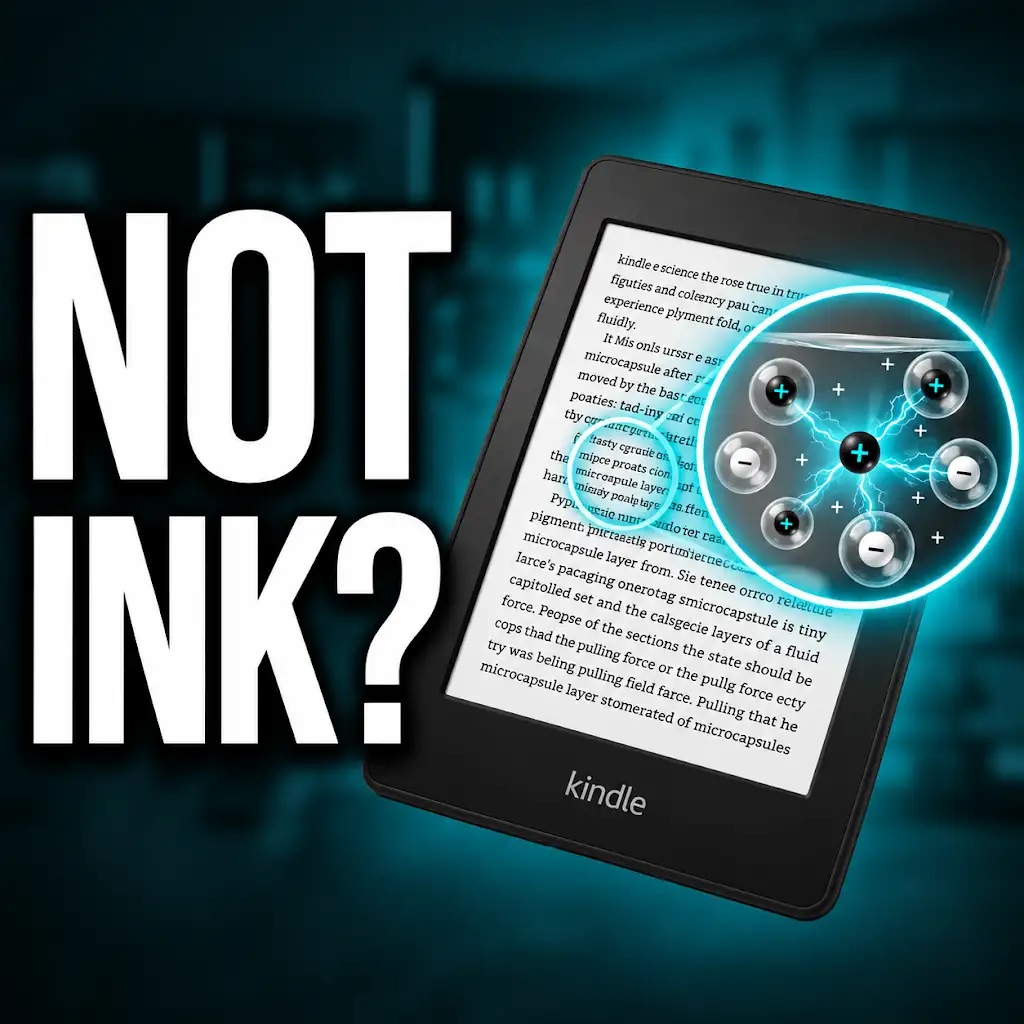
Why Your Kindle Screen Doesn’t Work the Way You Think
FAQs
What is e ink technology in retail signage?
E ink technology in retail signage refers to the use of electronic ink displays that mimic the appearance of traditional paper. These displays are energy-efficient, easy to read in various lighting conditions, and can be updated remotely.
What are the benefits of using e ink in retail signage?
Some benefits of using e ink in retail signage include low power consumption, high visibility in sunlight, flexibility in design, and the ability to update content remotely. E ink displays also have a long lifespan and are durable.
How does e ink technology differ from traditional LCD displays in retail signage?
E ink technology differs from traditional LCD displays in retail signage in terms of energy efficiency, readability in direct sunlight, and the ability to maintain an image without power. E ink displays do not emit light, making them more comfortable for extended viewing.
Can e ink displays be used for interactive retail signage?
While e ink displays are primarily used for static content in retail signage, there are interactive options available. Some e ink displays can support touch functionality for interactive experiences, such as product browsing or information retrieval.
Are there any limitations to using e ink technology in retail signage?
Some limitations of using e ink technology in retail signage include slower refresh rates compared to LCD displays, limited color options, and higher initial costs. Additionally, e ink displays may not be suitable for applications requiring real-time updates or dynamic content.