
The Illusion of Paper: E-Ink’s Foundation for Crisp Text
E-readers have revolutionized the way many people consume literature and information, offering a portable library in a sleek, lightweight device. At the heart of this transformation lies E-Ink technology, a display innovation that mimics the appearance of ink on paper with remarkable fidelity. This seemingly simple yet sophisticated technology is responsible for the crisp, clear text that makes extended reading sessions comfortable and enjoyable. Understanding how E-Ink achieves this clarity requires delving into its fundamental principles, from the microscopic electrophoretic particles to the careful control of light and contrast. The magic isn’t in emitting light, as with traditional screens, but in manipulating existing light to create a stable, reflective image, thus fostering the illusion of traditional print. This fundamental difference is the bedrock upon which E-Ink’s renowned readability is built.
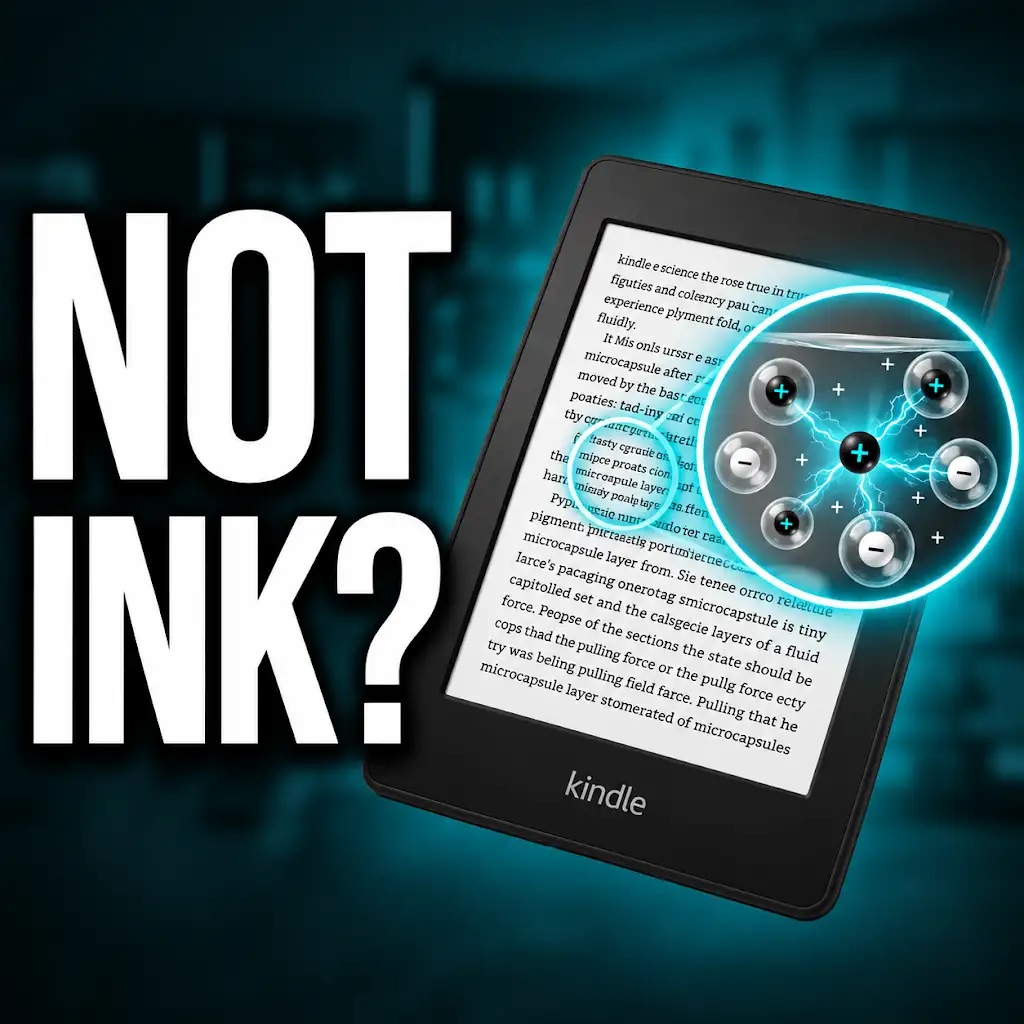
E-Ink’s core innovation is its electrophoretic display (EPD) technology. Unlike LCD or OLED screens that emit light, E-Ink displays are reflective, meaning they rely on ambient light to be seen. This characteristic is crucial for mimicking the natural appearance of ink on paper. The display itself is composed of millions of tiny microcapsules, each typically about the diameter of a human hair. Within these microcapsules are even smaller particles, usually white positively charged particles and black negatively charged particles, suspended in a clear fluid. These particles are the active agents that form the text and images on the screen. The arrangement and movement of these charged particles are meticulously controlled by a matrix of electrodes located beneath the microcapsules.
The Microscopic Dance of Charged Particles
The creation of crisp text on an E-Ink screen is a direct result of the precise control over these microscopic particles. When an electric field is applied to a specific area of the display, it influences the movement of the charged particles within the microcapsules. For instance, to form a black pixel, a negative charge is applied to the electrodes below that area. This repels the negatively charged black particles and attracts the positively charged white particles to the bottom of the microcapsule, effectively pushing the black particles to the surface. Conversely, to form a white pixel, a positive charge is applied, driving the black particles to the bottom and bringing the white particles to the surface. This selective movement of black and white particles creates the contrast necessary for displaying legible characters.
The key to E-Ink’s crispness lies in the bistable nature of these particles. Once positioned, they remain in that state without requiring continuous electrical power. This means that once an image or text is rendered, it “sticks” to the screen until the electrical field is changed. This power efficiency contributes to the long battery life of E-readers, but it also plays a role in text clarity. Unlike emissive displays that constantly refresh to maintain an image, E-Ink only consumes power when the image is being updated. This static display of text prevents the subtle flickering or ghosting that can occur with other display technologies, further enhancing the perception of sharpness and stability.
The Role of Electrodes in Pixel Formation
The underlying electrode grid is the conductor that translates digital information into physical particle movement. This grid is a finely tuned matrix of transparent electrodes, typically made of Indium Tin Oxide (ITO). Each electrode corresponds to a specific pixel on the screen. By applying precise voltages to these electrodes, the E-Ink controller can direct the electrophoretic particles with remarkable accuracy. This granular control ensures that each pixel is illuminated or darkened independently, allowing for the formation of intricate shapes and sharp edges that define legible text. The density and precision of this electrode grid are direct contributors to the resolution and overall clarity of the displayed text. Higher resolution displays have a greater number of electrodes, allowing for more detailed rendering of characters and finer lines.
The process of displaying text involves the E-Ink controller interpreting the digital data for each character and translating it into a series of electrical signals sent to the electrode grid. This creates localized electric fields that orchestrate the movement of the black and white particles. The contrast between the black text and the white background is exceptionally high, closely mimicking the appearance of printed ink. This high contrast ratio is another critical factor in achieving crisp text, as it makes the boundaries between characters and the background extremely well-defined.
In exploring the advancements in eReader technology, it’s fascinating to see how manufacturers are innovating display features to enhance user experience. For a deeper understanding of this topic, you can read a related article that delves into the various display technologies used in eReaders, including E Ink and color displays. This article provides insights into how these innovations impact readability and battery life. To learn more, visit this link.
Optimizing Contrast and Reflectivity for Readability

Beyond the fundamental mechanics of particle movement, E-Ink manufacturers employ several sophisticated techniques to optimize contrast and reflectivity, directly impacting the perceived crispness of the text. These optimizations are not just about making the text dark and the background light; they are about ensuring that this contrast is maintained under various lighting conditions and that the display reflects ambient light in a way that is pleasing to the eye, minimizing glare and maximizing legibility. Achieving a balance between these factors is an ongoing engineering challenge and a testament to the iterative improvements in E-Ink technology.
The inherent reflectivity of E-Ink displays, while a key advantage for mimicking paper, also presents challenges. Without a backlight, the display relies entirely on ambient light. This means that in low-light conditions, the text can become harder to read. To address this, modern E-readers often incorporate front-lighting systems. These systems employ low-power LEDs positioned along the edges of the screen, casting light downwards onto the display surface. This light is diffused and carefully directed to illuminate the text without causing excessive glare or affecting the overall color temperature of the display. This front-lighting is a crucial addition, as it allows users to read comfortably in dimly lit environments, effectively creating their own ambient light source and ensuring consistent text clarity regardless of the surrounding illumination.
The Art of Contrast Enhancement
Contrast enhancement is a multifaceted approach in E-Ink technology. One significant aspect is the careful selection and treatment of the microcapsule fluid and the charged particles themselves. The refractive indices of these components are engineered to maximize the scattering of ambient light from the white particles, resulting in a bright, paper-like background. Simultaneously, the black particles are designed to absorb light efficiently, creating a deep, dark contrast for the text. The precise formulation of these materials plays a vital role in achieving the desired optical properties.
Furthermore, display firmware and software algorithms are employed to dynamically adjust contrast levels. These algorithms can analyze the content being displayed and make subtle adjustments to the electrical fields to enhance the perceived contrast. For example, in a document with very fine print, the system might subtly increase the intensity of the electric field to ensure the black particles are maximally clumped together, creating sharper edges for the text. Conversely, in images with subtle gradients, the algorithms might be less aggressive to preserve detail. This intelligent contrast adjustment ensures that the text remains crisp and legible across a wide range of content types.
Mitigating Glare and Improving Viewing Angles
Glare can be a significant impediment to readability, especially when reading outdoors in bright sunlight. E-Ink displays are inherently less prone to glare than glossy LCD screens due to their matte finish. However, manufacturers also employ specific surface treatments to further reduce reflections. These treatments often involve micro-texturing the display’s protective layer, which scatters incoming light in multiple directions, effectively diffusing reflections. This diffusion minimizes the intensity of any specular reflections, making it easier to read the screen without squinting or repositioning the device.
Improving viewing angles is another area of continuous development. While E-Ink displays generally offer wide viewing angles, there can be subtle shifts in contrast or color saturation when viewed from extreme angles. Manufacturers work to minimize these effects through the careful engineering of the microcapsule structure and the alignment of the particles. Advanced E-Ink screens, such as E-Ink Kaleido and E-Ink Gallery, have also introduced color capabilities, further enhancing the viewing experience. While the primary focus here is on text, the principles of optimal light reflection and contrast control extend to color reproduction as well, ensuring that any textual elements within a color display maintain their crispness.
The Precision of Refresh Rate and Pixel Response

While E-Ink’s bistable nature is beneficial for power consumption and static image stability, it also means that the display requires a “refresh” to update the image. This refresh process is where pixel response time and refresh rate become critical factors in maintaining the illusion of seamless text display and preventing visual artifacts that could detract from crispness. The way E-Ink handles these updates is fundamental to the user’s perception of the text’s clarity and fluidity.
The refresh rate of an E-Ink display refers to how often the entire screen is redrawn. Unlike LCDs that refresh dozens of times per second, E-Ink displays have significantly lower refresh rates, often in the range of 1 to 10 frames per second for a full page refresh. This lower refresh rate is directly linked to the physical movement of the electrophoretic particles. However, manufacturers employ clever techniques to manage this refresh process to minimize its impact on perceived crispness.
Minimizing Ghosting and Artifacts
A common artifact associated with E-Ink displays is “ghosting,” where faint remnants of previous images or text remain on the screen after a refresh. This occurs when not all particles are perfectly returned to their resting positions during the refresh cycle. E-Ink manufacturers employ sophisticated algorithms and driving schemes to mitigate ghosting. These often involve multi-stage refresh patterns, where the screen might momentarily flash to black or white before displaying the new content. This “black-white” or “white-black” transition helps to clear residual particles and ensure a clean slate for the new image.
Moreover, the speed at which individual pixels can transition between states – their “pixel response time” – is crucial. While a full page refresh might take a second or more, partial refreshes that only update specific areas of the screen can be significantly faster. E-reader firmware is optimized to use these partial refreshes whenever possible, for example, when turning pages. Instead of redrawing the entire screen, only the text at the bottom of the page that is being replaced is updated, leading to a faster and less disruptive page turn experience. This speedier update, combined with ghosting mitigation techniques, ensures that the text appears to transition smoothly and remain crisp from one page to the next.
The Impact of Display Modes on Clarity
Modern E-Ink displays often offer different “display modes” or “refresh modes” that users can select. These modes typically vary in their refresh speed and the degree to which they employ ghosting mitigation techniques. For example, a “normal” or “high-quality” mode might prioritize maximum crispness and minimal artifacts, even if it means slightly slower page turns. Conversely, a “fast” or “draft” mode might prioritize speed by using less aggressive ghosting cancellation and potentially sacrificing some of the absolute sharpness of the text.
These modes are designed to cater to different user preferences and content types. For reading novels where text clarity is paramount, the high-quality mode is ideal. For navigating menus, browsing the web, or reading documents with a lot of scrolling, where speed is more important, a faster mode might be preferred. The underlying E-Ink technology is versatile enough to support these different operational parameters, allowing users to fine-tune their reading experience and always achieve the best possible text crispness for their current needs.
The Chemistry and Physics of Ink-Like Pigments
At the core of E-Ink’s success in mimicking real ink is a deep understanding and application of the chemistry and physics governing the behavior of its microscopic pigments. The selection and interaction of these pigments are not arbitrary; they are the result of meticulous research and development aimed at replicating the visual properties of traditional ink on paper. This involves creating particles that are not only responsive to electrical fields but also possess the right optical characteristics to create a clear, high-contrast image.
The black and white particles within the microcapsules are not simple dyes. They are often microencapsulated pigments or toner-like particles that have been specifically engineered for their electrostatic properties and their ability to scatter or absorb light. The black particles, for instance, are typically made from carbon black, a material known for its excellent light absorption properties. This ensures that when these particles are brought to the surface, they create a deep, true black, which is essential for high contrast.
Particle Engineering for Optimal Contrast and Stability
The size, shape, and surface charge of the electrophoretic particles are critical parameters that E-Ink manufacturers carefully control. The particles need to be small enough to move freely within the microcapsule but large enough to be effectively manipulated by the electric fields. Their shape can influence how they pack together, affecting the uniformity of the black or white areas. The surface charge is, of course, paramount for their electrophoretic movement.
Moreover, the stability of these particles is vital for the longevity and consistent performance of the E-Ink display. The particles must remain suspended in the fluid without aggregating or degrading over time, even with repeated electrical stimulation. The choice of fluid medium within the microcapsule also plays a role, affecting viscosity, particle suspension, and dielectric properties, all of which influence the speed and precision of particle movement. This complex interplay of material science and physics ensures that the displayed text remains stable and crisp over the lifespan of the device.
The Science of Light Scattering and Absorption
The perception of “crispness” is fundamentally about how light interacts with the display surface. E-Ink displays aim to mimic the way light interacts with printed paper. The white particles are designed to be highly reflective and diffusive. When ambient light strikes the display, the white particles scatter this light in all directions, making the background appear bright and paper-like. This diffusion minimizes specular reflections, reducing glare and allowing the text to be seen clearly from a wide range of angles.
Conversely, the black particles are engineered for maximum light absorption. When the black particles are brought to the surface to form text, they absorb a significant portion of the incident light. This creates a strong contrast against the bright white background. The sharpness of the text’s edges is determined by how precisely the boundary between the light-absorbing black particles and the light-scattering white particles is defined. The precise control of the electric fields ensures that these boundaries are as sharp as possible, minimizing fuzzy or blurred edges that would detract from the perceived crispness.
As the eReader market continues to evolve, manufacturers are increasingly focusing on how they display content to enhance user experience. A recent article discusses the latest advancements in screen technology and how these innovations are shaping the future of reading devices. For more insights on this topic, you can check out this informative piece on Freaky Science, which explores the impact of display quality on reader engagement and satisfaction.
Advanced E-Ink Technologies and Future Enhancements
| Manufacturer | Display Type | Screen Size (inches) | Resolution (ppi) | Refresh Rate | Front Light Technology | Touchscreen | Additional Features |
|---|---|---|---|---|---|---|---|
| Amazon (Kindle) | E Ink Carta | 6 | 300 | ~1 second | Built-in adjustable LED | Yes | Glare-free, waterproof models available |
| Kobo | E Ink Carta | 6 to 7.8 | 300 | ~1 second | ComfortLight PRO (adjustable color temperature) | Yes | Supports multiple file formats, waterproof options |
| Barnes & Noble (Nook) | E Ink Carta | 6 to 7.8 | 300 | ~1 second | Built-in front light | Yes | Glare-free, supports microSD expansion |
| Onyx Boox | E Ink Carta / Mobius (flexible) | 6 to 13.3 | 207 to 227 | ~1 second | Front light with adjustable color temperature | Yes | Android OS, note-taking capabilities |
| PocketBook | E Ink Carta | 6 to 7.8 | 300 | ~1 second | SMARTlight (adjustable brightness and color) | Yes | Supports audio playback, waterproof models |
The journey of E-Ink technology is far from over. Continuous research and development are pushing the boundaries of what is possible, leading to new generations of displays that offer even greater fidelity, color, and responsiveness. These advancements are not only about improving the existing capabilities but also about expanding the applications of E-Ink beyond simple text reading devices. The quest for ever-greater crispness and a more seamless reading experience drives innovation in this field.
E-Ink has made significant strides in introducing color into its displays. Technologies like E-Ink Kaleido and E-Ink Gallery allow for the display of color content with the same paper-like qualities as their monochrome counterparts. While the initial color E-Ink displays were not as vibrant as LCD or OLED screens, they offered a significant improvement in readability compared to backlit displays, especially in bright sunlight. The incorporation of color requires a more complex arrangement of filters or colored pigments, but the underlying principles of electrophoretic particle movement remain the same, ensuring that text within these color displays still benefits from the inherent crispness of E-Ink.
The Evolution of Color E-Ink Displays
Early color E-Ink technologies often relied on adding a color filter array over a monochrome E-Ink display. This approach allowed for color but often reduced the overall brightness and contrast of the monochrome display, impacting text sharpness. More recent advancements, such as the introduction of E-Ink Spectra and E-Paper displays with advanced color capabilities, have moved towards integrating color pigments directly within the electrophoretic particles themselves or using more sophisticated layering techniques.
These newer generations of color E-Ink displays offer a wider color gamut and improved color saturation, making them suitable for a broader range of applications, including magazines, comics, and educational materials. The goal is to achieve a level of color vibrancy that rivals traditional print while retaining the paper-like advantages of E-Ink. For text within these color displays, the focus remains on ensuring sharp edges and high contrast between the text color and its background, regardless of whether the background is white or a colored hue.
Towards Faster Refresh Rates and Improved Interactivity
The pursuit of faster refresh rates is a constant objective for E-Ink developers. While a true match for the high refresh rates of emissive displays might not be the primary goal, achieving faster partial refreshes and more fluid transitions is crucial for enhanced interactivity. This includes features like smoother scrolling, more responsive touch interactions, and the ability to display dynamic content without significant lag.
Newer E-Ink architectures and driving techniques are being developed to accelerate the movement of electrophoretic particles. This includes innovations in electrode design, optimized electrical pulse waveforms, and improved materials for the microcapsules and pigments. The aim is to reduce the time it takes for pixels to change state, thereby enabling more interactive and engaging E-Ink experiences. As these technologies mature, they promise to make E-Ink displays even more versatile, potentially bridging the gap between the readability of paper and the functionality of modern digital screens, all while preserving the signature crispness of E-Ink text.
Why Your Kindle Screen Doesn’t Work the Way You Think
FAQs
How do eReader manufacturers display text on their devices?
Ereader manufacturers use electronic ink technology to display text on their devices. This technology mimics the appearance of ink on paper, providing a more comfortable reading experience.
What are the benefits of using electronic ink technology in eReaders?
Electronic ink technology offers benefits such as reduced eye strain, improved readability in various lighting conditions, and lower power consumption compared to traditional LCD screens.
Can eReaders display images and graphics in addition to text?
Yes, many eReaders are capable of displaying images and simple graphics in addition to text. However, the quality and color capabilities may vary depending on the specific eReader model.
How do eReaders adjust the display based on ambient lighting conditions?
Some eReaders are equipped with ambient light sensors that automatically adjust the display brightness and contrast based on the surrounding lighting conditions. This feature helps optimize readability in different environments.
Are there different types of electronic ink technologies used by eReader manufacturers?
Yes, there are different types of electronic ink technologies used by eReader manufacturers, such as E Ink and E Paper. Each technology has its own set of characteristics and advantages, but they all aim to provide a paper-like reading experience.