
The Magic Behind the Monochrome: How E Ink Technology Creates Crisp Grayscale Displays
E Ink technology has revolutionized how we interact with digital information, particularly for reading. Unlike the glowing, vibrant screens of smartphones and tablets, E Ink displays offer a paper-like experience, characterized by their remarkable crispness and excellent readability under direct sunlight. This unique visual quality, especially in its grayscale iterations, is not achieved through pixels emitting light, but rather through a fascinating interplay of microcapsules, charged particles, and electrical fields. Understanding the fundamental principles behind E Ink’s monochrome prowess reveals a sophisticated engineering feat that prioritizes visual comfort and energy efficiency.
At its core, E Ink is an electrophoretic display (EPD) technology. This means it utilizes the movement of charged particles within a medium to create an image. Unlike Liquid Crystal Displays (LCDs) that rely on filtering backlight through liquid crystals, or Organic Light-Emitting Diodes (OLEDs) where each pixel generates its own light, E Ink screens are purely reflective. They mimic the appearance of ink on paper, absorbing ambient light and reflecting it back to the viewer. This inherent difference in operation is the key to their distinctive visual characteristics, particularly their contrast and clarity, which are crucial for their success in e-readers and other applications where prolonged viewing is common. The complexity lies not in generating light, but in precisely controlling the placement of tiny particles to form images and text that appear sharp and defined, even when rendering subtle shades of gray.
E Ink technology has revolutionized the way we perceive digital displays, particularly in creating stunning grayscale images that mimic the appearance of ink on paper. For a deeper understanding of how E Ink achieves this effect, you can explore a related article that delves into the intricacies of the technology and its applications in various devices. To learn more, visit this article on Freaky Science.
Microcapsules: The Heart of E Ink’s Display

The fundamental building blocks of any E Ink display are its microscopic capsules. These are not just simple containers but sophisticated micro-environments, each ingeniously designed to hold and manipulate a specific set of components. These tiny spheres, typically around 10 to 100 micrometers in diameter, are suspended in a transparent fluid and form the active layer of the display. The internal composition of these microcapsules is what dictates the display’s visual output, and for grayscale, it involves a careful balance of black and white particles. The manufacturing process for these microcapsules is a marvel of microfluidics and chemical engineering, ensuring uniformity and consistent performance across millions of these tiny units that make up the entire screen. The integrity of these capsules is paramount; any rupture or leakage would lead to image degradation and a loss of crispness.
The Charged Dance of Pigments
Within each microcapsule, there are two types of charged pigment particles suspended in a clear fluid. One type is positively charged, and the other is negatively charged. For a grayscale display, these would typically be black and white pigment particles, respectively. The brilliance of E Ink lies in its ability to precisely control the movement of these charged particles using electric fields. When an electric field is applied to a specific area of the display, it interacts with the charged particles, causing them to migrate towards one electrode or the other. For instance, if a positive electrode is brought near a microcapsule, the negatively charged white particles will be attracted to it, rising to the surface and making that portion of the display appear white. Conversely, if a negative electrode is applied, the positively charged black particles will move to the surface, creating a black area.
Controlling Shades of Gray
The creation of grayscale, the spectrum of tones between pure black and pure white, is a sophisticated manipulation of these black and white particles. It’s not simply a matter of having a third gray pigment. Instead, E Ink achieves grayscale by controlling the proportion of black and white particles that are brought to the surface of a microcapsule within a specific pixel. By varying the strength and duration of the electrical signals applied to the electrodes beneath the microcapsules, the display can achieve partial movement of both black and white particles. For example, a weaker or shorter electrical pulse might allow a mix of both black and white particles to settle at the surface, resulting in a shade of gray. The finer the control over these electrical impulses, the more nuanced and varied the grayscale tones can be, leading to smoother transitions and a more realistic representation of images. This precise control is managed by the display’s driver circuitry, which translates digital image data into the specific electrical commands needed to position the particles correctly.
The Electrodes: Precision Control for Clarity

The crispness of an E Ink display is directly tied to the precision with which it can control the movement of these charged particles. This precision is facilitated by a carefully constructed grid of electrodes. These electrodes are embedded within the display’s structure, typically on a transparent substrate beneath the microcapsule layer. The layout and design of these electrodes are critical for defining the individual “pixels” or addressable areas of the display. Each electrode or a small group of electrodes corresponds to a specific point on the screen, and by applying electrical charges to these specific points, the display can dictate the movement of particles within the microcapsules located directly above them. The finer the resolution of this electrode grid, the smaller the individual addressable areas, and consequently, the sharper and more detailed the displayed image will be.
Addressing Individual Pixels
The ability to independently control minuscule sections of the display is the cornerstone of high-resolution imaging. In an E Ink screen, the electrode array acts as a conductor, allowing for the selective application of voltage to specific regions. When a voltage is applied to a particular electrode, it generates an electric field that affects the charged particles within the microcapsules directly above it. This means that the system can “address” individual pixels, instructing them to display black, white, or any of the intermediate grayscale tones. This granular control is what allows E Ink to render sharp lines, fine text, and detailed images without the blurriness that can sometimes plague lower-resolution displays. The sophisticated driver electronics translate the digital image data into a series of precise electrical signals that are sent to these electrodes, orchestrating the movement of millions of particles in perfect unison to form the desired image.
The Role of Bistability
A key characteristic that contributes to E Ink’s crispness and energy efficiency is its bistable nature. This means that once the charged particles have been moved to form an image, they will remain in that position indefinitely without requiring any further electrical power. This is in stark contrast to LCDs, which need a constant supply of power to maintain the alignment of their liquid crystals. The bistability of E Ink is achieved because the particles are held in place by physical forces once the electric field is removed. This inherent property means that an E Ink display only consumes power when the image is actually being changed. When the display is static, it draws virtually no power, making it incredibly energy-efficient and contributing to the long battery life of devices that use it. This stability of the particle arrangement is also crucial for crispness, as it ensures that the image doesn’t “drift” or blur over time.
Achieving Sharpness: Bridging the Gap Between Technology and Perception
The crispness that E Ink displays are renowned for is not merely a byproduct of its technology but a result of deliberate design choices aimed at optimizing visual perception. The paper-like quality, the absence of backlight, and the precise control over particle placement all converge to create an image that is easy on the eyes and appears remarkably sharp, even at high resolutions. This sharpness is crucial for applications where prolonged reading or detailed image viewing is common. The technology is constantly evolving to push the boundaries of resolution and color reproduction, but the fundamental principles for achieving monochrome crispness remain at its heart.
E Ink technology has revolutionized the way we read and interact with digital content, particularly through its ability to create stunning grayscale images. This innovative technology utilizes tiny microcapsules filled with black and white particles that can be manipulated to display various shades of gray. For a deeper understanding of how E Ink achieves this remarkable feat, you can explore a related article that delves into the science behind its functionality. By clicking on this link, you can gain insights into the intricate processes that enable E Ink displays to render images with such clarity and depth.
The Absence of Backlight: A Key Contributor
One of the most significant factors contributing to the crispness and readability of E Ink displays is the absence of a backlight. Unlike LCD and OLED screens that emit their own light, E Ink displays are reflective, meaning they use ambient light to illuminate the screen. This is precisely how paper works. The light reflects off the black and white particles, and the viewer perceives the image. This reflective nature eliminates the harshness associated with direct light emission, reducing eye strain and making the display comfortable to view for extended periods. Furthermore, the lack of a backlight means there are no light-emitting elements that can contribute to pixel glow or diffusion, which can sometimes reduce the perceived sharpness of other display technologies. The light is reflected directly from the pigment particles, creating a clear and distinct image.
Pixel Structure and Micro-Level Details
The perceived sharpness of any display is inherently linked to its pixel structure. In E Ink, the “pixels” are essentially the addressable areas controlled by the electrodes, within which the microcapsules reside. The smaller and more precisely controlled these areas are, the higher
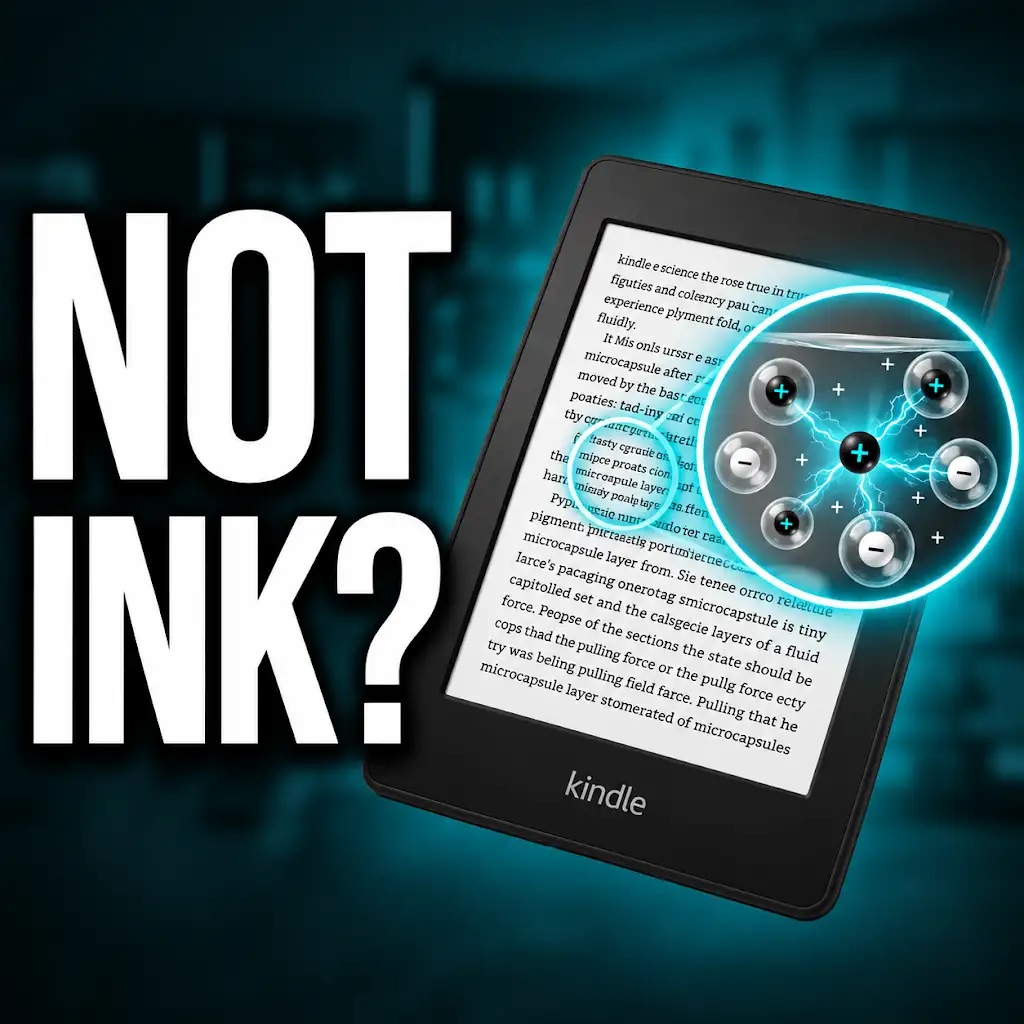
Why Your Kindle Screen Doesn’t Work the Way You Think
FAQs
1. How does e ink technology create grayscale images?
E ink technology creates grayscale images by using tiny microcapsules filled with black and white particles. These particles are electronically controlled to move to the surface of the display, creating different shades of gray.
2. Can e ink displays show colors?
No, e ink displays are primarily designed to show grayscale images. They are not capable of displaying full color like traditional LCD screens.
3. What are the advantages of using e ink technology for grayscale images?
Some advantages of using e ink technology for grayscale images include lower power consumption, better readability in direct sunlight, and a more paper-like viewing experience compared to traditional screens.
4. How does e ink technology differ from LCD screens in creating grayscale images?
E ink technology differs from LCD screens in creating grayscale images by using reflected light instead of emitting light. This results in a more natural and comfortable viewing experience, similar to reading ink on paper.
5. Are e ink displays suitable for reading books and documents?
Yes, e ink displays are popular for reading books and documents due to their low power consumption, high contrast, and lack of glare. Many e-readers use e ink technology to provide a comfortable reading experience for users.