The ethereal trails left behind on e-ink displays, often described as ghosting or image persistence, are a common and sometimes frustrating phenomenon for users. While e-ink technology offers distinct advantages in terms of readability and power efficiency, this visual artifact can mar the otherwise clean and paper-like experience. Understanding the underlying causes of ghosting is crucial for both manufacturers aiming to mitigate it and consumers seeking to minimize its impact. This exploration delves into the intricate mechanisms behind ghosting in e-ink displays, examining its origins and the various strategies employed to combat it, from fundamental design principles to software-driven interventions.
The Electrophoretic Ballet: How E-Ink Works
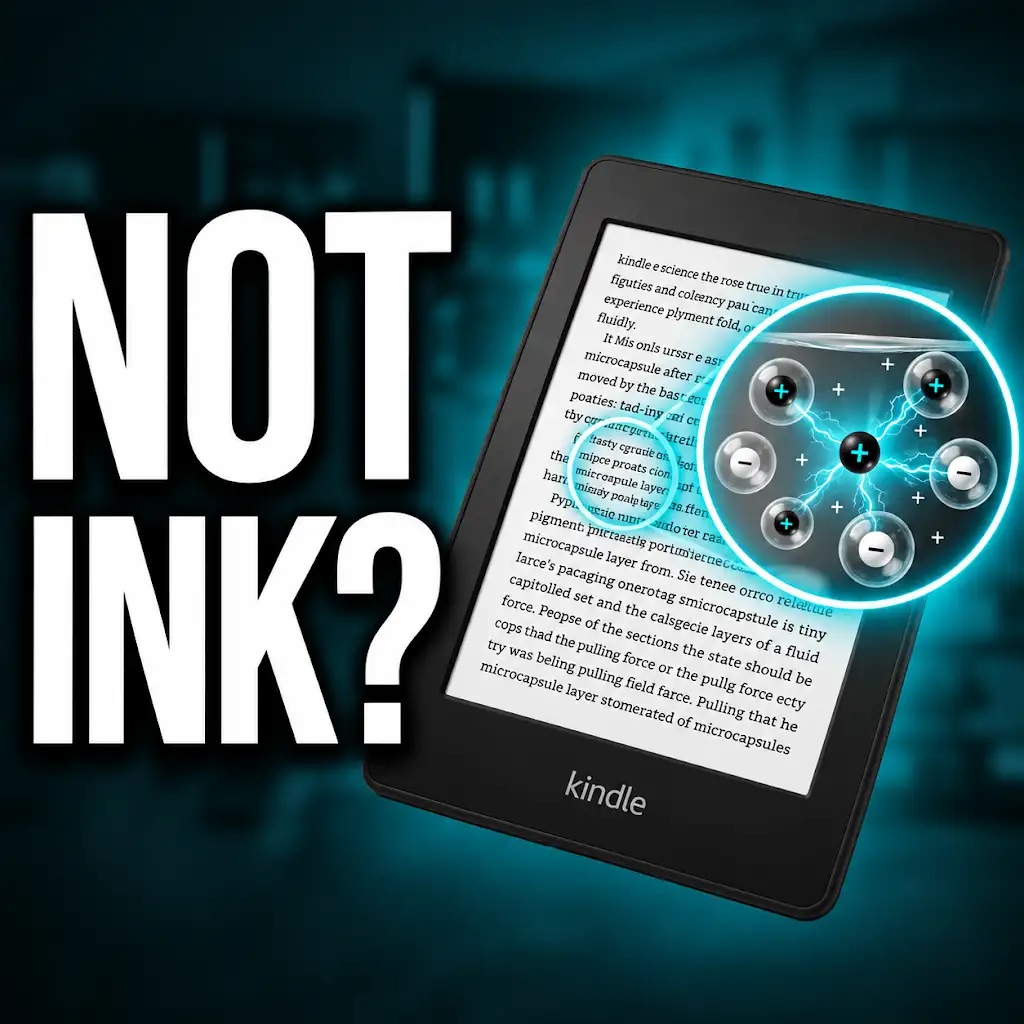
E-ink, or electrophoretic displays, rely on a fundamentally different principle than traditional LCD or OLED screens. Instead of emitting light, these displays manipulate tiny particles suspended within microcapsules. The core of an e-ink display consists of a layer of these microcapsules, each containing a fluid and a multitude of charged particles. Typically, there are two types of particles, one black and one white, each carrying opposite electrical charges.
Microcapsules and Charged Pigments
Within each microcapsule, the black particles might be positively charged, while the white particles are negatively charged, or vice-versa. The arrangement and movement of these particles are controlled by an electric field applied through a grid of electrodes beneath the microcapsule layer. When a specific electrode is activated, it creates an electric field that attracts particles of one charge and repels particles of the opposite charge. For instance, to display a black pixel, the electrodes would be configured to draw the black particles to the surface of the microcapsule, making that area appear dark. Conversely, to display a white pixel, the white particles would be brought to the surface.
Bistability and Power Efficiency
A key characteristic of e-ink technology is its bistability. This means that once the particles are moved into a particular configuration to form an image, they tend to remain in that position without requiring continuous power. This is analogous to how ink on paper stays put. This bistability is the primary reason for e-ink’s remarkable power efficiency; power is only consumed when the image is actively being changed. This makes e-ink ideal for devices like e-readers, where long battery life is a paramount concern, and for applications where information needs to be displayed statically for extended periods, such as electronic shelf labels or digital signage.
The ghosting effect in E Ink displays has been a topic of interest for many technology enthusiasts, as it can impact the readability and overall user experience of e-readers. For a deeper understanding of this phenomenon and its implications, you can explore a related article that discusses various aspects of E Ink technology and its advancements. To read more about it, visit this article.
The Genesis of Ghosting: Unpacking the Causes

Ghosting, also known as image persistence, occurs when remnants of a previously displayed image remain visible on the screen even after the content has been updated. This phenomenon is an inherent consequence of the electrophoretic process and the physical properties of the e-ink particles and their encapsulation. Several factors contribute to its manifestation, ranging from the physical characteristics of the display’s components to the environmental conditions under which it operates.
Incomplete Particle Migration
The most fundamental cause of ghosting lies in the incomplete migration of the charged particles within the microcapsules. When an e-ink display transitions from one image to another, the electrodes create an electric field to move the black and white particles to their new positions. However, in some instances, not all particles may fully reach their intended destinations. A small number of black particles might remain where white should be, or vice-versa, creating faint residual outlines or smudges. This can be due to insufficient voltage, insufficient duration of the electrical pulse, or the inherent viscosity of the fluid within the microcapsule.
Particle Aggregation and Adhesion
The tendency of the charged particles to aggregate or adhere to the inner walls of the microcapsules also plays a significant role. Over time, and with repeated transitions, the black and white particles can clump together. These aggregates may not respond as readily to the electric fields, leading to slower migration and a greater chance of leaving behind traces of previous states. Similarly, particles can develop a slight electrostatic adhesion to the plastic film that forms the microcapsule walls. This adhesion can prevent them from fully returning to their neutral state after a refresh, contributing to persistent image artifacts.
Environmental Influences: Temperature and Humidity
Environmental factors can exacerbate ghosting. E-ink displays are sensitive to temperature. At lower temperatures, the viscosity of the fluid within the microcapsules increases, making particle movement sluggish and more prone to incomplete migration. Conversely, at very high temperatures, the materials might expand or degrade, affecting the precise alignment of electrodes and the behavior of the charged particles. Humidity can also play a role, potentially affecting the electrostatic properties of the particles and their interactions within the microcapsules. These environmental influences can lead to inconsistencies in display performance and make ghosting more pronounced.
Material Degradation Over Time
Like all electronic components, the materials used in e-ink displays are subject to gradual degradation over extended periods of use. The pigments themselves, the fluid medium, and the encapsulation materials can undergo subtle chemical or physical changes. This degradation can alter the charge properties of the particles, increase their aggregation tendencies, or compromise the integrity of the microcapsule, all of which can contribute to an increase in ghosting over the lifespan of the device. Manufacturers aim to select materials with high durability, but even the best materials will eventually show signs of wear.
Mitigating the Ethereal Trails: Strategies and Solutions

Fortunately, the e-ink industry has developed a range of sophisticated strategies to combat ghosting and enhance the user experience. These solutions span hardware design, material science, and intelligent software algorithms, all working in concert to minimize the visibility of residual images.
The Power of the Full Refresh
The most common and effective method to eliminate ghosting is the full refresh, often referred to as a “screen flash” or “black and white transition.” During a full refresh, the display cycles through a complete black-to-white and then white-to-black transition, regardless of the current image. This process forces all particles to move to their extreme positions, effectively clearing any residual traces of the previous image. While highly effective at removing ghosting, full refreshes can be noticeable and momentarily disruptive to the reading experience, as the screen briefly flashes. Therefore, manufacturers carefully balance the frequency of full refreshes with partial refreshes to optimize both image clarity and user comfort.
Partial Refreshes and Intelligent Updates
To reduce the disruptive nature of full refreshes, displays also employ partial refreshes. In a partial refresh, only the pixels that need to change are updated. This is much faster and less visually jarring than a full refresh. However, partial refreshes are more prone to leaving behind ghosting artifacts, especially if the display transitions through many intermediate states or if the changes are subtle. Advanced e-ink controllers and firmware often incorporate intelligent algorithms that predict when a full refresh is necessary to prevent severe ghosting. These algorithms can analyze the history of screen updates, the complexity of the content, and even ambient conditions to decide whether a partial or full refresh is most appropriate.
Advanced Waveform Control
The “waveform” refers to the specific sequence and timing of electrical pulses applied to the electrodes to control particle movement. Manufacturers continuously develop and refine these waveforms to optimize the speed and completeness of particle migration. By fine-tuning the voltage levels, pulse durations, and the order of polarity changes, it’s possible to achieve more precise control over the electrophoretic process. Advanced waveform designs can help to overcome particle adhesion issues and ensure that particles move more consistently, thereby reducing the likelihood of ghosting. This is an area of ongoing research and development in the e-ink industry.
Material Innovation and Encapsulation Improvements
Ongoing research and development in material science are crucial for combating ghosting at its source. This includes developing new pigment formulations that are less prone to aggregation or adhesion, as well as improving the properties of the fluid medium to reduce viscosity and ensure smoother particle movement across a wider temperature range. Furthermore, advancements in microencapsulation techniques can lead to more robust and uniform microcapsules, which are less likely to degrade over time and maintain their performance. Innovations in the barrier layers and electrode materials also contribute to a more stable and consistent electrophoretic response.
Design and User Experience Considerations
Beyond the technical solutions, the design of e-ink devices and the software that drives them play a significant role in how ghosting is perceived and managed by users. A thoughtful approach to user interface design and content presentation can go a long way in minimizing the annoyance of residual images.
Optimizing Content for E-Ink
The type of content displayed has a direct impact on the likelihood and visibility of ghosting. Content that involves frequent, complex, or subtle changes is more likely to induce ghosting than static text. For example, reading a novel with primarily black text on a white background is less taxing on the e-ink display than navigating a complex menu with many small icons and varied colors. Designers of e-ink applications often strive to present information in a way that minimizes screen transitions or uses techniques that are e-ink friendly. This can include using simpler color palettes, avoiding rapid animations, and designing layouts that allow for longer periods of static display.
User Interface Design and Refresh Strategies
The user interface (UI) of an e-ink device is a critical element in managing ghosting. Developers and designers must make conscious decisions about when to implement full refreshes versus partial refreshes. For instance, a device might perform a full refresh only when navigating between major sections of an application or when a significant visual change occurs. For minor interactions, like turning a page in an e-book, a less disruptive partial refresh might be employed. Some devices offer user-configurable refresh rates, allowing individuals to prioritize either speed or image clarity based on their preferences. Clear visual cues, such as a brief flicker or a subtle change in screen appearance, can also alert users to an impending refresh, preparing them for the visual interruption.
Software Updates and Firmware Enhancements
The software that controls the e-ink display is constantly being refined. Manufacturers regularly release firmware updates that can introduce improvements to the display driving algorithms, including more sophisticated waveform control and smarter refresh strategies. These updates can address newly discovered ghosting issues or enhance the overall performance of the display. For users, keeping their devices updated is a simple yet effective way to benefit from ongoing improvements in ghosting mitigation. The ability of the firmware to learn from user interaction patterns and adapt its refresh behavior over time is also an area of active development.
The ghosting effect in E Ink displays is a phenomenon that can impact the readability and overall user experience of devices like e-readers. This issue arises when previous images or text faintly remain visible after new content is displayed, which can be distracting for users. For a deeper understanding of this topic and its implications, you can explore a related article that discusses various aspects of E Ink technology and its advancements. Check it out here to learn more about how these displays are evolving and addressing challenges like ghosting.
The Future of Ghosting-Free E-Ink
| Metric | Description | Typical Values | Impact on E Ink Display |
|---|---|---|---|
| Ghosting Intensity | Residual image visibility after refresh | 5-15% contrast retention | Reduces display clarity and sharpness |
| Refresh Rate | Frequency of screen updates | 0.5 – 2 Hz (typical for e-ink) | Higher rates reduce ghosting but increase power consumption |
| Temperature | Operating temperature of the display | 0°C to 40°C optimal range | Lower temps increase ghosting due to slower particle movement |
| Update Method | Type of screen refresh (partial/full) | Partial refresh: faster, Full refresh: slower | Partial refresh increases ghosting; full refresh reduces it |
| Electrophoretic Particle Mobility | Speed of microcapsule particles moving under electric field | Varies by material, typically 10-100 µm/s | Higher mobility reduces ghosting effect |
The quest for truly ghosting-free e-ink displays is an ongoing endeavor, driven by the desire to deliver a seamless and unparalleled reading and viewing experience. While current technologies have made significant strides, the pursuit of perfection continues, with advancements on multiple fronts promising even cleaner and more responsive displays in the future.
Next-Generation E-Ink Technologies
The e-ink landscape is not static. Research and development are continuously exploring new electrophoretic technologies and alternative display mechanisms that might inherently reduce or eliminate ghosting. This includes investigating new types of microcapsules, novel pigment compositions, and potentially even entirely different particle manipulation techniques. For example, some emerging technologies aim to improve the speed and uniformity of particle movement, thereby minimizing the chance of incomplete transitions. The development of “color e-ink” has also presented unique challenges and opportunities in ghosting mitigation, requiring sophisticated multi-layer particle systems.
Enhanced Control and Predictive Algorithms
The role of sophisticated control systems and predictive algorithms is set to expand significantly. Future e-ink displays will likely feature even more intelligent firmware that can anticipate user behavior and content changes with greater accuracy. This could lead to a dynamic adjustment of refresh rates and types, ensuring that ghosting is minimized without unnecessarily interrupting the user experience. Machine learning techniques are being explored to analyze patterns of use and optimize display performance in real-time, making the display more responsive and adaptable. The goal is to create a system that “knows” when a ghosting issue is likely to arise and proactively intervenes before it becomes noticeable.
The Enduring Appeal of Paper-Like Displays
Despite the challenges, the fundamental advantages of e-ink technology – its exceptional readability in bright light, its extremely low power consumption, and its comfortable, paper-like appearance – ensure its continued relevance and growth. As ghosting mitigation strategies become more refined, and as new display technologies emerge, e-ink is poised to expand its reach into even more applications, from more advanced e-readers and tablets to diverse industrial and commercial uses. The ongoing innovation in addressing ghosting is not just about fixing a technical flaw; it’s about unlocking the full potential of this unique display technology and making it an even more compelling alternative to traditional screens.
Why Your Kindle Screen Doesn’t Work the Way You Think
FAQs
What is the ghosting effect in E Ink displays?
The ghosting effect in E Ink displays refers to the faint remnants of previous images or text that are still visible after the screen has been updated. This can occur when the particles in the display do not fully reset to their neutral state, causing a lingering shadow of the previous content.
What causes the ghosting effect in E Ink technology?
The ghosting effect in E Ink technology is primarily caused by the slow response time of the particles within the display. When the particles do not reset quickly enough, they can leave behind traces of the previous image, resulting in ghosting.
Can the ghosting effect be reduced or eliminated in E Ink displays?
While it is challenging to completely eliminate the ghosting effect in E Ink displays, manufacturers have been working on improving the technology to minimize its impact. Techniques such as faster particle response times and optimized refresh rates can help reduce ghosting.
Does the ghosting effect affect the readability of content on E Ink displays?
Yes, the ghosting effect can impact the readability of content on E Ink displays, especially when switching between different images or text frequently. The remnants of previous content can cause visual distractions and reduce the overall clarity of the display.
Are there any strategies to mitigate the ghosting effect in E Ink displays?
Some strategies to mitigate the ghosting effect in E Ink displays include using optimized refresh algorithms, implementing partial refresh techniques, and adjusting the display settings to minimize the visibility of ghosting. Additionally, displaying content with higher contrast can help mask the ghosting artifacts.