
The soft glow emanating from an e-reader screen, so unlike the harsh glare of a traditional LCD or LED panel, is the hallmark of Electronic Ink, or E Ink. This innovative display technology, found in everything from Amazon Kindles to some high-end smartphones and electronic shelf labels, owes its unique visual experience to a sophisticated interplay of physics and electrical engineering, encapsulated by the concept of the “E Ink waveform.” Understanding how these waveforms function is key to appreciating the magic behind electronic paper. It’s not simply about displaying pixels; it’s about precisely controlling the movement of microscopic particles to mimic the appearance of ink on paper.
The Fundamental Building Blocks: Microcapsules and Pigments
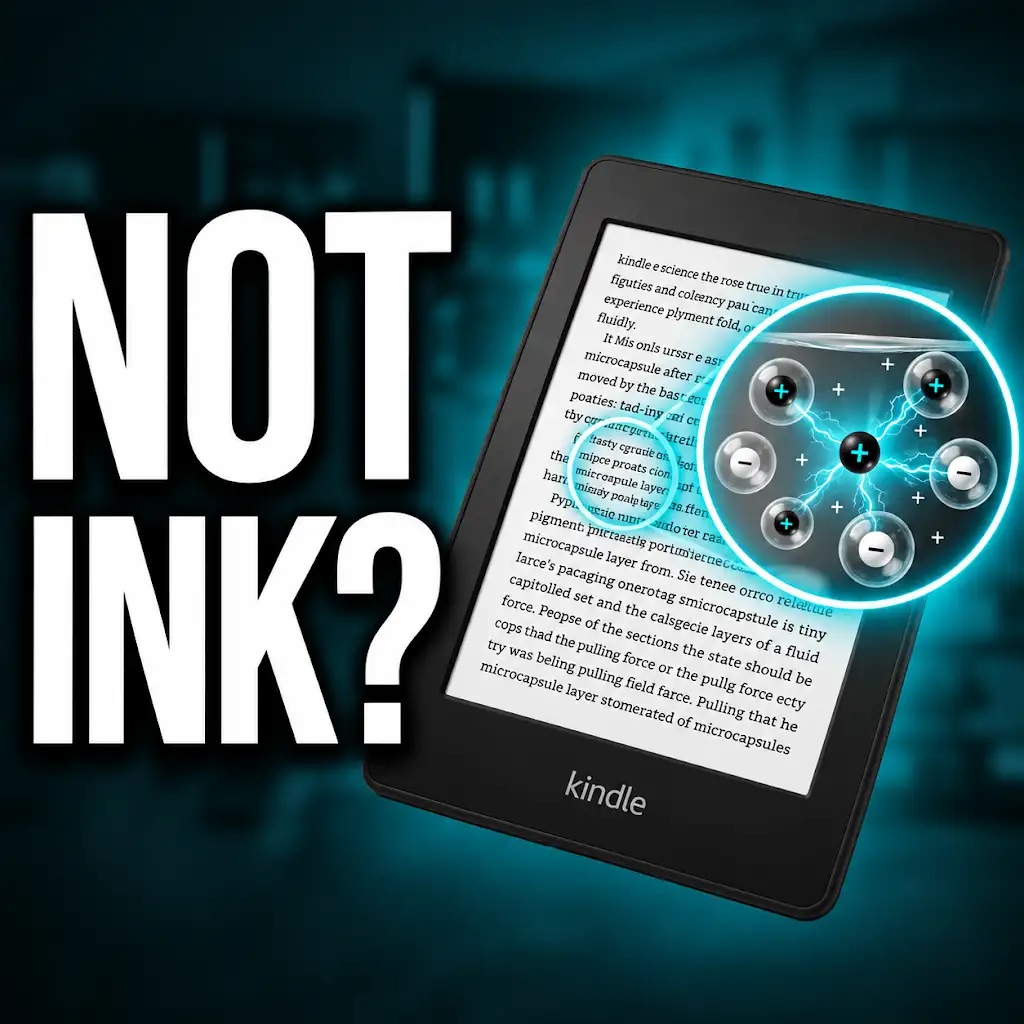
At the heart of every E Ink display lies a layer of millions of tiny, transparent microcapsules, each roughly the diameter of a human hair. These microcapsules are suspended in a fluid and contain a mixture of charged pigment particles. The magic happens when an electrical field is applied to these microcapsules, causing the charged particles within to move and rearrange. This movement is what creates the visible image.
The Dichotomy of Charged Pigments
The most common E Ink technology utilizes two types of charged pigment particles within each microcapsule: positively charged white particles and negatively charged black particles. Imagine a small sphere filled with these two types of particles. When a positive electrical charge is applied to a specific area of the display’s substrate (the underlying electronic circuitry), it attracts the negatively charged black particles to the top of the microcapsule, making that area appear black. Conversely, when a negative electrical charge is applied, it repels the black particles and attracts the positively charged white particles to the top, resulting in a white appearance.
Layering for Color and Grayscale
While the simplest E Ink displays use just black and white particles, more advanced versions can achieve grayscale and even color. Grayscale is typically achieved by controlling the amount of black and white pigment that is brought to the surface. By applying varying degrees of electrical charge, a partial movement of particles can be orchestrated, creating shades of gray. For color E Ink, the technology becomes even more intricate. Color E Ink displays, often referred to as Kaleido or Gallery, typically employ a color filter array layered over a black-and-white E Ink display. Alternatively, some more advanced technologies incorporate multiple colored pigment particles (e.g., cyan, magenta, yellow, and black) within the microcapsules themselves, requiring even more complex electrical control to achieve the desired hues. The fundamental principle remains the same: manipulating the position of charged particles through electrical fields, but the complexity scales significantly with added color capabilities.
For those interested in understanding the intricacies of E Ink technology, a related article that delves deeper into the subject is available at this link: E Ink Waveform Explained. This article provides a comprehensive overview of how waveforms are utilized in E Ink displays to create clear and crisp images, making it an excellent resource for both enthusiasts and professionals in the field.
The Role of Electrical Fields in Particle Movement
The transformation of a blank screen into a readable text or image is orchestrated by precisely controlled electrical fields. These fields act as invisible hands, pushing and pulling the charged pigment particles within the microcapsules to their designated positions. This is where the concept of the E Ink waveform becomes crucial. A waveform is essentially a graphical representation of how the electrical voltage or current changes over time. For E Ink, these waveforms are not random; they are meticulously designed sequences of electrical pulses and durations.
Generating the Displayed Image: Pixel by Pixel Control
Each pixel on an E Ink display is connected to a matrix of electrodes. When the display controller decides what to show, it sends specific electrical signals to these electrodes. These signals, dictated by the waveform, create localized electric fields. The strength and polarity of these fields determine which pigment particles move to the surface of the microcapsules associated with that pixel, thereby controlling its color or shade. For a black pixel, the waveform will guide the black particles to the front. For a white pixel, the waveform will ensure the white particles are at the forefront. For grayscale, the waveform will dictate a partial movement, resulting in a blend of black and white visible.
The Importance of Waveform Design for Performance
The design of an E Ink waveform is a highly sophisticated process. It’s not just about turning pixels on and off; it’s about achieving specific outcomes: speed, contrast, and longevity of the display. Different waveforms are optimized for different tasks. For instance, a waveform designed for rapid page turns might prioritize speed, potentially at the expense of subtle grayscale transitions. Conversely, a waveform used for displaying a static image where high contrast is paramount would be designed to ensure particles are firmly settled and maintain their position for extended periods. The careful sequencing of voltage levels and durations within a waveform ensures that the particles move efficiently, settle correctly, and remain in place with minimal power consumption once the desired image is achieved.
Unpacking the E Ink Waveform: The Heart of the Process
The term “E Ink waveform” refers to the specific sequence of electrical signals applied to the display’s electrodes to achieve a desired visual state. These are not simple on/off switches but rather complex, multi-stage electrical stimuli. Each waveform is essentially a recipe for moving the pigment particles to create a particular pixel state – black, white, or one of the intermediate grayscale levels.
The Stages of a Typical Waveform
A typical E Ink waveform for updating a pixel involves several distinct stages. While the exact implementation can vary between different E Ink technologies and manufacturers, a general pattern emerges. This multi-stage approach is critical for achieving both reliable image formation and minimizing ghosting or image persistence.
The Initial Drive Pulse: Setting the Stage
The waveform usually begins with an initial drive pulse. This pulse is designed to overcome any residual charge or particle alignment from the previous image state. It’s a forceful nudge that essentially resets the microcapsule’s contents, ensuring that the subsequent steps have a clean slate to work with. The duration and amplitude of this initial pulse are critical for breaking down any lingering electrostatic forces that might be holding particles in place.
The Settling Phase: Achieving the Desired State
Following the initial drive pulse, the waveform enters a crucial settling phase. This is where the specific voltage levels are applied to guide the charged pigment particles to their target positions. For a white pixel, the waveform will apply a negative voltage to the electrode to attract positive white particles. For a black pixel, a positive voltage will be applied to attract negative black particles. The waveform dictates not only the polarity but also the duration of these pulses. This duration is carefully calibrated to allow sufficient time for the particles to move and settle at the top of the microcapsule, creating a stable and clear image.
The Erase Pulse: Clearing Residuals
A common feature in E Ink waveforms is an “erase” pulse. This pulse is designed to deliberately move all particles to a neutral or undesired state before the final image is formed. For example, it might involve a short burst of alternating polarity to thoroughly mix the particles within the microcapsule. This erase pulse is vital for preventing “ghosting” – faint remnants of previous images that can appear on the screen. By actively clearing the display’s state, the erase pulse ensures a clean transition to the new image.
The Final Drive Pulse: Solidifying the Image
Finally, a brief “final drive pulse” or a holding voltage is often applied. This pulse ensures that the pigment particles are firmly settled in their desired positions and that they will remain there even after the driving electrical field is removed. This holding phase is key to E Ink’s ultra-low power consumption, as it requires no continuous power to maintain an image. Once the particles are settled, they stay put, effectively locking the image in place until a new update is commanded.
Waveforms in Action: Examples and Applications
The theoretical understanding of E Ink waveforms is best illuminated by considering their practical applications. The specific waveform employed dictates the performance characteristics of the E Ink display, influencing everything from how quickly a page can be turned to how clearly fine text appears. Different applications necessitate different waveform strategies.
Page Turning on E-readers: Speed vs. Clarity
When reading an e-book, the user expects a swift transition between pages. Achieving this requires waveforms optimized for speed. These waveforms might employ shorter settling times or less aggressive erase cycles. However, this speed can sometimes come at the cost of perfect clarity. Users might occasionally notice a slight ghosting effect, where faint outlines of the previous page are visible. To mitigate this, e-readers often have settings that allow for a full refresh (a more complete erase and redraw cycle) every few pages, which sacrifices some speed for improved visual fidelity. The waveform designer is constantly balancing these competing demands.
Static Displays and Information Boards: Longevity and Contrast
In contrast to the dynamic page-turning of e-readers, applications like electronic shelf labels or public information displays often prioritize image stability and longevity. These displays might remain static for days or weeks. For these scenarios, waveforms are designed to ensure particles are exceptionally well-settled, maximizing contrast and preventing any drift or fading over extended periods. The erase cycles might be less frequent, and the holding phases might be more robust, ensuring the information remains pristine without continuous power draw.
High-Contrast Applications: Pushing the Boundaries
For applications demanding the absolute highest contrast and sharpest text, specialized waveforms are developed. These might involve more aggressive drive pulses and longer settling times. The goal is to push the pigment particles to the very edges of their microcapsules, creating a stark difference between black and white areas. This is particularly important for displaying detailed graphics or small font sizes where subtle imperfections can become noticeable. The development of new generations of E Ink displays often goes hand-in-hand with the refinement of these advanced waveforms.
E Ink technology has revolutionized the way we interact with digital displays, and understanding the waveform used in this technology is crucial for grasping its functionality. For those interested in a deeper exploration of how E Ink works, you can check out a related article that delves into the intricacies of this fascinating subject. The article provides insights into the various applications of E Ink and explains the significance of the waveform in achieving high-quality images. To learn more, visit this informative resource that sheds light on the science behind E Ink technology.
The Evolution and Future of E Ink Waveforms
| Waveform Type | Description | Purpose | Typical Duration (ms) | Effect on Display |
|---|---|---|---|---|
| Erase Waveform | Applies a uniform voltage to reset pixels to a neutral state | Clears previous image to reduce ghosting | 50-100 | Removes residual charge, prepares for new image |
| Update Waveform | Voltage pulses that move charged pigment particles to form new image | Refreshes display with new content | 100-300 | Changes pixel states to display updated image |
| Compensation Waveform | Adjusts voltage to compensate for pixel aging and temperature | Maintains image quality and contrast over time | Varies (typically 10-50) | Improves uniformity and reduces artifacts |
| Overdrive Waveform | Applies higher voltage pulses to speed up particle movement | Reduces refresh time and ghosting | 20-50 | Faster transitions, smoother animations |
| Partial Update Waveform | Targets only a portion of the display for faster refresh | Enables quick updates without full screen refresh | 30-100 | Reduces power consumption and update time |
E Ink technology is not static. The waveforms are continuously evolving, driven by advancements in materials science, electrical engineering, and the growing demands of new applications. The pursuit of faster refresh rates, higher resolutions, improved color fidelity, and even greater power efficiency fuels this ongoing innovation.
Towards Faster Refresh Rates and Reduced Ghosting
One of the primary research areas in E Ink waveform development is achieving faster refresh rates without introducing unacceptable levels of ghosting. This involves a deeper understanding of the fluid dynamics within the microcapsules and the electrostatic interactions between the pigment particles and the electrodes. New waveform techniques might involve pre-conditioning pulses, optimized alternating current (AC) drive schemes, or more sophisticated algorithms that predict particle behavior. The goal is to make the page-turning experience on e-readers feel almost instantaneous, akin to flipping a physical page.
Enhancing Color and Grayscale Capabilities
The development of color E Ink has presented new challenges and opportunities for waveform design. Achieving accurate and vibrant colors requires precise control over multiple sets of pigment particles or the color filter array. Waveforms for color E Ink are significantly more complex, often involving multi-stage sequences for each color channel. Future research will likely focus on developing waveforms that can produce a wider color gamut, higher contrast in color, and faster color transitions, making color E Ink displays more suitable for a broader range of applications, including magazines, comics, and even interactive color signage.
Power Efficiency and Extended Lifespan
While E Ink is already renowned for its power efficiency, there’s always room for improvement. Waveform optimization plays a crucial role here. By fine-tuning the energy delivered at each stage of the display update, engineers can minimize the overall power consumption. This is particularly important for battery-powered devices where extending battery life is a constant priority. Furthermore, waveforms are designed to minimize stress on the microcapsules and pigment particles, contributing to the long lifespan characteristic of E Ink displays. As E Ink technology continues to mature, we can expect to see even more sophisticated waveforms that push the boundaries of what is possible with electronic paper.
Why Your Kindle Screen Doesn’t Work the Way You Think
FAQs
What is an e ink waveform?
An e ink waveform is a specific electrical signal that controls the movement of particles in electronic ink displays, determining which pixels are activated and which are not.
How does an e ink waveform work?
An e ink waveform works by applying different voltages to the electronic ink particles, causing them to move and either appear dark (activated) or light (deactivated) on the display.
What are the benefits of using e ink waveforms in electronic displays?
Using e ink waveforms in electronic displays offers benefits such as low power consumption, high visibility in various lighting conditions, and the ability to maintain an image without continuous power.
Can e ink waveforms be customized for different types of electronic ink displays?
Yes, e ink waveforms can be customized to optimize the performance of electronic ink displays based on factors like refresh rate, grayscale levels, and overall display quality.
Are e ink waveforms commonly used in e-readers and electronic shelf labels?
Yes, e ink waveforms are commonly used in e-readers and electronic shelf labels due to their energy efficiency, readability in sunlight, and ability to retain images without power.