
The Magic Behind the Screen: Unpacking E Ink’s Core Mechanics
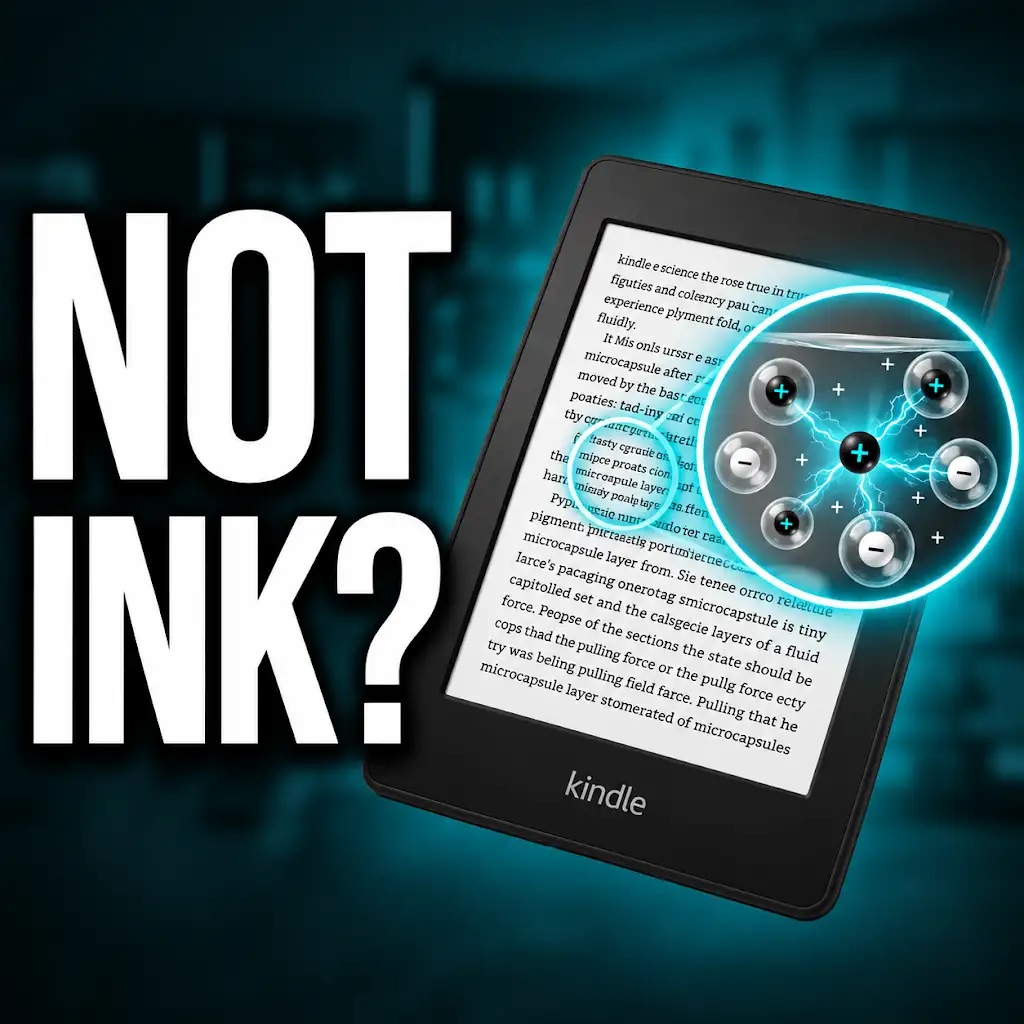
E Ink technology, often referred to as electronic paper, has revolutionized the way we interact with digital content, offering a reading experience remarkably akin to traditional paper. Unlike the emissive displays of smartphones and tablets that glow with backlights, E Ink screens are reflective, meaning they utilize ambient light to illuminate the text and images. This fundamental difference is the key to its unique properties, such as its exceptional readability in bright sunlight and its incredibly low power consumption. At its heart, E Ink’s functionality relies on a sophisticated yet elegant interplay of tiny particles suspended within a microcapsule. These microcapsules, often no larger than a human hair, are the building blocks of every E Ink display. Each capsule contains a clear fluid and a multitude of positively and negatively charged particles, typically black and white pigments. The magic happens when an electrical charge is applied to specific areas of the display. This charge influences the movement of these charged particles, effectively creating the text and images we see.
The Microcapsule: A Tiny, Complex World
The microcapsule is the fundamental unit of an E Ink display. These microscopic spheres are ingeniously engineered to hold and manipulate the charged pigments. Imagine thousands, even millions, of these tiny capsules packed together to form a thin layer. Each capsule is a self-contained environment, housing a fluid that allows the pigments to move freely. The primary components within a typical E Ink microcapsule are two types of charged particles: positively charged white particles and negatively charged black particles. These particles are suspended in a clear oil or other suitable fluid. The precise composition and density of these particles, as well as the properties of the surrounding fluid, are carefully calibrated by E Ink engineers to achieve optimal contrast, responsiveness, and longevity. The integrity of these microcapsules is paramount; if a capsule were to rupture, the pigments would mix, leading to a pixel that could no longer display a clear image. Therefore, the manufacturing process for E Ink displays involves meticulous control over the encapsulation of these delicate components.
Electrophoretic Movement: The Driving Force of Visibility
The visual display on an E Ink screen is achieved through a process called electrophoresis, which is the movement of charged particles in a fluid under the influence of an electric field. When an electrical signal is applied to a specific point on the display, it creates an electric field that interacts with the charged pigments within the microcapsules at that location. For example, to display a white pixel, a positive charge is applied to the electrode beneath that microcapsule. This positive charge repels the positively charged white particles and attracts the negatively charged black particles to the bottom of the capsule, leaving the white particles at the surface, visible to the reader. Conversely, to display a black pixel, a negative charge is applied. This negative charge repels the negatively charged black particles and attracts the positively charged white particles to the bottom, bringing the black particles to the surface. By precisely controlling the electrical charges applied to vast arrays of microcapsules, the E Ink display can form complex patterns of black and white, thereby rendering text and images. The absence of a backlight means that the light we see on an E Ink screen is the ambient light reflecting off these positioned particles.
E-ink technology has revolutionized the way we read and interact with digital content, providing a paper-like experience that is easy on the eyes. For a deeper understanding of how this innovative technology works and its various applications, you can check out a related article on the topic. To learn more, visit Freaky Science for an engaging explanation of e-ink technology and its impact on modern reading devices.
From Pixels to Pages: The Display Matrix and Control System
While the microcapsules are the active display elements, they require a sophisticated underlying infrastructure to function. This infrastructure consists of a matrix of electrodes and a control system that dictates precisely which microcapsules are activated and how. This intricate network allows for the fine-grained control necessary to form coherent images and text. Without this underlying control system, the individual microcapsules would be unable to work in concert to create a readable display.
The Thin-Film Transistor (TFT) Backplane
At the foundation of every E Ink display lies a thin-film transistor (TFT) backplane. This is essentially a grid of transistors and electrodes, with each transistor acting as a tiny switch for a specific microcapsule or a small group of them. When a pixel needs to be updated, the control system sends a signal to the relevant transistor. This transistor then applies the appropriate voltage to the electrode, which in turn creates the electric field that manipulates the charged particles within the microcapsules. The density of these transistors and electrodes is what determines the resolution of the E Ink display. Higher resolution displays have more transistors and electrodes packed into the same area, allowing for finer detail and sharper text. The development of advanced TFT technology has been crucial in enabling the high-resolution, responsive E Ink displays we see today. These backplanes are fabricated using processes similar to those used for LCD screens, but they are designed to work with the electrophoretic principles of E Ink.
The Driving Electronics: Orchestrating the Display
The TFT backplane is controlled by a dedicated set of driving electronics. These electronics receive image data from the device’s processor and translate it into the specific voltage signals required to activate the transistors in the backplane. This involves a complex sequence of operations to ensure that each pixel is updated accurately and efficiently. The driving electronics manage the timing of the voltage pulses, the polarity of the charges, and the duration for which they are applied. For example, a refresh operation might involve a complex pattern of positive and negative pulses to ensure that residual charges from previous images are cleared, resulting in a clean display. The efficiency and sophistication of these driving electronics play a significant role in the overall performance of an E Ink device, impacting factors like refresh rates and power consumption. Advanced algorithms are employed to optimize these processes, minimizing the amount of energy required to update the screen.
The Power of Reflection: Why E Ink Shines in Sunlight
One of the most celebrated advantages of E Ink technology is its remarkable readability in bright ambient light, a stark contrast to the glare and washout experienced with traditional backlit displays. This reflective nature is not just a convenience; it’s a core design principle that dictates its power efficiency and its suitability for specific applications. The way E Ink interacts with light is fundamentally different from how other display technologies operate.
Mimicking Paper: The Reflective Principle
Unlike LCD or OLED screens that emit their own light, E Ink displays are purely reflective. This means they act like a sheet of paper, reflecting the ambient light that falls upon them. When you read a book, your eyes perceive the ink on the page because the ink absorbs certain wavelengths of light and reflects others. E Ink replicates this by using the black and white particles within the microcapsules to absorb or reflect ambient light. When white particles are at the surface, they reflect a broad spectrum of light, making the pixel appear white and bright. When black particles are at the surface, they absorb most of the incident light, making the pixel appear black and dark. This passive reflection is what makes E Ink so comfortable to read, especially in direct sunlight where backlit screens would become almost unreadable. The brighter the ambient light, the brighter the E Ink display appears, up to a point.
Energy Efficiency: The “Bistable” Advantage
The reflective nature of E Ink also leads to its extraordinary power efficiency. E Ink displays are “bistable,” meaning they retain an image even when no power is being supplied to the display itself. Once the charged particles are moved to their desired positions to form an image, they stay there. Power is only consumed during the brief moment of image transition – when the display is actively changing from one image to the next. This is in stark contrast to backlit displays, which require continuous power to maintain an image. This bistable characteristic is what allows e-readers to last for weeks or even months on a single charge. The processor and other components of the device still consume power, but the display itself is incredibly energy-sipping. This dramatically reduces the overall power requirements of E Ink-based devices, making them ideal for portable applications where battery life is a critical concern.
The Spectrum of E Ink: Beyond Black and White
While early E Ink displays were limited to monochrome (black and white), the technology has evolved significantly, offering a growing range of color capabilities. These advancements have broadened the appeal and functionality of E Ink, opening up new possibilities for devices that can now display a richer visual experience. The journey from monochrome to color has involved ingenious new approaches to particle manipulation and color filtering.
The Evolution of Color E Ink
The development of color E Ink has been a significant technological hurdle. Several approaches have been explored and implemented. One of the earlier methods involved placing a color filter array (CFA) over a monochrome E Ink display. This meant that while the underlying E Ink display was still creating black and white pixels, the color filter would then imbue those pixels with specific colors. However, this method often resulted in reduced color saturation and contrast, as the color filters would absorb some of the light. A more advanced and widely adopted approach is the use of E Ink Kaleido™ technology, which incorporates color pigments directly into the microcapsules. This allows for a more vibrant and saturated color display without the need for a separate color filter. These color E Ink displays typically use a combination of CMYK (cyan, magenta, yellow, and black) pigments, which can be mixed and layered to create a wide spectrum of colors.
Applications and Limitations of Color E Ink
Color E Ink technology has found its way into a variety of devices, from more advanced e-readers that can display color magazines and comics to e-notes and even digital signage. The ability to display color enhances the user experience for content that is inherently visual, such as children’s books, educational materials, and presentation slides. However, it’s important to note that color E Ink still has limitations compared to traditional backlit color displays. Refresh rates are generally slower, and the vibrancy and color accuracy may not match that of an LCD or OLED screen, especially for fast-moving content like video. Furthermore, the color saturation can still be somewhat muted, and the colors may appear darker than on a backlit display due to the reflective nature of the technology. Despite these limitations, color E Ink represents a significant leap forward, offering a compelling alternative for applications where power efficiency and sunlight readability are paramount, and where a full-color experience is desirable.
E Ink technology has revolutionized the way we read and interact with digital content, providing a paper-like experience that is easy on the eyes. If you’re curious to learn more about how this innovative technology works and its various applications, you can check out a related article that explains it in simple terms. This resource offers insights into the science behind E Ink displays and their benefits for readers and consumers alike. For more information, visit this article to dive deeper into the fascinating world of E Ink technology.
The Future of E Ink: Innovations and Emerging Use Cases
| Aspect | Description | Example/Metric |
|---|---|---|
| Technology Type | Electronic paper display that mimics the appearance of ink on paper | Used in e-readers like Kindle |
| Display Mechanism | Microcapsules containing black and white particles that move with electric charge | Black particles move to top for black text, white particles for background |
| Power Consumption | Very low power; only uses power when changing the display | Can last weeks on a single charge |
| Readability | High contrast, easy on eyes, readable in bright sunlight | Reflective display, no backlight needed |
| Refresh Rate | Slower than LCD or OLED; suitable for static images and text | Typically 1-2 seconds per page refresh |
| Color Capability | Mostly black and white; some color e-ink displays exist but limited | Color depth up to 4096 colors in advanced models |
| Thickness | Thin and lightweight compared to traditional displays | Typically less than 1 mm thick |
| Common Uses | E-readers, electronic shelf labels, smartwatches, signage | Amazon Kindle, Pebble smartwatch |
E Ink technology is not a static entity; it is a continuously evolving field with ongoing research and development aimed at pushing its boundaries. The unique properties of E Ink lend themselves to a diverse array of applications beyond the familiar e-reader, and future innovations promise to further expand its reach. The core strengths of E Ink – its power efficiency, readability, and paper-like aesthetic – are driving its exploration into new and exciting frontiers.
Enhancing Performance and Functionality
Future developments in E Ink are likely to focus on improving key performance metrics. This includes increasing refresh rates to make them more suitable for dynamic content and reducing ghosting (residual images from previous displays). Scientists are also working on developing new particle formulations and microcapsule designs that can achieve higher contrast ratios, broader color gamuts, and more vibrant colors in color E Ink displays. Another area of active research is the development of flexible and stretchable E Ink displays. Imagine e-readers that can be rolled up or integrated into clothing and other flexible surfaces. These advancements will open up entirely new form factors and functionalities for E Ink-based devices. The goal is to make E Ink displays even more versatile and adaptable to a wider range of user needs and environments.
Expanding Beyond Traditional Devices
The applications of E Ink are steadily moving beyond the realm of dedicated e-readers. Its unique characteristics make it ideal for a host of other uses. One significant area of growth is in electronic shelf labels (ESLs) for retail. These low-power, high-visibility displays can be updated wirelessly and remotely, allowing retailers to dynamically change prices and product information, thereby improving efficiency and reducing waste. E Ink is also being explored for smart cards, public transportation information displays, luggage tags, and even as secondary displays on smartphones and wearables where power saving is a priority. The potential for integrating E Ink into architectural elements, such as smart windows or interactive displays embedded in walls, is also being investigated. As the technology matures and its capabilities expand, E Ink is poised to become an increasingly ubiquitous presence in our daily lives, offering a unique blend of functionality and aesthetic appeal that no other display technology can match.
Why Your Kindle Screen Doesn’t Work the Way You Think
FAQs
What is e ink technology?
E ink technology is a type of electronic paper display that mimics the appearance of ink on paper. It is commonly used in e-readers, electronic shelf labels, and other devices that require low power consumption and high visibility in various lighting conditions.
How does e ink technology work?
E ink technology works by using tiny microcapsules filled with positively charged white particles and negatively charged black particles. When an electric field is applied, the particles move to the top of the microcapsules, creating the appearance of text or images on the display.
What are the advantages of e ink technology?
Some advantages of e ink technology include low power consumption, high visibility in direct sunlight, wide viewing angles, and the ability to maintain an image without power. E ink displays also do not emit light, making them easier on the eyes for extended reading.
Can e ink displays show color?
While traditional e ink displays are grayscale, there are newer versions that can display limited color. These color e ink displays use a filter layer to produce a limited range of colors, making them suitable for certain applications like digital signage and e-readers.
Is e ink technology the same as LCD or OLED displays?
No, e ink technology is different from LCD and OLED displays. E ink displays use reflected light to create an image, while LCD and OLED displays emit light. E ink displays are also known for their low power consumption and high visibility in various lighting conditions, making them ideal for certain applications.