
The Magic Behind the E-Ink Screen
The Kindle, a device synonymous with digital reading, owes much of its appeal to its remarkably paper-like display. Unlike the glowing screens of smartphones and tablets, a Kindle’s screen doesn’t emit light; instead, it reflects ambient light, mimicking the experience of reading a physical book. This visual fidelity is achieved through a sophisticated technology known as E-Ink, and at its heart lies the Kindle’s display layer. Understanding this layer is key to appreciating how the device delivers crisp, clear text that minimizes eye strain and enhances the reading experience. The Kindle display layer is not a single monolithic component but rather a carefully orchestrated system of materials and electrical signals, working in concert to achieve its unique visual properties. It’s a testament to engineering ingenuity, transforming raw digital information into a tangible, readable form that feels remarkably familiar.
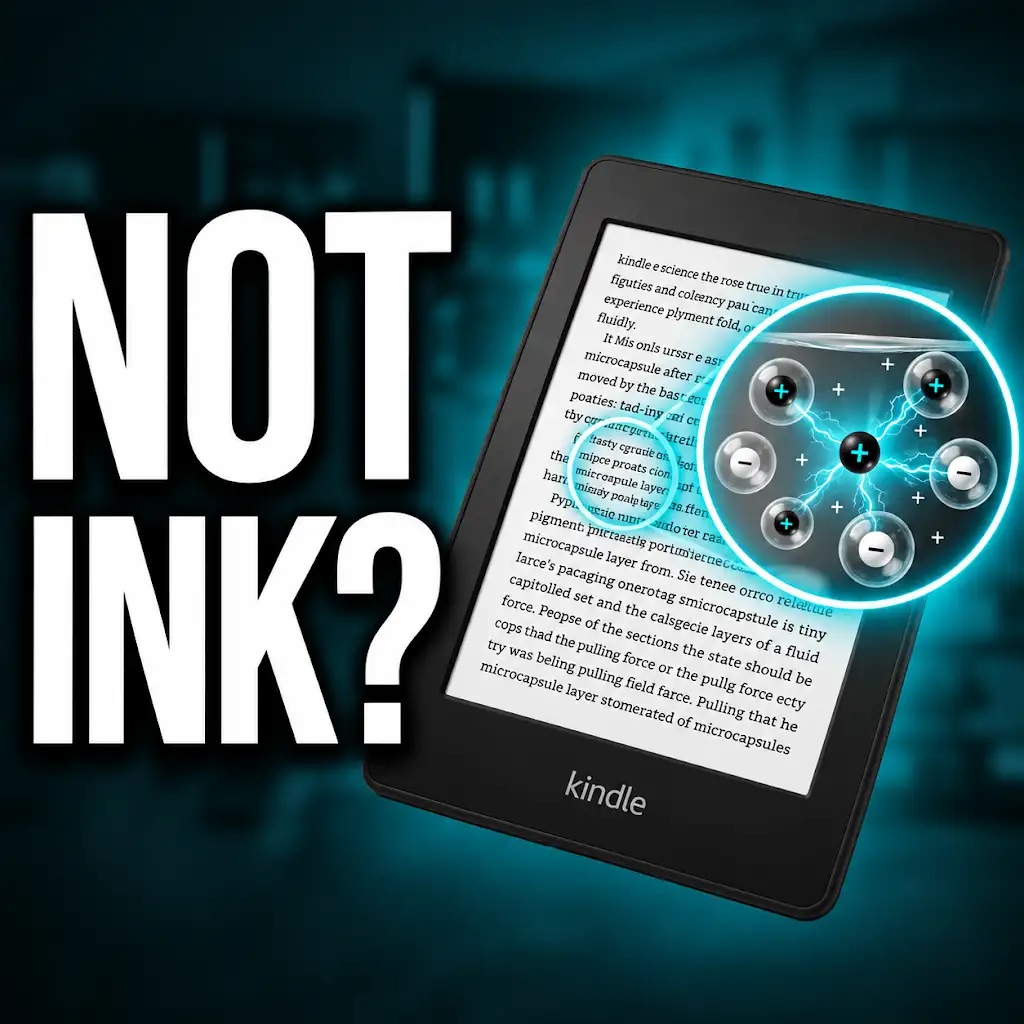
The E-Ink technology itself is a marvel of microencapsulation and electrochemistry. Imagine millions of tiny, transparent capsules, each smaller than a human hair, suspended within the display layer. These microcapsules are the fundamental building blocks responsible for creating the visible text and images on the screen. Within each microcapsule, two types of charged particles are suspended: black positively charged particles and white negatively charged particles. The precise control and movement of these particles, guided by electrical signals, are what ultimately determine the appearance of the text on the Kindle. This process is fundamentally different from LCD or OLED displays, which rely on backlighting or self-emissive pixels. The E-Ink display, by contrast, is bistable, meaning it can maintain an image without requiring continuous power, further contributing to the device’s impressive battery life. The Kindle display layer, therefore, is the crucial interface that translates digital data into this analog-like visual output.
The Microcapsule Matrix: Tiny Worlds of Black and White
The E-Ink display is fundamentally a grid of these microcapsules, arranged with incredible precision. Each microcapsule acts like a tiny, individual pixel, capable of displaying either black or white, or shades of gray through partial activation. The density of these microcapsules per square inch is exceptionally high, ensuring that even small fonts and fine lines appear sharp and well-defined. When an electrical charge is applied to a specific area of the display layer, it influences the movement of the charged particles within the microcapsules located in that area. This controlled movement is the essence of how an image, or in the case of the Kindle, text, is formed. The clarity and readability of the text are directly proportional to the size and uniformity of these microcapsules and the precision with which they can be manipulated.
The structure within each microcapsule is also critical. They are typically filled with a clear fluid, which allows the charged particles to move freely. The black particles are usually carbon-based, while the white particles are often titanium dioxide. The charge differences between these particles and the electrodes that control them create the necessary forces for movement. The engineering challenge lies in ensuring that these particles move quickly and accurately enough to update the display in a timely manner, while also maintaining their position once settled, thus creating a stable image. The Kindle display layer is a sophisticated implementation of this microcapsule technology, refined over years of development to provide a superior reading experience.
Electrodes and Drivers: The Architects of Text Formation
The E-Ink display layer doesn’t operate in isolation; it’s intrinsically linked to a complex system of electrodes and driver electronics. A fine grid of transparent electrodes is strategically placed above and below the E-Ink layer. These electrodes act as the control mechanisms, allowing precise electrical signals to be sent to individual microcapsules or groups of microcapsules. The driver electronics, a sophisticated circuit board, interpret the digital information from the Kindle’s processor – the text you’re reading – and translate it into specific voltage patterns applied to these electrodes.
When a particular character or word needs to be displayed, the driver electronics orchestrate a sequence of electrical pulses. For example, to form a black letter on a white background, the electrodes beneath the area where the letter should appear would be energized in a way that attracts the white particles to the back of the microcapsule and repels the black particles to the front, facing the reader. Conversely, to create white space, the electrical polarities would be reversed. The speed and accuracy of these electrical signals are paramount. While E-Ink is known for its power efficiency, the actual process of updating the screen, known as a “refresh” or “flash,” can sometimes be noticeable. This is because the particles need time to move and settle into their new positions. The Kindle display layer is designed to optimize this refresh process, making it as unobtrusive as possible. The integration of these electrodes and drivers is what gives the Kindle its ability to render complex text layouts, including different font sizes, styles, and even images.
If you’re interested in understanding the intricacies of Kindle’s display layer, you may find the article on the science behind e-reader technology particularly enlightening. This article delves into how various display technologies impact reading experiences and compares them to traditional printed materials. For more insights, you can read the related article here: Science Behind E-Reader Technology.
The Layers Beneath the Surface: Building the E-Ink Display

The E-Ink display is not a single sheet of material but a carefully constructed laminate of several distinct layers. Each layer plays a specific role in ensuring the display’s functionality, durability, and visual quality. This multi-layered approach is essential for protecting the delicate E-Ink particles and for enabling the precise electrical control required for image formation. The Kindle display layer, therefore, is an engineered sandwich, where each ingredient contributes to the final, paper-like appearance.
The outer layers are designed for protection and clarity, while the inner layers house the core E-Ink technology and the control circuitry. The careful selection and assembly of these materials are crucial for the overall performance and longevity of the Kindle device. The inherent bistability of E-Ink means that once an image is set, it requires no power to maintain, a significant advantage for battery-powered devices. This fundamental characteristic influences the design and integration of all the layers within the Kindle display.
The Protective Outer Shell: Clarity and Resilience
The outermost layer of the Kindle display is typically a transparent plastic or glass substrate. This layer serves multiple crucial purposes. Firstly, it provides a protective barrier against scratches, smudges, and minor impacts, safeguarding the more delicate layers beneath. Secondly, it is engineered to have excellent optical clarity, ensuring that ambient light can reach the E-Ink layer effectively and that the reflected image is not distorted or diffused. The surface of this outer layer is often treated with anti-glare coatings to further enhance readability in bright conditions, reducing reflections that can make reading difficult on traditional glossy screens.
The transparency of this layer is critical because E-Ink displays are reflective, not emissive. They rely on the light that bounces off the surface to create the image. Any reduction in light transmission through the outer layers would directly impact the brightness and contrast of the text. Furthermore, this layer is often designed to be slightly textured, mimicking the feel of paper, which contributes to the overall tactile experience of reading on a Kindle. The Kindle display layer relies on this robust yet optically transparent outer shell to deliver its signature reading experience.
The E-Ink Ink Layer: The Heart of the Display
Beneath the protective outer shell lies the E-Ink ink layer itself. This is where the magic of black and white text truly happens. As previously discussed, this layer is composed of millions of microcapsules, each containing charged black and white particles suspended in a fluid. The precise arrangement and behavior of these particles are governed by electrical fields generated by the electrodes. This layer is incredibly thin, contributing to the overall slim profile of the Kindle device.
The E-Ink ink itself is a proprietary formulation developed by E Ink Corporation. The exact composition and the way the particles are charged are closely guarded secrets, contributing to the superior performance of their displays. The Kindle display layer leverages this advanced ink technology to create high-contrast text that appears remarkably sharp. The ability of these particles to migrate within the microcapsules and maintain their position is key to the E-Ink’s bistable nature. This means that once the text is rendered on the screen, the electrical charge can be removed, and the image will persist, consuming no power until the next screen update.
The Backplane and Electrode Array: Guiding the Particles
Directly beneath the E-Ink ink layer is the backplane, which contains the electrode array. This is the circuitry that controls the movement of the charged particles within the microcapsules. The electrode array is essentially a grid of tiny electrical conductors, typically made of indium tin oxide (ITO) or other transparent conductive materials. These electrodes are meticulously patterned to align with the microcapsules above them.
When the Kindle’s processor determines what to display, it sends signals to the driver electronics, which then apply specific voltages to the electrodes in the array. By precisely controlling the voltage and polarity applied to each electrode, the driver can create an electric field that attracts or repels the black and white particles in the microcapsules above. This selective manipulation of particles allows for the formation of individual pixels, which combine to form characters, words, and images. The resolution of the Kindle display, and thus the crispness of the text, is directly related to the density and precision of this electrode array. A finer electrode array allows for more discrete control over smaller areas of the E-Ink layer, resulting in sharper text and more detailed images. The Kindle display layer is a sophisticated integration of these components, ensuring precise control over every element on the screen.
The Physics of E-Ink: Electrokinetic Wonders

The E-Ink technology powering the Kindle display relies on fundamental principles of physics, specifically electrokinetics. The movement of charged particles within a fluid under the influence of an electric field is the core mechanism. This seemingly simple concept, when applied at a microscopic level with millions of precisely controlled elements, results in a display that revolutionizes digital reading. The Kindle display layer is a practical application of these scientific principles, optimized for readability and power efficiency.
The bistable nature of E-Ink is a direct consequence of the physics involved. Once the charged particles have been moved to their desired positions, they tend to remain there due to surface tension and van der Waals forces, even after the electric field is removed. This electrokinetic behavior is what allows the Kindle to display text for extended periods without consuming power, a significant advantage over traditional display technologies. Understanding this physics is crucial to appreciating the innovation behind the Kindle display layer.
Electrophoretic Motion: The Dance of Charged Particles
The primary physical phenomenon at play is electrophoresis. Electrophoresis is the movement of charged particles dispersed in a fluid or gel under the influence of an applied electric field. In the case of E-Ink, the black and white particles within each microcapsule are deliberately given opposite electrical charges. When an electric field is applied across the microcapsule, the positively charged particles are attracted towards the negatively charged electrode, and the negatively charged particles are attracted towards the positively charged electrode.
The Kindle display layer leverages this directed motion. For instance, to make a letter appear black, the electrodes beneath that area are energized to draw the black particles to the front of the microcapsule, while pushing the white particles to the back. Conversely, to create white space, the polarity is reversed, bringing the white particles to the front. The speed at which these particles move and settle dictates the refresh rate of the display. While not as instantaneous as the refresh rates of LCD or OLED screens, E-Ink’s electrophoresis is sufficiently fast for comfortable reading and offers the distinct advantage of being power-free once the image is static. The Kindle display layer is a testament to the precise control of these electrophoretic forces.
Bistability and Power Efficiency: The Enduring Image
The defining characteristic of E-Ink technology, and a major reason for its adoption in e-readers like the Kindle, is its bistability. This means that the display can maintain an image indefinitely without consuming any power. Once the black and white particles have been moved into their designated positions to form text or an image, they remain there until an electrical signal is applied to change them. This is fundamentally different from active-matrix displays (like those in smartphones and TVs) which require a constant supply of power to refresh and maintain each pixel.
The Kindle display layer exploits this bistability to achieve incredibly long battery life. A single charge can power the device for weeks, even with regular reading, because the screen only draws significant power during page turns or when the content is actively being changed. This power efficiency contributes significantly to the portability and convenience of the Kindle, allowing users to read for extended periods without needing to find a power outlet. The enduring nature of the image is a direct result of the physical properties of the E-Ink particles and their stable configuration.
Beyond Text: Grayscale and Image Rendering
While the Kindle is primarily known for its exceptional text display, the E-Ink technology is capable of more than just simple black and white. The Kindle display layer can render images and display content in various shades of gray, adding another dimension to the reading experience. This capability expands the versatility of the device beyond simple novels and documents, allowing for the display of comics, magazines, and even graphics-intensive technical manuals. The nuanced control over the electrophoretic particles makes this grayscale capability possible.
The ability to display intermediate shades is achieved by controlling the extent to which the black and white particles move within the microcapsules. Instead of fully repelling or attracting one color, the electrical signals can be modulated to create a partial mixture of black and white particles at the front of the microcapsule. This partial mixing results in a perceived shade of gray. The Kindle display layer is engineered to execute these finer gradations with enough precision to render images with a respectable level of detail and contrast.
Achieving Shades of Gray: Controlled Particle Distribution
The creation of grayscale on an E-Ink display involves a more nuanced application of electrical fields than is required for simple black and white text. Instead of a complete separation of black and white particles to opposite ends of the microcapsule, the driver electronics can apply a series of precisely timed electrical pulses. These pulses can partially move the particles, resulting in a blend of black and white appearing at the front surface.
For example, a lighter shade of gray might be achieved by allowing a small amount of black pigment to mix with the white, while a darker shade would involve a larger proportion of black particles. The Kindle display layer utilizes sophisticated algorithms within its driver electronics to calculate the appropriate electrical signals for each microcapsule to achieve the desired grayscale level. This precise control over particle distribution is what allows for the display of images that, while not as vibrant as on an LCD or OLED, are still highly readable and effective for their intended purpose on an e-reader.
Image Rendering Capabilities: Comics and More
The grayscale rendering capability of the Kindle display layer opens up possibilities for displaying a wider range of content. This includes, but is not limited to, graphic novels, comics, magazines with illustrations, and even diagrams or charts within textbooks. While E-Ink is not ideal for fast-moving video or highly saturated color, its high contrast and paper-like appearance make it well-suited for static or semi-static imagery where detail and readability are paramount.
The Kindle display layer’s ability to render these images is a significant enhancement to the reading experience. Users can enjoy illustrated content with a level of clarity and comfort that traditional backlit screens often struggle to match, especially during prolonged viewing sessions. The deliberate design choice to prioritize text and image clarity, even at the expense of vibrant color, is a hallmark of the Kindle’s philosophy and a direct benefit of the sophisticated E-Ink display technology.
If you’re interested in understanding the intricacies of the Kindle display layer, you might find it helpful to explore a related article that delves into the technology behind e-readers. This article provides insights into how different display technologies impact reading experiences and offers comparisons between various devices. For more information, you can check out this detailed resource that complements your knowledge of Kindle’s display features.
The Future of Kindle Displays: Innovations and Evolution
| Layer | Description | Function | Typical Metrics |
|---|---|---|---|
| Front Light Layer | Thin layer of LEDs and light guide panel | Illuminates the display evenly for reading in low light | Brightness: 0-30 nits, Uniformity: >85% |
| E Ink Display Layer | Electrophoretic display with microcapsules containing black and white particles | Displays text and images with high contrast and low power consumption | Resolution: 300 PPI, Refresh rate: ~1 sec, Contrast ratio: ~10:1 |
| Touchscreen Layer | Capacitive or infrared touch sensor layer | Detects user input for navigation and interaction | Touch accuracy: ±2 mm, Response time: |
| Protective Glass Layer | Durable glass or plastic cover | Protects the display from scratches and impacts | Hardness: Mohs 6-7, Thickness: ~0.5 mm |
The E-Ink technology powering the Kindle has been continuously evolving, and the display layer is at the forefront of these advancements. While the core principles remain the same, manufacturers are constantly refining the materials, the driving electronics, and the overall integration to improve performance, introduce new features, and enhance the user experience. The Kindle display layer of today is a far cry from its early iterations, and the future promises even more exciting developments.
These ongoing innovations aim to address some of the inherent limitations of E-Ink, such as refresh rates and color reproduction, while preserving its core advantages of paper-like appearance and power efficiency. The Kindle display layer is not a static technology but a dynamic one, constantly being pushed forward by research and development.
Faster Refresh Rates and Smoother Transitions
One of the most significant areas of development for E-Ink technology, and by extension the Kindle display layer, has been improving refresh rates. Early E-Ink displays could be quite slow to update, leading to noticeable “flashes” or “ghosting” as the display transitioned between pages or images. Newer generations of E-Ink displays, often referred to as “Carta” or “Oasis” displays in Kindle devices, have dramatically reduced these refresh times.
This improvement is achieved through more advanced driver electronics, optimized E-Ink formulations, and refined electrode designs. Faster refresh rates lead to a smoother and more seamless reading experience, making page turns feel more instantaneous and reducing the visual disturbance of screen updates. The Kindle display layer is benefiting from these advancements, making the device feel more responsive and fluid.
Color E-Ink and Beyond
While the classic Kindle experience is monochrome, E Ink Corporation has been developing and releasing color E-Ink displays for several years. These color E-Ink displays, which employ various technologies like Kaleido or Gallery, can reproduce a limited but functional palette of colors. While they may not match the vibrancy of LCD or OLED screens, they offer a significant advantage for devices that need to display color content with the power efficiency and paper-like comfort of E-Ink.
The incorporation of color into the Kindle display layer is a logical next step in its evolution. This would allow for richer content, including magazines with colorful advertisements, children’s books with vibrant illustrations, and educational materials with colored diagrams. The ongoing development in this area suggests that the Kindle display layer is poised to embrace color, further broadening its appeal and functionality without compromising its core strengths. Future Kindle devices may very well offer a full-color, paper-like reading experience.
Why Your Kindle Screen Doesn’t Work the Way You Think
FAQs
What is the display layer on a Kindle?
The display layer on a Kindle is a thin, transparent sheet that covers the E Ink screen. It protects the screen from scratches, smudges, and other damage.
How does the display layer affect the reading experience on a Kindle?
The display layer on a Kindle helps reduce glare and reflections, making it easier to read in various lighting conditions. It also provides a smooth surface for swiping and tapping while navigating through the device.
Can the display layer be replaced if it gets damaged?
Yes, the display layer on a Kindle can be replaced if it gets damaged. There are replacement kits available for purchase, and some electronic repair shops offer this service as well.
Does the display layer impact the battery life of a Kindle?
The display layer on a Kindle does not significantly impact the battery life of the device. The E Ink screen technology used in Kindles is energy-efficient, and the display layer itself does not consume much power.
Is the display layer on a Kindle different from a screen protector?
Yes, the display layer on a Kindle is different from a screen protector. While a screen protector is an additional layer applied on top of the display for extra protection, the display layer is an integral part of the device’s design and functionality.