
The Illusion of Ink: Unpacking the Magic of E-Ink Displays
The humble Kindle, a device synonymous with digital reading, offers an experience that feels remarkably akin to paper. This seemingly simple feat is a testament to the sophisticated technology lurking beneath its smooth surface, a technology known as E-Ink, or electronic ink. Unlike the backlit LCD or OLED screens found in most smartphones and tablets, E-Ink displays eschew active illumination, instead mimicking the reflective nature of traditional print. To truly appreciate the Kindle’s reading prowess, one must delve into the microscopic world of E-Ink, understanding the ingenious engineering that creates this illusion of ink on paper.
The journey begins with understanding the fundamental building blocks of an E-Ink display. These aren’t pixels in the conventional sense, glowing with emitted light. Instead, they are tiny capsules, each no larger than a human hair, containing microscopic particles. This core concept, the electrophoretic display, has been the bedrock of E-Ink technology since its inception, undergoing continuous refinement to improve speed, contrast, and power efficiency. The magic lies in manipulating these charged particles to form the visible image, a process that is both elegant and remarkably power-efficient.
For those interested in the intricate details of Kindle screens, a fascinating article can be found at Freaky Science that delves into the microscopic view of e-reader displays. This piece explores the technology behind e-ink screens, highlighting how they function and the advantages they offer for reading. To learn more about this captivating subject, you can read the full article here: Freaky Science.
The Microscopic Canvas: Electrophoretic Displays Explained

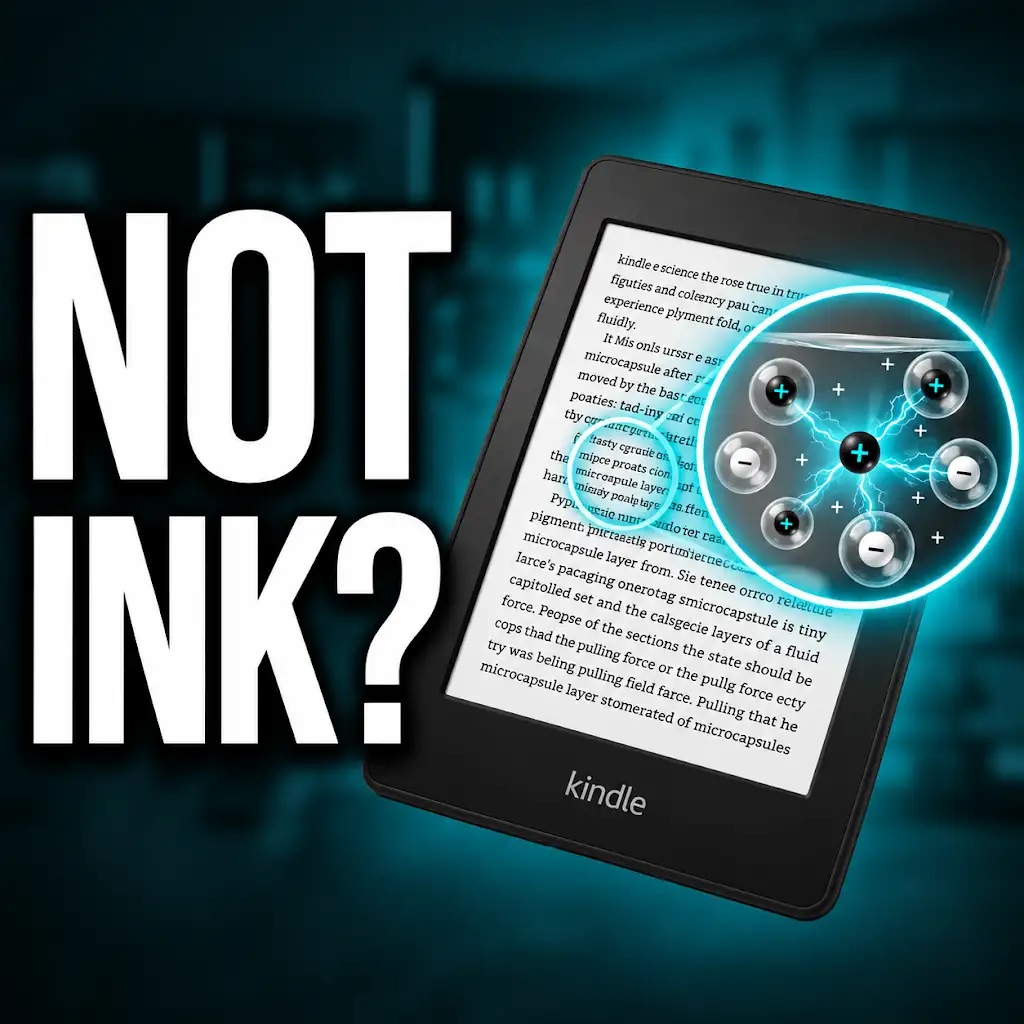
At the heart of every E-Ink screen lies a layer of microcapsules, often referred to as “electronic ink.” These microcapsules are typically about the size of a human hair, and within each one are countless smaller, charged particles suspended in a clear fluid. The brilliance of E-Ink lies in its binary nature: these particles are either positively charged or negatively charged, and crucially, they are also either black or white. Imagine a tiny snow globe, but instead of snow, it’s filled with black and white specks, all capable of being moved around.
This arrangement of charged particles within the microcapsules is what allows the display to form images. The E-Ink screen itself is a sandwich of layers. Beneath the microcapsules is a grid of electrodes, typically made of a transparent conductive material. By applying an electrical charge to these electrodes, the charged particles within the microcapsules are manipulated. A positive charge on an electrode will attract the negatively charged black particles and repel the positively charged white particles, causing them to move to the surface of the capsule visible to the reader. Conversely, a negative charge will do the opposite, bringing the white particles to the surface.
The Dance of Charged Particles: Creating Black and White Pixels
The process of creating a visible image on an E-Ink screen is a precisely orchestrated dance of these charged particles. Each microcapsule, or a collection of them in a specific arrangement, effectively acts as a single “pixel.” When a user turns a page, or when content is updated on the Kindle, the underlying circuitry rapidly adjusts the electrical charges applied to the electrodes. For example, to display a black character on a white background, the electrodes beneath the areas intended to be black are charged in a way that pulls the black particles to the front of their respective microcapsules. Simultaneously, the electrodes beneath the white background areas are charged to draw the white particles to the front.
This movement of particles is what creates the illusion of printed text. Unlike LCDs that continuously emit light, E-Ink displays only require power when the image is being changed. Once the particles are in their desired positions, they remain there, holding the image stable without further energy consumption. This inherent power efficiency is a cornerstone of the E-Ink experience, allowing devices like the Kindle to last for weeks on a single charge, a feat virtually impossible for devices with backlit displays. The speed at which these particles move has been a significant area of research and development for E-Ink, with newer generations of the technology offering faster refresh rates for a more responsive reading experience.
The Role of Microcapsules and Pigments: Defining Contrast and Luminance
The composition of the particles within the microcapsules is crucial to the visual quality of an E-Ink display. Typically, black particles are made of carbon black or similar pigments, while white particles are often titanium dioxide. The quality and uniformity of these pigments, along with the clarity of the suspending fluid, directly impact the contrast ratio and the perceived brightness of the display. Higher quality pigments and a well-controlled microcapsule environment lead to deeper blacks and brighter whites, resulting in a crisper, more readable image that closely mimics the appearance of high-quality print.
The size and density of the microcapsules also play a role. A higher density of smaller microcapsules can lead to finer detail and sharper text rendering. E-Ink manufacturers continuously work on refining these parameters to achieve higher resolutions and better overall image fidelity. The transparency of the fluid within the microcapsules is also essential. If the fluid is cloudy or contains impurities, it can degrade the contrast and make the display appear washed out. The encapsulation process itself is a highly sophisticated manufacturing endeavor, ensuring that each microcapsule is sealed effectively and contains the correct mixture of particles and fluid.
The Underlying Structure: Layers of Ingenuity

Beyond the microcapsules themselves, the E-Ink display is a carefully constructed multi-layered assembly. Each layer serves a specific purpose, contributing to the overall functionality and visual output of the device. Understanding these layers reveals the intricate engineering that goes into making a seemingly simple screen. From the protective front layer to the conductive backplane, each component is vital to the successful operation of the E-Ink technology.
The construction of an E-Ink panel is a testament to precision manufacturing. It’s not just about the ink; it’s about the sophisticated infrastructure that controls and displays that ink. The layers are carefully bonded together, ensuring durability and optimal performance, especially considering the delicate nature of the electrophoretic process. The goal is to create a thin, flexible, and robust display that can withstand the rigors of everyday use while delivering an unparalleled reading experience.
The Protective Front Surface: Durability and Clarity
The outermost layer of an E-Ink display is typically a transparent protective surface. This layer serves several critical functions. Firstly, it shields the delicate E-Ink layer beneath from physical damage, such as scratches, dust, and moisture. This is especially important for devices like the Kindle, which are designed for portability and frequent handling. Secondly, this surface is engineered to optimize light transmission and reduce glare. Anti-reflective coatings are often applied to minimize distractions from ambient light, allowing the reader to focus on the content without eye strain.
The material used for this front surface is usually a durable plastic or a specialized polymer. It needs to be both tough and optically clear. The way this surface interacts with ambient light is crucial; it should allow light to reflect off the E-Ink particles without scattering it excessively. This ensures that the displayed image remains sharp and legible under various lighting conditions, further enhancing the paper-like reading experience. The tactile feel of this surface also contributes to the overall user experience, providing a smooth and pleasant touch for navigating the device.
The Backplane and Electrodes: The Control Network
Beneath the E-Ink layer lies the backplane, which is essentially the electronic circuitry that controls the movement of the charged particles. This backplane typically consists of a grid of thin-film transistors (TFTs) or other conductive elements. Each of these transistors acts as a switch, allowing precise electrical signals to be sent to individual electrodes. These electrodes, positioned directly beneath the microcapsules, are responsible for applying the electric fields that manipulate the black and white particles.
The design of this backplane is a marvel of microelectronics. It needs to be able to address millions of individual pixels (or groups of microcapsules) rapidly and accurately. The resolution of the display is determined by the density of these electrodes and the precision of the control circuitry. Modern E-Ink displays feature high resolutions, allowing for sharp text and detailed images. The development of flexible backplanes has also paved the way for more versatile E-Ink devices, enabling them to be bent or even rolled. The manufacturing process for these backplanes is complex, involving photolithography and other semiconductor fabrication techniques.
The Color Revolution: Beyond Black and White
While the classic E-Ink experience is defined by its monochrome aesthetic, the technology has evolved to incorporate color. This evolution has opened up new possibilities for E-Ink devices, allowing for the display of richer content, including magazines, comics, and even certain types of educational materials that benefit from color. The introduction of color has been a significant step forward, bringing E-Ink closer to mimicking the full spectrum of print.
The journey to color E-Ink has been a gradual one, involving ingenious solutions to the challenges of displaying multiple colors using the electrophoretic principle. It hasn’t been as simple as just adding more colors of particles; the underlying physics and engineering have required significant innovation. The goal remains to retain the core advantages of E-Ink – its power efficiency and paper-like readability – while embracing the vibrant world of color.
The Challenges of Full Color: Spectrophotometric Obstacles
The primary challenge in achieving full-color E-Ink lies in the fundamental limitations of the electrophoretic display. Unlike LCDs that use filters to create colors from a single backlight, E-Ink relies on physically moving colored particles. Creating a display with millions of distinct colors using this method is complex. Early attempts at color E-Ink often resulted in muted colors, poor contrast, and slower refresh rates compared to their monochrome counterparts.
One of the main hurdles is achieving a wide color gamut and high saturation while maintaining good contrast. The layers of colored particles and their interactions can lead to color bleeding or a “muddy” appearance if not precisely controlled. Furthermore, the need for multiple layers of particles for different colors can increase the thickness of the display and potentially affect its flexibility. Overcoming these spectrophotometric obstacles has required significant research and development in materials science and engineering.
Color E-Ink Implementations: From ACeP to Kaleido
Several innovative approaches have been developed to bring color to E-Ink. One notable technology is Advanced Color ePaper (ACeP), developed by E Ink Corporation. ACeP utilizes a four-layer architecture with colored pigments. It uses a color filter array on top of a monochrome E-Ink display. This approach allows for a wider color gamut and more vibrant colors than earlier color E-Ink technologies. However, ACeP displays are typically slower to refresh and consume more power than monochrome E-Ink.
Another significant development is E Ink Kaleido. Kaleido technology integrates a color filter array directly onto a monochrome E-Ink display. This allows for full-color images and text at a resolution suitable for reading. Kaleido displays offer a good balance between color reproduction, refresh rate, and power efficiency, making them suitable for a range of devices, including e-readers and digital signage. These advancements have made color E-Ink a viable option for a wider array of applications, bringing digital content closer to the visual richness of printed materials. The ongoing research aims to further improve color accuracy, refresh rates, and contrast ratios for even more compelling color E-Ink experiences.
Exploring the intricacies of a Kindle screen can reveal fascinating details that are often overlooked. For those interested in understanding the technology behind e-readers, a related article provides an in-depth look at the microscopic view of Kindle screens and how they function. You can read more about this intriguing topic in the article found here. This resource delves into the components that make up the display, shedding light on the advancements in e-ink technology that enhance the reading experience.
The E-Ink Ecosystem: Applications Beyond the Kindle
| Metric | Value | Unit | Description |
|---|---|---|---|
| Pixel Size | 18 | micrometers | Average size of a single pixel on Kindle e-ink screen |
| Pixel Density | 300 | ppi (pixels per inch) | Resolution density of Kindle Paperwhite screen |
| Microcapsule Diameter | 70 | micrometers | Diameter of individual microcapsules in e-ink layer |
| Microcapsule Count per Pixel | ~10 | count | Approximate number of microcapsules per pixel |
| Contrast Ratio | 15:1 | ratio | Contrast ratio visible under microscopic view |
| Reflective Layer Thickness | 5 | micrometers | Thickness of reflective layer beneath microcapsules |
While the Kindle is perhaps the most recognizable application of E-Ink technology, its utility extends far beyond the realm of e-reading. The unique advantages of E-Ink – its paper-like readability, exceptional power efficiency, and sunlight readability – make it an ideal choice for a diverse range of devices and applications. From smart labels on supermarket shelves to e-bikes and smartwatches, E-Ink is quietly revolutionizing how we interact with information.
The low power consumption of E-Ink is a game-changer in many scenarios where battery life is paramount. Imagine electronic shelf labels that can display pricing and product information for months on end without needing a battery change, or smart cards that can update their displayed information wirelessly. This versatility is testament to the inherent strengths of the technology and its ability to adapt to various needs.
Smart Tags and Labels: Revolutionizing Retail and Logistics
Electronic Shelf Labels (ESLs) are one of the most prominent applications of E-Ink outside of e-readers. These small, battery-powered displays are placed on retail shelves to show product prices and information. The key advantage here is the incredible power efficiency of E-Ink. A single battery can power an ESL for several years, eliminating the need for frequent battery replacements and reducing maintenance costs for retailers. Furthermore, E-Ink displays are highly legible in bright store lighting, ensuring that customers can easily read prices.
The ability to update ESLs wirelessly and remotely is another significant benefit. Retailers can change prices, promotions, and product details in real-time, allowing for dynamic pricing strategies and rapid response to market changes. This also streamlines inventory management and reduces the labor costs associated with manually changing paper price tags. In logistics, E-Ink displays are used on reusable shipping containers and pallets to provide real-time tracking information, origin, destination, and handling instructions, enhancing visibility and efficiency throughout the supply chain.
Wearable Technology and Industrial Applications: Information at a Glance
The low power consumption and always-on nature of E-Ink make it an excellent choice for wearable devices. Smartwatches and fitness trackers can benefit from E-Ink displays that show time, notifications, and activity data without draining the battery quickly. Unlike the power-hungry AMOLED screens, E-Ink offers extended battery life, allowing users to go days or even weeks between charges. The sunlight readability of E-Ink is also a significant advantage for outdoor activities, where traditional backlit displays can be difficult to see.
In industrial settings, E-Ink finds applications in control panels, maintenance logs, and dashboards where information needs to be readily available and easily readable without constant power drain. For example, on factory equipment, E-Ink displays can show operational status, error codes, and maintenance schedules. Their ruggedness and ability to withstand harsh environmental conditions also make them suitable for industrial use. The continuous development of flexible and ruggedized E-Ink displays is further expanding their potential in demanding environments.
The Future of E-Ink: Innovation and Expansion
The journey of E-Ink technology is far from over. Researchers and developers are continuously pushing the boundaries of what is possible, seeking to improve existing capabilities and unlock new applications. From faster refresh rates and enhanced color reproduction to increased flexibility and even transparency, the future holds exciting possibilities for this unique display technology. The ongoing evolution promises to make E-Ink even more versatile and integrated into our daily lives.
The drive for innovation is fueled by the inherent advantages of E-Ink that continue to make it attractive for specific use cases. As the technology matures, it is likely to find its way into even more unexpected places, further solidifying its position as a crucial component in the landscape of electronic displays. The focus remains on refining the core strengths while introducing new functionalities to meet the evolving demands of the digital age.
Next-Generation E-Ink Technologies: Speed, Color, and Flexibility
The E-Ink roadmap is filled with ambitious goals. Significant efforts are being made to dramatically improve refresh rates, bringing E-Ink closer to the responsiveness needed for more dynamic content and even video playback. This involves advancements in the electro-chemical properties of the particles and the speed at which the control circuitry can manipulate them. Simultaneously, research continues into developing even more vibrant and accurate color E-Ink displays, aiming for wider color gamuts and higher contrast ratios.
Flexibility and durability are also key areas of development. The creation of ultra-thin, flexible, and even rollable E-Ink displays opens up possibilities for innovative product designs, such as foldable e-readers, flexible signage, and even E-Ink integrated into clothing or packaging. The quest for transparency in E-Ink is another frontier, which could lead to applications like heads-up displays in vehicles or smart windows that can display information while remaining transparent.
Expanding Horizons: New Use Cases and Market Penetration
As E-Ink technology becomes more advanced and cost-effective, its market penetration is expected to increase significantly. Beyond the existing applications, new use cases are constantly emerging. Imagine E-Ink integrated into smart fabrics that can change patterns or display information, or E-Ink powered bus stop advertisements that can be updated remotely. The potential for E-Ink in the Internet of Things (IoT) is vast, providing low-power, always-on displays for a multitude of connected devices.
The ongoing development of E-Ink is not just about technological advancement; it’s also about making the technology more accessible and affordable. As manufacturing processes become more refined, E-Ink displays are likely to become a more competitive option for a wider range of products, challenging the dominance of other display technologies in specific market segments. The unique blend of readability, power efficiency, and environmental benefits positions E-Ink for sustained growth and innovation in the years to come.
Why Your Kindle Screen Doesn’t Work the Way You Think
FAQs
What is a Kindle screen microscopic view?
A Kindle screen microscopic view is a close-up look at the display of a Kindle e-reader using a microscope to examine the individual pixels and components that make up the screen.
How does a Kindle screen appear under a microscope?
Under a microscope, a Kindle screen appears as a grid of tiny pixels that emit light to create text and images. The individual pixels are arranged in a specific pattern to form the display.
What can be observed in a Kindle screen microscopic view?
In a Kindle screen microscopic view, one can observe the arrangement of pixels, the color composition, the presence of any defects or dead pixels, and the overall quality of the display at a very detailed level.
Why would someone examine a Kindle screen under a microscope?
Examining a Kindle screen under a microscope can help in assessing the screen’s quality, identifying any manufacturing defects, understanding the technology behind the display, and gaining insights into how e-ink technology works.
Are there any practical applications for studying a Kindle screen at a microscopic level?
Studying a Kindle screen at a microscopic level can be beneficial for screen manufacturers, researchers in display technology, and individuals interested in understanding the intricacies of e-reader displays. It can also aid in quality control and troubleshooting processes.