
The Magic of E Ink: A Journey into Electronic Paper Display Technology
Electronic Ink, or E Ink, has revolutionized how we consume digital content, bringing the comfort and familiarity of paper to our screens. Unlike the emissive displays of smartphones and televisions that generate their own light, E Ink screens are reflective, mimicking the way ink on paper interacts with ambient light. This fundamental difference is what gives E Ink its unique advantages: exceptional battery life, a glare-free reading experience, and a paper-like appearance. The secret to this magic lies in the intricate dance of charged particles within tiny microcapsules, orchestrated by precisely timed electrical signals known as drive waveforms. Understanding these waveforms is key to unraveling the fascinating workings of E Ink displays.
E-ink technology has revolutionized the way we read and interact with digital content, and understanding the drive waveforms used in these displays is crucial for optimizing their performance. For a deeper dive into the intricacies of e-ink drive waveforms and their impact on display quality, you can refer to a related article that explores these concepts in detail. For more information, visit this article.
Microcapsules: The Building Blocks of E Ink
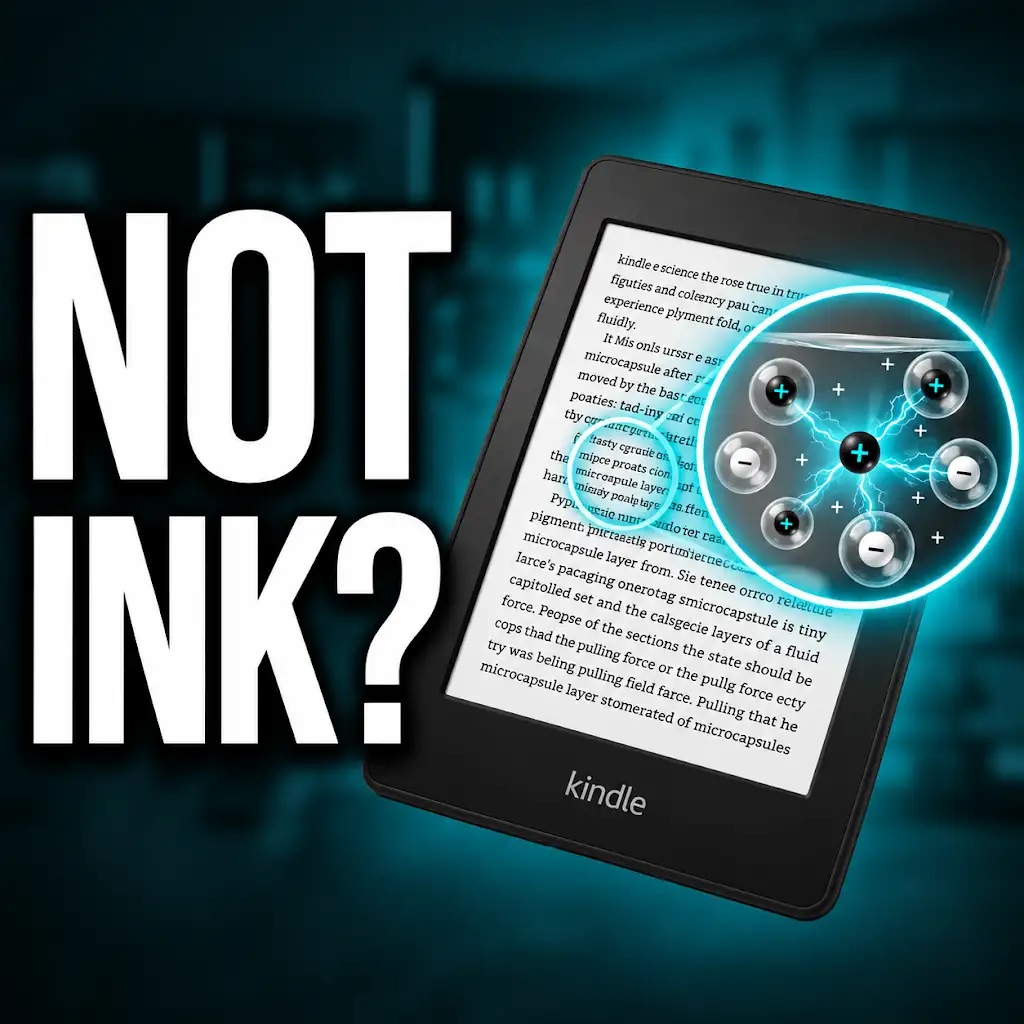
At the heart of every E Ink display are millions of microscopic capsules, each no larger than a human hair. These microcapsules are the fundamental units that create the visible image. Within each capsule, a complex mixture of liquids houses tiny, charged pigment particles. Typically, there are two types of particles: positively charged white particles and negatively charged black particles. These particles are suspended in a clear fluid, allowing them to move freely when an electric field is applied. The controlled movement of these black and white particles to the front or back of the microcapsule is what forms the pixels on the screen, creating the visual representation of text and images.
The Composition of Microcapsules
The precise composition of the microcapsules is a closely guarded secret by E Ink Corporation, the dominant player in this field. However, the general principle involves a fluid medium that facilitates the movement of charged pigment particles. This fluid needs to be stable, non-reactive with the pigments, and capable of sustaining the microcapsules’ integrity over a long lifespan. The white pigment is often a form of titanium dioxide, known for its brightness and opacity. The black pigment is usually carbon black, providing deep, rich blacks. The electrical charge is imparted to these particles through specific chemical treatments or the inclusion of charged additives. The viscosity of the internal fluid is also critical, influencing the speed at which the particles can move in response to electrical stimuli.
The Role of Electrodes
To manipulate the charged particles within the microcapsules, a network of electrodes is essential. These electrodes are typically arranged in a grid pattern behind the layer of microcapsules. When a voltage is applied to a specific electrode, it creates an electric field that extends through the microcapsule located above it. The polarity and magnitude of this voltage determine the direction and strength of the force exerted on the charged pigment particles. By precisely controlling the voltage applied to each electrode in the grid, the display can dictate which pigment particles (black or white) become visible at each pixel location, thereby forming the desired image.
Drive Waveforms: The Language of E Ink
The “drive waveform” is the sequence of electrical pulses and voltage levels applied to the electrodes to control the movement of pigment particles. It’s the programming language that instructs the E Ink display on how to form an image. Unlike the rapid refresh rates of traditional displays, E Ink’s reflective nature means it only consumes power when the image is being changed. This is because once the particles are moved into position, they remain there without requiring continuous power, a phenomenon known as bistability. The drive waveform dictates how quickly and effectively these particles are moved to achieve a stable image.
The Concept of Bistability
Bistability is a cornerstone of E Ink technology. It means that the display has two stable states: one where the white particles are at the front (displaying white) and one where the black particles are at the front (displaying black). Once the pigment particles are moved to their desired position, they will stay there until a new electrical signal is applied. This is a significant departure from technologies like LCD, which require constant power to maintain their state. This inherent bistability is the primary reason for E Ink devices’ exceptionally long battery life, often lasting weeks on a single charge.
Different Waveform Types and Their Impact
The complexity of the drive waveform is crucial for achieving various display functionalities. Simple waveforms might be used for static text display, ensuring quick and efficient rendering. More complex waveforms are employed for displaying images with grayscale or for transitions that minimize visual artifacts. For instance, a simple black-and-white image might use a straightforward waveform that pushes black particles to one side and white to the other. However, to achieve shades of gray, the waveform needs to be more nuanced. It might involve partially moving the particles, creating a mixed appearance. Furthermore, the speed of the waveform directly impacts the refresh rate of the display. Faster waveforms can lead to quicker page turns and smoother transitions, though they might also consume slightly more power during the transition.
The Importance of Image Quality
The quality of the image rendered by an E Ink display is heavily dependent on the sophistication of its drive waveform. Waveforms are meticulously designed to minimize ghosting, a common issue in E Ink where remnants of previous images can persist on the screen. They also aim to achieve optimal contrast and brightness. The waveform must precisely control the amount of time and the voltage applied to ensure that the pigment particles reach their intended positions without overshooting or undershooting. This is particularly challenging when displaying dynamic content or when switching between very different images. Engineers spend considerable effort optimizing these waveforms for specific display panel sizes, resolutions, and intended use cases.
The Waveform Design Process: Precision Engineering
Designing effective E Ink drive waveforms is a sophisticated process that involves a deep understanding of physics, chemistry, and electrical engineering. It’s not simply about applying a voltage; it’s about applying a precisely timed sequence of voltages that guide the movement of charged particles to achieve the desired visual outcome. This involves extensive experimentation and simulation to find the optimal parameters for each specific display.
Factors Influencing Waveform Design
Several factors play a critical role in the design of a drive waveform. The physical properties of the microcapsules, including the size, charge, and mobility of the pigment particles, are paramount. The electrical characteristics of the display driver circuitry also influence the achievable voltage levels and switching speeds. Environmental conditions, such as temperature, can affect the viscosity of the internal fluid and the mobility of the particles, necessitating adaptive waveform strategies. Furthermore, the intended use of the device – whether for static text, dynamic images, or video – dictates the required refresh rate and the acceptable level of artifacts.
Simulation and Optimization Techniques
To streamline the waveform design process and reduce the need for extensive physical prototyping, sophisticated simulation software is employed. These tools model the behavior of the charged particles within the microcapsules under the influence of applied electric fields. Engineers can then experiment with different voltage levels, pulse durations, and sequencing to predict the resulting image. Optimization algorithms are often used to automatically search for waveform parameters that minimize ghosting, maximize contrast, and achieve the desired refresh rates. This iterative process of simulation, analysis, and refinement allows for the development of highly efficient and effective drive waveforms.
The Role of Firmware
The drive waveforms themselves are not hardwired into the display panel. Instead, they are implemented in the firmware of the electronic device. This allows for flexibility and updates. For example, a firmware update might introduce a new waveform that improves performance or introduces new display capabilities. This also means that different E Ink devices, even those with similar display panels, might utilize slightly different waveforms optimized for their specific hardware and software configurations. This firmware-driven approach is essential for adapting to the nuances of individual display manufacturing variations.
E ink technology has revolutionized the way we interact with digital displays, and understanding the drive waveforms used in these systems is crucial for optimizing performance. For a deeper dive into the intricacies of E ink technology and its applications, you can explore a related article that discusses various aspects of this innovative display method. This resource provides valuable insights into how drive waveforms impact the efficiency and quality of E ink screens. If you’re interested in learning more, check out this informative piece on Freaky Science.
Waveform Optimization for Specific Applications
| Parameter | Description | Typical Value | Unit |
|---|---|---|---|
| Voltage Amplitude | Peak voltage applied during waveform drive | 15 | V |
| Pulse Width | Duration of each voltage pulse | 100 | ms |
| Frequency | Number of waveform cycles per second | 5 | Hz |
| Waveform Type | Shape of the driving voltage waveform | Square | – |
| Refresh Rate | Number of full screen updates per second | 0.5 | Hz |
| Rise Time | Time taken for voltage to rise from 10% to 90% | 10 | ms |
| Fall Time | Time taken for voltage to fall from 90% to 10% | 10 | ms |
| Drive Waveform Polarity | Polarity of the applied voltage during drive | Alternating | – |
The ideal drive waveform is not a one-size-fits-all solution. It needs to be tailored to the specific application and the desired user experience. What works perfectly for a dedicated e-reader might not be optimal for a digital signage display or a smart label. This optimization process considers trade-offs between refresh rate, power consumption, image quality, and cost.
E-Readers: Prioritizing Battery Life and Readability
For e-readers, the primary focus is on maximizing battery life and providing a comfortable reading experience. This means waveforms are designed to be highly bistable, ensuring that power is only consumed during page turns. Ghosting is minimized through careful waveform sequencing, and sharp text is prioritized. While refresh rates might not be as high as other display technologies, they are sufficient for turning pages. The goal is to make the reading experience as close to paper as possible, with minimal distraction from the display technology itself.
Digital Signage and Smart Labels: Speed and Durability
In applications like digital signage or smart labels, the requirements can be different. While battery life might still be a concern for some smart labels, the need for faster updates and the ability to display dynamic content becomes more important. Waveforms for these applications might be optimized for quicker transitions, allowing for more frequent content changes. The durability of the display, in terms of its ability to withstand repeated updates without degradation, is also a key consideration. Some applications might even require waveforms that can withstand harsher environmental conditions or a higher volume of image changes over time.
Wearable Technology: Miniaturization and Efficiency
For wearable devices with E Ink displays, such as smartwatches, the constraints are even more stringent. Space is at a premium, and power consumption must be minimized to extend battery life. Waveforms need to be highly efficient and optimized for smaller screen sizes and potentially lower resolutions. The complexity of the waveform might be reduced to achieve faster refreshes on smaller displays, while still maintaining acceptable image quality for notifications and basic information. The integration of the E Ink driver circuitry with the wearable’s main processor also plays a significant role in the overall waveform implementation.
The Future of E Ink Waveforms: Innovation and Evolution
The field of E Ink technology is constantly evolving, and so too are the drive waveforms that power it. Researchers and engineers are continuously pushing the boundaries to achieve even better performance, new functionalities, and wider applications for this unique display technology.
Towards Full Color E Ink
One of the most significant advancements in E Ink technology has been the development of full-color E Ink displays. Unlike early attempts that relied on adding color filters, newer technologies like ACeP (Advanced Color ePaper) and Gallery™ are integrating color directly into the microcapsules. The drive waveforms for these color displays are considerably more complex, as they need to control multiple types of color pigment particles (typically cyan, magenta, yellow, and black – CMYK) independently to produce a wide spectrum of colors. This requires highly precise voltage control and sophisticated waveform sequencing to achieve accurate and vibrant color reproduction.
Enhanced Refresh Rates and Reduced Artifacts
The pursuit of faster refresh rates and the complete elimination of artifacts like ghosting remains a key area of research. Innovations in waveform design, coupled with advancements in the physical characteristics of the microcapsules and driver electronics, are leading to E Ink displays that can now show smoother animations and more dynamic content than ever before. This could open doors for E Ink in applications where its previous limitations in speed were a deterrent.
New Material Science and Advanced Waveform Control
Beyond the pigments and microcapsules, ongoing research into new material science for the display substrate and encapsulation layers can also influence waveform design. As new materials enable faster particle movement or greater bistability, the waveforms can be adapted to exploit these new properties. Furthermore, the integration of AI and machine learning into the waveform generation process is being explored. These advanced techniques could potentially lead to self-optimizing waveforms that dynamically adjust to environmental conditions and content changes, further enhancing performance and efficiency. The continued exploration of E Ink’s potential, driven by these waveform innovations, promises to further integrate this remarkable technology into our daily lives in novel and exciting ways.
Why Your Kindle Screen Doesn’t Work the Way You Think
FAQs
What are e ink drive waveforms?
E ink drive waveforms are electrical signals that control the behavior of electronic ink particles in e ink displays. These waveforms determine how the ink particles move and arrange themselves to create images on the screen.
How do e ink drive waveforms affect the performance of e ink displays?
E ink drive waveforms play a crucial role in determining the refresh rate, contrast, and power consumption of e ink displays. By optimizing the waveforms, manufacturers can improve the overall performance of the displays.
What are some common types of e ink drive waveforms used in e ink technology?
Common types of e ink drive waveforms include simple waveforms, multi-pulse waveforms, and temperature-compensated waveforms. Each type has its own advantages and is used in different applications based on specific requirements.
How are e ink drive waveforms created and implemented in e ink devices?
E ink drive waveforms are typically created by engineers and designers using specialized software tools. Once created, these waveforms are programmed into the display controller of e ink devices to control the behavior of the ink particles.
Why is it important to optimize e ink drive waveforms for e ink displays?
Optimizing e ink drive waveforms is important to ensure that e ink displays deliver high-quality images with fast refresh rates and low power consumption. By fine-tuning the waveforms, manufacturers can enhance the user experience and extend the battery life of e ink devices.