
The Dance of Molecules: Understanding Water’s Freezing Phenomenon
Water, a substance seemingly simple and ubiquitous, holds within its liquid form a remarkable complexity that culminates in the fascinating process of freezing. Far from being a mere passive transformation, ice formation is a dynamic, molecular ballet orchestrated by temperature, pressure, and the inherent properties of water itself. To truly grasp how ice forms in water, one must delve into the microscopic world, observing the intricate interactions between water molecules as they transition from a state of chaotic motion to an ordered, crystalline structure. This journey will illuminate the fundamental principles governing phase changes and the unique characteristics that make water’s freezing a subject of enduring scientific curiosity.
Ice formation in water is a fascinating process that involves the cooling of water molecules, leading to a structured arrangement as they transition from a liquid to a solid state. For a deeper understanding of this phenomenon, you can explore a related article that delves into the science behind ice formation and its implications in nature. Check it out here: Freaky Science.
Kinetic Energy and Molecular Motion: The Foundation of Fluidity
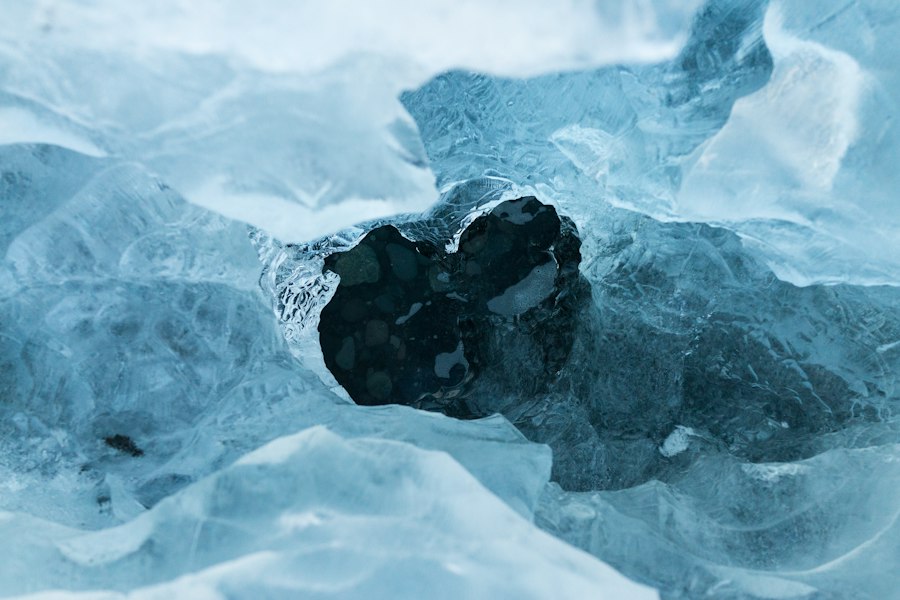
Before water can freeze, it must first exist in its liquid state, a state characterized by the continuous motion of its constituent molecules. The fundamental driver behind this motion is kinetic energy, the energy of movement. In liquid water, molecules are in constant flux, vibrating, rotating, and translating throughout the volume. They are held together by intermolecular forces, primarily hydrogen bonds, which are attractive forces between the slightly positive hydrogen atoms of one water molecule and the slightly negative oxygen atom of another. However, these hydrogen bonds are transient; they are constantly forming and breaking as the molecules jostle and collide.
This constant molecular activity is what gives liquids their fluidity. Molecules can slide past one another, allowing water to flow and take the shape of its container. The average kinetic energy of the molecules is directly proportional to the temperature of the water. When the temperature is high, the molecules possess a significant amount of kinetic energy, leading to vigorous, random motion. As the temperature decreases, the molecules lose kinetic energy, their movements become slower and less energetic. This reduction in kinetic energy is the crucial first step in the freezing process.
Temperature as a Thermometer of Molecular Speed
Temperature is, in essence, a macroscopic measure of the average kinetic energy of the particles within a substance. When we speak of water warming up, we are observing an increase in the speed at which its molecules are moving. Conversely, cooling water signifies a decrease in this molecular speed. This relationship is not coincidental; it is a fundamental principle of thermodynamics. The energy we add as heat excites the water molecules, causing them to vibrate and move more rapidly. When heat is removed, the molecules decelerate. This slowing down is not a uniform process for every single molecule. There will always be some molecules with higher kinetic energy and others with lower kinetic energy at any given temperature, creating a distribution of speeds. However, it is the average kinetic energy that dictates the overall temperature of the water.
Intermolecular Forces: The Invisible Bonds
While kinetic energy drives molecular motion, intermolecular forces, particularly hydrogen bonds in water, provide the cohesive forces that keep the molecules from dispersing entirely. These bonds, though weaker than the covalent bonds within a water molecule, are significant enough to hold the liquid together. They act like a temporary scaffolding, allowing molecules to move but also influencing their proximity and interactions. The strength and nature of these intermolecular forces play a critical role in determining the properties of water, including its freezing point. In liquid water, these hydrogen bonds are dynamic, constantly breaking and reforming. As the temperature drops and kinetic energy decreases, the influence of these attractive forces becomes more pronounced relative to the disruptive force of molecular motion.
The Onset of Freezing: Nucleation and the Critical Moment
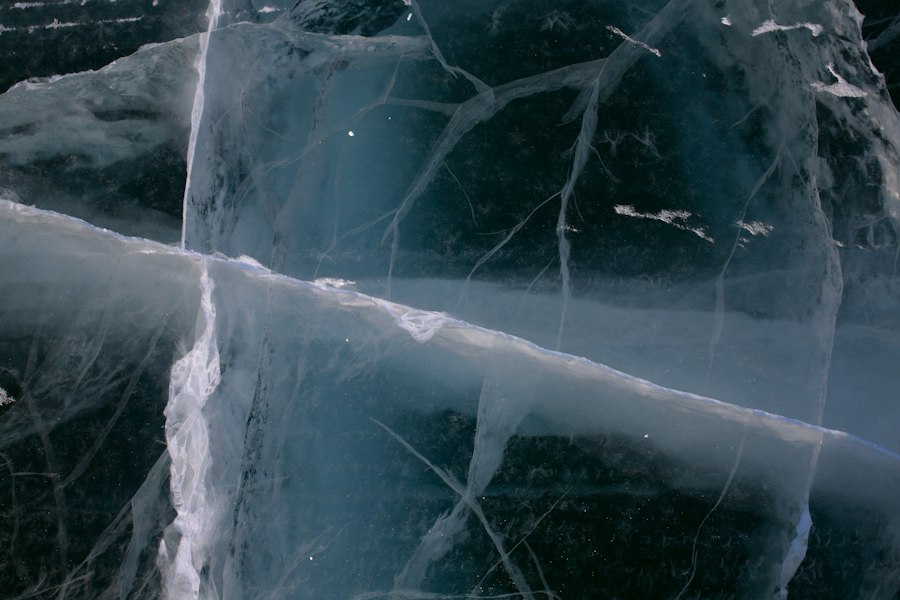
As water cools and its molecules lose kinetic energy, the hydrogen bonds begin to persist for longer durations. The molecular motion becomes less frantic, and the attractive forces start to gain dominance. Freezing does not occur spontaneously and uniformly throughout the entire body of water at its freezing point. Instead, it begins at specific points within the liquid, a process known as nucleation. Nucleation is the initial formation of a stable, ordered cluster of molecules that will serve as the seed for the growing ice crystal.
Heterogeneous Nucleation: The Common Pathway
In most real-world scenarios, freezing occurs via heterogeneous nucleation. This means that the formation of ice crystals is initiated on the surface of impurities present in the water. These impurities can be anything from dust particles and dissolved minerals to microscopic imperfections on the container walls. These surfaces provide a favorable template for water molecules to arrange themselves into an ordered, crystalline lattice. The molecules can orient themselves more readily on these pre-existing structures, lowering the energy barrier required for the formation of a stable nucleus. Without these nucleation sites, water would need to reach a significantly lower temperature (supercooling) before spontaneous, homogeneous nucleation could occur.
Homogeneous Nucleation: A Rare and Energetic Event
Homogeneous nucleation, on the other hand, is the spontaneous formation of a stable ice nucleus from pure water without the aid of any impurities. This process is much rarer and requires significantly more energy to overcome the energetic barrier of forming a new, ordered structure from scratch. For homogeneous nucleation to occur in water, temperatures typically need to drop below -38 degrees Celsius (-36.4 degrees Fahrenheit). At such extremely low temperatures, the molecular motion is so suppressed that clusters of molecules can spontaneously align into an ice-like structure. However, in everyday situations, heterogeneous nucleation is the dominant mechanism by which ice begins to form.
The Critical Radius: A Matter of Stability
For a cluster of water molecules to become a stable ice nucleus, it must reach a critical size. Initially, small clusters of molecules that attempt to form an ice-like structure are unstable. They are more likely to break apart than to grow, as the surface energy of these tiny formations is high, and the thermal motion can easily disrupt them. However, as a cluster grows, its volume increases, and the favorable energy contribution from the formation of the ordered ice lattice begins to outweigh the unfavorable surface energy. Once a cluster reaches this critical radius, it becomes energetically favorable for it to grow further by attracting more water molecules. This critical nucleus is the cornerstone upon which the entire ice crystal will develop.
Crystal Growth: The Art of Molecular Assembly
Once a stable ice nucleus has formed, the process of crystal growth begins. Water molecules from the surrounding liquid continue to attach themselves to the surface of the nucleus, arranging themselves into the characteristic hexagonal lattice structure of ice. This growth is not a chaotic jumble; it is a highly ordered process guided by the existing crystalline structure of the nucleus.
The Hexagonal Lattice: Water’s Preferred Architecture
The precise arrangement of water molecules in ice is a fascinating testament to the nature of hydrogen bonding. In the ice crystal, each water molecule is tetrahedrally coordinated, meaning it forms hydrogen bonds with four neighboring water molecules. Two of these bonds involve the molecule donating its hydrogen atoms to oxygen atoms of other molecules, while the other two involve the molecule accepting hydrogen atoms from the hydrogen atoms of other molecules. This arrangement results in a highly symmetrical, open, hexagonal crystalline structure. This specific arrangement is dictated by the bond angles and lengths of the hydrogen bonds, which are optimized for energy minimization in the solid state.
Growth Fronts and Surface Kinetics: Guiding the Crystal’s Expansion
The growth of an ice crystal is not uniform in all directions. The rate at which new water molecules attach to the crystal surface is influenced by various factors, including temperature, the availability of water molecules, and the surface structure of the growing crystal. Growth often occurs preferentially along certain crystallographic planes, leading to the formation of distinct facets and shapes. These “growth fronts” represent the leading edges of the crystal where new molecules are being incorporated. The kinetics of how quickly molecules can diffuse to these growth fronts and adhere to the surface dictates the overall rate of crystal expansion.
Impurities and their Impact: Distorting the Perfect Structure
The presence of impurities, which were instrumental in initiating freezing through heterogeneous nucleation, can also influence the subsequent growth of the ice crystal. Dissolved substances, such as salts, can interfere with the orderly arrangement of water molecules at the crystal surface. They may become incorporated into the ice lattice, disrupting its perfect hexagonal structure, or they may segregate to the crystal boundaries. This incorporation of impurities can affect the physical properties of the ice, making it weaker or altering its melting point. In some cases, impurities can even promote the formation of polycrystalline ice, where many small, randomly oriented ice crystals form instead of a single large, well-defined crystal.
Understanding how ice forms in water is a fascinating topic that delves into the principles of physics and chemistry. When water cools down, its molecules begin to slow down and arrange themselves into a crystalline structure, leading to the formation of ice. This process not only highlights the unique properties of water but also has significant implications for our environment and climate. For a deeper exploration of this subject, you can read a related article that discusses the science behind ice formation in detail at this link.
Supercooling and the Reversal of Freezing: When Logic Falters
| Parameter | Value | Unit | Description |
|---|---|---|---|
| Freezing Point of Water | 0 | °C | Temperature at which water begins to freeze under standard atmospheric pressure |
| Density of Water at 0°C | 999.84 | kg/m³ | Density of liquid water just before freezing |
| Density of Ice at 0°C | 916.7 | kg/m³ | Density of ice formed at freezing point |
| Latent Heat of Fusion | 334 | kJ/kg | Energy required to convert 1 kg of water at 0°C to ice without temperature change |
| Crystal Structure | Hexagonal | – | Common crystal lattice structure of ice Ih formed in natural conditions |
| Expansion on Freezing | ~9 | % | Approximate volume increase when water freezes to ice |
| Freezing Rate | Varies | °C/hour | Rate at which temperature drops to form ice, depends on environment |
| Supercooling Temperature | -40 | °C | Lowest temperature water can be cooled without freezing under pure conditions |
Under ideal conditions, pure water will freeze at precisely 0 degrees Celsius (32 degrees Fahrenheit) at standard atmospheric pressure. However, in reality, water can often be cooled below its freezing point without solidifying. This phenomenon is known as supercooling. Supercooled water is in a metastable state, meaning it is not at its lowest energy state but is temporarily trapped in a liquid form.
The Energetic Barrier to Nucleation
Supercooling occurs because the formation of a stable ice nucleus, whether homogeneous or heterogeneous, requires a certain amount of energy to overcome the energetic barrier. If the cooling rate is faster than the rate at which stable nuclei can form, the water will remain liquid even when its temperature drops below the equilibrium freezing point. The molecules continue to move with enough energy to break apart any small, transient clusters that might form. The absence of suitable nucleation sites or a rapid rate of cooling are the primary reasons for supercooling.
The Sudden Release: Re-establishing Equilibrium
When supercooled water finally does freeze, it often does so suddenly and dramatically. This can be triggered by a disturbance, such as shaking the container, introducing a nucleation site (like a small ice crystal or even a tiny solid particle), or a significant temperature fluctuation. Once nucleation occurs in supercooled water, the formation of ice can propagate very rapidly through the entire volume, releasing a significant amount of latent heat of fusion. This sudden release of energy can cause the temperature of the water to rise back up to its freezing point as the liquid transforms into solid ice. This phenomenon highlights the delicate balance between kinetic energy and intermolecular forces, and how a small perturbation can trigger a complete phase change.
Practical Implications: From Frost to Aviation
The phenomenon of supercooling has several practical implications. In meteorology, supercooled water droplets in clouds are responsible for the formation of ice crystals that lead to snow and hail. Aircraft flying through clouds containing supercooled water can accumulate ice on their wings and fuselage, posing a significant safety hazard. In culinary applications, carefully controlled supercooling can be used to achieve specific textures in frozen desserts. Understanding supercooling is crucial for predicting and mitigating the effects of ice formation in various natural and engineered systems.
Factors Influencing Ice Formation: Beyond Temperature
While temperature is the most significant factor governing the formation of ice in water, several other variables can influence the process, altering the freezing point or the rate at which ice forms. These factors underscore the complex interplay of forces at the molecular level.
Pressure: A Subtle but Significant Influence
Pressure exerts a subtle but measurable influence on the freezing point of water. Unlike most substances, water exhibits an anomalous behavior: its freezing point decreases slightly as pressure increases. This is because ice is less dense than liquid water. When pressure is applied, it favors the denser phase, which in this case is liquid water. Therefore, more energy (a lower temperature) is required to force water into the less dense solid ice phase against increased pressure. This effect is generally small at everyday pressures but becomes more significant at very high pressures.
Dissolved Solutes: The Freezing Point Depression
The presence of dissolved substances, such as salts or sugars, significantly impacts the freezing point of water. This phenomenon is known as freezing point depression. Solute molecules interfere with the ability of water molecules to arrange themselves into a crystalline lattice. They occupy space and disrupt the hydrogen bonding network, making it more difficult for ice crystals to form. Consequently, a lower temperature is required to achieve freezing. This principle is widely applied in everyday life, such as using salt to de-ice roads or adding antifreeze to car radiators. The greater the concentration of dissolved solute, the lower the freezing point of the solution.
Impurities as Catalysts and Inhibitors: A Dual Role
As discussed earlier, impurities play a dual role in ice formation. They act as nucleation sites, initiating the freezing process by providing a surface for ice crystals to form upon. This is their role as catalysts. However, once incorporated into or adsorbed onto the growing ice crystal, certain impurities can also act as inhibitors. They can distort the crystal lattice and slow down the growth rate, or even prevent further freezing altogether if present in sufficient quantities. The specific chemical nature of the impurity determines whether it primarily acts as a nucleating agent or as a growth inhibitor.
Water Purity and Other Factors: The Ideal vs. The Real
The purity of the water itself is a critical determinant of its freezing behavior. As mentioned, pure water exhibits the characteristic freezing point of 0 degrees Celsius. However, even trace amounts of impurities can alter this significantly. Factors such as the presence of dissolved gases (like dissolved oxygen or carbon dioxide) can also have minor effects on the freezing point and nucleation process. The history of the water, including how it has been treated or stored, can also influence the types and distribution of impurities present, thereby affecting its freezing characteristics. Understanding these myriad factors allows for a more comprehensive appreciation of the science behind how ice forms in water.

Why Hot Water Freezes Faster Than Cold (The Mpemba Effect)
FAQs
How does ice form in water?
Ice forms in water when the temperature drops below 0 degrees Celsius (32 degrees Fahrenheit), causing the water molecules to slow down and come together to form a solid lattice structure.
What is the process of ice formation in water called?
The process of ice formation in water is called freezing. During freezing, the water molecules lose energy and arrange themselves into a crystalline structure, resulting in the formation of ice.
At what temperature does water freeze?
Water freezes at 0 degrees Celsius (32 degrees Fahrenheit). This is the temperature at which the kinetic energy of water molecules decreases enough for them to form solid ice crystals.
Can impurities in water affect the formation of ice?
Yes, impurities in water can affect the formation of ice. Impurities such as salt or minerals can lower the freezing point of water, making it harder for ice to form. This is why salt is often used to prevent ice formation on roads and sidewalks.
Why does ice float on water?
Ice floats on water because it is less dense than liquid water. When water freezes, it expands and forms a crystalline structure that is less dense than the liquid form. This causes ice to float on top of water bodies.