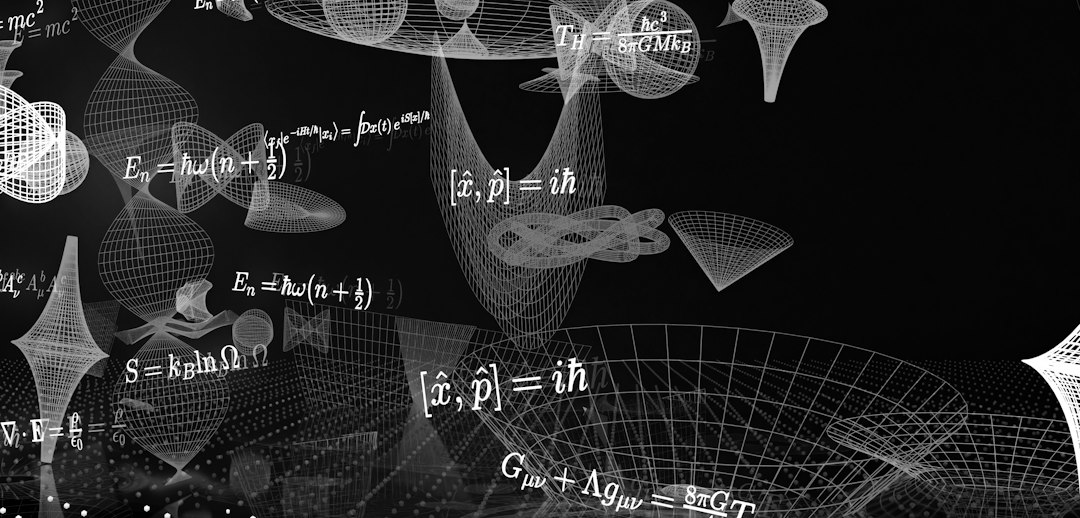
The vast expanse of the cosmos, a canvas painted with swirling nebulae, distant galaxies, and the enigmatic dance of celestial bodies, has long captivated the human imagination. For centuries, humanity has gazed upwards, seeking answers to fundamental questions about its origins, its place in the universe, and the very nature of reality. A recent physics documentary, simply titled “Exploring the Universe: A Fascinating Physics Documentary Reveal,” has embarked on an ambitious journey to demystify these cosmic wonders, offering viewers a profound and accessible glimpse into the cutting edge of astrophysics and cosmology. The film eschews complex jargon where possible, opting instead for stunning visuals and insightful explanations to illuminate some of the most profound mysteries of existence.
Unveiling the Cosmic Tapestry
The documentary’s opening sequences immediately plunge the viewer into a breathtaking visual odyssey. Starting with familiar celestial objects, the film gradually expands its scope, revealing the sheer scale and complexity of the universe. It masterfully blends archival footage with cutting-edge CGI, depicting everything from the fiery birth of stars within stellar nurseries to the silent, awe-inspiring drift of galaxies across billions of light-years. The narrative voice, calm and authoritative, guides the audience through the intricate web of cosmic structures, explaining the fundamental forces that govern their formation and evolution.
The Dance of Gravity and Matter
A significant portion of the early segment is dedicated to the ubiquitous force of gravity. The documentary explains how gravity, often perceived as a simple pull, is in fact a curvature of spacetime itself, as described by Einstein’s theory of general relativity. Through animated visualizations, viewers witness how massive objects, like stars and planets, warp the fabric of spacetime, dictating the paths of other objects. This segment emphasizes the crucial role of gravity in the formation of stars, planets, and entire galaxies, demonstrating how seemingly chaotic interactions are, in fact, governed by this fundamental force. The film illustrates this with examples, showcasing the gravitational ballet of binary star systems and the gravitational lensing effect, where the gravity of massive objects bends light from distant sources, providing astronomers with a unique tool to study the universe.
From Dust to Stars: The Stellar Lifecycle
The birth and death of stars are presented as central to the universe’s ongoing narrative. The documentary delves into the process of stellar nucleosynthesis, explaining how stars are cosmic furnaces that forge heavier elements from lighter ones. Viewers are shown how clouds of gas and dust, under the influence of gravity, collapse to form protostars, which eventually ignite nuclear fusion, becoming luminous stars. The film then traces the varied paths stars take throughout their lives, from the gentle, long lives of red dwarfs to the explosive deaths of massive stars in supernovae. These supernovae are highlighted not just for their spectacular brilliance, but for their crucial role in seeding the universe with the elements necessary for life, including carbon, oxygen, and iron, the very building blocks of planets and organisms.
If you’re interested in exploring the fascinating world of physics further, you might want to check out a related article that delves into the intricacies of quantum mechanics and its implications for our understanding of the universe. This article provides a comprehensive overview of the fundamental principles that govern the behavior of particles at the quantum level. You can read more about it by visiting Freaky Science, where you’ll find a wealth of information that complements the themes discussed in the physics documentary.
Probing the Fabric of Spacetime
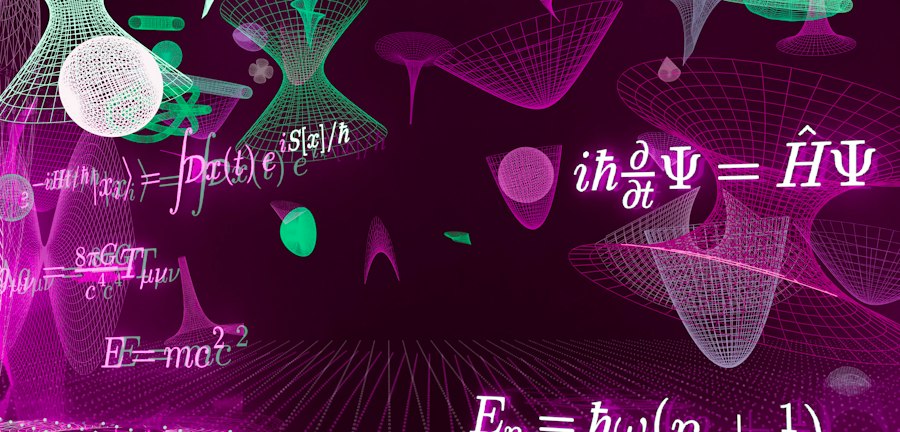
Beyond the visible universe, the documentary ventures into the more abstract and mind-bending concepts of modern physics, particularly those related to spacetime and its enigmatic properties. It tackles complex theories with clarity, making them accessible to a general audience, and highlighting the ongoing quest to understand the fundamental nature of the universe at its most extreme scales.
The Enigma of Black Holes
Black holes, regions of spacetime where gravity is so strong that nothing, not even light, can escape, are a focal point of this section. The film uses sophisticated simulations to depict the formation of black holes from the collapse of massive stars. It explores the concept of the event horizon, the point of no return, and the singularity at the heart of a black hole, a point of infinite density where our current understanding of physics breaks down. The documentary also touches upon the theoretical possibility of Hawking radiation, a faint thermal radiation believed to be emitted by black holes, suggesting that even these seemingly inescapable gravitational wells are not entirely black. The visual representations of accretion disks, swirling masses of gas and dust around black holes, are both beautiful and terrifying, underscoring their immense power and destructive potential.
Gravitational Waves: Ripples in the Cosmic Ocean
A groundbreaking revelation explored in the documentary is the direct detection of gravitational waves. The film explains how these ripples in spacetime, predicted by Einstein a century ago, are generated by cataclysmic cosmic events such as the collision of black holes or neutron stars. Viewers witness a dramatization of the detection process, illustrating the immense sensitivity required to measure these minuscule distortions in spacetime. The significance of this discovery is emphasized, opening a new window onto the universe, allowing scientists to observe phenomena that were previously invisible and to test the limits of Einstein’s theories in extreme environments. The documentary presents this as a pivotal moment in astrophysics, comparable to the invention of the telescope.
The Mysteries of Dark Matter and Dark Energy
As the documentary progresses, it delves into the vast unknowns that still characterize our understanding of the universe. The concept of “dark” components, invisible and mysterious, forms a significant part of the exploration, highlighting the limitations of our current observational capabilities.
The Invisible Scaffolding: Dark Matter
The existence of dark matter, an unseen substance that makes up an estimated 85% of the universe’s matter, is presented as a perplexing puzzle. The film explains how its presence is inferred from its gravitational effects on visible matter, such as the rotation of galaxies and the clustering of galaxy clusters. The documentary showcases evidence for dark matter, including galaxy rotation curves that deviate from expected patterns based on visible mass, and gravitational lensing that indicates more mass is present than can be accounted for by luminous objects. It discusses various theoretical candidates for dark matter, from weakly interacting massive particles (WIMPs) to axions, emphasizing that its true nature remains one of the most significant unsolved mysteries in physics.
The Accelerating Universe: Dark Energy
Perhaps the most profound mystery is dark energy, a hypothetical form of energy that is thought to be responsible for the accelerating expansion of the universe. The documentary explains how observations of distant supernovae in the late 1990s revealed that the universe is not only expanding but doing so at an ever-increasing rate. The concept of a cosmological constant, introduced by Einstein and later discarded, is revisited as a potential explanation for dark energy, though its precise nature and origin are still hotly debated. The film conveys the cosmic implications of this accelerating expansion, suggesting that galaxies will eventually recede from each other at such a rate that the night sky will become increasingly empty, a concept termed the “Big Freeze” or “Heat Death” of the universe.
Seeking the Origins of Everything
The documentary then pivots to the grandest questions of all: the origin and ultimate fate of the universe itself. It explores the leading cosmological model and the speculative theories that attempt to explain the earliest moments of existence.
The Big Bang: A Universe From Nothing
The Big Bang theory, the prevailing cosmological model for the universe’s birth, is explained in detail. The film illustrates how the universe began as an incredibly hot, dense point that rapidly expanded and cooled, leading to the formation of fundamental particles, atoms, and eventually stars and galaxies. The Cosmic Microwave Background radiation, the faint afterglow of the Big Bang, is presented as a crucial piece of evidence supporting this theory. The documentary explores the inflationary epoch, a hypothetical period of extremely rapid expansion in the universe’s first fraction of a second, which helps explain the observed uniformity of the universe on large scales.
The Multiverse Hypothesis: Worlds Beyond Our Own?
Pushing the boundaries of theoretical physics, the documentary touches upon the speculative concept of the multiverse. It discusses various theoretical frameworks, such as eternal inflation and string theory, that suggest our universe might be just one of many, existing in parallel or in different dimensions. While acknowledging the highly theoretical nature of these ideas, the film presents them as fascinating avenues of research that could potentially answer fundamental questions about the fine-tuning of our universe’s physical constants. The idea that our universe might be one of countless others, each with potentially different physical laws, is presented as both humbling and awe-inspiring.
If you’re fascinated by the mysteries of the universe, you might enjoy exploring a related article that delves into the intricacies of quantum mechanics and its implications for our understanding of reality. This captivating piece complements the physics documentary by providing deeper insights into the fundamental principles that govern the behavior of particles at the smallest scales. To learn more about this intriguing topic, check out the article here: quantum mechanics.
The Future of Cosmic Exploration
| Documentary Title | Release Year | Duration (minutes) | Main Topic | Director | IMDB Rating |
|---|---|---|---|---|---|
| Particle Fever | 2013 | 99 | Large Hadron Collider and Particle Physics | Mark Levinson | 7.6 |
| The Elegant Universe | 2003 | 180 | String Theory | Nova / Brian Greene | 8.3 |
| Cosmos: A Spacetime Odyssey | 2014 | 660 | Physics, Astronomy, and Cosmology | Ann Druyan / Neil deGrasse Tyson | 9.3 |
| Into the Universe with Stephen Hawking | 2010 | 180 | Cosmology and Theoretical Physics | Rodriguez / Stephen Hawking | 8.1 |
| Einstein’s Big Idea | 2005 | 90 | Mass-Energy Equivalence (E=mc²) | Nova / Gary Johnstone | 7.4 |
Concluding its exploration, the documentary looks towards the future of humanity’s quest to understand the universe. It highlights the ongoing efforts in observational astronomy, theoretical physics, and technological innovation that are paving the way for new discoveries.
Next-Generation Telescopes and Observatories
The film showcases the development and deployment of revolutionary new astronomical instruments. The James Webb Space Telescope, with its unprecedented infrared capabilities, is presented as a key tool for peering further back in time and observing the formation of the first stars and galaxies. Future plans for even larger and more powerful telescopes, both on Earth and in space, are discussed, emphasizing the continuous drive to push the boundaries of our observational power. The documentary also highlights ground-based observatories utilizing cutting-edge adaptive optics and interferometry techniques to achieve resolutions that rival those of space-based telescopes.
The Enduring Human Drive for Knowledge
Ultimately, “Exploring the Universe: A Fascinating Physics Documentary Reveal” is a testament to the enduring human curiosity and our insatiable desire to comprehend our place in the cosmos. It demonstrates that while we have made incredible strides in understanding the universe, vast frontiers of knowledge remain unexplored. The documentary inspires viewers to continue looking up, to ponder the great mysteries, and to support the scientific endeavors that seek to unravel them. It leaves the audience with a profound sense of wonder and a renewed appreciation for the breathtaking beauty and profound complexity of the universe we inhabit. The film effectively underscores that the journey of cosmic exploration is far from over; it is, in fact, just beginning.

Why Hot Water Freezes Faster Than Cold (The Mpemba Effect)
FAQs
What is the purpose of a physics documentary?
A physics documentary aims to educate and inform viewers about various concepts and theories in physics through visual storytelling and real-life examples.
How are physics documentaries different from traditional educational materials?
Physics documentaries use engaging visuals, animations, and real-world applications to make complex physics concepts more accessible and interesting to a wider audience compared to traditional textbooks or lectures.
Are physics documentaries suitable for all age groups?
While some physics documentaries are designed for a general audience, others may be more suitable for older viewers due to the complexity of the topics discussed. It’s important to check the recommended age group before watching a physics documentary.
Can physics documentaries inspire viewers to pursue a career in physics?
Yes, physics documentaries have the potential to spark curiosity and interest in viewers, leading them to explore physics further and possibly consider a career in the field. They can showcase the excitement and relevance of physics in our everyday lives.
Where can one find physics documentaries to watch?
Physics documentaries can be found on streaming platforms like Netflix, Amazon Prime, and YouTube, as well as on educational websites and channels dedicated to science programming. Libraries and educational institutions may also have a collection of physics documentaries available for viewing.