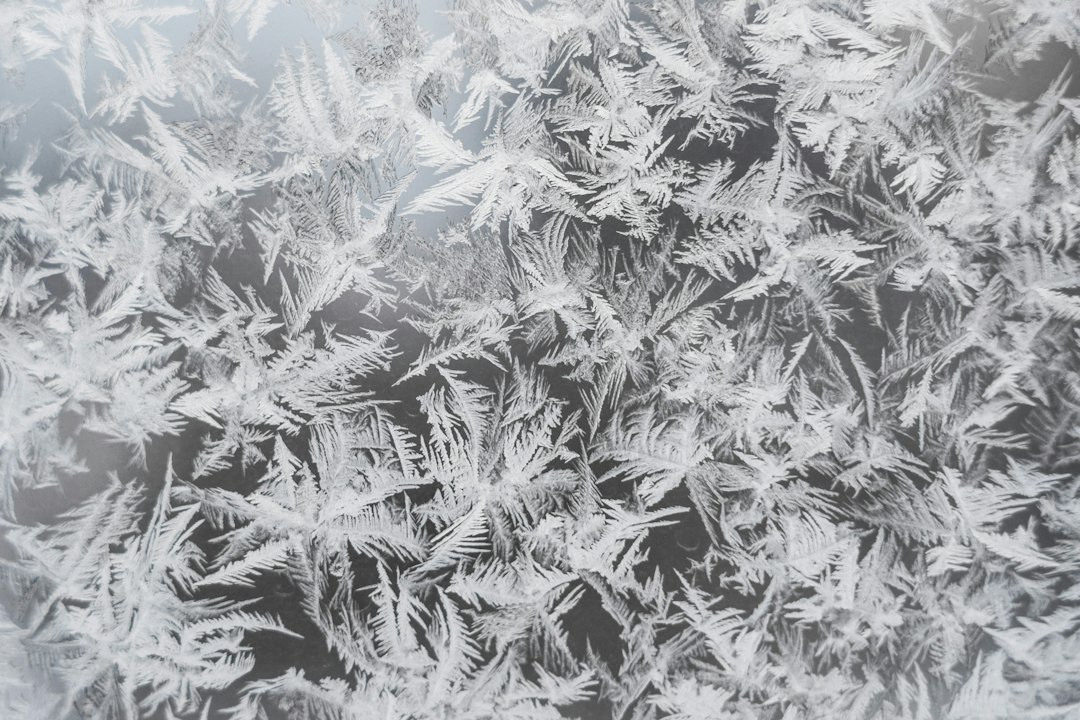
The intricate beauty of a snowflake, the frost patterns on a windowpane, the frozen droplets clinging to a winter branch – these are all manifestations of ice crystal formation. This ubiquitous natural phenomenon, seemingly simple, is governed by a complex interplay of physics and chemistry. Understanding the science behind how ice crystals grow, both in the wild and in technological applications, unlocks a deeper appreciation for the natural world and drives innovation in fields ranging from meteorology to materials science. The process is a delicate dance between water molecules, temperature, and the surrounding environment, leading to an astonishing diversity of crystal structures.
The Molecular Foundation of Ice
At its core, ice crystal formation is a story of water molecules arranging themselves into a highly ordered solid state. Water, with its chemical formula H₂O, possesses unique properties that are crucial for this process. Each water molecule is polar, meaning it has a slightly positive charge on the hydrogen atoms and a slightly negative charge on the oxygen atom. This polarity allows water molecules to form hydrogen bonds with each other, a relatively weak but collectively strong intermolecular force.
Hydrogen Bonding and the Liquid State
In liquid water, these hydrogen bonds are constantly forming and breaking, allowing the molecules to flow and adapt to their container. The extensive network of hydrogen bonds gives liquid water its high surface tension, specific heat capacity, and viscosity. The dynamic nature of these bonds is what enables water to exist as a liquid over a wide range of temperatures.
The Transition to a Crystalline Solid
As water cools, the kinetic energy of the molecules decreases, and the hydrogen bonds become more stable. When the temperature drops below the freezing point (0°C or 32°F at standard atmospheric pressure), the water molecules begin to lose enough energy to become fixed in a specific, repeating arrangement. This ordered structure is a crystal lattice. The hydrogen bonds, now more persistent, dictate the geometry of this lattice.
The Hexagonal Structure of Ice Ih
The most common form of ice, known as ice Ih (ice one h), crystallizes in a hexagonal structure. In this arrangement, each oxygen atom is tetrahedrally bonded to four neighboring oxygen atoms through hydrogen bonds. Two of these hydrogen bonds are strong (covalent character), while the other two are weaker (ionic character), meaning the proton is shared between two oxygen atoms. This specific arrangement leaves significant empty space within the crystal lattice, which is why solid ice is less dense than liquid water, causing it to float. The hexagonal symmetry of ice Ih is directly responsible for the six-fold symmetry observed in many snowflakes.
Ice crystal formation is a fascinating process that plays a crucial role in various natural phenomena, from weather patterns to the beauty of snowflakes. For those interested in exploring this topic further, you can read a related article that delves into the science behind ice crystal formation and its implications in our environment. Check it out here: Ice Crystal Formation.
Nucleation: The Spark of Ice Formation
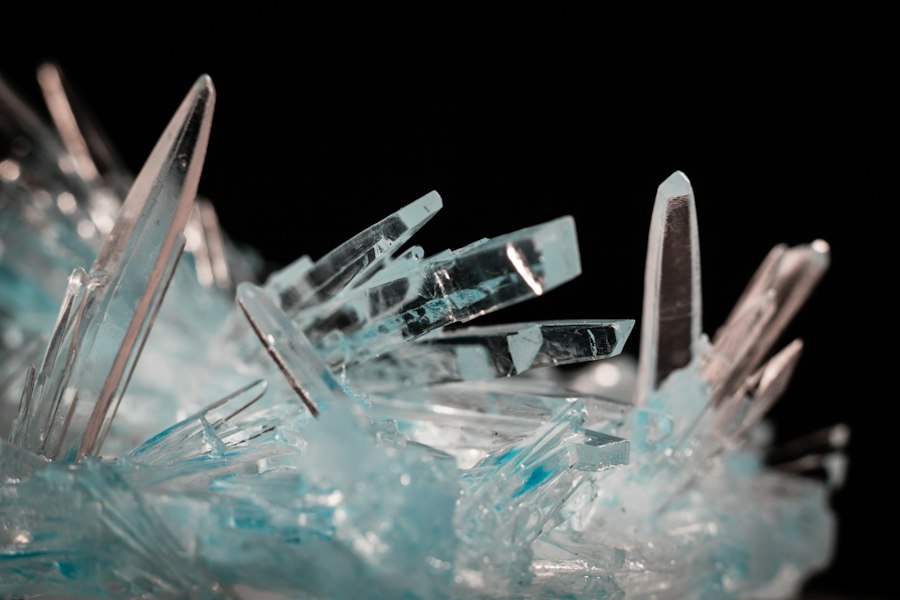
For ice crystals to form, a crucial initial step known as nucleation must occur. Nucleation is the process by which a stable, ordered phase begins to form within a disordered phase. In the case of ice, this means the first few water molecules spontaneously arranging themselves into a nascent ice crystal. This is a thermodynamically unfavorable process because it requires energy to create a new interface between the solid ice and the liquid water.
Homogeneous Nucleation
Homogeneous nucleation occurs when ice crystals form spontaneously from pure water without the presence of any foreign particles. This process requires significant supercooling, meaning the water must be cooled several degrees below its freezing point before nucleation can occur. The probability of homogeneous nucleation is very low because the formation of a stable ice embryo from random molecular collisions is statistically improbable. In everyday situations, homogeneous nucleation is rarely observed; other mechanisms usually dominate.
Heterogeneous Nucleation
Heterogeneous nucleation is far more common and occurs when ice crystals form on the surface of impurities or foreign particles suspended in the water. These particles, known as ice nucleating agents (INAs), provide a surface upon which water molecules can more easily arrange themselves into an ordered ice lattice. The interaction between the water molecules and the surface of the INA lowers the energy barrier for nucleation, making it much more likely to occur at temperatures closer to the normal freezing point.
Ice Nucleating Agents in Nature
Nature is replete with ice nucleating agents. Dust particles, pollen, soot, and even certain biological molecules, such as proteins found in some bacteria, can act as INAs. For instance, certain species of bacteria produce proteins that are highly effective at inducing ice formation at temperatures as high as -2°C (28.4°F). This ability is thought to be an adaptation that helps these bacteria survive in cold environments, but it also has implications for agriculture, as it can lead to frost damage in plants. The presence and abundance of these INAs significantly influence the freezing behavior of atmospheric water, impacting cloud formation and precipitation.
Crystal Growth: Shaping the Ice
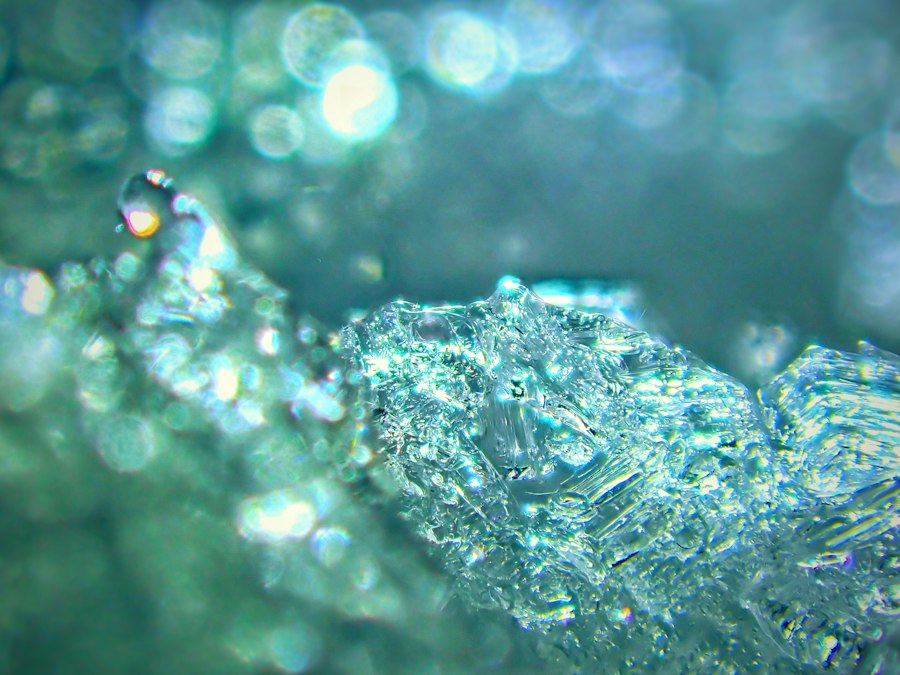
Once nucleation has occurred, the ice crystal begins to grow by the accretion of additional water molecules from the surrounding liquid or vapor. The rate and manner of this growth are highly dependent on the environmental conditions, particularly temperature and the supersaturation of water vapor.
Diffusion-Limited Growth
In a liquid environment, ice crystal growth is primarily diffusion-limited. This means that the speed at which the crystal grows is determined by how quickly water molecules can diffuse from the bulk liquid to the surface of the growing crystal. Growth tends to be most rapid at the corners and edges of the crystal, where the surface area-to-volume ratio is higher, leading to the formation of more dendritic or feathery structures.
Vapor-Phase Growth and Supersaturation
In the atmosphere, ice crystals often grow by accreting water vapor. This process is heavily influenced by supersaturation, which is the condition where the partial pressure of water vapor in the air exceeds its saturation vapor pressure at a given temperature. When the air is supersaturated with respect to ice, water vapor molecules readily deposit onto the surface of an ice crystal, causing it to grow. The degree of supersaturation and the temperature dictate the morphology of the ice crystal.
Morphological Diversity: From Plates to Needles
The exquisite diversity of ice crystal shapes, famously seen in snowflakes, is a direct consequence of variations in temperature and supersaturation during their growth. At temperatures around -2°C (28.4°F) and moderate supersaturation, hexagonal plates tend to form. As the temperature decreases towards -15°C (5°F), the growth becomes more branched, leading to the formation of stellar dendrites, the classic snowflake shape. At even colder temperatures, or under conditions of high supersaturation, needles or columns can form.
The Role of Impurities
The presence of impurities in the water or water vapor can also significantly influence crystal growth. Impurities can alter the surface energy of the ice crystal, affecting the rate at which water molecules attach and the preferred growth directions. In some cases, impurities can lead to the formation of less perfect crystals or even prevent the formation of certain shapes altogether.
Ice Crystals in Nature’s Embrace
Ice crystal formation is a fundamental process that shapes countless natural environments and influences a wide array of ecological and meteorological phenomena. From the majestic ice formations of polar regions to the delicate frost patterns that grace our landscapes, its presence is both beautiful and consequential.
Snowflakes: The Ephemeral Artistry of the Atmosphere
Snowflakes are perhaps the most iconic example of natural ice crystals. Each snowflake is an intricate assembly of hexagonal ice crystals, typically formed in clouds at temperatures below freezing. The journey of a snowflake from its nucleation to its fall to the ground involves complex interactions with atmospheric conditions. As a crystal grows by accreting water vapor, it follows a unique path through varying temperature and humidity zones within the cloud. This journey imprints a distinct growth history onto each crystal, resulting in the unparalleled individuality of every snowflake. The six-fold symmetry arises from the underlying hexagonal crystal structure of ice, while the branching and intricate details are a testament to the ever-changing atmospheric environment.
Frost and Hoar Frost: Delicate Art on Surfaces
Frost and hoar frost are other common manifestations of ice crystal formation. Frost forms when water vapor in the air comes into contact with a surface that is below freezing and undergoes deposition directly from vapor to solid ice. This process is known as desublimation. The patterns of frost are influenced by the surface on which they form, as well as the temperature and humidity of the air. Hoar frost, in particular, forms when water vapor deposits onto existing ice crystals or other cold surfaces, leading to the growth of feathery, needle-like ice structures. This often occurs in humid conditions with light winds, creating a delicate, ethereal coating of ice.
Glaciers and Ice Sheets: Sculptors of Landscapes
On a grander scale, the accumulation and compaction of snow over millennia lead to the formation of glaciers and ice sheets. These massive bodies of ice are essentially colossal ice crystals, though their internal structure is far more complex than a single, perfect crystal. The slow movement of glaciers reshapes landscapes through erosion and deposition, carving out valleys, fjords, and moraines. The study of ice cores extracted from these formations provides invaluable insights into Earth’s past climate and atmospheric composition.
The Impact on Ecosystems
The presence of ice crystals has profound effects on ecosystems. Frozen ground in permafrost regions dictates the types of vegetation that can thrive. The freezing and thawing cycles of water within the soil can lead to frost heave, which can damage infrastructure and alter soil structure. In aquatic environments, the formation of ice on the surface of lakes and rivers insulates the water below, allowing aquatic life to survive the winter. The formation of ice crystals also plays a critical role in precipitation, delivering essential water to ecosystems.
Ice crystal formation is a fascinating process that plays a crucial role in various natural phenomena, from weather patterns to the beauty of snowflakes. For those interested in exploring this topic further, a related article can be found at Freaky Science, which delves into the science behind how these intricate structures develop under different atmospheric conditions. Understanding the mechanisms of ice crystal formation not only enhances our knowledge of meteorology but also inspires awe at the complexity of nature.
Technological Applications of Ice Crystal Science
| Parameter | Value | Unit | Description |
|---|---|---|---|
| Freezing Point | 0 | °C | Temperature at which water begins to freeze |
| Critical Supersaturation | 1.2 | Relative Humidity (RH) | Minimum supersaturation required for ice nucleation |
| Ice Nucleation Temperature | -15 to -40 | °C | Temperature range where heterogeneous ice nucleation occurs |
| Ice Crystal Growth Rate | 0.1 to 1.0 | μm/s | Rate at which ice crystals grow under typical atmospheric conditions |
| Ice Crystal Size | 10 to 100 | μm | Typical size range of atmospheric ice crystals |
| Ice Crystal Habit | Columnar, Plate, Dendrite | — | Common shapes of ice crystals depending on temperature and humidity |
| Latent Heat of Fusion | 333.55 | kJ/kg | Energy released during ice formation from water |
The principles governing ice crystal formation are not only fascinating from a scientific perspective but also have significant implications for technological advancements. Understanding and controlling these processes allows for the development of new materials, improved weather forecasting, and enhanced agricultural practices.
Cryopreservation: Preserving Biological Samples
Cryopreservation, the preservation of biological materials at very low temperatures, relies heavily on understanding ice crystal formation. When biological cells or tissues are cooled, ice crystals can form both inside and outside the cells. Intracellular ice formation is particularly damaging, as sharp ice crystals can puncture cell membranes and disrupt cellular structures. To minimize this damage, cryoprotective agents (CPAs) are used. These CPAs, such as glycerol or dimethyl sulfoxide (DMSO), work by reducing the amount of ice that forms and by increasing the viscosity of the intracellular solution, thus inhibiting ice crystal growth. Controlled cooling rates are also crucial to allow water to move out of the cells before it can freeze intracellularly.
De-icing and Anti-icing Technologies
The ability of ice to adhere to surfaces poses significant challenges in various industries, from aviation to civil infrastructure. De-icing technologies aim to remove existing ice, often by applying chemical agents that lower the freezing point of water or by using mechanical methods. Anti-icing technologies, on the other hand, aim to prevent ice from forming in the first place. This can be achieved through the use of specialized coatings that are hydrophobic (water-repelling) or have low surface energy, making it difficult for ice to adhere. Research is also ongoing into developing materials that can actively release heat or disrupt ice crystal formation at the molecular level.
Food Science and Refrigeration
Ice crystal formation is a critical consideration in the food industry. The freezing of food is a common preservation technique, but the size and distribution of ice crystals can significantly impact the quality of the frozen product. Large ice crystals can damage the cellular structure of food, leading to a mushy texture and loss of moisture upon thawing. To achieve optimal food quality, controlled freezing processes are employed, often using techniques like blast freezing or cryogenic freezing, which aim to produce small, uniformly distributed ice crystals. Understanding ice crystal growth also informs the development of effective refrigeration systems, ensuring consistent temperatures and minimizing unwanted ice formation.
Materials Science and Engineering
The controlled formation of ice crystals can also be harnessed in materials science. For example, the self-assembly of ice crystals has been explored as a template for creating porous materials with controlled structures. By guiding the growth of ice crystals and then removing them, scientists can create scaffolds with specific pore sizes and arrangements, which can be useful for applications in filtration, catalysis, and drug delivery. Furthermore, the unique mechanical properties of ice itself, when engineered into specific structures, are being investigated for potential uses in construction and specialized applications.
The science behind ice crystal formation is a testament to the elegance and complexity of physical and chemical processes occurring all around us. From the microscopic dance of water molecules to the macroscopic sculpting of landscapes, ice crystals play an indispensable role in shaping our world. Continued research into this fascinating phenomenon promises further insights into nature’s wonders and opens doors to innovative technological solutions for the future.
Why Hot Water Freezes Faster Than Cold (The Mpemba Effect)
FAQs
What factors influence ice crystal formation?
Ice crystal formation is influenced by temperature, humidity levels, and the presence of nucleation sites where ice crystals can start forming.
How does the shape of ice crystals vary?
The shape of ice crystals can vary depending on the temperature and humidity conditions during formation. Common shapes include hexagonal plates, dendrites, columns, and needles.
What role do impurities play in ice crystal formation?
Impurities can act as nucleation sites, promoting ice crystal formation. They can also affect the size and shape of the crystals that form.
Can ice crystal formation impact the quality of frozen foods?
Yes, ice crystal formation in frozen foods can impact their texture and taste. Smaller ice crystals formed quickly can result in a smoother texture, while larger ice crystals formed slowly can lead to a more icy or grainy texture.
How is ice crystal formation studied in scientific research?
Scientists study ice crystal formation using techniques such as microscopy, spectroscopy, and controlled experiments in laboratory settings to understand the processes involved and develop strategies to control crystal formation in various applications.