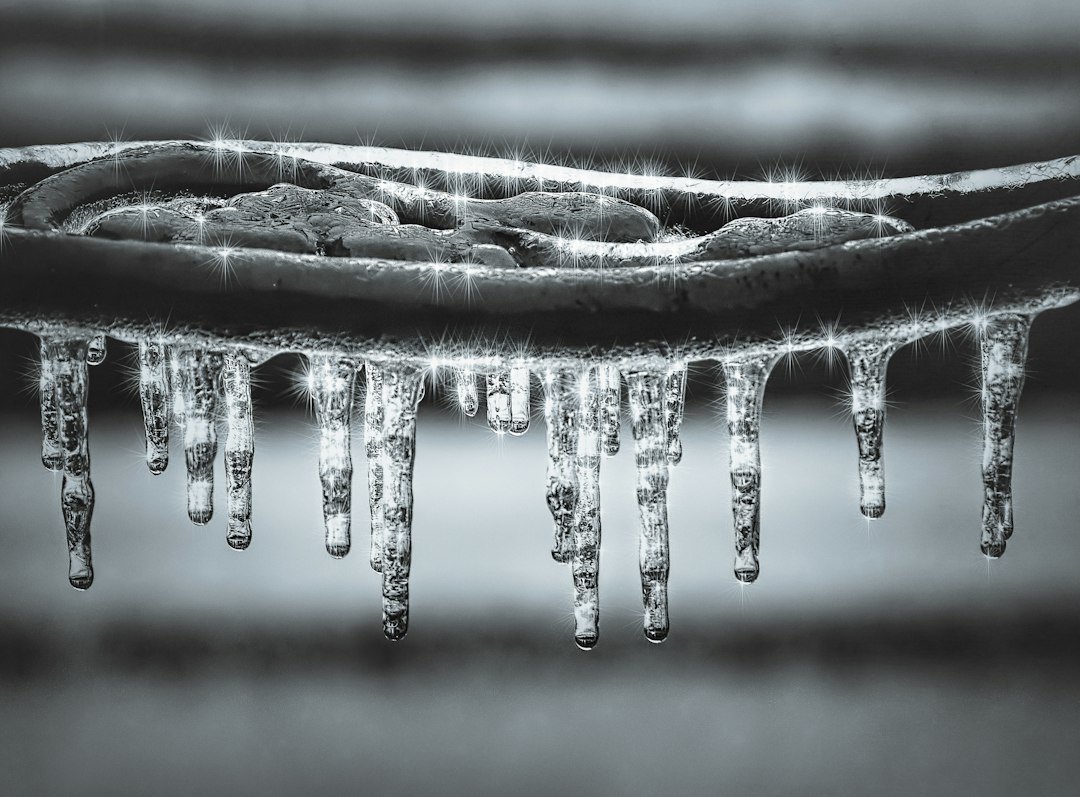
The transformation of liquid water into the solid, crystalline structure of ice is a seemingly simple phenomenon, yet it is governed by a complex interplay of molecular forces, thermodynamics, and subtle environmental cues. From the delicate snowflakes that adorn winter landscapes to the solid blocks used for refrigeration and construction, the science behind ice formation is both fundamental to our understanding of the physical world and crucial for numerous practical applications. This article delves into the intricate processes that lead water to freeze and crystallize, exploring the molecular dance that gives rise to this ubiquitous solid.
The Molecular Dance of Water Molecules
Water, or H₂O, is a remarkably unique molecule. Its bent geometry, with oxygen at the apex and two hydrogen atoms forming the sides, creates a significant polarity. The oxygen atom, being more electronegative, pulls electrons towards itself, giving it a partial negative charge, while the hydrogen atoms acquire a partial positive charge. This polarity is the bedrock upon which the entire behavior of water, including its freezing process, is built.
Hydrogen Bonding: The Intermolecular Glue
The partial charges on water molecules allow them to form attractive forces with neighboring molecules. Specifically, the partially positive hydrogen atom of one water molecule is attracted to the partially negative oxygen atom of another. This electrostatic attraction is known as a hydrogen bond. While individually weaker than covalent bonds (the bonds within a water molecule itself), the vast number of hydrogen bonds that can form between water molecules creates a significant collective force.
In liquid water, these hydrogen bonds are constantly forming, breaking, and reforming. The molecules are in continuous motion, sliding past each other, and the hydrogen bond network is dynamic and fluid. This constant flux allows water to flow and adapt to the shape of its container. However, as the temperature decreases, the kinetic energy of the water molecules diminishes. The molecules move slower, and the hydrogen bonds become more stable and persistent. This is the initial step in the transition from liquid to solid.
The Role of Kinetic Energy
Kinetic energy, the energy of motion, is directly related to temperature. In liquid water, molecules possess enough kinetic energy to overcome the attractive forces of hydrogen bonds, allowing them to move freely. As heat is removed from the water, the molecules lose kinetic energy, slowing down. At a certain point, the thermal motion is no longer sufficient to break the hydrogen bonds as quickly as they form. This leads to the stabilization of the hydrogen bond network, paving the way for a more ordered structure.
The freezing point of pure water at standard atmospheric pressure is 0 degrees Celsius (32 degrees Fahrenheit). This is the temperature at which the rate of hydrogen bond formation equals the rate of hydrogen bond breaking, and the transition to a solid state begins. However, this is a simplified view. The actual process of crystallization is more nuanced and depends on several factors beyond just temperature.
Ice formation is a fascinating subject that encompasses various scientific principles, from thermodynamics to crystallography. For those interested in delving deeper into the complexities of how ice forms and its implications on our environment, a related article can be found at Freaky Science. This resource provides insights into the different types of ice, the conditions necessary for their formation, and the role they play in climate change and ecosystems.
Nucleation: The Genesis of Ice Crystals
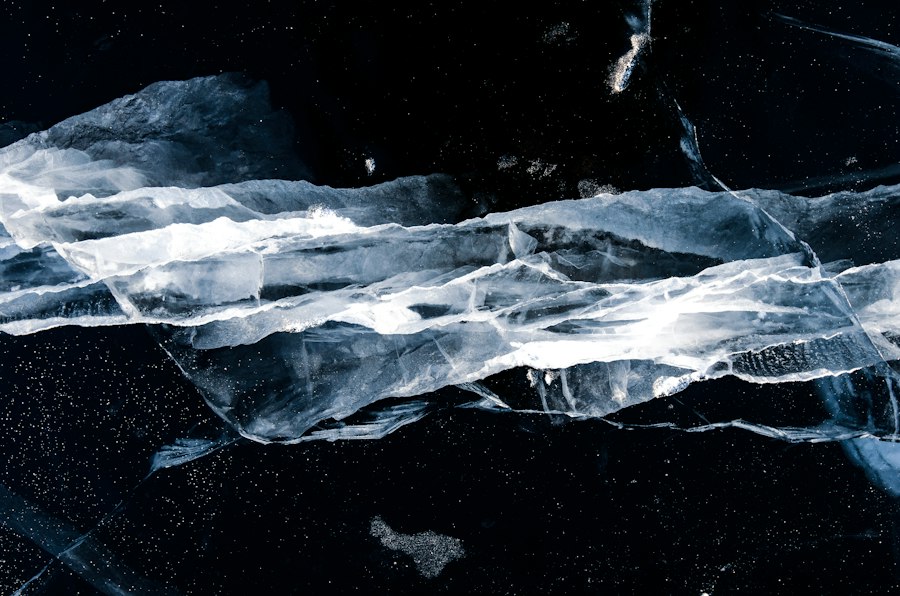
The formation of ice crystals does not occur spontaneously throughout the entire body of liquid water simultaneously. Instead, it begins at specific points, known as nucleation sites. Nucleation is the critical first step in the formation of a new phase, in this case, solid ice from liquid water. Without these initial seeds, water can remain in a liquid state even below its freezing point, a phenomenon known as supercooling.
Homogeneous Nucleation: The Rare Spontaneous Event
Homogeneous nucleation refers to the formation of an ice nucleus from pure water without the influence of any foreign particles. This process is statistically improbable and requires a significant degree of supercooling. It involves a spontaneous, random clustering of water molecules that, by chance, arrange themselves into a stable ice crystal structure. The formation of such a stable cluster, or nucleus, requires overcoming an energy barrier. The initial clusters are unstable and tend to break apart. However, if a cluster reaches a critical size, it becomes thermodynamically favorable for further growth, as the surface energy cost of forming a new interface is outweighed by the bulk energy gained from forming the stable solid phase. For pure water, this typically requires supercooling to temperatures around -40°C, which is rarely observed in everyday conditions.
Heterogeneous Nucleation: The Common Pathway
Heterogeneous nucleation, on the other hand, is far more common and occurs in the presence of foreign particles or surfaces. These impurities, such as dust motes, dissolved salts, or imperfections on the container walls, act as templates or catalysts for ice formation. The surface of these impurities can interact with water molecules in a way that lowers the energy barrier for ice crystal formation.
The molecular structure of the impurity can often mimic the lattice structure of ice, providing a pre-organized arrangement for water molecules to attach to. This “wetting” of the impurity surface by water molecules facilitates the orderly arrangement of hydrogen bonds, leading to the formation of a stable ice nucleus at a much higher temperature than would be required for homogeneous nucleation. This is why tap water freezes at 0°C, while ultra-pure, filtered water can be supercooled to much lower temperatures. The presence of microscopic contaminants in tap water provides abundant heterogeneous nucleation sites.
Crystal Growth and Structure: Building the Ice Lattice
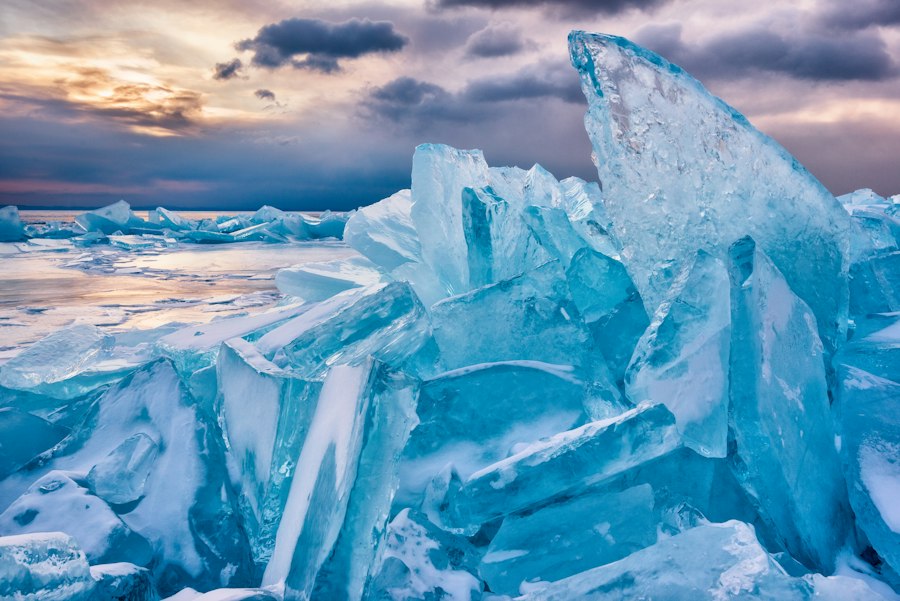
Once a stable ice nucleus has formed, it begins to grow. This growth is a process of accretion, where more water molecules attach themselves to the existing crystal structure, guided by the principles of hydrogen bonding. The resulting structure of ice is not a random aggregation of molecules but a highly ordered, crystalline lattice.
The Hexagonal Structure (Ice Ih)
The most common form of ice, designated as Ice Ih (Ice one hexagonal), possesses a hexagonal crystal structure. In this structure, each water molecule is tetrahedrally coordinated, meaning it forms hydrogen bonds with four neighboring water molecules. Two of these hydrogen bonds involve the oxygen atom of the molecule donating its hydrogen atoms to two other water molecules, and the other two hydrogen bonds involve the hydrogen atoms of the molecule accepting from two other water molecules. This arrangement results in a highly ordered, open, hexagonal lattice.
The hydrogen atoms are not precisely located midway between oxygen atoms but are arranged in an ordered manner within the O-H…O bonds. This specific arrangement of hydrogen atoms within the lattice is responsible for the remarkable properties of ice, including its lower density compared to liquid water.
Anomalous Density of Ice
A peculiar and highly significant characteristic of ice is its lower density compared to liquid water. This is counterintuitive, as solids are typically denser than their liquid counterparts. The hexagonal crystal structure of Ice Ih, with its open lattice and relatively large distances between molecules, is responsible for this anomaly. In liquid water, the molecules are packed more closely together, and while hydrogen bonds are present, they are more transient, allowing for a denser arrangement.
As water freezes, the molecules are forced into the more rigid, open hexagonal structure to maximize hydrogen bonding. This increased spacing between molecules in the solid state leads to a lower density. This property has profound implications for aquatic life, as ice floats on water, insulating the water below from the freezing temperatures and allowing aquatic organisms to survive in frigid environments. Without this anomaly, lakes and oceans would freeze solid from the bottom up.
Other Ice Phases
While Ice Ih is the most prevalent form, under varying temperature and pressure conditions, water can form numerous other crystalline and amorphous phases of ice. Currently, at least 19 different crystalline phases and several amorphous phases of ice have been identified. These different phases arise from variations in the arrangement of hydrogen atoms within the lattice or due to different packing arrangements of the water molecules themselves, often induced by extreme pressures. For instance, under immense pressure, water can form denser ice phases like Ice II, III, V, VI, VII, VIII, and others, where the molecules are packed much more tightly. Studying these different phases provides valuable insights into the behavior of water under extreme conditions and has applications in fields like planetary science.
Factors Influencing Freezing and Crystallization
While temperature is the primary driver of freezing, several other factors can significantly influence the process, affecting both the temperature at which freezing occurs and the morphology of the resulting ice crystals.
Pressure’s Subtle Influence
Pressure has a fascinating and somewhat counterintuitive effect on the freezing point of water. For most substances, increasing pressure raises the freezing point because the solid phase is generally denser than the liquid phase, and increased pressure favors denser states. However, water is an exception. Due to the anomalous density of ice, increasing pressure actually lowers the freezing point of water, up to a certain limit. This is because increased pressure favors the denser liquid state over the less dense solid ice structure. This phenomenon is crucial in understanding geological processes like the movement of glaciers, where the immense pressure exerted on ice can cause it to deform and flow. Beyond a certain pressure, however, other denser ice phases become stable, and their freezing points can increase with pressure.
The Impact of Dissolved Substances
The presence of dissolved substances, such as salts or sugars, significantly alters the freezing behavior of water. These solutes interfere with the formation of the hydrogen bond network required for ice crystal growth. For ice crystals to form, water molecules need to arrange themselves in a specific crystalline lattice. Dissolved solute molecules disrupt this orderly arrangement, making it harder for ice nuclei to form and grow.
This effect is known as freezing point depression. The more solute dissolved in the water, the lower the freezing point. This is why saltwater freezes at a lower temperature than pure water, and why salt is used to de-ice roads in winter. The salt molecules prevent the formation of a stable ice lattice by disrupting hydrogen bonding, effectively lowering the freezing point of the water-salt mixture. Similarly, adding sugar to water to make ice cream also lowers its freezing point, preventing it from becoming a solid block of ice and allowing for a smoother, creamier texture.
Impurities and Nucleation
As discussed in the section on nucleation, impurities play a vital role in the initiation of ice formation. The nature and abundance of these impurities can dictate the temperature at which freezing begins and the rate at which it proceeds. Different types of impurities have varying efficacies as nucleation sites. For instance, certain mineral particles might be excellent ice nucleators, while others might have little effect. Understanding the interaction between water molecules and various surfaces is an active area of research, particularly in meteorology and atmospheric science, for predicting precipitation and understanding cloud formation.
Ice formation is a fascinating process that involves various physical and chemical changes, influencing everything from weather patterns to the behavior of ecosystems. For those interested in delving deeper into this topic, a related article can be found at Freaky Science, where you can explore the intricate details of how ice crystals develop and the factors that affect their growth. Understanding these mechanisms not only enhances our knowledge of natural phenomena but also has practical implications in fields such as climate science and environmental studies.
The Morphology of Ice: From Spheres to Stars
| Parameter | Description | Typical Values | Units |
|---|---|---|---|
| Freezing Point of Water | Temperature at which pure water freezes | 0 | °C |
| Supercooling Temperature | Temperature below freezing where water remains liquid | -5 to -40 | °C |
| Ice Nucleation Rate | Rate at which ice crystals begin to form | 10^3 to 10^9 | nuclei/cm³/s |
| Ice Crystal Growth Rate | Speed of ice crystal size increase | 0.1 to 1.0 | μm/s |
| Critical Radius for Nucleation | Minimum radius of stable ice nucleus | 1 to 10 | nm |
| Latent Heat of Fusion | Energy required to convert ice to water at 0°C | 333.55 | J/g |
| Ice Density | Density of ice at 0°C | 0.917 | g/cm³ |
| Water Density | Density of liquid water at 0°C | 0.9998 | g/cm³ |
| Ice Crystal Habit | Common shapes of ice crystals | Hexagonal plates, columns, dendrites | N/A |
| Ice Formation Time | Time required for ice to form under typical conditions | Seconds to minutes | Time |
The shape and size of ice crystals are not uniform. They vary dramatically depending on the conditions under which they form, particularly temperature and humidity. This variability is responsible for the diverse forms of ice we observe, from the simple hexagonal plates to the intricate snowflakes.
The Influence of Temperature on Snowflake Growth
Snowflakes, perhaps the most iconic form of ice, are a testament to the intricate relationship between water molecules and their environment. The growth of a snowflake begins when a tiny ice crystal forms in a supercooled cloud. As this nascent crystal falls through the cloud, it encounters varying temperatures and humidity levels, each influencing how water vapor molecules deposit onto its surface.
At temperatures around -15°C (5°F), snowflakes tend to grow as stellar dendrites, the classic six-branched, star-like structures. In this temperature range, water vapor readily condenses and freezes onto the edges and corners of the developing crystal, leading to rapid outward growth and the formation of intricate arms. At slightly warmer temperatures (e.g., -10°C), simpler hexagonal plates are more common, while at even colder temperatures (below -20°C), needles or hollow columns can form. The complex interplay of these temperature zones as a snowflake tumbles through the atmosphere dictates its unique, often symmetrical, and incredibly varied morphology. No two snowflakes are precisely alike, a consequence of their individual journeys through the atmospheric crucible.
Ice on Surfaces: Frost and Beyond
When water vapor in the air comes into contact with a surface that is below freezing, it can directly transition from a gaseous state to a solid state through a process called deposition. This is how frost forms on cold surfaces. The water vapor molecules arrange themselves on the surface, often following the microscopic contours of the material, leading to the formation of delicate crystalline patterns. The type of surface can influence the initial nucleation and subsequent growth of frost crystals, leading to different textures and appearances.
Other forms of ice, like hailstones, form through a different process. Hailstones grow as ice pellets are repeatedly swept up and down in powerful updrafts within thunderstorms. They collect supercooled water droplets, which freeze onto the existing ice core, adding layers of ice. The size and internal structure of hailstones can reveal clues about the storm’s intensity and the conditions within the cumulonimbus clouds.
Conclusion: The Enduring Significance of Ice
The formation of ice is a beautiful illustration of fundamental scientific principles at play. From the subtle yet powerful force of hydrogen bonding that dictates the structure of water molecules to the critical role of nucleation sites that initiate the transformation, the process is a delicate balance of thermodynamics and molecular interactions. The anomalous density of ice, leading to its ability to float, is a cornerstone of life on Earth, while the diverse morphologies of ice crystals showcase the sensitivity of this common substance to its environmental conditions. Understanding the science behind ice formation is not merely an academic pursuit; it has practical implications in fields ranging from meteorology and climate science to food preservation and materials engineering. The simple act of water turning into ice is a profound reminder of the intricate and elegant workings of the natural world.

Why Hot Water Freezes Faster Than Cold (The Mpemba Effect)
FAQs
How does ice form?
Ice forms when water molecules slow down and come together to form a solid structure due to a decrease in temperature below the freezing point of water.
What factors affect the formation of ice?
Factors that affect the formation of ice include temperature, humidity, air movement, and the presence of impurities in the water.
Why does ice float on water?
Ice floats on water because it is less dense than liquid water. When water freezes, the molecules form a crystalline structure that spaces them out, making ice less dense and causing it to float.
How does the shape of ice crystals affect ice formation?
The shape of ice crystals can vary depending on the temperature and humidity conditions during formation. Different shapes of ice crystals can impact the overall structure and properties of ice formations.
What is supercooling and how does it relate to ice formation?
Supercooling is the process where a liquid is cooled below its freezing point without solidifying. It can play a role in ice formation by allowing water to remain in a liquid state until a disturbance or nucleation site triggers the formation of ice crystals.