
The Molecular Dance of Freezing: From Liquid to Solid
The transformation of water from its familiar liquid state to the solid form we know as ice is a fundamental process governed by the intricate interplay of molecules and energy. This journey, seemingly simple on the surface, is a profound demonstration of physics and chemistry at work. At its core, ice formation is a story of decreasing molecular motion and the establishment of a stable, ordered structure.
The Energetic Basis of Phase Transitions
Water molecules, H₂O, are constantly in motion. In the liquid state, these molecules possess a significant amount of kinetic energy, allowing them to slide past one another, forming transient hydrogen bonds. These bonds, formed by the attraction between the slightly positive hydrogen atoms of one water molecule and the slightly negative oxygen atom of another, are crucial to water’s unique properties. However, in liquid water, these bonds are constantly breaking and reforming, leading to the fluid nature of the substance.
As the temperature of water drops, the kinetic energy of its molecules diminishes. This reduction in energy means that the molecules move slower and slower. When the temperature reaches the freezing point, typically 0 degrees Celsius (32 degrees Fahrenheit) at standard atmospheric pressure, the molecules have lost enough energy that they can no longer overcome the attractive forces holding them together. At this critical juncture, the molecules begin to arrange themselves into a more permanent, ordered structure.
This ordering process isn’t entirely spontaneous. For ice to form, there needs to be a nucleating agent, a small impurity like dust or a microscopic imperfection on a surface. These imperfections provide a template upon which water molecules can begin to arrange themselves in a crystalline lattice. Without these nucleation sites, water can become supercooled, meaning it remains in its liquid state below its freezing point. However, once nucleation occurs, the process of ice crystal growth accelerates rapidly.
The Crystal Lattice of Ice
The most common form of ice, known as ice Ih (ice one hexagonal), crystallizes into a hexagonal lattice structure. In this structure, each water molecule is tetrahedrally bonded to four neighboring water molecules via hydrogen bonds. Two of these bonds are directed towards the oxygen atom (covalent character), and two are directed away from it, forming the connections to other molecules.
This tetrahedral arrangement is fundamental to why ice is less dense than liquid water. In the liquid state, the hydrogen bonds are constantly breaking and reforming, allowing the molecules to pack closer together. In the solid state, the rigid hexagonal lattice forces the molecules into a more spread-out configuration. Imagine building with LEGO bricks; if you arrange them loosely, you can fit more in a given space. But if you build a rigid, interconnected structure, there will inevitably be gaps. In the case of ice, these gaps create more volume for the same number of molecules, resulting in lower density. This counterintuitive property is why ice floats, a phenomenon with profound implications for aquatic life.
The formation of this ordered lattice is an exothermic process, meaning it releases energy. This latent heat of fusion must be removed from the water for it to freeze completely. Conversely, melting ice requires energy input to break the hydrogen bonds and disrupt the crystalline structure.
Recent advancements in the science of frozen water have opened up new avenues for research and exploration. For those interested in delving deeper into this fascinating topic, a related article can be found at Freaky Science, which discusses the unique properties of ice and its implications for climate change and environmental science. This resource provides valuable insights into how frozen water behaves under various conditions and its significance in our ecosystem.
The Remarkable Properties of Frozen Water
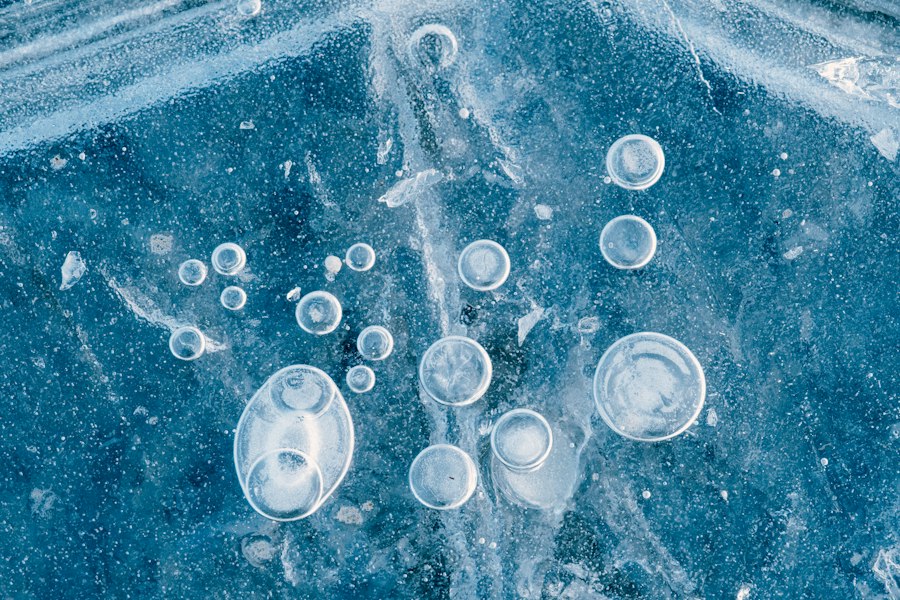
The crystalline structure of ice is not merely a curious arrangement of molecules; it bestows upon frozen water a suite of unique and often surprising properties that distinguish it from other solids and even from its liquid precursor. These properties are not just scientific curiosities; they have shaped our planet and our lives.
Density Anomaly: The Ice That Floats
As mentioned previously, the most striking property of ice is its lower density compared to liquid water. At its maximum density, liquid water has a density of approximately 1000 kg/m³ at 4°C. Ice, on the other hand, has a density of about 917 kg/m³ at 0°C. This 9% difference in density is a direct consequence of the open, hexagonal crystal lattice of ice Ih.
This density anomaly is of immense ecological importance. When bodies of water freeze, the ice forms a layer on the surface, insulating the water below. This insulation prevents the entire water body from freezing solid, allowing aquatic organisms to survive the harsh winter months. If ice were denser than water, it would sink, leading to the complete freezing of lakes and oceans from the bottom up, an outcome that would drastically alter life on Earth. The gradual freezing from the top down is a testament to the specific hydrogen bonding arrangement in ice.
Thermal Conductivity and Insulation
While often perceived as a barrier to heat transfer, ice, particularly in its pure, solid form, is a relatively good conductor of heat compared to many other common insulating materials like Styrofoam or fiberglass. However, its thermal conductivity is still significantly lower than that of metals. This property allows for heat to transfer through ice, albeit at a slower rate than in liquids.
The insulating capability of ice often arises not from the ice itself but from the presence of air pockets within it, particularly in snow or porous ice formations. Air, being a poor conductor of heat, significantly enhances the insulating properties of such materials. This is why snow is an excellent insulator for plants and animals during winter, providing a relatively stable microclimate beneath its surface. The layers of hexagonal ice crystals, with their inherent structure, do possess a certain capacity for heat transfer, but it is the entrapped air that truly magnifies their insulating effect in natural settings.
Mechanical Strength and Brittleness
The crystalline structure of ice also dictates its mechanical properties. Ice is a brittle solid, meaning it tends to fracture rather than deform plastically under stress. The rigid, ordered arrangement of molecules means that once the bonds are stressed beyond their elastic limit, they break, leading to fracture.
The strength of ice varies depending on factors such as temperature, the presence of impurities, and the rate at which stress is applied. Colder ice tends to be stronger and more brittle than warmer ice. The addition of salts or other impurities can disrupt the crystal lattice and lower the melting point, also affecting the mechanical properties. This brittleness is evident when observing glaciers; while massive, they can fracture and calve icebergs due to stresses and melting. Understanding the mechanical properties of ice is critical for engineering applications, such as building structures on frozen ground or designing icebreakers.
The Dynamics of Ice Formation: From Nucleation to Growth
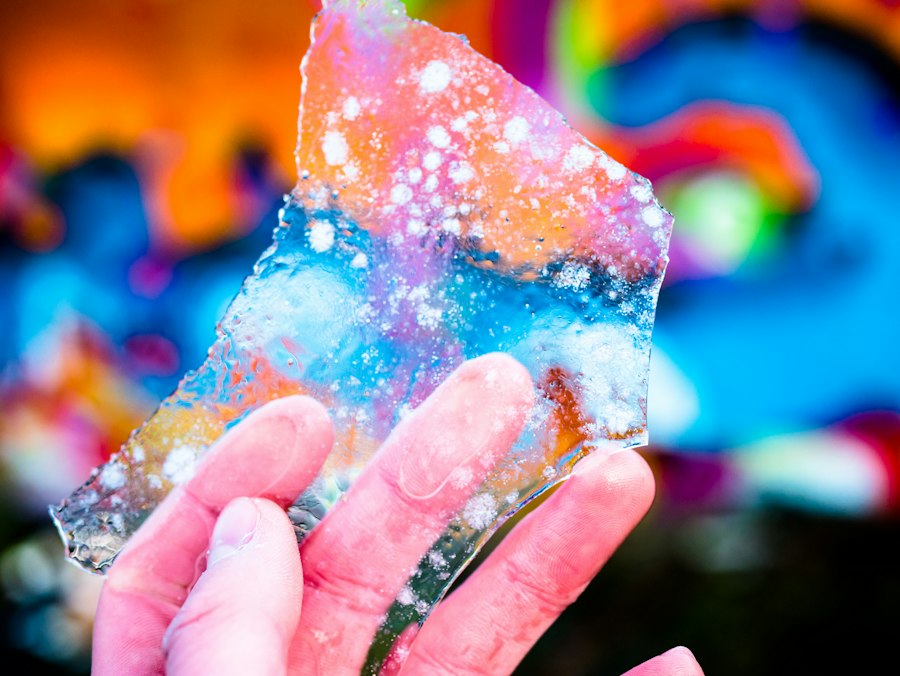
The process by which liquid water transitions into solid ice is a dynamic one, involving distinct stages from the initial spark of crystal formation to the macroscopic growth of an ice mass. This journey is influenced by a multitude of environmental factors.
The Genesis of Ice: Nucleation Processes
The birth of an ice crystal, known as nucleation, is a critical first step. As water cools, its molecules move more slowly, and their ability to form stable hydrogen bonds increases. However, for a macroscopic ice crystal to form, a stable nucleus must be created. This nucleus is a tiny aggregate of water molecules arranged in the characteristic ice lattice.
There are two primary types of nucleation: homogeneous and heterogeneous. Homogeneous nucleation occurs when water molecules spontaneously assemble into a stable ice nucleus without the assistance of any external surface. This is a rare event in natural settings and typically requires significant supercooling.
Heterogeneous nucleation, on the other hand, is far more common. It involves the formation of an ice nucleus on a pre-existing surface, such as a dust particle, a mineral grain, or even a microbial cell. These surfaces provide a favorable template for the water molecules to align and form the ice lattice, reducing the energy barrier for nucleation. The presence of impurities in water, therefore, plays a vital role in facilitating ice formation at temperatures closer to the theoretical freezing point. Scientists have even developed artificial ice nucleating agents, such as silver iodide, used in cloud seeding to encourage precipitation.
The Art of Crystal Growth: From Microscopic to Macroscopic
Once a stable nucleus has formed, it begins to grow by attracting and incorporating more water molecules from the surrounding liquid. This growth process is influenced by the rate of heat transfer away from the growing crystal and the availability of water molecules.
In pure water under controlled conditions, ice crystals often form intricate, hexagonal structures. The most familiar is the snowflake, a testament to the symmetry of the hexagonal ice lattice and the complex conditions of atmospheric temperature and humidity encountered during its formation. As water vapor condenses and freezes onto the growing ice crystal, the molecule’s orientation and the surrounding atmospheric conditions dictate the intricate patterns that emerge.
In bulk water, such as in a freezing lake, ice crystals grow by accretion. The exposed surfaces of the growing crystal become sites for new water molecules to attach and freeze. The rate of cooling significantly impacts the morphology of the ice. Rapid cooling can lead to the formation of smaller, more numerous crystals, resulting in opaque, granular ice. Slower cooling allows for larger, more ordered crystals to form, producing clearer ice. The removal of latent heat of fusion is a crucial factor; as heat is released by the freezing water, it must be efficiently dissipated for continued growth.
Factors Influencing Freezing Rates
Several environmental factors dictate how quickly water freezes and the characteristics of the resulting ice. Temperature is the most obvious factor; the colder the surroundings, the faster the heat loss and the more rapid the freezing process.
The volume and shape of the water body also play a significant role. Smaller volumes of water freeze more quickly than larger ones due to a higher surface area to volume ratio, facilitating faster heat exchange with the environment. The presence of dissolved substances, such as salts, significantly lowers the freezing point of water. This is why saltwater freezes at a lower temperature than freshwater, and why salt is used to de-ice roads.
Wind can also influence freezing rates. While wind can increase the rate of evaporation, which cools the surface, it can also churn the water, bringing warmer water to the surface and potentially slowing down the overall freezing process. Conversely, a strong wind can enhance heat loss from an exposed water surface, accelerating freezing. The flow of water also impacts freezing; moving water typically freezes slower than stagnant water because the continuous motion hinders the establishment of a stable ice structure.
The Multifaceted World of Ice Polymorphs
While ice Ih, the hexagonal form, is the most familiar and ubiquitous type of ice encountered on Earth’s surface, the world of frozen water is far more diverse. Under varying pressures and temperatures, water molecules can arrange themselves into at least seventeen distinct crystalline structures, known as polymorphs, and several amorphous (non-crystalline) forms.
Beyond Ice Ih: High-Pressure Phases
The discovery of different ice phases has largely been driven by experiments conducted under extreme pressures. When subjected to immense forces, water molecules are forced into closer proximity, compelling them to adopt new, denser packing arrangements.
Ice II, for instance, is a monoclinic crystalline structure that forms under high pressure and low temperature. Unlike ice Ih, ice II is denser than liquid water. Further increases in pressure can lead to the formation of ice III, ice V, ice VI, and so on, each with its own unique crystal lattice and properties. These high-pressure ice polymorphs are not just laboratory curiosities; they are believed to exist in the interiors of icy moons and giant planets within our solar system, playing a significant role in their geological and atmospheric processes. The study of these exotic ice forms often involves sophisticated X-ray diffraction techniques and specialized cryogenic equipment to achieve and maintain the necessary extreme conditions.
Amorphous Ices: The Disordered States
In addition to crystalline forms, water can also exist in amorphous, or glassy, states. Amorphous ices lack the long-range order characteristic of crystalline solids. These forms are typically produced by rapidly cooling water vapor or liquid water such that the molecules do not have sufficient time to arrange themselves into a crystal lattice.
Two common types of amorphous ice are low-density amorphous ice (LDA) and high-density amorphous ice (HDA). LDA can be formed by rapidly cooling water vapor onto a very cold surface. HDA, on the other hand, can be formed by compressing LDA or by rapidly cooling water under high pressure. These amorphous forms are of interest in fields such as astrobiology, as they are thought to be present in comets and interstellar clouds, and may have played a role in the origin of life on Earth. Studying these forms requires specialized techniques, as they are typically unstable at ambient temperatures and pressures.
The Significance of Polymorphism
The existence of multiple ice polymorphs highlights the remarkable versatility of the water molecule and the profound influence of pressure and temperature on its physical state. Each polymorph possesses a distinct arrangement of hydrogen bonds, leading to unique densities, mechanical properties, and thermal characteristics.
Understanding these different phases is crucial for comprehending a wide range of phenomena, from the behavior of water in the deep interiors of planets to the formation of materials in industrial processes. The continuous exploration of the ice phase diagram, the map of which ice phase exists under given pressure-temperature conditions, is an active area of research, constantly revealing new insights into the fundamental behavior of this essential substance.
Recent studies in frozen water science have unveiled fascinating insights into the molecular structure of ice and its unique properties. For those interested in exploring this topic further, a related article can be found on Freaky Science, which delves into the various forms of ice and their implications for climate change. You can read more about it in this informative piece that highlights the importance of understanding ice in our environment.
The Role of Ice in Climate and Geology
| Metric | Value | Unit | Description |
|---|---|---|---|
| Freezing Point of Water | 0 | °C | Temperature at which pure water freezes at standard atmospheric pressure |
| Density of Ice | 0.917 | g/cm³ | Density of ice at 0°C, less than liquid water causing ice to float |
| Latent Heat of Fusion | 334 | J/g | Energy required to convert 1 gram of ice at 0°C to water at 0°C without temperature change |
| Thermal Conductivity of Ice | 2.18 | W/m·K | Ability of ice to conduct heat at 0°C |
| Ice Crystal Structure | Hexagonal | – | Common crystalline form of ice known as Ice Ih |
| Speed of Sound in Ice | 3,800 | m/s | Speed at which sound travels through ice at 0°C |
| Melting Point Depression | Varies | °C | Lowering of ice melting point due to impurities or pressure |
The presence and behavior of ice on Earth have profoundly shaped its climate and geological landscape. From the vast ice sheets that have covered continents to the intricate processes of glaciers and sea ice, frozen water is a dynamic force in shaping our planet.
Glaciers and Ice Sheets: Earth’s Frozen Reservoirs
Glaciers and ice sheets represent enormous reservoirs of frozen water, holding a significant portion of the planet’s freshwater. Glaciers are large masses of ice that form over many years from the accumulation and compaction of snow. They flow slowly downhill under their own weight, carving out valleys and shaping landscapes through erosion.
Ice sheets, like those covering Greenland and Antarctica, are even larger and more extensive, covering vast continental landmasses. These massive ice bodies play a critical role in regulating global climate by reflecting solar radiation back into space, a phenomenon known as the albedo effect. A higher albedo means more sunlight is reflected, contributing to cooler global temperatures. Conversely, the melting of ice sheets reduces this albedo, leading to increased absorption of solar radiation and a positive feedback loop that exacerbates warming.
The dynamics of glaciers and ice sheets are also closely linked to sea level rise. As these ice masses melt, the water flows into the oceans, causing sea levels to increase. This has significant implications for coastal communities and ecosystems worldwide. The study of ice cores extracted from these frozen regions provides invaluable historical data about past climate conditions, atmospheric composition, and even ancient biological material, offering a unique window into Earth’s history.
Sea Ice and Its Climatic Influence
Sea ice, which forms from the freezing of seawater, is another crucial component of the Earth’s cryosphere. Unlike freshwater ice, sea ice contains dissolved salts, although much of the salt is expelled during the freezing process, leaving behind ice that is less salty than the surrounding water.
Sea ice plays a vital role in regulating ocean temperatures and atmospheric circulation. It acts as an insulator, preventing excessive heat loss from the ocean into the atmosphere during winter. The extent and thickness of sea ice, particularly in the Arctic, are sensitive indicators of climate change. Declining sea ice cover has profound impacts on Arctic ecosystems, indigenous communities, and global weather patterns. The opening of Arctic shipping routes due to reduced sea ice is also an emerging geopolitical and economic consideration.
The formation and melting of sea ice are complex processes influenced by ocean currents, wind patterns, and atmospheric temperatures. Understanding these dynamics is essential for accurate climate modeling and predicting future climate scenarios. The constant flux of sea ice also influences ocean salinity and density, which in turn drives major ocean currents like the thermohaline circulation.
Permafrost and its Frozen Secrets
Permafrost refers to ground that remains frozen for two or more consecutive years. It is found in high-latitude regions and at high altitudes. Permafrost contains vast amounts of organic matter, including plant and animal remains, that have been preserved in a frozen state for millennia.
The thawing of permafrost, driven by rising global temperatures, is a growing concern. As permafrost thaws, the organic matter within it begins to decompose, releasing greenhouse gases such as carbon dioxide and methane into the atmosphere. This creates a positive feedback loop, where warming leads to permafrost thaw, which releases more greenhouse gases, further contributing to warming.
Permafrost also plays a significant role in landscape stability. The presence of ice within the soil acts as a binding agent, holding the ground together. When permafrost thaws, the ground can become unstable, leading to subsidence, landslides, and damage to infrastructure built on frozen ground. The Arctic permafrost is a vast carbon sink, and its potential release of ancient carbon is a significant factor in global climate change projections. Understanding the thermal regime of permafrost and its response to warming is crucial for mitigating the impacts of climate change.

Why Hot Water Freezes Faster Than Cold (The Mpemba Effect)
FAQs
What is the scientific explanation behind the formation of ice?
Ice is formed when water molecules slow down and come together to form a solid structure due to a decrease in temperature. The molecules arrange themselves in a hexagonal pattern, creating the solid form we know as ice.
How does ice float on water?
Ice floats on water because it is less dense than liquid water. When water freezes, it expands and becomes less dense, causing it to float on the denser liquid water below.
What is the role of ice in Earth’s climate system?
Ice plays a crucial role in Earth’s climate system by reflecting sunlight back into space, helping to regulate the planet’s temperature. Ice also influences ocean currents and weather patterns, making it a key component of the global climate system.
How does ice melting affect sea levels?
When ice melts, it adds more water to the oceans, causing sea levels to rise. This can lead to coastal flooding, erosion, and other negative impacts on coastal communities and ecosystems.
What are some unique properties of ice that make it important in various scientific fields?
Ice has several unique properties, such as its ability to expand when freezing, its high reflectivity, and its role in shaping landscapes through processes like glaciation. These properties make ice a valuable subject of study in fields like climatology, geology, and environmental science.