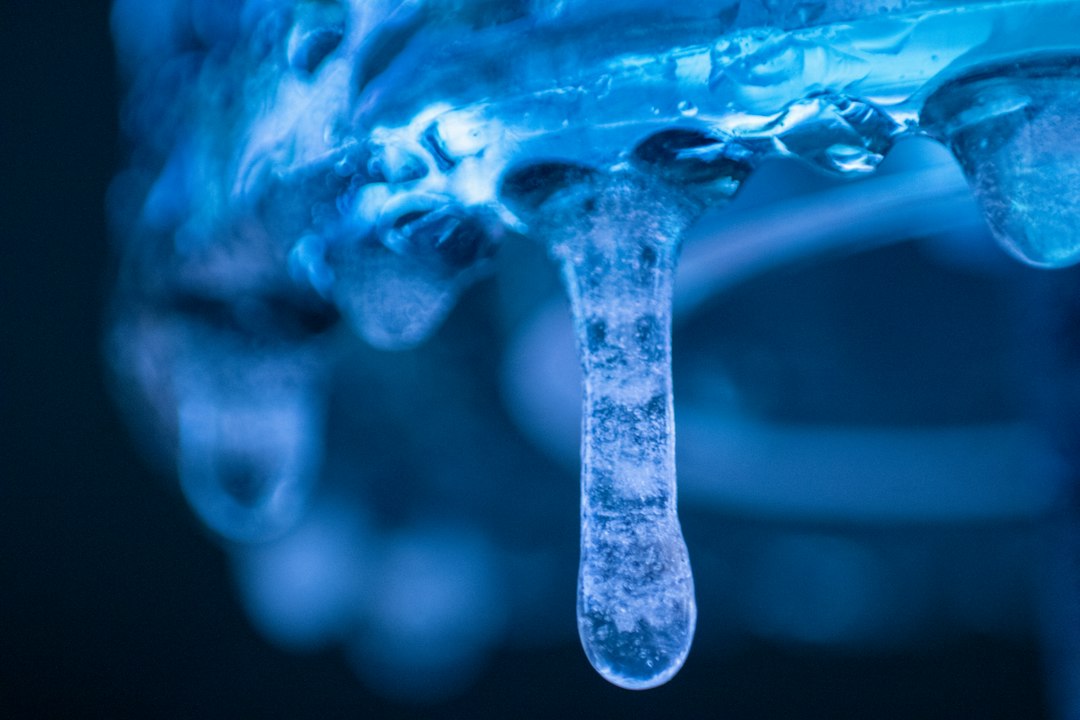
The Curious Case of Hot Water’s Swift Freeze: Introducing the Mpemba Effect
The intuitive understanding of physics dictates that colder objects should cool faster than warmer ones. When faced with two containers of water, one filled with hot water and the other with cold, most individuals would confidently predict that the cold water will reach the freezing point and solidify first. This is a logical assumption, as the hot water possesses a greater amount of thermal energy that needs to be dissipated before it can undergo the phase transition to ice. However, observed phenomena have repeatedly challenged this straightforward expectation, leading to a perplexing paradox known as the Mpemba effect. This intriguing phenomenon describes the observation that, under certain specific circumstances, hot water can indeed freeze faster than cold water. The Mpemba effect has puzzled scientists for centuries, sparking debate, numerous experiments, and a wealth of proposed explanations. Its counterintuitive nature makes it a fascinating subject for scientific inquiry, blurring the lines between everyday observation and complex physical principles. The very existence of such an effect necessitates a deeper exploration of the intricate factors that govern heat transfer and the phase transition of water.
The name “Mpemba effect” originates from Erasto Mpemba, a Tanzanian schoolboy who, in the 1960s, noticed that his ice cream mixture, prepared from a hot base, froze faster than his classmates’ batches made from a cooled base. He brought his observation to the attention of physics teacher Mr. Denis Osborne, who was initially skeptical but, after conducting experiments, found Mpemba’s claim to be true. This anecdotal evidence, while compelling, was met with significant scientific resistance due to its apparent violation of fundamental thermodynamic principles. Osborne, along with Mpemba, later published their findings, bringing the phenomenon to the wider scientific community’s attention. However, the lack of a universally accepted, definitive explanation has meant that the Mpemba effect remains a topic of ongoing research and discussion. The journey from a schoolboy’s observation to a complex scientific puzzle highlights the importance of empirical evidence in challenging established theories and pushing the boundaries of our understanding.
The phenomenon of whether hot water freezes faster than cold water has intrigued scientists and laypeople alike for years, leading to what is known as the Mpemba effect. For a deeper understanding of this topic and to explore various experiments and theories surrounding it, you can read a related article at Freaky Science. This article delves into the complexities of the Mpemba effect and presents different perspectives on why hot water might freeze faster under certain conditions.
Unpacking the Potential Mechanisms: Why Hot Might Outpace Cold

The Mpemba effect, while seemingly paradoxical, is not a supernatural occurrence but rather a complex interplay of various physical processes. Numerous theories have been proposed to explain this phenomenon, each focusing on different aspects of water’s behavior during cooling and freezing. It is crucial to understand that no single explanation has been universally accepted as the sole cause, and it is likely that a combination of these factors contributes to the observed effect, depending on the specific experimental conditions. These proposed mechanisms delve into the nuances of heat transfer, water’s unique properties, and external influences.
Evaporative Cooling: A Weighty Consideration
One of the most frequently cited explanations for the Mpemba effect centers on the process of evaporation. When water is heated, its vapor pressure increases, leading to a higher rate of evaporation. As water molecules escape from the surface as vapor, they carry thermal energy away from the remaining liquid. This loss of energy results in a cooling effect. Consequently, the hot water, with its higher initial rate of evaporation, might lose heat more rapidly through this mechanism than the colder water, which has a lower vapor pressure and thus a slower evaporation rate.
The impact of evaporation is particularly significant in open containers where a larger surface area is exposed to the surrounding air. The greater the temperature difference between the water and the ambient air, the more vigorous the evaporation will be. This initial phase of rapid cooling through evaporation could give the hot water a head start in reaching the freezing point. Moreover, as evaporation reduces the total mass of the water, there is less mass to cool down. This reduction in mass, coupled with the energy loss through evaporation, can contribute to the hot water freezing faster. However, the effectiveness of this mechanism is highly dependent on factors such as the container’s shape, the ambient humidity, and air currents. In a sealed container, where evaporation is significantly reduced or entirely suppressed, the Mpemba effect is generally not observed, lending strong support to the role of evaporative cooling.
Convection Currents: The Unseen Dance of Heat
Convection plays a pivotal role in heat transfer within a fluid. As water heats up, density differences are created. Warmer, less dense water rises, while cooler, denser water sinks. These circulating currents, known as convection currents, are instrumental in distributing heat throughout the liquid. In the case of hot water, vigorous convection currents are established due to the larger temperature gradients. These currents efficiently transfer heat from the bulk of the water to the surface, where it can be dissipated into the surroundings.
When cold water is cooling, the temperature gradients are less pronounced, leading to weaker convection currents. The less efficient transfer of heat via convection in cold water means that the cooling process can be slower. The vigorous convection in hot water can lead to a more rapid decrease in the average temperature of the water, especially in the initial stages of cooling. Furthermore, as the hot water cools and approaches the freezing point, the formation of ice crystals often begins at the surface. The continuous flow of warmer water from below to the surface, driven by convection, can facilitate a more uniform and potentially faster freezing process from the top down. The nature and strength of these convection currents are influenced by the container’s geometry and the temperature differences involved.
Dissolved Gases: A Subtle Influence on Freezing Point
The presence of dissolved gases, such as air, within water can subtly influence its freezing point. Water molecules are often associated with dissolved gas molecules. When water is heated, the solubility of gases decreases, and they tend to escape from the liquid. Hot water, having been heated more significantly, will generally contain fewer dissolved gases than cold water. The process of releasing these dissolved gases during heating and subsequent cooling can affect the way ice crystals form.
Some theories suggest that the presence of dissolved gases acts as a barrier to the formation of ice nuclei, the initial microscopic structures around which ice crystals grow. Water with fewer dissolved gases might therefore be able to form these nuclei and begin freezing more readily. As hot water has undergone heating and subsequent cooling, it has already released a significant portion of its dissolved gases. This reduced gas content could contribute to a faster nucleation and growth of ice crystals. Conversely, cold water, with its higher dissolved gas content, might experience a delay in the initiation of the freezing process. The precise mechanism by which dissolved gases influence nucleation is complex and involves surface energy considerations and molecular interactions.
Supercooling: The Art of Staying Liquid
Supercooling is a phenomenon where a liquid is cooled below its freezing point without solidifying. This can occur if the liquid is free from impurities or imperfections that could act as nucleation sites for ice crystal formation. Supercooled water remains in a liquid state until it is disturbed or introduced to a nucleation site, at which point it rapidly freezes.
It has been proposed that hot water might be more susceptible to supercooling than cold water. This could be due to the vigorous boiling that occurs when water is heated, which can expel dissolved gases and create a cleaner liquid, thus reducing potential nucleation sites. When this hot water then cools, it may enter a more pronounced supercooled state. However, if the cold water also supercools significantly, and then freezes abruptly, it could potentially overcome any initial lead the hot water had. The interplay between initial cooling rates and the extent of supercooling is a critical factor in determining which water freezes first. The transition from a supercooled state to solid ice is often rapid and exothermic, releasing latent heat that can affect the overall freezing time.
The Role of Solubility and Impurities
The solubility of substances within water can also be affected by temperature. As water cools, the solubility of many dissolved substances, including salts and minerals, decreases. This can lead to the precipitation of these impurities. In the case of hot water, when it cools, any dissolved impurities may precipitate out of the solution. These precipitated impurities can act as nucleation sites, promoting the formation of ice crystals and thus accelerating the freezing process.
Conversely, cold water, which has not undergone the heating and subsequent cooling that would cause precipitation, may contain a more stable solution of impurities. If these impurities are not conducive to rapid ice nucleation, the cold water might freeze more slowly. The type and concentration of dissolved impurities present in the water are therefore critical variables. For instance, pure water is known to supercool more readily than water containing dissolved salts. If hot water is effectively “purified” by precipitation of dissolved solids during its cooling phase, it could indeed freeze faster than cold water which retains its dissolved impurities.
Frost Formation: An Unforeseen Heat Sink
When water is placed in a freezer, heat is removed from the water by the cold air. However, the freezer’s internal surfaces can also contribute to heat removal. In many freezers, a layer of frost can accumulate on the cooling coils and walls. The way this frost interacts with the containers of water can influence the rate of heat transfer.
It has been suggested that containers of hot water might melt existing frost layers more effectively than containers of cold water. This melting of frost creates a more direct thermal contact between the container and the cold surface, facilitating a more efficient transfer of heat away from the water. This enhanced heat transfer through direct contact with a melted frost layer could contribute to the hotter water cooling down and freezing faster. The insulating properties of a frost layer can significantly impede heat transfer, so any mechanism that reduces this insulation would accelerate the cooling process.
Experimental Scrutiny: The Ongoing Quest for Definitive Proof
The Mpemba effect, despite its intriguing nature, has proven to be surprisingly challenging to reproduce consistently and definitively under controlled laboratory conditions. This difficulty in achieving reproducible results has fueled much of the debate surrounding its existence and underlying causes. Researchers have employed a variety of experimental setups and methodologies to investigate the phenomenon, each attempting to isolate and measure the various proposed contributing factors.
Rigorous Protocols and Controlled Environments
To rigorously test the Mpemba effect, scientists must meticulously control numerous variables that can influence the cooling and freezing process. This includes the initial temperatures of the hot and cold water, the volume and shape of the containers, the type of container material, the ambient temperature and humidity of the environment, air circulation within the freezer, and the purity of the water itself. Differences in these parameters between experiments can lead to conflicting results.
For example, the choice of container material can influence heat transfer rates. Metal containers generally conduct heat better than glass or plastic. The surface area to volume ratio of the container is also crucial, as it affects the rate of evaporative cooling and heat loss to the environment. The specific design of the freezer, including the placement of the water containers and the efficiency of its cooling system, can also play a significant role. Achieving a truly “fair test” where only the initial temperature of the water differs is paramount for isolating the Mpemba effect.
Challenges in Reproducibility: The Elusive Phenomenon
One of the primary challenges in studying the Mpemba effect is its notorious lack of reproducibility. While many anecdotal reports and some experimental studies have claimed to observe the effect, others have failed to do so, even when using similar protocols. This inconsistency has led some scientists to question whether the Mpemba effect is a robust physical phenomenon or an artifact of specific, perhaps poorly controlled, experimental conditions.
The sensitivity of the effect to seemingly minor variations in experimental parameters makes it difficult to pin down a universal set of conditions under which it reliably occurs. This has led to frustration among researchers and has been a significant barrier to establishing a universally accepted explanation. The precise combination of factors that trigger the Mpemba effect might be quite specific and difficult to replicate across different laboratories or even within the same laboratory over time. This elusive nature has sparked a continuous cycle of experimentation and refinement of hypotheses.
Analyzing the Data: Statistical Significance and Interpretation
Interpreting the results of Mpemba effect experiments requires careful statistical analysis. Simply observing that one container froze slightly faster than another is not sufficient evidence. Researchers must determine if the observed difference is statistically significant, meaning it is unlikely to have occurred by chance. This involves conducting multiple trials and applying statistical tests to the data.
The way data is collected and analyzed can also influence the conclusions drawn. For instance, how the freezing point is defined and measured (e.g., when the entire volume solidifies versus when the first ice crystals appear) can lead to different interpretations. Furthermore, even if a statistically significant difference is observed, attributing it solely to the initial temperature difference, rather than to some uncontrolled variable, remains a challenge. The scientific community requires robust, statistically sound evidence that can withstand scrutiny before accepting a phenomenon as a fundamental physical principle.
The Influence of Water’s Unique Properties: A Deeper Dive
Water is not an ordinary substance; its molecular structure and the way its molecules interact endow it with a set of unique properties that set it apart from most other liquids. These properties are crucial for understanding why phenomena like the Mpemba effect might occur, as they deviate from the behavior expected of simpler substances.
Hydrogen Bonding: The Molecular Glue
At the heart of water’s peculiar behavior lies hydrogen bonding. Water molecules (H₂O) are polar, with a slightly positive charge on the hydrogen atoms and a slightly negative charge on the oxygen atom. This polarity leads to attractive forces between the hydrogen atom of one water molecule and the oxygen atom of another. These relatively weak but numerous attractions are known as hydrogen bonds.
Hydrogen bonds influence water’s viscosity, surface tension, and its anomalous expansion upon freezing. When water is heated, these hydrogen bonds are stretched and weakened, allowing the molecules to move more freely. As it cools, the hydrogen bonds begin to reform, influencing the structure and behavior of the liquid. The dynamics of these bonds breaking and reforming at different temperatures are complex and play a role in heat transfer and phase transitions. The energy required to break these bonds and the energy released as they reform are significant factors in the overall thermal dynamics.
Density Anomaly: The Peculiar Expansion of Ice
Perhaps the most well-known anomalous property of water is its density. Unlike most substances, which become denser as they cool and solidfy, water reaches its maximum density at approximately 4 degrees Celsius (39.2 degrees Fahrenheit). Below this temperature, water actually becomes less dense as it approaches freezing. This is due to the formation of a crystalline lattice structure in ice, where hydrogen bonds hold the water molecules further apart than they are in liquid water at temperatures just above freezing.
This density anomaly has important implications for convection currents. As water cools from above, it can reach its maximum density at 4°C and then sink. This means that the coldest water tends to settle at the bottom of a container, while warmer water remains at the top. This stratification can affect the rate at which heat is lost to the surroundings, potentially influencing the freezing process. In the context of the Mpemba effect, understanding how these density-driven convection patterns evolve in both hot and cold water during cooling is crucial.
Impurities and pH: Subtle but Significant Factors
The purity of water and its pH (acidity or alkalinity) can also exert a subtle but significant influence on its freezing behavior. As discussed earlier, dissolved impurities can act as nucleation sites, affecting the temperature at which ice crystals begin to form. The type and concentration of these impurities can vary depending on the water source.
Furthermore, the pH of water can affect the solubility of gases and the behavior of ions, which in turn can influence nucleation processes. Highly purified or distilled water, lacking dissolved impurities, is more prone to supercooling. Conversely, water with dissolved minerals or salts might freeze more readily. While the Mpemba effect is often studied with tap water, variations in tap water composition across different regions could contribute to the observed inconsistencies in reproducibility.
The intriguing question of whether hot water freezes faster than cold water has sparked much debate among scientists and enthusiasts alike. This phenomenon, often referred to as the Mpemba effect, challenges our conventional understanding of thermodynamics. For those interested in exploring this topic further, a related article can be found at Freaky Science, where various experiments and theories surrounding this curious occurrence are discussed in detail. Understanding the underlying principles can shed light on why hot water sometimes seems to defy expectations when it comes to freezing.
Beyond the Freezer: Real-World Implications and Future Research
| Temperature of Water | Initial Temperature (°C) | Freezing Time (minutes) | Observation |
|---|---|---|---|
| Hot Water | 80 | 15 | Freezes faster than cold water in some conditions (Mpemba effect) |
| Cold Water | 25 | 20 | Freezes slower than hot water in some conditions |
| Room Temperature Water | 20 | 22 | Freezing time varies with environment |
While the Mpemba effect might seem like a curious laboratory anomaly, understanding its underlying mechanisms could have broader implications across various scientific and engineering fields. The ongoing research into this phenomenon continues to push the boundaries of our understanding of fundamental physical processes.
Applications in Various Disciplines: From Food Science to Meteorology
The principles governing the Mpemba effect, particularly those related to rapid cooling and phase transitions, could find applications in diverse areas. In food science, understanding how to accelerate the freezing of food products could lead to improved preservation techniques, maintaining better texture and nutritional quality. In materials science, controlling the freezing of liquids could be important for certain manufacturing processes.
Meteorology might also benefit from a deeper understanding of how water behaves under different temperature regimes. The rapid formation of ice in clouds, for example, is a complex process influenced by numerous factors, and insights from Mpemba effect research could contribute to more accurate weather modeling. Even in everyday life, a better grasp of this phenomenon could lead to more efficient ways of making ice or understanding why things freeze faster under certain conditions.
The Unfinished Puzzle: A Call for Further Investigation
Despite decades of research, a definitive and universally accepted explanation for the Mpemba effect remains elusive. This ongoing debate highlights the complexity of the phenomenon and the intricate interplay of factors involved. Future research will likely focus on developing even more precise experimental controls, utilizing advanced imaging techniques to observe the microscopic processes of freezing in situ, and employing sophisticated computational models to simulate the behavior of water under various conditions.
The Mpemba effect serves as a powerful reminder that even seemingly simple phenomena can harbor deep complexity. It underscores the importance of empirical observation in challenging established scientific paradigms and the continuous pursuit of knowledge. The quest to fully unravel the Mpemba effect is a testament to the enduring fascination with water and its myriad mysteries. It suggests that perhaps there are still fundamental aspects of everyday substances that we are only beginning to comprehend.

Why Hot Water Freezes Faster Than Cold (The Mpemba Effect)
FAQs
1. Does hot water freeze faster than cold water?
Yes, the Mpemba effect suggests that under certain conditions, hot water can freeze faster than cold water. This phenomenon is still not fully understood and is subject to ongoing research.
2. What factors can influence whether hot water freezes faster than cold water?
Factors such as the initial temperature of the water, the container it is in, the surrounding environment, and the presence of impurities can all play a role in determining whether hot water will freeze faster than cold water.
3. Is the Mpemba effect universally observed in all situations?
No, the Mpemba effect is not consistently observed in all situations. It is influenced by various factors, and the conditions under which hot water may freeze faster than cold water can vary.
4. What are some proposed explanations for the Mpemba effect?
Some proposed explanations for the Mpemba effect include evaporation, dissolved gases, supercooling, convection currents, and differences in the rate of cooling between hot and cold water.
5. How can the Mpemba effect have practical applications?
Understanding the Mpemba effect could have practical applications in fields such as food science, medicine, and materials science. It could potentially lead to more efficient cooling processes and energy savings in various industries.