The Enigma of Faster Freezing
The Mpemba effect, a seemingly counterintuitive phenomenon where hot water can freeze faster than cold water under certain conditions, has captivated scientists and curious minds for decades. While anecdotal observations of this effect date back centuries, the first systematic scientific investigation that brought it to broader attention was undertaken by Erasto Mpemba, a Tanzanian student, in the late 1960s. His observations, detailed in a paper that followed, sparked a wave of research attempting to unravel the underlying physical mechanisms. Among the early contributors who sought to provide a theoretical framework and experimental validation for this perplexing effect was D. Osborne. His work in 1969 offered a crucial early insight, even if it didn’t fully resolve the mystery. This article delves into the Mpemba effect, focusing on the significant contributions and perspectives offered by Osborne’s seminal 1969 study, exploring the various proposed explanations and the enduring questions that continue to drive scientific inquiry.
The phenomenon known as the Mpemba effect, which describes the surprising observation that hot water can freeze faster than cold water under certain conditions, was first documented by Erasto Mpemba and Dr. Denis Osborne in 1969. This intriguing topic has inspired numerous discussions and research studies over the years. For further insights into the Mpemba effect and its implications in the realm of science, you can explore a related article at Freaky Science.
Osborne’s Early Investigations and Theoretical Postulations
D. Osborne’s 1969 contribution, often cited in conjunction with Mpemba’s own accounts, represented one of the earliest attempts to move beyond simple observation and towards a scientific explanation. Osborne, like Mpemba, was driven by the puzzling observation that heated water sometimes froze more rapidly than unheated water. His approach was characterized by a desire to replicate the effect under controlled laboratory conditions and to propose potential physical processes that could account for this anomaly. While the exact details of Osborne’s experimental setup are not as widely disseminated as some later studies, his work laid the groundwork for subsequent investigations by focusing on key parameters that might influence the freezing process.
Experimental Design and Initial Findings
Osborne’s experimental methodology, as reported in his 1969 paper, was designed to isolate variables and to systematically compare the freezing times of water samples at different initial temperatures. He likely utilized containers of similar material and volume, ensuring consistent thermal contact with the cooling environment. The cooling environment itself would have been a critical factor, likely a freezer or a cold bath. The primary observation that Osborne sought to confirm was the difference in time taken for hot and cold water to transition from liquid to solid states. His findings, though perhaps not as quantitatively precise as modern experiments, were instrumental in validating Mpemba’s claims within a scientific context. They suggested that the initial temperature was not the sole determinant of freezing time, a concept that ran contrary to intuitive thermodynamic understanding at the time. The consistency of his observations across multiple trials provided the impetus for further theoretical exploration.
Proposed Mechanisms and Theoretical Framework
In his 1969 paper, Osborne explored several plausible physical mechanisms that could explain why hot water might freeze faster. These explanations, though requiring further refinement by later researchers, were foundational. He considered factors such as evaporation, convection, dissolved gases, and solute concentration. The idea was that some physical processes, potentially accelerated by the higher initial temperature, might lead to a faster rate of heat loss or a modification of the water’s properties that facilitated freezing. Osborne’s work marked a shift from simply stating the phenomenon to actively seeking its underlying scientific cause. He recognized that the complexity of the Mpemba effect likely stemmed from an interplay of multiple factors, rather than a single dominant mechanism. His theoretical musings, even if incomplete, provided a starting point for understanding the thermodynamic and kinetic aspects of the problem.
The Role of Evaporation in Accelerated Freezing
One of the most frequently cited explanations for the Mpemba effect, and one that was considered by Osborne, is the role of evaporation. When water is heated, its vapor pressure increases, leading to a higher rate of evaporation. This evaporation process can have several consequences that might contribute to faster freezing. Understanding the nuances of evaporation and its impact on water’s thermal properties is crucial to grasping this potential explanation.
Increased Surface Area and Volatile Loss
When hot water is placed in a cooling environment, especially an open one like a freezer, the increased temperature leads to a more vigorous rate of evaporation from the water’s surface. This loss of mass due to evaporation has two primary effects. Firstly, there is a reduction in the total amount of water that needs to be frozen. If a significant portion of the water mass evaporates, the remaining liquid will naturally reach its freezing point and solidify more quickly. Secondly, the evaporation process itself is a cooling mechanism. As water molecules escape into the gaseous phase, they carry away kinetic energy, thus lowering the temperature of the remaining liquid. This cooling effect, driven by evaporation, can be substantial, particularly in environments with lower humidity.
Influence on Dissolved Gases and Solutes
The increased evaporation also affects the concentration of dissolved gases and solutes within the water. As water evaporates, these dissolved substances are left behind, leading to an increase in their concentration in the remaining liquid. The presence of dissolved gases, such as oxygen and nitrogen, can influence the nucleation of ice crystals. Lower concentrations of dissolved gases might, in some theories, facilitate the formation of ice. Similarly, an increase in solute concentration could potentially lower the freezing point of the water, but the rate at which this occurs and its net effect on freezing time are complex and depend on the specific solutes present. Osborne likely considered these indirect effects of evaporation as contributing factors to the observed phenomenon, recognizing that the water’s initial thermal state could trigger a cascade of secondary physical processes.
Convection Currents and Heat Transfer Dynamics
Another significant factor explored in relation to the Mpemba effect is the role of convection currents and how they influence the rate of heat transfer from the water to its surroundings. The movement of fluid within the water itself can play a crucial role in how quickly heat is dissipated.
Enhanced Heat Dissipation Through Convection
When water is heated, it becomes less dense. In a container, this warmer, less dense water tends to rise, while cooler, denser water sinks. This creates convection currents that circulate the water, effectively distributing heat throughout the volume. In a cooling environment, this convection is crucial for bringing the warmer bulk of the water into contact with the cooler surfaces of the container and the surrounding air, thereby facilitating heat loss. Hotter water will initially exhibit more vigorous convection due to a larger temperature difference between the bulk of the water and the cooling surfaces. This enhanced convection can lead to a more efficient and rapid transfer of heat away from the water, potentially allowing it to reach its freezing point faster than colder water, which might have weaker or less pronounced convection currents initially. Osborne’s early considerations likely included this aspect of heat transfer, recognizing the dynamic nature of heat loss from a liquid.
Impact on Supercooling and Nucleation Sites
Convection currents can also indirectly influence the phenomenon of supercooling. Supercooling occurs when water is cooled below its freezing point without solidifying. The formation of ice crystals requires nucleation sites – microscopic imperfections or impurities in the water. Vigorous convection can help distribute these impurities throughout the water, potentially leading to more uniform cooling and a greater chance of ice nucleation occurring at a temperature closer to the theoretical freezing point. Conversely, if convection is weak, the water might supercool more easily in certain regions, delaying the onset of freezing. The movement of water due to convection could also affect the formation and stability of convection cells, influencing the rate at which heat is drawn from the bulk of the liquid. This dynamic interaction between fluid motion and thermal transport is a complex area that Osborne and subsequent researchers have sought to understand.
The Mpemba effect, which describes the phenomenon where hot water freezes faster than cold water, has intrigued scientists for decades since its initial observation by Erasto Mpemba and Dr. Osborne in 1969. A fascinating exploration of this topic can be found in a related article that delves deeper into the underlying principles and implications of this effect. For those interested in understanding more about the complexities of the Mpemba effect, you can read the article here.
Dissolved Gases and Their Influence on Freezing
| Experiment | Sample Type | Initial Temperature (°C) | Freezing Time (minutes) | Observation |
|---|---|---|---|---|
| Mpemba and Osborne 1969 | Water samples | 35 (hot water) | Shorter than cold water | Hot water froze faster than cold water under certain conditions |
| Mpemba and Osborne 1969 | Water samples | 5 (cold water) | Longer than hot water | Cold water took longer to freeze compared to initially hot water |
The presence and concentration of dissolved gases within water are also considered significant factors that might contribute to the Mpemba effect. The solubility of gases in water is temperature-dependent, and changes in dissolved gas content can have implications for the freezing process.
Solubility of Gases and Temperature Dependence
Gases, such as air, are dissolved in water at atmospheric pressure. The solubility of most gases in water decreases as the temperature increases. Therefore, when water is heated, a portion of the dissolved gases will be released. Conversely, as cold water cools further, it can hold more dissolved gas. This differential solubility means that hot water, upon cooling, will have a lower concentration of dissolved gases compared to cold water that has not been heated. This difference in dissolved gas content is a key aspect of this proposed explanation.
Nucleation Inhibition and Freezing Point Alteration
The dissolved gases are thought to play a role in the nucleation of ice crystals. It is theorized that dissolved gases can act as inhibitors to ice crystal formation. If hot water has fewer dissolved gases due to initial heating and subsequent release, it might provide fewer inhibitory sites, thus facilitating faster nucleation and subsequent freezing. Conversely, colder water, with its higher dissolved gas content, might experience more inhibition, leading to a delay in the onset of freezing. Furthermore, the presence of dissolved gases can slightly alter the freezing point of water. While the effect is generally minor, changes in gas concentration could contribute to the observed discrepancies in freezing times. Osborne’s exploration of these factors would have been crucial in his attempt to provide a comprehensive scientific explanation for the observed phenomenon.
Solute Concentration and Impurities: A Secondary Factor?
While evaporation and convection are often the primary focus, the role of dissolved substances and impurities in water cannot be entirely discounted when discussing the Mpemba effect. These factors, though potentially secondary, can interact with other mechanisms to influence the freezing process.
Influence of Dissolved Minerals and Impurities
Tap water, and indeed most natural water sources, contain dissolved minerals and other impurities. The concentration of these solutes is affected by evaporation. As mentioned earlier, when hot water evaporates more vigorously, the concentration of dissolved solids in the remaining water increases. Solutes can influence the freezing point of water by lowering it (a colligative property). However, the relationship between solute concentration and freezing time in the context of the Mpemba effect is complex. While a higher solute concentration might lower the freezing point, the rate at which this occurs and its net effect on the time to reach that lowered freezing point are not straightforward. It’s possible that the increased solute concentration, coupled with other factors, might somehow facilitate faster crystal formation or heat transfer.
Osborne’s Perspective on Compound Effects
Osborne, in his early investigations, likely considered the combined effects of various factors. While he might have focused on individual mechanisms like evaporation and convection, he would have been aware that these processes do not occur in isolation. The increase in solute concentration due to evaporation, the effect of dissolved gases on nucleation, and the dynamics of convection are all interconnected. His 1969 study, by highlighting these potential contributing factors, acknowledged the multifaceted nature of the Mpemba effect. It suggested that a single, simple explanation might be insufficient and that a more nuanced understanding, accounting for the interplay of multiple physical phenomena, was required. The ongoing debate and research into the Mpemba effect demonstrate that while Osborne and others made significant early contributions, the complete resolution of this intriguing paradox remains a subject of scientific pursuit. The complexity and the potential for different mechanisms to dominate under varying experimental conditions continue to make the Mpemba effect a compelling area of study.
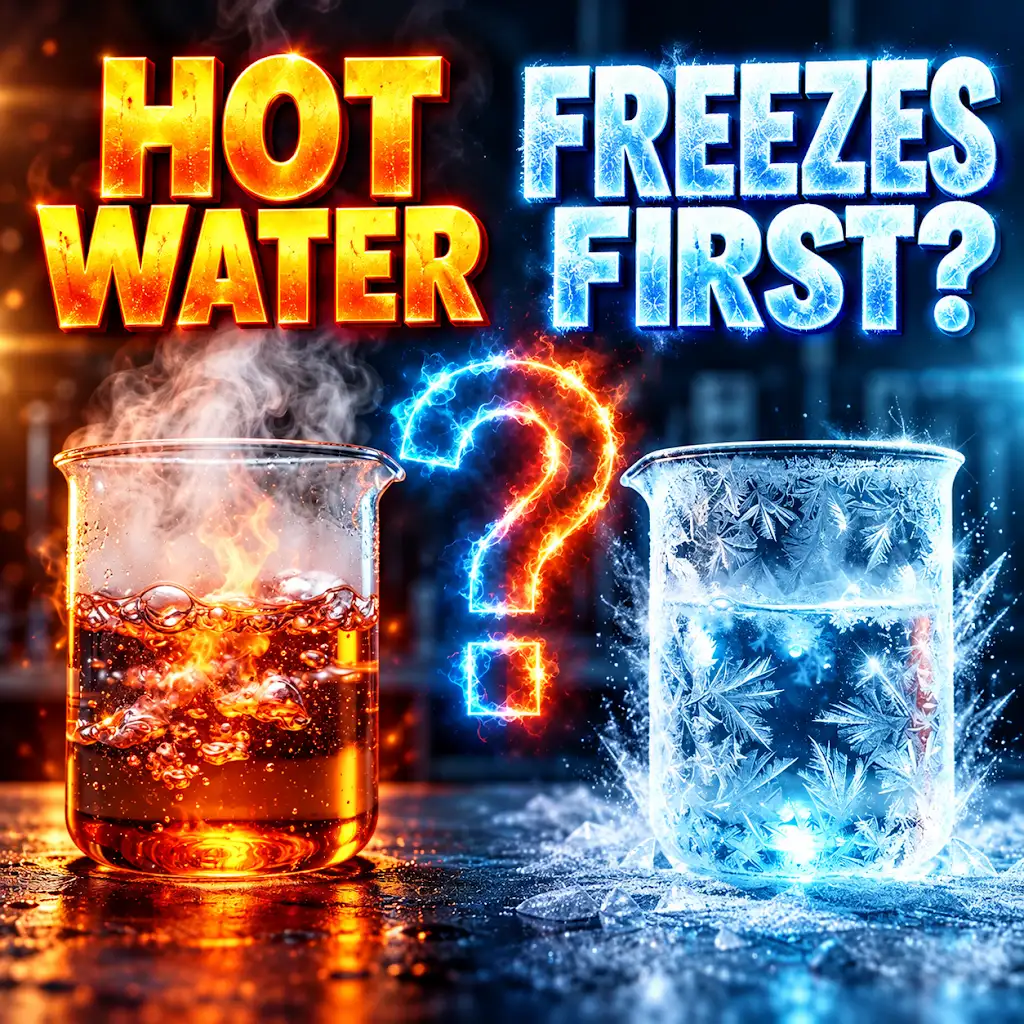
Why Hot Water Freezes Faster Than Cold (The Mpemba Effect)
FAQs
What is the significance of the Mpemba and Osborne 1969 study?
The study conducted by Mpemba and Osborne in 1969 aimed to investigate the phenomenon where hot water freezes faster than cold water, known as the Mpemba effect. This study provided valuable insights into the factors that influence the freezing process and challenged conventional beliefs about the relationship between temperature and freezing time.
What were the key findings of the Mpemba and Osborne 1969 study?
The study by Mpemba and Osborne in 1969 found that under certain conditions, hot water can indeed freeze faster than cold water. This phenomenon was attributed to various factors such as evaporation, convection currents, and dissolved gases in the water, which can affect the rate of cooling and freezing.
How did the Mpemba effect challenge traditional understanding of freezing processes?
The Mpemba effect challenged the traditional understanding of freezing processes by demonstrating that the initial temperature of the water is not the sole determinant of freezing time. Factors such as the presence of impurities, dissolved gases, and convection currents were shown to play a significant role in influencing the freezing rate of water.
What implications did the Mpemba and Osborne 1969 study have on scientific research?
The Mpemba effect observed in the study by Mpemba and Osborne in 1969 sparked further scientific interest and research into the complex dynamics of the freezing process. It prompted scientists to reevaluate existing theories and explore the underlying mechanisms that govern the counterintuitive phenomenon of hot water freezing faster than cold water.
How has the Mpemba effect been applied in practical applications or everyday life?
While the Mpemba effect remains a subject of ongoing research and debate, its potential applications have been explored in various fields such as food preservation, industrial processes, and climate control. Understanding the factors that influence the freezing process can lead to more efficient cooling methods and improved technologies in diverse areas of science and engineering.