
Unveiling the Secrets of Solidification: The Shelf Contact Freezing Experiment
The transition of a liquid into a solid, a process known as freezing or solidification, is fundamental to countless natural phenomena and industrial applications. From the formation of glaciers to the preservation of food, understanding the intricate mechanisms of ice formation is of paramount importance. While the general principles of freezing are well-established, the precise dynamics of crystal nucleation and growth, particularly when a liquid comes into contact with a cold surface, remain an active area of scientific inquiry. The shelf contact freezing experiment offers a powerful and controlled environment to investigate these complex processes, providing critical insights into the formation of ice on a macroscopic scale. This article delves into the experimental setup, observations, and the profound implications of shelf contact freezing for our understanding of ice formation dynamics.
The allure of studying freezing on a cold surface lies in its direct relevance to everyday experiences and scientific challenges. Consider the formation of frost on a windowpane, the freezing of water onto a chilled aircraft wing, or the challenges faced in cryopreservation. In all these scenarios, the initial interaction of the liquid with a solid substrate plays a pivotal role in dictating the subsequent freezing process. Traditional bulk freezing methods, where cooling occurs uniformly throughout the liquid volume, often mask the crucial surface effects. Shelf contact freezing, by contrast, isolates and amplifies these surface phenomena, allowing researchers to meticulously observe and analyze the initial stages of ice nucleation and the subsequent propagation of the solid phase. This controlled approach enables the unraveling of factors that influence the speed, morphology, and crystalline structure of the ice that forms, ultimately leading to a more profound comprehension of solidification.
In exploring the fascinating realm of shelf contact freezing experiments, one can gain further insights by reading a related article that delves into the principles and applications of this phenomenon. This article provides a comprehensive overview of the methods used in such experiments, as well as the implications for various scientific fields. For more detailed information, you can check out the article here: Shelf Contact Freezing Experiment.
Experimental Design and Methodological Approaches
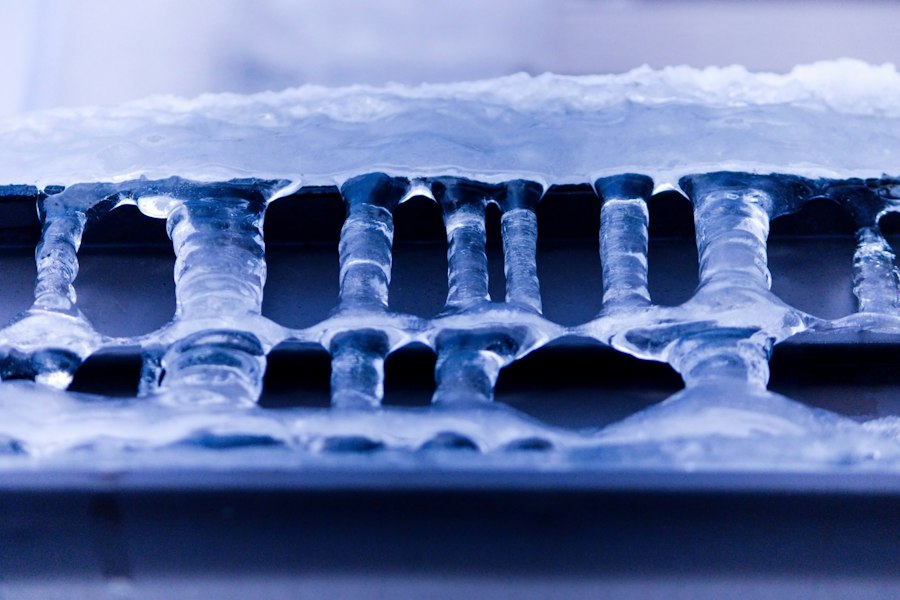
The shelf contact freezing experiment, at its core, involves bringing a liquid, typically water, into direct contact with a supercooled solid surface. The simplicity of this fundamental setup belies the sophisticated methodologies employed to capture and analyze the ensuing phase transition. Researchers have developed a range of techniques to precisely control experimental parameters and to visualize the intricate details of ice formation as it unfolds.
The Core Apparatus: A Chilled Surface and a Liquid Reservoir
The cornerstone of any shelf contact freezing experiment is the chilled surface, often referred to as the “shelf.” This surface is meticulously prepared to ensure a clean and uniform interface. Common materials for the shelf include polished metals like aluminum or stainless steel, glass slides, or specialized hydrophobic or hydrophilic coatings. The temperature of the shelf is crucial; it must be maintained at a temperature below the freezing point of the liquid to induce solidification. This is typically achieved through circulating a cryogenic fluid, such as a chilled ethanol-water mixture or a refrigerant, through channels embedded within or beneath the shelf. Precise temperature control is paramount, often with accuracies of a fraction of a degree Celsius, to ensure reproducibility and to study the influence of subtle temperature variations on ice formation.
The liquid reservoir is equally important. It can range from a simple container holding a volume of water to more complex setups designed to control the rate of liquid supply or to introduce specific solutes or impurities. The geometry of the liquid reservoir and its placement relative to the chilled surface can significantly influence the freezing process. For instance, a thin film of liquid, a sessile drop, or a flowing stream can each exhibit distinct freezing behaviors due to differences in surface area to volume ratio and the rate of heat transfer. The purity of the liquid is also a critical factor, as dissolved impurities can profoundly affect nucleation kinetics and crystal growth. Deionized and degassed water is frequently used to minimize extraneous nucleation sites and to ensure that the observed freezing is primarily driven by the interaction with the cold surface.
Advanced Visualization Techniques: Capturing the Dynamics
Observing the rapid and often microscopic events of ice nucleation and growth requires sophisticated visualization techniques. High-speed cameras are indispensable for capturing the fleeting moments of crystal initiation and propagation. These cameras, coupled with powerful illumination sources, can record events at frame rates of thousands or even millions of frames per second. This allows researchers to dissect the initial stages of ice formation, which can occur in milliseconds.
Optical microscopy, particularly with phase contrast or differential interference contrast (DIC) microscopy, is often employed to observe the fine details of ice crystal morphology. These techniques can reveal the intricate dendritic structures, epitaxial growth patterns, and the formation of grain boundaries within the ice. For studying the internal structure of the ice, techniques like Raman spectroscopy or infrared thermography can be used to assess temperature gradients and the composition of the solidified ice. In certain advanced setups, X-ray diffraction can be employed to analyze the crystallographic orientation of ice crystals as they form on the surface. The choice of visualization technique is dictated by the specific phenomena being investigated, from the initial appearance of a single ice nucleus to the macroscopic growth of an ice layer.
Parameter Control and Data Acquisition: Ensuring Rigor
Rigorous experimental design necessitates meticulous control over key parameters and robust data acquisition. Beyond temperature, other crucial parameters include the rate of cooling, the pressure of the surrounding environment, and the surface properties of the chilled substrate. For instance, varying the cooling rate of the shelf can reveal how quickly or slowly the liquid is brought to its freezing point, which can influence the type of nucleation (homogeneous vs. heterogeneous) and the resulting ice morphology.
Automated data acquisition systems are essential for recording multiple parameters simultaneously and with high precision. This includes logging temperature at various points, recording the images from high-speed cameras, and potentially measuring other relevant physical quantities such as pressure or humidity. Sophisticated image processing software is then used to analyze the recorded data. This can involve tracking the growth rate of ice crystals, quantifying the number of nucleation sites, measuring the area covered by ice, and determining the crystallographic orientation of the ice formed. Statistical analysis of these data allows for the identification of trends, the validation of theoretical models, and the drawing of robust conclusions about the ice formation dynamics.
Nucleation Events: The Genesis of Ice
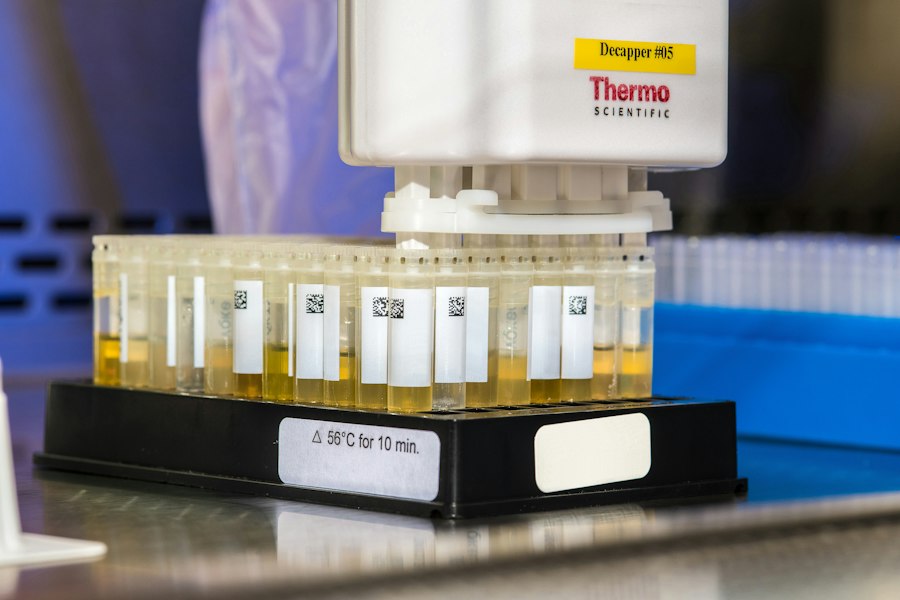
The formation of ice is initiated by a process known as nucleation, the spontaneous emergence of a stable solid phase from a supercooled liquid. In the context of shelf contact freezing, nucleation is heavily influenced by the presence of the solid interface. Understanding the nature and dynamics of these initial nucleation events is fundamental to comprehending the subsequent growth of ice.
Heterogeneous Nucleation: The Surface’s Crucial Role
In most real-world scenarios, and particularly in shelf contact freezing, ice formation is dominated by heterogeneous nucleation. This means that the formation of stable ice nuclei preferentially occurs at pre-existing sites on the chilled surface. These sites can be imperfections, impurities, or irregularities on the surface itself. The presence of such sites lowers the energy barrier required for the formation of a stable ice nucleus compared to homogeneous nucleation, which would occur spontaneously within the bulk liquid without any external influence.
The chilled surface acts as a template, providing a favorable substrate for water molecules to arrange themselves into an ordered crystalline structure. The specific material properties of the surface, such as its wettability (hydrophilicity or hydrophobicity), surface roughness, and chemical composition, play a critical role in determining the efficiency of heterogeneous nucleation. A hydrophilic surface might attract water molecules more strongly, promoting their organization into an ice lattice, while a rough surface might offer more pockets or edges where nucleation can be initiated. Researchers meticulously characterize these surface properties to understand their impact on nucleation density and the location of initial ice formation.
In recent studies exploring the effects of shelf contact freezing, researchers have uncovered intriguing insights into how this method can impact food preservation and quality. For a deeper understanding of the scientific principles behind such experiments, you may find it helpful to read a related article that discusses various freezing techniques and their applications in food science. This article can be accessed through this link, providing valuable information that complements the findings of the shelf contact freezing experiment.
Homogeneous Nucleation: A Rare but Important Benchmark
While heterogeneous nucleation is the dominant mechanism in shelf contact freezing under typical experimental conditions, homogeneous nucleation serves as an important theoretical benchmark and can be observed under highly controlled circumstances. Homogeneous nucleation occurs when ice nuclei form spontaneously within the bulk liquid, without the aid of any external surfaces or impurities. This process requires a significantly higher degree of supercooling because the formation of a stable nucleus from randomly oriented liquid molecules requires overcoming a substantial energy barrier.
Achieving and observing homogeneous nucleation in a shelf contact experiment is challenging. It typically necessitates ultra-pure water, meticulously cleaned surfaces free of any contaminants, and precise control over the degree of supercooling. In such idealized conditions, nucleation might occur in the bulk liquid away from the surface, or it might occur simultaneously at multiple locations. While rare in practice, understanding the conditions under which homogeneous nucleation occurs provides valuable insights into the fundamental thermodynamic principles governing ice formation and the intrinsic properties of water itself. The comparison between heterogeneous and homogeneous nucleation rates under varying conditions helps to elucidate the specific role of the solid surface in promoting ice formation.
Nucleation Kinetics: The Speed of Ice’s Genesis
The rate at which ice nuclei form, known as nucleation kinetics, is a critical parameter influencing the overall freezing process. This rate is highly dependent on the degree of supercooling, the nature of the surface, and the presence of any dissolved substances. Experimental investigations aim to quantify this nucleation rate by counting the number of nucleation events within a specific area and time frame.
By systematically varying the temperature of the chilled surface and observing the onset of ice formation, researchers can determine the critical supercooling required for significant nucleation. Furthermore, by analyzing high-speed video footage, they can track the appearance of individual nuclei and estimate their formation rate. This data is often fitted to established nucleation theories, such as the classical nucleation theory, to extract fundamental parameters like interfacial energy between ice and water, and the work of nucleation. Understanding nucleation kinetics allows for predictions about how quickly ice will form under different conditions, which is vital for applications ranging from food preservation to the design of de-icing systems. It also sheds light on the stochastic nature of freezing, highlighting that even under identical macroscopic conditions, the exact timing and location of nucleation can vary.

Why Hot Water Freezes Faster Than Cold (The Mpemba Effect)
FAQs
What is shelf contact freezing?
Shelf contact freezing is a method of freezing food products by placing them directly on a cold surface, such as a freezer shelf, to accelerate the freezing process.
How does shelf contact freezing differ from traditional freezing methods?
Shelf contact freezing is different from traditional methods like air blast freezing or immersion freezing because it involves direct contact with a cold surface, allowing for faster freezing times and potentially better preservation of food quality.
What are the advantages of shelf contact freezing in food preservation?
Shelf contact freezing can help preserve the texture, flavor, and nutritional value of food products better than traditional freezing methods. It also allows for quicker freezing, which can be beneficial for maintaining the freshness of perishable items.
Are there any limitations or drawbacks to shelf contact freezing?
One limitation of shelf contact freezing is that it may not be suitable for all types of food products, especially those that are sensitive to moisture loss or require specific freezing conditions. Additionally, it may not be as practical for large-scale freezing operations.
How can shelf contact freezing be implemented in a home setting?
In a home setting, shelf contact freezing can be achieved by placing food items directly on a freezer shelf or a flat tray in the freezer. It is important to ensure that the surface is clean and that the food is properly packaged to prevent contamination and maintain quality during freezing.