Unveiling the Dynamic World of Chemical Reactions Through a Visual Exploration
The realm of chemistry, often perceived as a complex landscape of abstract formulas and laboratory jargon, truly comes alive when observed in action. Chemical reactions, the fundamental processes that underpin everything from the baking of a cake to the functioning of our own bodies, are a captivating spectacle. They represent the constant transformation of matter, the breaking and forming of bonds, and the release or absorption of energy. Understanding these transformations is not merely an academic pursuit; it’s a journey into the very essence of how the universe operates. This exploration delves into the fascinating world of chemical reactions, guided by a special science investigation video that promises to illuminate these intricate processes in a visually engaging manner. The video serves as a gateway, offering a tangible and observable representation of concepts that might otherwise remain confined to textbooks and theoretical discussions. It’s an opportunity for viewers to witness firsthand the dynamism of chemical change, fostering a deeper appreciation for the invisible forces that shape our physical reality. From the simplest combustion to the intricate pathways of photosynthesis, chemical reactions are the unsung heroes of countless phenomena. This article aims to unpack the core principles behind these reactions, highlighting key areas of investigation that are likely to be featured in such a visual exploration, and emphasizing the educational value of observing these processes through a dedicated science investigation video.
In our latest science investigation video, we delve into the fascinating world of chemical reactions and their everyday applications. To further explore this topic, you can check out a related article that provides in-depth insights and experiments that you can try at home. For more information, visit this article to enhance your understanding of the science behind these reactions.
The Foundation of Chemical Change: Understanding Reactants and Products
At its core, a chemical reaction is a process that involves the rearrangement of atoms and molecules. This rearrangement results in the formation of new substances with different properties from the original ones. The starting materials in a chemical reaction are known as reactants, and the substances formed are called products. The transformation from reactants to products is governed by specific laws and principles of chemistry, primarily the law of conservation of mass, which states that matter cannot be created or destroyed in a chemical reaction. This means that the total mass of the reactants must equal the total mass of the products. The video is expected to illustrate this fundamental concept by showcasing reactions where the input materials are clearly identifiable and the resulting substances can be observed, perhaps even analyzed for their altered characteristics. For instance, a demonstration might involve the combination of simple elements like hydrogen and oxygen to form water. The video would likely depict the initial gaseous states of hydrogen and oxygen and then the formation of liquid water, emphasizing that no atoms were lost or gained in the process, simply reorganized.
The Role of Energy in Chemical Transformations
Chemical reactions are intimately linked with energy. Energy can be either released or absorbed during the process. Reactions that release energy, typically in the form of heat and light, are called exothermic reactions. A classic example is combustion, where fuel reacts with oxygen to produce heat and light, like a burning candle or a roaring campfire. These reactions are often spontaneous once initiated. On the other hand, endothermic reactions absorb energy from their surroundings. These reactions often require a continuous input of energy to proceed. Photosynthesis, the process by which plants convert light energy into chemical energy in the form of glucose, is a prime example of an endothermic reaction. The science investigation video might showcase both types of reactions, clearly indicating the energy changes involved. For an exothermic reaction, the visual might depict a rapid increase in temperature, a flame, or even an explosion, accompanied by a release of light. For an endothermic reaction, the video might show a decrease in temperature, perhaps ice forming or a substance cooling significantly as it reacts. This visual representation of energy transfer is crucial for a holistic understanding of reaction dynamics.
Factors Influencing Reaction Rates: The Speed of Change
The speed at which a chemical reaction occurs, known as the reaction rate, is not always constant. Several factors can influence how quickly reactants are converted into products. These factors are critical for controlling chemical processes in both natural and industrial settings. The science investigation video is likely to highlight some of these key factors through practical demonstrations. Common factors include the concentration of reactants, the surface area of solid reactants, the temperature, and the presence of a catalyst.
Concentration Matters: More Particles, Faster Reactions
When the concentration of reactants is higher, there are more particles in a given volume, leading to more frequent collisions between reactant molecules. According to collision theory, for a reaction to occur, reactant particles must collide with sufficient energy (activation energy) and with the correct orientation. Therefore, increased concentration generally leads to a faster reaction rate. The video might demonstrate this by showing two identical reactions, one with a dilute solution of a reactant and another with a concentrated solution, highlighting the visible difference in the speed of product formation.
Surface Area: Unlocking Reactivity
For reactions involving solids, the surface area exposed to the other reactants plays a significant role. Increasing the surface area of a solid reactant by breaking it into smaller pieces or grinding it into a powder exposes more of its particles to react. This leads to more frequent collisions and thus a faster reaction rate. A common demonstration involves the reaction of a solid metal with an acid. A solid chunk of metal will react much slower than the same amount of metal in powdered form. The video could clearly illustrate this difference in reactivity by comparing the effervescence produced when a metal cube reacts with acid versus when the same amount of metal in powder form reacts, showcasing the accelerated reaction with increased surface area.
Temperature’s Influence: Heating Up the Pace
Temperature is a crucial factor affecting reaction rates. As temperature increases, the kinetic energy of molecules increases, causing them to move faster and collide more frequently. More importantly, a higher temperature means a greater proportion of molecules will possess the activation energy required for the reaction to occur. This leads to a significant increase in the reaction rate. The video might showcase reactions at different temperatures, perhaps involving a color change or gas production, to vividly demonstrate how heating speeds up the process. Conversely, cooling a reaction will slow it down.
Catalysts: The Unseen Accelerators
Catalysts are substances that increase the rate of a chemical reaction without being consumed in the process themselves. They work by providing an alternative reaction pathway with a lower activation energy. Catalysts are essential in many industrial processes, such as the production of ammonia and the catalytic converters in cars. The video could feature a reaction that proceeds very slowly on its own but is dramatically accelerated by the addition of a specific catalyst. Observing the rapid formation of products in the presence of a catalyst, while the catalyst itself remains unchanged, offers a powerful visual understanding of its function.
Exploring Different Types of Chemical Reactions Visually

Chemical reactions can be broadly categorized into several fundamental types, each characterized by a specific pattern of reactant and product transformation. The science investigation video is expected to provide clear visual examples of these common reaction types, making them more accessible and understandable to the viewer. Witnessing these classifications in action moves the concepts from abstract definitions to concrete observable events.
Synthesis Reactions: Building New Compounds
Synthesis reactions, also known as combination reactions, are processes where two or more simple substances combine to form a more complex compound. The general form of a synthesis reaction is A + B → AB. These reactions are fundamental to building larger molecules from smaller building blocks. For example, the formation of ammonia from nitrogen and hydrogen gas (N₂ + 3H₂ → 2NH₃) is a synthesis reaction. The video might depict the direct combination of elements or simple compounds, showing the reactants disappearing and a new, distinct product forming. The formation of rust on iron (iron + oxygen → iron oxide) could also serve as a visual example, demonstrating how elements combine to create a new substance with vastly different properties.
Decomposition Reactions: Breaking Down to Simpler Forms
Decomposition reactions are the opposite of synthesis reactions, where a single compound breaks down into two or more simpler substances. The general form is AB → A + B. These reactions often require energy input, such as heat or electricity, to break the chemical bonds within the compound. A common example is the electrolysis of water, where water (H₂O) is broken down into hydrogen gas (H₂) and oxygen gas (O₂). The video could visually represent this by showing water being subjected to an electric current, and then observing the bubbles of hydrogen and oxygen gases forming at the electrodes. Another example could be the thermal decomposition of calcium carbonate (CaCO₃) into calcium oxide (CaO) and carbon dioxide (CO₂), where heating causes the compound to break apart.
In the realm of science investigations, one fascinating article that delves into the intricacies of scientific exploration can be found at Freaky Science. This resource offers insights into various experiments and discoveries that can inspire budding scientists to embark on their own investigative journeys. Whether you’re interested in chemistry, physics, or biology, the articles available provide a wealth of knowledge that complements any science investigation video.
Single Displacement Reactions: Swapping Partners
In single displacement reactions, also known as single replacement reactions, one element replaces another element in a compound. The general form is A + BC → AC + B (if A is a metal) or A + BC → BA + C (if A is a nonmetal). These reactions are often driven by the relative reactivity of the elements involved. For instance, if a more reactive metal is placed in a solution of a less reactive metal’s salt, the more reactive metal will displace the less reactive metal. The video might show a piece of zinc metal being placed into a copper sulfate solution. The zinc will displace the copper, forming zinc sulfate and solid copper. The visual would clearly show the blue copper sulfate solution becoming less blue as copper metal deposits on the zinc, and the zinc itself might change appearance as it dissolves and copper plates onto it.
Double Displacement Reactions: An Exchange of Ions
Double displacement reactions, also known as double replacement reactions or metathesis reactions, involve the exchange of ions between two compounds. The general form is AB + CD → AD + CB. These reactions typically occur in aqueous solutions and often result in the formation of a precipitate (an insoluble solid), a gas, or water. The video could illustrate this by combining two clear solutions, such as silver nitrate and sodium chloride. The silver ions (Ag⁺) from silver nitrate will combine with chloride ions (Cl⁻) from sodium chloride to form a white precipitate of silver chloride (AgCl), while sodium ions (Na⁺) and nitrate ions (NO₃⁻) will remain in solution as sodium nitrate. The formation of the cloudy precipitate is a clear visual indicator of the double displacement reaction.
Combustion Reactions: The Rapid Reaction with Oxygen
Combustion is a rapid chemical reaction between a substance with an oxidant, usually oxygen, to produce heat and light. Fuels, such as hydrocarbons, undergo combustion. The general form for the combustion of a hydrocarbon is CxHy + O₂ → CO₂ + H₂O (balanced). The science investigation video will undoubtedly feature striking examples of combustion, such as the burning of a candle, wood, or even a more dramatic demonstration involving flammable materials. The visual spectacle of flames, heat, and the release of gases like carbon dioxide and water vapor will powerfully illustrate this common and visually impressive reaction type.
The Science Investigation Video: A Visual Toolkit for Learning
The availability of a dedicated science investigation video significantly enhances the learning experience surrounding chemical reactions. Such a video transcends the limitations of static diagrams and written descriptions by offering dynamic, real-time observations. It provides a visual lexicon for chemical principles, allowing learners to connect abstract concepts with concrete phenomena. The ability to pause, rewind, and re-examine specific moments in a reaction is invaluable for comprehension and retention. The video serves as a virtual laboratory, accessible to anyone with the means to view it, democratizing scientific exploration and making complex chemical processes observable and understandable.
Engaging Demonstrations for Clarity
The effectiveness of a science investigation video lies in its ability to present chemical reactions through engaging and clear demonstrations. Rather than simply stating facts, the video allows viewers to witness the evidence firsthand. This is particularly important for reactions that involve subtle changes, rapid transformations, or phenomena that are difficult to reproduce in a standard classroom setting due to safety concerns or resource limitations. The visual aspect helps to solidify understanding, making the abstract principles of chemistry more tangible. For instance, observing the energetic release during an exothermic reaction or the gradual formation of a precipitate in a double displacement reaction offers a much more impactful learning experience than reading about it. The video’s visual narrative guides the viewer through the process, highlighting key observations and explaining the underlying chemical principles in conjunction with the visual evidence.
Explaining the Unseen: Microscopic and Macroscopic Views
A well-produced science investigation video can go beyond simply showing macroscopic changes. It can often incorporate animations or visual aids to illustrate the microscopic events occurring at the molecular level, such as the breaking and forming of chemical bonds, the movement of ions, and the collision of particles. This dual perspective – observing the macroscopic outcome while understanding the microscopic cause – is crucial for developing a comprehensive grasp of chemical reactions. The video might use computer-generated imagery to depict atoms rearranging themselves or molecules colliding with sufficient energy to react. This ability to visualize the unseen world of molecules and their interactions provides a profound insight into the mechanisms driving chemical transformations.
Fostering Inquiry and Deeper Understanding
Ultimately, a science investigation video is a powerful tool for fostering scientific inquiry. By showcasing a variety of reactions and the factors that influence them, it can spark curiosity and encourage viewers to ask questions. Why does this reaction happen? What would happen if we changed this condition? The video can serve as a springboard for further research and exploration, prompting viewers to delve deeper into the principles of chemistry. It transforms passive learning into an active process of discovery, encouraging critical thinking and problem-solving skills. The visual evidence presented in the video can be used as a basis for formulating hypotheses and designing further investigations, even if those investigations are purely theoretical or involve simulations. The impact of such a visual resource extends beyond mere memorization, aiming to cultivate a genuine understanding and appreciation for the dynamic and ever-changing nature of the chemical world.
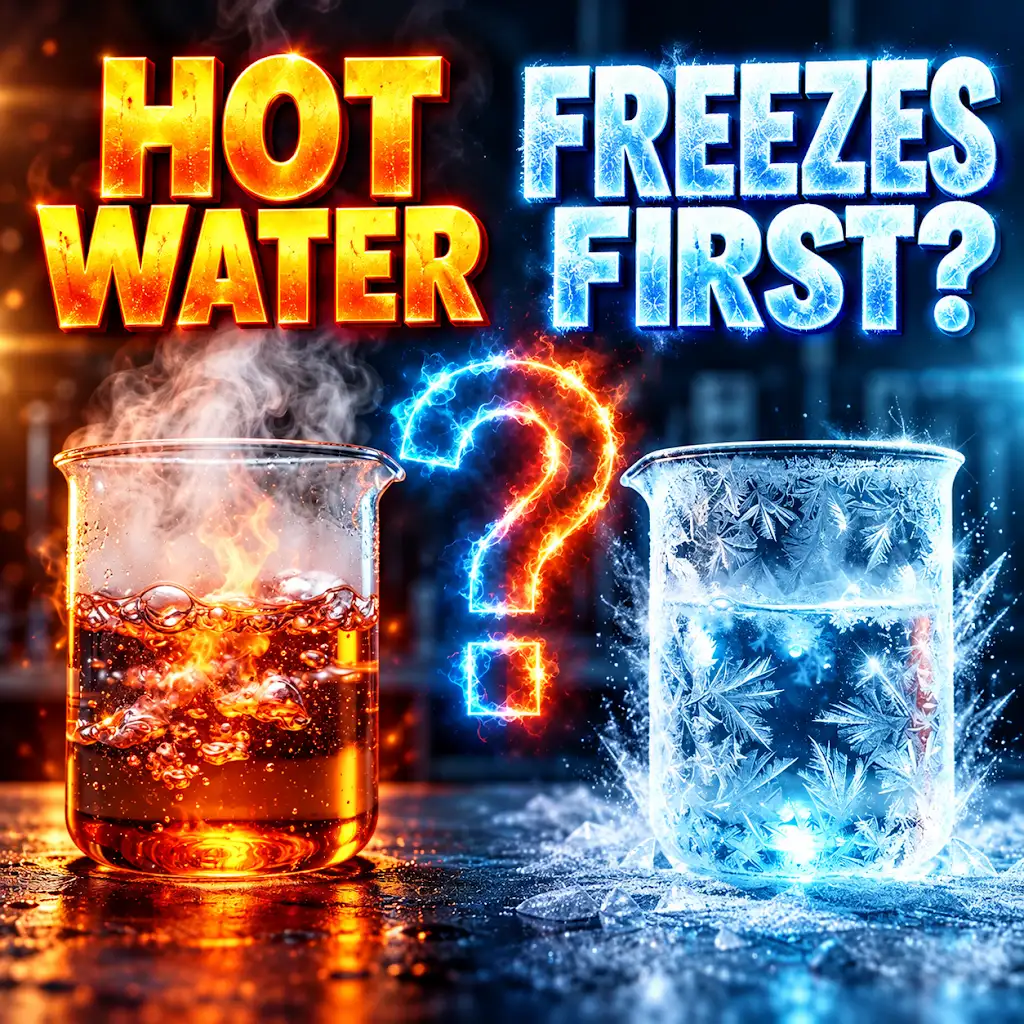
Why Hot Water Freezes Faster Than Cold (The Mpemba Effect)
FAQs
What is a science investigation video?
A science investigation video is a visual presentation that showcases a scientific experiment or research study. It typically includes a detailed explanation of the scientific method, the purpose of the investigation, the procedures followed, and the results obtained.
How can science investigation videos benefit students?
Science investigation videos can benefit students by providing a visual and engaging way to learn about scientific concepts and processes. They can help students better understand complex scientific ideas, improve their critical thinking skills, and inspire curiosity and interest in science.
What are some common elements found in science investigation videos?
Common elements found in science investigation videos include an introduction to the topic, a clear explanation of the hypothesis being tested, a demonstration of the experiment or research process, a discussion of the results, and a conclusion that summarizes the findings and their implications.
How can one create a successful science investigation video?
To create a successful science investigation video, one should carefully plan the content, use clear and concise language, include visuals and graphics to enhance understanding, ensure accuracy in presenting scientific information, and engage the audience by making the video informative and interesting.
Where can one find science investigation videos to watch?
Science investigation videos can be found on educational websites, science-focused YouTube channels, online learning platforms, and scientific research institutions’ websites. These videos are often created by educators, scientists, and science communicators to share knowledge and promote scientific literacy.