
The allure of the cosmos has long captivated humanity, prompting us to replicate extraterrestrial conditions in laboratories to better understand the universe. Among the many phenomena to investigate, the behavior of water in a vacuum stands out as a particularly compelling subject. Water, the ubiquitous solvent and a fundamental component of life as we know it, undergoes remarkable transformations when stripped of atmospheric pressure. A vacuum chamber experiment offers a controlled environment to observe these changes firsthand, revealing principles that govern everything from the formation of ice on the Moon to the survival of extremophiles in space. This article delves into the fascinating world of water’s behavior in a vacuum, exploring the underlying physics and the observational results of such experiments.
The Fundamentals of Vacuum and Water’s Phase Transitions
A vacuum chamber is an enclosed space from which air has been removed, creating a near-perfect absence of atmospheric pressure. This reduction in external pressure has profound implications for the physical properties of substances contained within, particularly liquids like water. Understanding these implications requires a grasp of phase transitions – the physical processes through which matter changes from one state to another, such as solid to liquid, liquid to gas, or gas to solid.
The Water Molecule and Intermolecular Forces
At the heart of water’s behavior lies its unique molecular structure. A water molecule (H₂O) consists of one oxygen atom covalently bonded to two hydrogen atoms. The oxygen atom is more electronegative than the hydrogen atoms, meaning it attracts electrons more strongly. This uneven distribution of electron density creates a polar molecule, with a partial negative charge on the oxygen atom and partial positive charges on the hydrogen atoms. These polarities lead to the formation of hydrogen bonds – attractive forces between the partially positive hydrogen of one water molecule and the partially negative oxygen of another. Hydrogen bonds are crucial for many of water’s familiar properties, such as its high boiling point, surface tension, and ability to dissolve many substances. In a vacuum, the absence of atmospheric pressure significantly alters the dynamics of these intermolecular forces and their influence on phase changes.
Vapor Pressure and Boiling Point Depression
The concept of vapor pressure is central to understanding why water behaves differently in a vacuum. Vapor pressure is the pressure exerted by the vapor of a substance in thermodynamic equilibrium with its condensed phases (solid or liquid) at a given temperature in a closed system. In essence, it represents the tendency of molecules to escape from the liquid or solid phase into the gaseous phase. At standard atmospheric pressure (approximately 1 atmosphere or 101.3 kilopascals), water boils at 100 degrees Celsius (212 degrees Fahrenheit). Boiling occurs when the vapor pressure of the liquid equals the external pressure exerted on it. When the external pressure is reduced, as in a vacuum chamber, the vapor pressure required for boiling is also reduced. Consequently, water will boil at a significantly lower temperature in a vacuum. This phenomenon is known as boiling point depression. In a sufficiently high vacuum, water can boil even at room temperature or below, a process sometimes referred to as “cold boiling.”
Sublimation and Desublimation
Beyond boiling, water can also transition directly between its solid (ice) and gaseous (water vapor) states. This process is called sublimation. In a vacuum, sublimation becomes a more prominent phenomenon. If ice is placed in a vacuum chamber, the molecules on the surface of the ice will gain enough kinetic energy to overcome the intermolecular forces holding them in the solid state and escape directly into the gaseous phase, even at temperatures below the freezing point. The reverse process, where water vapor directly transforms into ice, is called desublimation or deposition. This direct solid-to-gas and gas-to-solid transition is facilitated by the lack of surrounding atmospheric molecules that would otherwise impede the movement of water molecules or promote condensation back into the liquid phase.
In exploring the fascinating dynamics of water behavior under different atmospheric pressures, the vacuum chamber water experiment provides a captivating demonstration of physical principles. For those interested in delving deeper into related scientific experiments and concepts, you can check out this informative article on Freaky Science, which discusses various experiments that illustrate the wonders of physics and chemistry. To learn more, visit Freaky Science.
The Experimental Setup for Observing Water in Vacuum
To investigate these phenomena, a controlled experimental setup is indispensable. A typical vacuum chamber experiment involving water requires specialized equipment designed to create and maintain a vacuum, introduce water, and observe its behavior.
The Vacuum Chamber and Pumping System
The core of the experiment is the vacuum chamber itself. These chambers are typically constructed from robust materials like stainless steel or glass to withstand the pressure differential. They are sealed with high-integrity gaskets to prevent any air leakage. Connected to the chamber is a vacuum pump, the engine of the experiment. Various types of vacuum pumps can be employed, depending on the desired level of vacuum. Roughing pumps, like rotary vane pumps, are used to remove the bulk of the air, reducing the pressure to a few millibars. For achieving higher vacuums, diffusion pumps or turbomolecular pumps are often used in conjunction with roughing pumps, capable of reaching pressures in the range of 10⁻⁶ millibars or even lower. A system of valves allows for precise control over the introduction and removal of air and other gases, as well as the introduction of water.
Water Introduction and Observation Tools
Introducing water into the vacuum chamber requires careful consideration to avoid compromising the vacuum. This can be achieved through various methods, such as using a sample holder that can be sealed and then exposed to the vacuum, or by employing a syringe pump system that can inject a controlled amount of liquid into the chamber. For observing the water’s behavior, a variety of tools are employed. High-resolution cameras, often capable of capturing images at high frame rates, are essential for documenting the rapid changes. Microscopy can be used to observe the formation of ice crystals or the behavior of individual water droplets. Temperature sensors and pressure gauges are strategically placed within the chamber to monitor the environmental conditions precisely. Some experiments may also incorporate spectroscopic techniques to analyze the composition of the vapor phase.
Cryogenic Cooling and Heating Capabilities
To explore the full spectrum of water’s behavior in a vacuum, the experimental setup often includes capabilities for both cooling and heating. Cryogenic cooling systems, such as liquid nitrogen dewars or Peltier coolers, can be used to lower the temperature within the chamber, facilitating the study of ice formation and sublimation at very low temperatures. Conversely, heating elements can be incorporated to raise the temperature, allowing for the observation of boiling and evaporation under reduced pressure. This controlled manipulation of temperature, combined with the vacuum environment, provides a comprehensive platform for studying water’s phase transitions.
Observed Phenomena: From Boiling to Freezing and Beyond
When water is subjected to a vacuum, a dramatic visual and physical transformation occurs. The familiar liquid water undergoes a rapid and often surprising metamorphosis, demonstrating the power of reduced pressure.
Rapid Boiling and Evaporative Cooling
Upon rapid decompression, water in a vacuum chamber exhibits immediate and vigorous boiling. This is not the gentle bubbling seen on a stovetop; instead, it can be a violent effervescence as a significant portion of the water vaporizes almost instantaneously. This rapid vaporization process is endothermic, meaning it absorbs heat from its surroundings. This leads to a significant drop in the temperature of the remaining liquid and any solid surfaces. This phenomenon is known as evaporative cooling. In extreme cases, the evaporative cooling can be so intense that the remaining liquid water freezes even as it continues to boil. This self-cooling and freezing effect is a striking illustration of the interplay between phase transitions and heat transfer in a vacuum.
Ice Formation and Crystal Morphology
As evaporative cooling takes effect, the remaining liquid water can freeze, forming ice. The appearance of this ice can differ from ice formed under atmospheric pressure. In a vacuum, the absence of air currents and the rapid nature of the freezing process can lead to the formation of intricate and sometimes delicate ice crystal structures. The morphology of these crystals is influenced by the rate of cooling and the specific vacuum conditions. Observing these ice structures can offer insights into the fundamental processes of crystallization. In some instances, the ice might sublimate directly from the solid state, bypassing the liquid phase entirely, especially if the vacuum is sufficiently high and the temperature is kept low.
The “Bouncing” Droplet Phenomenon
A particularly intriguing observation in some vacuum experiments with water involves the behavior of small droplets. When a droplet of water is introduced into a high vacuum, instead of simply spreading out or evaporating uniformly, it can sometimes appear to “bounce” or “pulsate.” This phenomenon is attributed to the rapid and uneven sublimation occurring from the surface of the droplet. As molecules escape into the vacuum from certain areas, pressure differentials are created that can propel the droplet. This can lead to seemingly erratic movements and a momentary adherence to surfaces before eventually vaporizing or freezing. This behavior highlights the complex interplay of surface tension, evaporation, and vacuum dynamics.
Implications and Applications of Water in Vacuum Research
The study of water’s behavior in a vacuum is not merely an academic exercise; it has significant implications across various scientific and technological fields. Understanding these principles helps us comprehend natural phenomena and design advanced technologies.
Astrobiology and the Search for Life Beyond Earth
The presence of water is considered a primary prerequisite for life as we know it. Therefore, understanding how water behaves in extraterrestrial environments, which often feature near-vacuum conditions and extreme temperatures, is crucial for astrobiology. For instance, Mars has a very thin atmosphere, and large portions of its surface are effectively under vacuum conditions. Studying water ice on Mars, its sublimation rates, and potential for transient liquid water under specific conditions is vital for assessing the planet’s past and present habitability. Similarly, investigating the behavior of water in icy moons like Europa or Enceladus, which are thought to harbor subsurface oceans, provides context for understanding potential life-sustaining environments beyond Earth.
Materials Science and Space Technology
The behavior of water in vacuum also has direct relevance to materials science and the development of space technology. Many materials used in spacecraft are exposed to the vacuum of space. Understanding how water trapped within these materials might behave – whether it freezes, boils, or sublimes – is critical for predicting material degradation, component failure, and overall mission success. For example, the outgassing of water from materials can be a concern, as it can contaminate sensitive instruments or alter the properties of the material. Research into controlling water’s behavior in vacuum informs the selection and design of materials for spacecraft, satellites, and lunar or Martian habitats.
Food Preservation and Freeze-Drying
The principles of sublimation in a vacuum are exploited in the food industry through a process called freeze-drying. In freeze-drying, food is first frozen, and then the ice is removed as water vapor through sublimation under vacuum. This process is highly effective at preserving the food’s nutritional value, flavor, and texture, as it avoids the high temperatures associated with conventional drying methods, which can degrade sensitive compounds. Vacuum chambers are the core technology behind industrial freeze-drying, demonstrating a direct and practical application of the phenomena observed in laboratory experiments.
In exploring the fascinating effects of pressure on water, the vacuum chamber water experiment provides a captivating demonstration of how liquids behave under reduced atmospheric conditions. This experiment reveals the intriguing phenomenon of water boiling at room temperature when subjected to a vacuum. For those interested in delving deeper into similar scientific explorations, you can check out a related article on various experiments that showcase the principles of physics and chemistry at Freaky Science.
Future Directions and Unanswered Questions
| Parameter | Value | Unit | Notes |
|---|---|---|---|
| Initial Water Volume | 500 | ml | Volume of water placed in the vacuum chamber |
| Initial Pressure | 101.3 | kPa | Atmospheric pressure before vacuum applied |
| Final Pressure | 5 | kPa | Pressure inside chamber after vacuum applied |
| Water Temperature | 22 | °C | Room temperature during experiment |
| Boiling Point of Water | 10 | °C | Approximate boiling point under reduced pressure |
| Time to Boil | 30 | seconds | Time taken for water to start boiling under vacuum |
| Chamber Volume | 2 | liters | Internal volume of the vacuum chamber |
| Vacuum Pump Rate | 0.1 | liters/second | Rate at which air is removed from chamber |
Despite considerable progress, the study of water’s behavior in a vacuum continues to present intriguing avenues for further research and poses questions that demand deeper exploration. The complexity of intermolecular interactions under extreme conditions ensures that this field remains dynamic and fertile ground for scientific inquiry.
Exploring Microgravity and Vacuum Interactions
While vacuum chambers simulate the pressure aspect of space, they do not replicate the microgravity environment. The behavior of water in space is a combined effect of vacuum and microgravity, which can lead to unique phenomena not fully captured in terrestrial vacuum experiments. For instance, in microgravity, surface tension plays a more dominant role in the formation and behavior of water bodies, leading to spherical droplets and different fluid dynamics. Future research could focus on experiments conducted in microgravity environments (e.g., on the International Space Station) that also incorporate vacuum conditions to provide a more complete understanding of extraterrestrial water behavior.
Investigating the Role of Impurities and Dissolved Solutes
Most vacuum chamber experiments typically begin with pure water. However, natural water sources, especially those potentially harboring life or relevant to planetary science, often contain dissolved salts, minerals, and other impurities. The presence of these solutes can significantly alter the phase transition behavior of water under vacuum. For example, dissolved salts can lower the freezing point and affect the vapor pressure of water. Investigating the behavior of saline solutions, brines, or even water contaminated with organic molecules in a vacuum would provide more realistic insights into scenarios encountered in space exploration and astrobiology. This could involve studying eutectic points in mixed solute systems under vacuum or the effect of impurities on sublimation rates.
Advanced Modeling and Simulation of Water in Space
Complementary to experimental investigations, advanced computational modeling and simulation techniques are becoming increasingly powerful tools for understanding water’s behavior in vacuum. Molecular dynamics simulations can offer atomic-level insights into the processes of evaporation, sublimation, and ice formation under reduced pressure. Developing more sophisticated models that accurately predict water’s behavior under a wide range of vacuum and temperature conditions, and incorporating the effects of microgravity and impurities, will be crucial for future space missions, planetary exploration, and the design of life support systems. These models can help guide experimental design and interpret complex observational data. The intricate dance of water molecules under extreme conditions in a vacuum continues to inspire and challenge scientists, promising further revelations about this fundamental substance and its role in the universe.
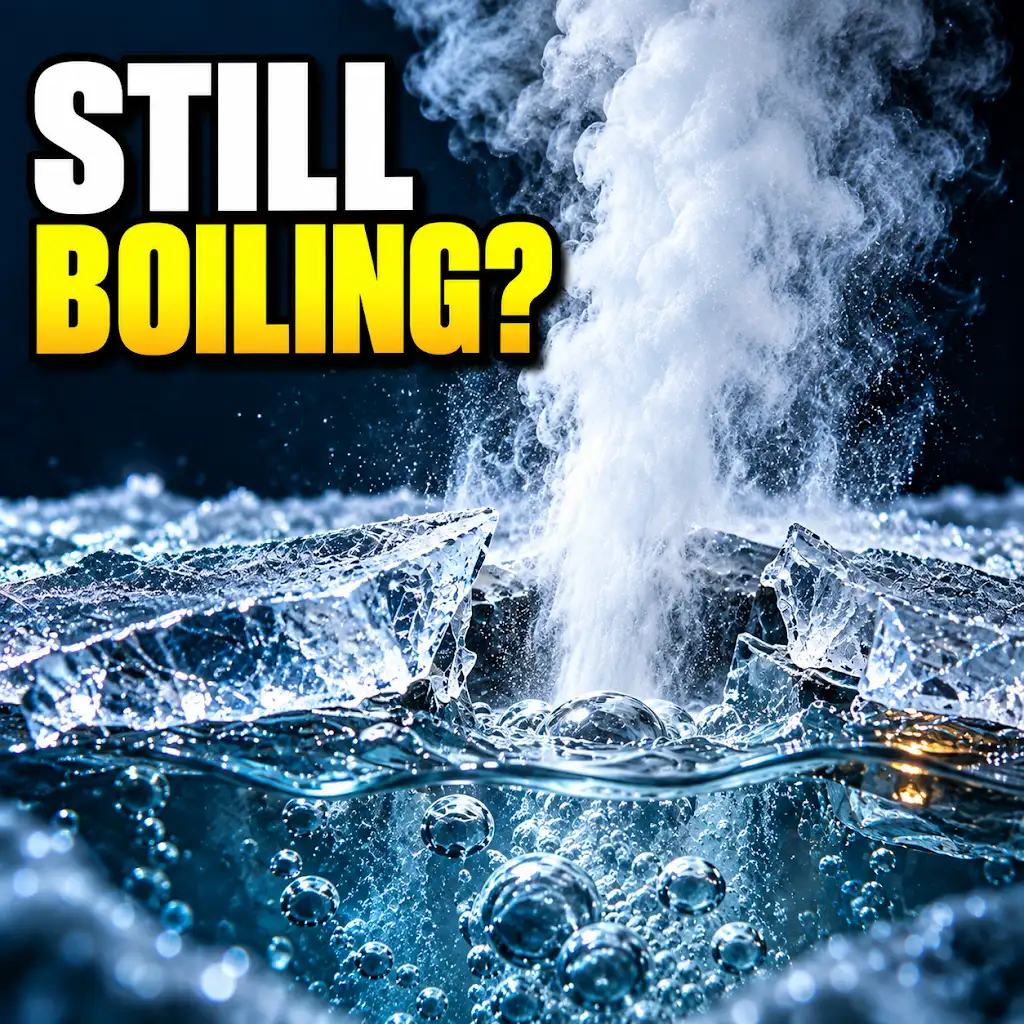
Water Boiled While Ice Formed. Could a Lander Sink Into It?
FAQs
What is a vacuum chamber water experiment?
A vacuum chamber water experiment involves placing a container of water inside a vacuum chamber and observing the effects of reduced air pressure on the water.
What happens to water in a vacuum chamber?
When the air pressure is reduced in a vacuum chamber, the water starts to boil at a lower temperature due to the decreased pressure. This causes the water to evaporate and form bubbles.
Why does water boil at a lower temperature in a vacuum chamber?
Water boils when its vapor pressure equals the pressure of the surrounding atmosphere. In a vacuum chamber, the reduced pressure lowers the boiling point of water, causing it to boil at a lower temperature than normal.
What are some common observations in a vacuum chamber water experiment?
Common observations in a vacuum chamber water experiment include rapid boiling, formation of bubbles, and the water appearing to boil at room temperature due to the reduced pressure.
What is the significance of a vacuum chamber water experiment?
A vacuum chamber water experiment helps demonstrate the effects of reduced pressure on the boiling point of water and illustrates how pressure influences physical properties. It is also used to study phase changes and the behavior of liquids in low-pressure environments.