
The phenomenon of water boiling at room temperature might strike many as a contradiction, an impossibility that defies the common understanding of how everyday liquids behave. The kitchen kettle, the stovetop pot – these are familiar settings where heat is applied to coax water into its gaseous state. Yet, in controlled laboratory environments, and even through simple demonstrations with readily available equipment, water can indeed be induced to boil without any external heat source beyond ambient temperature. The key to unlocking this seemingly paradoxical behavior lies not in altering the temperature of the water itself, but in manipulating the pressure surrounding it. This exploration delves into the fascinating world of vacuum and its profound effects on the physical properties of water, explaining how reducing pressure can significantly lower its boiling point, ultimately allowing it to transition into steam at the mildest of atmospheric conditions.
The Fundamental Relationship Between Pressure and Boiling Point
To understand how water can boil at room temperature, one must first grasp the fundamental physics governing the boiling process. Boiling is not simply a matter of reaching a specific temperature; it is a dynamic equilibrium that occurs when the vapor pressure of a liquid equals the external pressure exerted upon it. Vapor pressure is the pressure exerted by the gas phase of a substance in equilibrium with its liquid phase within a closed system. As a liquid is heated, its molecules gain kinetic energy, move faster, and escape from the liquid surface into the gaseous phase, increasing the vapor pressure. Conversely, as the external pressure on a liquid increases, more energy is required for the molecules to overcome this pressure and escape into the gas phase. This means that a higher external pressure necessitates a higher vapor pressure, and therefore a higher temperature, for boiling to occur.
Defining Boiling and Vapor Pressure
Boiling is the process by which a liquid turns into a vapor when it is heated to its boiling point. This transition happens throughout the bulk of the liquid, not just at the surface, as evidenced by the formation of bubbles of vapor within the liquid. These bubbles form when the vapor pressure inside them becomes equal to or greater than the surrounding liquid pressure. Vapor pressure is an intrinsic property of a liquid at a given temperature. Even at room temperature, water molecules are constantly escaping from the liquid surface and forming a gas phase above it. However, in an open container, these gas molecules dissipate into the atmosphere. In a closed system, they accumulate, and the pressure they exert is the vapor pressure. The more volatile a liquid, the higher its vapor pressure at a given temperature. Water, while not as volatile as, say, ethanol, still possesses a measurable vapor pressure at room temperature.
The Role of External Pressure
The external pressure acting on the surface of a liquid plays a critical role in determining its boiling point. Imagine a pot of water on a stove. The atmosphere above the water exerts a certain pressure, pushing down on the surface. To boil, the water molecules must generate enough internal vapor pressure to push back against this atmospheric pressure and escape as gas. If the external pressure is increased, for instance, by sealing the pot with a heavy lid, the water will require a higher temperature to generate the necessary vapor pressure to overcome this greater resistance. Conversely, if the external pressure is decreased, the water needs less internal vapor pressure to initiate boiling. This is the crucial principle that enables boiling at room temperature.
How Pressure Influences Molecular Escape
At any given temperature, some molecules within a liquid possess enough kinetic energy to overcome the intermolecular forces holding them in the liquid state and escape into the gaseous phase. This escape is facilitated by the vapor pressure. When the external pressure is high, these escaping molecules face a significant barrier. The surrounding atmospheric pressure essentially “pushes back” on any potential vapor bubble trying to form, making it more difficult for molecules to aggregate and grow into a bubble. Conversely, in a vacuum or a significantly reduced pressure environment, this external resistance is greatly diminished. The molecules are free to escape with much less energy expenditure. Therefore, even at room temperature, where the average kinetic energy of water molecules is relatively low compared to their boiling point at standard atmospheric pressure, a sufficiently low external pressure can allow the vapor pressure to match the external pressure, leading to boiling.
In exploring the fascinating phenomenon of water boiling at room temperature under vacuum conditions, you may find the article on the principles of vacuum and boiling points particularly enlightening. This article delves into the science behind how reducing atmospheric pressure can lower the boiling point of liquids, making it possible for water to transition from liquid to gas even at lower temperatures. For more detailed insights, you can read the article here: Freaky Science.
Creating the Vacuum: Techniques and Apparatus
Achieving a vacuum sufficient to lower water’s boiling point to room temperature requires specific equipment and techniques. It’s not something that can be accomplished by simply opening a window or placing a jar on a shelf. The most common method involves using a vacuum pump to evacuate air from a sealed chamber containing the water. The degree of vacuum required depends on the desired boiling point. For water to boil at, say, 25 degrees Celsius (77 degrees Fahrenheit), the pressure needs to be reduced to approximately 3.17 kilopascals (0.46 pounds per square inch) – a fraction of the standard atmospheric pressure (approximately 101.3 kilopascals).
The Essential Role of a Vacuum Pump
A vacuum pump is the heart of any setup designed to create reduced pressure. There are various types of vacuum pumps, each suited for different applications and achieving different levels of vacuum. For demonstrating room temperature boiling of water, a relatively simple laboratory vacuum pump, such as a rotary vane pump or a diaphragm pump, is usually sufficient. These pumps work by mechanically removing air molecules from a sealed system. A rotary vane pump uses rotating vanes within a housing to trap and expel air, while a diaphragm pump uses a flexible diaphragm to create a pumping action. The key is that these pumps can reduce the pressure within a chamber significantly below ambient levels.
The Vacuum Chamber: A Sealed Environment
The vacuum chamber is the vessel where the water is placed and from which the air is evacuated. This chamber must be robust and completely sealed to maintain the reduced pressure. Glass bell jars are commonly used in educational settings for demonstrations, as they allow for visual observation of the boiling process. For more precise experiments, specialized vacuum chambers made of metal or thick glass with airtight seals are employed. The chamber needs to be connected to the vacuum pump via tubing and valves, allowing for controlled evacuation and, if necessary, repressurization. The size and shape of the chamber can vary depending on the experiment, but the integrity of its seal is paramount.
Measuring and Controlling Pressure
Accurate measurement and control of pressure are crucial for understanding and replicating room temperature boiling. A vacuum gauge, connected to the chamber, is used to monitor the pressure inside. Different types of gauges exist, such as Pirani gauges or capacitance manometers, each with varying ranges and accuracies. For simple demonstrations, a basic mechanical gauge might suffice, but for scientific experiments, more precise electronic gauges are essential. The ability to control the rate of evacuation and, if needed, to slowly introduce air back into the chamber allows for a more nuanced study of the relationship between pressure and boiling. This control is typically achieved through valves in the vacuum line.
The Science Behind the Bubble: Molecular Dynamics in Low Pressure
The visual manifestation of boiling – the formation and rise of bubbles – is a direct consequence of the reduced pressure. In a vacuum, the molecules within the water no longer face the significant resistance of atmospheric pressure. This allows the inherently present vapor pressure to become dominant, leading to rapid vaporization. The process is not about adding energy to the water but about removing the force that opposes the natural tendency of water molecules to escape into the gaseous state.
Vaporization at the Molecular Level
At room temperature, a certain proportion of water molecules at the surface possess enough kinetic energy to overcome the intermolecular forces and escape into the air, creating vapor. In a normal atmosphere, this vapor simply dissipates. However, if the water is in a sealed container and the air is being removed, these escaped molecules begin to accumulate. As the pressure decreases, the rate at which molecules can escape from the liquid surface increases. This leads to a net increase in the concentration of water vapor above the liquid. When the pressure of this vapor reaches the external pressure, boiling begins. The process can be thought of as the liquid’s inherent tendency to vaporize being allowed to express itself freely due to the absence of opposing external force.
Bubble Formation and Growth
Boiling in reduced pressure is characterized by the formation of numerous bubbles within the bulk of the liquid. These bubbles are not pockets of air but are filled with water vapor. For a bubble to form and grow, the vapor pressure inside it must be equal to or greater than the pressure of the surrounding liquid. In a vacuum, the pressure of the surrounding liquid is significantly reduced. Therefore, even the relatively low vapor pressure of water at room temperature is sufficient to initiate and sustain the formation of these vapor bubbles. The bubbles grow as more water molecules vaporize into them, and they rise to the surface due to buoyancy, then burst, releasing the vapor into the evacuated space.
Energy Considerations: Latent Heat of Vaporization
While no external heat is being added in the traditional sense, the process of boiling still involves energy transfer. When a liquid boils, it absorbs energy, known as the latent heat of vaporization, to change its state from liquid to gas. In room temperature boiling under vacuum, this energy is drawn from the internal thermal energy of the water itself. As molecules escape and form vapor, they take some of this internal energy with them. This means that, over time, the water can actually become cooler as it boils. This effect is sometimes referred to as evaporative cooling, and it’s the same principle that makes sweating cool us down. The evaporation of sweat from the skin removes heat from the body. In the case of boiling water under vacuum, the rapid vaporization leads to a more pronounced cooling effect.
Demonstrating Room Temperature Boiling: Experiments and Observations
The most compelling way to understand and appreciate the phenomenon of water boiling at room temperature is through direct observation. Several simple yet effective experiments can be conducted to showcase this principle, often using readily available laboratory equipment. These demonstrations highlight the tangible impact of pressure reduction on the physical state of water.
The Classic Bell Jar Experiment
A common and visually striking demonstration involves placing a beaker of water inside a glass bell jar. The bell jar is then sealed, and a vacuum pump is connected to a port on the bell jar. As the pump operates, the air is slowly evacuated from the chamber. Initially, the water will appear still. However, as the pressure drops, small bubbles will begin to form on the surface of the water and then within the bulk of the liquid. The rate of bubble formation will increase as the vacuum becomes stronger. Eventually, the water will appear to be vigorously boiling, with large bubbles rising to the surface, all while the temperature of the water remains at room temperature. If the vacuum is maintained, the boiling will continue until all the water has vaporized or the vacuum is released.
Controlled Evacuation and Repressurization
More advanced demonstrations can involve controlling the rate of evacuation and subsequent repressurization. By slowly letting air back into the bell jar, observers can witness the boiling process gradually cease. As the pressure increases, the vapor pressure inside the bubbles becomes insufficient to overcome the rising external pressure, and the bubbles collapse. This allows for a dynamic illustration of the pressure-boiling point relationship. Observing how the intensity of boiling changes with varying pressure provides a deeper understanding of the continuous nature of this phenomenon.
Visualizing Temperature Changes
For a more complete understanding, temperature measurements can be incorporated into the demonstration. A thermometer placed in the water within the bell jar can be monitored throughout the experiment. It will be observed that the temperature of the water remains relatively constant at room temperature during the initial stages of evacuation. However, as boiling progresses and a significant amount of water vaporizes, the temperature will begin to drop due to the evaporative cooling effect. This reinforces the understanding that the energy for vaporization is being drawn from the water’s own internal heat.
In exploring the fascinating phenomenon of water boiling at room temperature under a vacuum, one can gain deeper insights by reading a related article that delves into the principles of phase changes and vapor pressure. This intriguing subject highlights how reducing atmospheric pressure can lead to boiling at temperatures much lower than the standard boiling point. For a comprehensive understanding of these concepts, you can check out this informative piece on Freaky Science, which provides an engaging overview of the science behind boiling and vacuum conditions.
Practical Implications and Further Explorations
| Parameter | Value | Unit | Notes |
|---|---|---|---|
| Boiling Point of Water at 1 atm | 100 | °C | Standard atmospheric pressure |
| Room Temperature | 20-25 | °C | Typical indoor temperature range |
| Vapor Pressure of Water at 25°C | 23.8 | mmHg | Equilibrium vapor pressure at room temperature |
| Pressure Required to Boil Water at 25°C | 23.8 | mmHg | Pressure must be reduced to this value to boil at 25°C |
| Standard Atmospheric Pressure | 760 | mmHg | Sea level pressure |
| Typical Vacuum Pressure for Boiling at Room Temp | 20-25 | mmHg | Pressure range to induce boiling at ~25°C |
| Boiling Point at 50 mmHg | 81.3 | °C | Lower pressure reduces boiling point |
| Boiling Point at 10 mmHg | 45.8 | °C | Further reduced boiling point |
While the concept of boiling water at room temperature might seem like a mere laboratory curiosity, the underlying principles of manipulating pressure have significant practical applications and open doors to further scientific inquiry. Understanding and controlling phase transitions under varying pressure conditions are vital in numerous industrial processes and scientific research areas.
Applications in Food Preservation and Dehydration
The principles behind vacuum boiling are directly applied in freeze-drying and vacuum dehydration, methods used to preserve food and other sensitive materials. In vacuum dehydration, food products are subjected to reduced pressure, which lowers the boiling point of water within them. This allows water to evaporate at lower temperatures, preserving the nutritional value, flavor, and texture of the food more effectively than traditional drying methods that involve higher temperatures. Freeze-drying, a more advanced technique, involves freezing the material and then sublimating the ice (direct transition from solid to gas) under vacuum.
Industrial Processes and Chemical Engineering
In the chemical industry, vacuum distillation is a crucial technique for separating compounds with high boiling points or those that are thermally sensitive. By reducing the pressure in the distillation apparatus, these compounds can be vaporized and condensed at lower temperatures, preventing decomposition and allowing for more efficient separation. This is particularly important in the refining of petroleum products and the production of pharmaceuticals.
Space Exploration and Vacuum Environments
The vacuum of space presents a unique environment where the behavior of liquids is dramatically altered. Understanding how liquids boil and vaporize under near-perfect vacuum conditions is essential for designing spacecraft, life support systems, and experiments that are conducted in space. For instance, the management of water and other fluids on space stations relies on a thorough understanding of phase transitions in low-pressure environments. Furthermore, the study of how water behaves in the vacuum of space is critical for astrobiological research, particularly in the search for evidence of life on other planets.
Advanced Research Frontiers
The exploration of boiling at room temperature extends to more advanced research frontiers. Scientists are investigating superheating and boiling phenomena in microgravity and in highly controlled nanoscale environments. Understanding the precise nucleation and growth of vapor bubbles in extreme conditions can lead to advancements in materials science, microfluidics, and the development of novel technologies for energy conversion and heat transfer. The fundamental principles at play are continually being refined and applied to push the boundaries of scientific understanding and technological innovation.
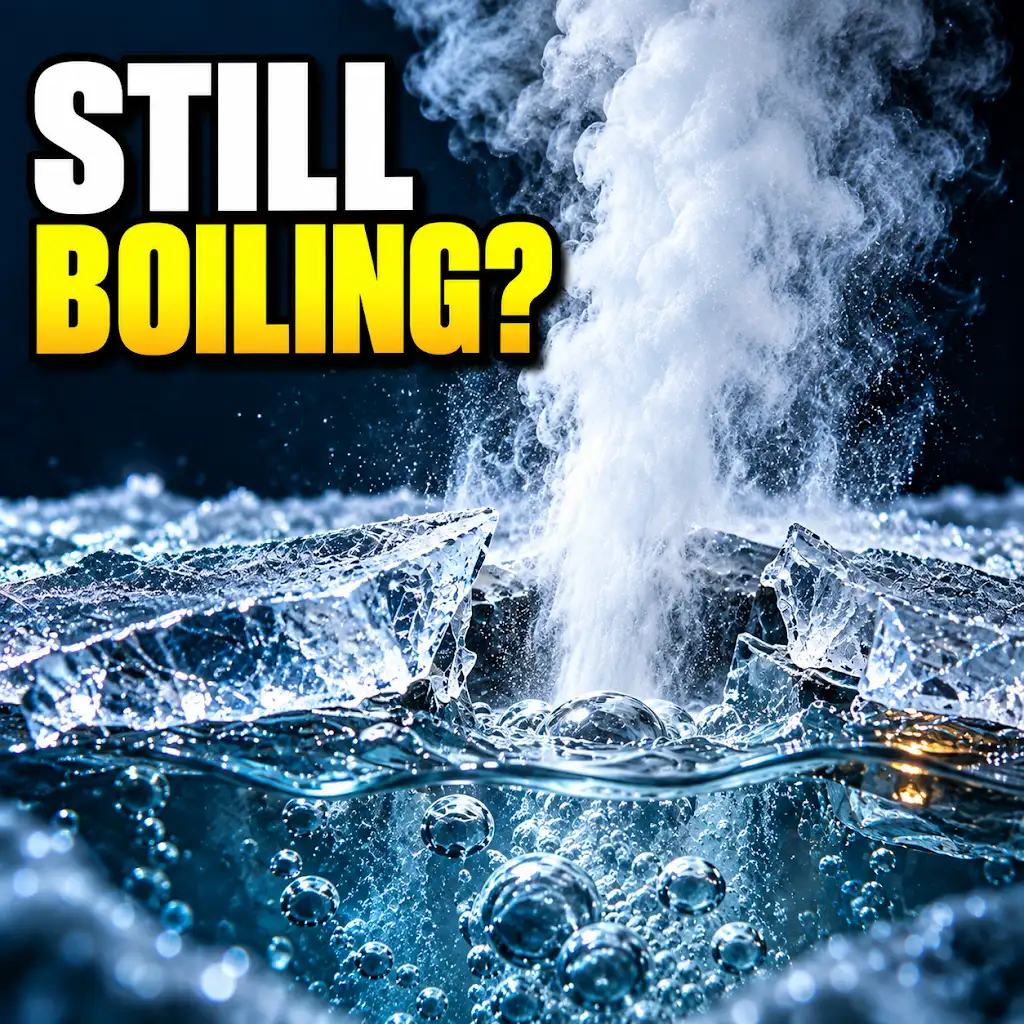
Water Boiled While Ice Formed. Could a Lander Sink Into It?
FAQs
Why does water boil at room temperature in a vacuum?
Water boils at room temperature in a vacuum because the reduced pressure lowers the boiling point of the water. In a vacuum, there is less atmospheric pressure pushing down on the water, allowing it to boil at a lower temperature.
What is the boiling point of water at room temperature in a vacuum?
The boiling point of water at room temperature in a vacuum is significantly lower than the standard boiling point of 100 degrees Celsius (212 degrees Fahrenheit). In a vacuum, water can boil at temperatures as low as room temperature or even lower, depending on the level of vacuum.
Is it safe to boil water at room temperature in a vacuum?
Boiling water at room temperature in a vacuum can be safe as long as proper precautions are taken. It is important to use appropriate equipment designed for vacuum conditions and follow safety guidelines to prevent accidents or injuries.
What are some practical applications of boiling water at room temperature in a vacuum?
Boiling water at room temperature in a vacuum is commonly used in scientific experiments, industrial processes, and food preparation. It can be used to remove air bubbles from liquids, dry heat-sensitive materials, or create unique culinary dishes through vacuum cooking techniques.
How does the process of water boiling at room temperature in a vacuum differ from boiling water in a regular environment?
When water boils at room temperature in a vacuum, the process is different from boiling water in a regular environment because the reduced pressure affects the boiling point and the rate of evaporation. In a vacuum, water can boil without reaching its usual boiling temperature, and the lack of air pressure can lead to faster evaporation and cooling of the water.