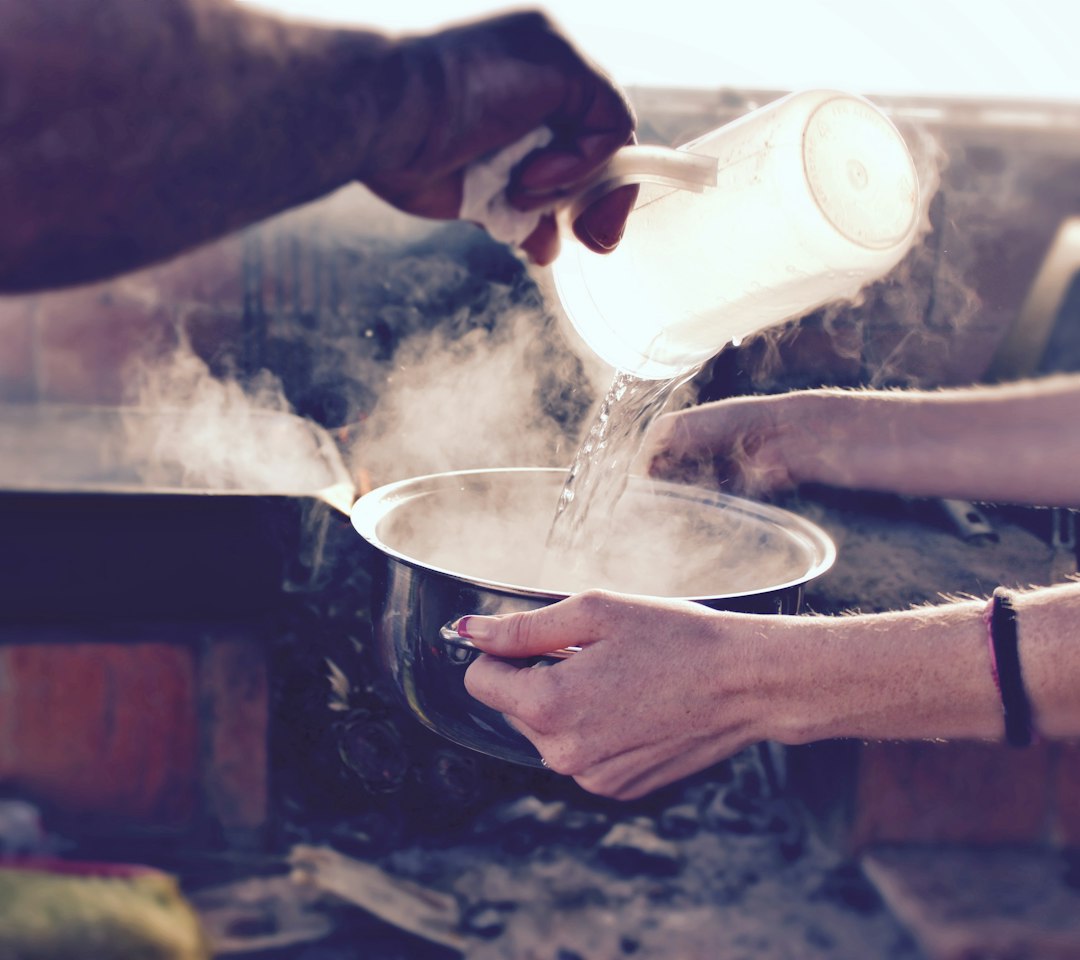
The human race has long associated the transformation of water from its liquid state to its gaseous form – boiling – with the application of heat. Fire, stovetops, and electrical elements have been the universally accepted conduits for this process. However, scientific curiosity and technological advancement have begun to unravel the possibility of achieving boiling without the conventional introduction of thermal energy. This exploration delves into the innovative methods and underlying scientific principles that enable water to reach its boiling point through means other than direct heating, opening up fascinating avenues for scientific inquiry and practical applications.
The Pressure Cooker Principle: Manipulating Vapor Pressure
The most accessible and widely understood method of boiling water without direct, significant heat application hinges on the manipulation of vapor pressure. Boiling, at its core, is the phenomenon where the vapor pressure of a liquid equals the surrounding atmospheric pressure. When this equality is reached, the liquid molecules gain enough kinetic energy to overcome intermolecular forces and escape into the gaseous phase, forming bubbles throughout the bulk of the liquid.
Decreasing Ambient Pressure to Facilitate Boiling
The most straightforward way to achieve boiling without increasing temperature is by reducing the external pressure exerted on the water. Imagine a sealed container filled with water. If the air pressure above the water is gradually decreased, the water will eventually start to boil, even at room temperature. This is because as the external pressure drops, the water molecules require less kinetic energy (and thus less heat) to overcome it and transition into vapor.
This principle is demonstrably illustrated in high-altitude environments. At sea level, atmospheric pressure is approximately 1 atmosphere (atm), and water boils at 100 degrees Celsius (212 degrees Fahrenheit). As altitude increases, atmospheric pressure decreases. For example, in Denver, Colorado, the “Mile High City,” water boils at around 95 degrees Celsius (203 degrees Fahrenheit). At even higher altitudes, or within a vacuum chamber, water can boil at significantly lower temperatures, even below room temperature.
A common laboratory demonstration of this phenomenon involves placing a flask of warm water (not boiling) in a bell jar and then evacuating the air using a vacuum pump. As the air is removed, the pressure inside the bell jar drops, and the water begins to bubble and boil, appearing to boil without any added heat source. The kinetic energy the water already possesses is sufficient to overcome the reduced external pressure.
The Role of Vacuum Chambers
Vacuum chambers are the primary tools for demonstrating and exploring boiling at reduced pressures. These sealed environments allow for the precise control of internal pressure. By pumping air out of the chamber, a near-vacuum can be achieved, drastically lowering the pressure. Any liquid placed within such a chamber, including water, will then boil at a temperature dictated by its vapor pressure curve at that specific low pressure.
The implications of this are significant. In certain industrial processes or scientific experiments where maintaining a low temperature is crucial, but vaporization is required, vacuum distillation is employed. This allows for the separation of components of a mixture based on their boiling points, but at much lower temperatures than would be necessary under atmospheric pressure. This is particularly useful for heat-sensitive compounds that could degrade or decompose if exposed to high temperatures.
Understanding Vapor Pressure Dynamics
Vapor pressure is the pressure exerted by a vapor in thermodynamic equilibrium with its condensed phases (solid or liquid) at a given temperature in a closed system. For water, vapor pressure increases with temperature. However, the definition of boiling is when this vapor pressure equals the external pressure. Therefore, if the external pressure is lowered, the temperature at which the vapor pressure of water reaches this point also lowers.
Consider a typical vapor pressure curve for water. At 100°C, the vapor pressure is 1 atm. At 20°C, the vapor pressure is significantly lower, about 0.023 atm. If the ambient pressure is reduced to 0.023 atm, water will boil at 20°C. This highlights that boiling is not solely a function of temperature but of the balance between the liquid’s internal tendency to vaporize (its vapor pressure) and the external forces resisting this vaporization.
In exploring innovative methods for boiling water without traditional heat sources, you may find the article on Freaky Science particularly intriguing. It delves into various scientific principles and techniques that allow for the boiling of water through alternative means, such as using pressure changes or chemical reactions. For more detailed insights, you can read the article here: Freaky Science.
Cavitation: The Power of Micro-Bubbles
While pressure reduction is a primary method for achieving widespread boiling, another fascinating phenomenon, cavitation, also involves the formation of bubbles within a liquid, albeit through different mechanisms and often on a microscopic scale. Cavitation is essentially the formation and subsequent collapse of vapor-filled cavities in a liquid. While not typically leading to bulk boiling in the traditional sense, understanding cavitation sheds light on how pressure fluctuations can induce localized vaporization.
Acoustic Cavitation and Ultrasound
Acoustic cavitation occurs when intense sound waves are propagated through a liquid. The sound waves create alternating regions of high and low pressure. During the low-pressure cycles, the liquid’s tension can exceed its vapor pressure, leading to the formation of small, temporary vapor-filled bubbles or cavities. When these regions of low pressure transition to high-pressure cycles, these bubbles rapidly collapse.
The collapse of these cavitation bubbles is an energetic event. The implosion generates localized zones of extremely high temperatures and pressures, often referred to as “hot spots.” While these hot spots are transient and microscopic, they are sufficient to cause chemical reactions and physical changes within the liquid. In some instances, the energy released by bubble collapse can be enough to initiate localized boiling within the immediate vicinity of the collapsing bubble, even if the bulk liquid temperature remains below its standard boiling point.
Ultrasonic Cavitation for Chemical Reactions
Ultrasonic cavitation has found significant applications in various fields, particularly in chemistry. The intense localized energy released by bubble collapse can accelerate chemical reactions, enhance mixing, and facilitate processes like sonochemistry. For instance, in organic synthesis, ultrasonic irradiation can lead to faster reaction times and higher yields.
The ability to induce localized vaporization and high-energy conditions through ultrasound opens up possibilities for processes that might otherwise require higher bulk temperatures. This is especially valuable when dealing with sensitive reactants or products that could be damaged by conventional heating. The controlled generation and collapse of cavitation bubbles provide a unique pathway to harness energy within a liquid medium.
The Mechanical Energy Transfer
At its heart, cavitation involves the transfer of mechanical energy from the sound waves into the liquid, creating pressure variations. This mechanical energy is converted into localized thermal and chemical energy upon bubble collapse. Unlike heating, where energy is added uniformly throughout the liquid, cavitation’s energy is concentrated in specific, albeit fleeting, points. This localized energy deposition can, under the right conditions, lead to the transient formation of vapor bubbles that mimic the appearance of boiling.
Electrochemical Methods: Driving Reactions with Electricity
The application of electricity, beyond simple resistive heating, offers another pathway to induce changes in water that can lead to vaporization without relying solely on conventional heat sources. Electrochemical processes leverage electrical currents to drive chemical reactions, and some of these reactions can generate sufficient energy or byproducts to cause water to boil.
Electrolysis and Gas Production
Electrolysis is the process of using electrical energy to drive a non-spontaneous chemical reaction. When an electric current is passed through water (often with an electrolyte added to improve conductivity), it splits into its constituent elements: hydrogen gas and oxygen gas. This process is commonly demonstrated in science classes.
The generation of hydrogen and oxygen gas during electrolysis occurs as bubbles, similar to boiling. While the primary driving force is electrical, the exothermic nature of the recombination of hydrogen and oxygen, and the energy required for the decomposition, can lead to localized temperature increases. More importantly, the rapid evolution of gases can create turbulence and pressure fluctuations within the water, contributing to a process that visually resembles boiling.
Electrocatalysis and Enhanced Reactions
Electrocatalysis involves using electrodes to facilitate chemical reactions. In some electrocatalytic processes involving water, the efficiency of water splitting or other reactions can be significantly enhanced. This enhanced reactivity can lead to a more vigorous evolution of gases or the generation of localized heat through exothermic side reactions, potentially causing the water to boil.
For instance, research into advanced water electrolysis systems aims to improve energy efficiency. Some methods employ specialized catalysts that lower the activation energy for water splitting. This leads to a more rapid and efficient production of hydrogen and oxygen. The sheer volume of gas being produced can create conditions that appear as boiling, especially in enclosed systems where pressure might build.
Faraday’s Law and Energy Conversion
The fundamental principle behind electrochemistry is Faraday’s laws of electrolysis, which relate the amount of chemical change produced by an electric current to the quantity of electricity passed. In essence, electrical energy is being converted into chemical energy. In the case of water electrolysis, this chemical energy is stored in the bonds of hydrogen and oxygen. While not directly boiling water through heat, the energy input via electricity is driving a process that results in gas evolution and potential localized temperature increases that can mimic or contribute to boiling.
Nanotechnology and Acoustic Streaming: Micro-Scale Energy Delivery
At the nanoscale, researchers are exploring novel ways to deliver energy to liquids, leading to phenomena that can induce boiling-like effects. Nanotechnology offers precise control over energy deposition, and acoustic streaming, a related phenomenon, highlights how targeted mechanical energy can influence fluid behavior.
Nanoparticles and Localized Heating
Dispersing specific nanoparticles within water and then exposing them to external energy sources, such as lasers or magnetic fields, can lead to highly localized heating. Certain nanoparticles are designed to absorb specific wavelengths of light or respond to magnetic fields very efficiently. When these nanoparticles absorb energy, they convert it into heat, which is then transferred to the surrounding water molecules.
If enough nanoparticles are present and sufficiently energized, the localized heating can reach the boiling point of water in their immediate vicinity. This creates a multitude of microscopic boiling events throughout the liquid. While the bulk temperature of the water might remain below 100°C, these localized “hot spots” around nanoparticles can lead to the formation of micro-bubbles, giving the appearance of boiling.
Laser-Induced Nucleation
When a focused laser beam interacts with water containing specific nanoparticles or even impurities, it can induce cavitation and localized heating, leading to boiling. The laser energy can excite the nanoparticles, causing them to release heat, or it can directly ablate microscopic impurities, creating nucleation sites for bubbles. This process is sometimes referred to as laser-induced nucleation or laser-induced boiling.
The precise control offered by lasers allows for the targeting of specific regions within the liquid. This ability to induce boiling in a highly controlled and localized manner has potential applications in microfluidics, targeted drug delivery, and advanced materials processing.
Acoustic Streaming and Micro-Vortex Formation
Acoustic streaming is a phenomenon that occurs when ultrasonic waves propagate through a fluid. It results in the generation of steady fluid flows, often in the form of micro-vortices. While not directly causing boiling, the intense localized energy deposition within these vortices, and the potential for localized pressure drops due to fluid dynamics, can contribute to conditions where bubble formation and collapse (cavitation) are more likely.
The continuous stirring and mixing caused by acoustic streaming can also enhance heat transfer and mixing, potentially contributing to more uniform heating if a secondary heat source were present. However, in the context of boiling without heat, the energy imparted by the sound waves creating these streaming effects can lead to localized energetic events within the fluid, indirectly supporting bubble formation.
In exploring innovative methods of boiling water without traditional heat sources, you might find the article on Freaky Science particularly intriguing. It delves into various scientific principles and experiments that demonstrate how water can reach its boiling point through alternative means. For a deeper understanding of this fascinating topic, you can read more about it in this related article.
Theoretical Frontiers and Future Possibilities
| Method | Principle | Time to Boil Water (Approx.) | Energy Source | Practicality |
|---|---|---|---|---|
| Microwave Heating | Microwave radiation excites water molecules | 2-4 minutes (for 1 cup) | Electricity | High – common household method |
| Solar Water Heating | Concentrated sunlight increases water temperature | 10-60 minutes (depending on sunlight intensity) | Solar energy | Moderate – requires sunny conditions and setup |
| Pressure Cooker (Residual Heat) | Trapped steam pressure raises boiling point | Varies – can maintain boiling without continuous heat | Initial heat source, then residual heat | Moderate – requires initial heating |
| Chemical Reaction (Exothermic) | Heat generated from chemical reactions (e.g., calcium oxide + water) | Minutes to reach boiling | Chemical energy | Low – not commonly used for drinking water |
| Heat Pump Technology | Transfers heat from environment to water | Varies – generally slower than direct heating | Electricity (for pump operation) | Low to moderate – more for heating than boiling |
The pursuit of boiling water without heat extends beyond current experimental capabilities and into theoretical realms, exploring exotic physics and advanced engineering concepts. These speculative avenues, while not yet practical, push the boundaries of our understanding and hint at future innovations.
Quantum Effects and Superfluidity
At extremely low temperatures, some substances exhibit superfluidity, a state of matter characterized by zero viscosity. While water does not exhibit superfluidity under normal conditions, the study of quantum fluids provides insights into energy transfer and phase transitions at fundamental levels. Theoretical explorations might consider if exotic quantum phenomena could, under extreme conditions, influence the phase behavior of water in ways that bypass conventional thermal requirements.
For instance, in superfluids, energy can be transferred without generating thermal excitation in the traditional sense. While a direct parallel to boiling water is unlikely, the concept of non-thermal energy transfer mechanisms remains an area of theoretical interest.
Exotic Forms of Energy Transfer
Beyond conventional heat and mechanical energy, scientists continue to investigate other potential forms of energy transfer. This could include manipulating electromagnetic fields in novel ways, or even exploring theoretical concepts like negative energy transfer, though these remain highly speculative. The goal would be to impart sufficient energy to water molecules to overcome intermolecular forces and transition to a gaseous state without increasing their bulk kinetic energy through thermal means.
Biomimicry and Biological Processes
Nature often provides inspiration for scientific innovation. While no direct biological process is known to boil water without heat, studying how biological systems manage energy and manipulate molecular states could offer clues. For example, certain enzymes catalyze reactions with remarkable efficiency, and understanding
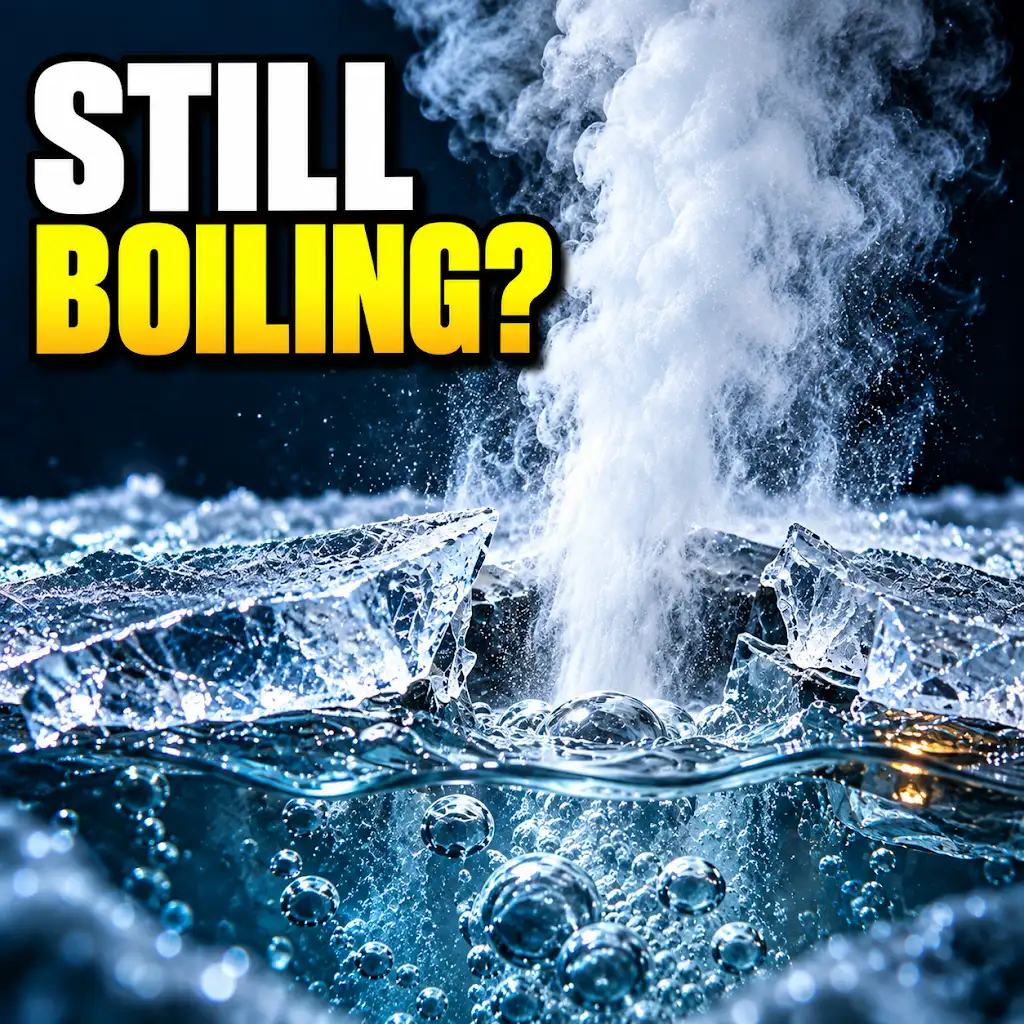
Water Boiled While Ice Formed. Could a Lander Sink Into It?
FAQs
Can water be boiled without using heat?
Yes, water can be boiled without using heat through a process called vacuum distillation, where water is boiled at a lower temperature due to reduced air pressure.
What is the principle behind boiling water without heat?
The principle behind boiling water without heat is to lower the air pressure above the water, which reduces the boiling point of the water, allowing it to boil at room temperature.
Is it safe to drink water that has been boiled without heat?
Water that has been boiled without heat using vacuum distillation is safe to drink, as the process effectively kills bacteria and other harmful microorganisms present in the water.
Can boiling water without heat be used for water purification?
Yes, boiling water without heat can be used for water purification as the process effectively removes impurities and kills harmful microorganisms, making the water safe to drink.
What are the advantages of boiling water without heat?
Some advantages of boiling water without heat include energy savings, faster water purification process, and the ability to boil water at lower temperatures, which can be useful in certain applications.