
The faint, ethereal glow of a distant star painted the inky blackness as the Odyssey, a marvel of human engineering, gracefully descended through the frigid atmosphere of Europa. This Jovian moon, long a tantalizing enigma, now held the promise of unlocking secrets about extraterrestrial life, and the mission’s success hinged on this critical landing. For years, scientists and engineers had poured their knowledge and dreams into this ambitious endeavor, and now, as the spacecraft’s retro-thrusters fired, kicking up plumes of ice crystals, a collective breath was held across the globe. The tension in mission control was palpable, a silent hum of anticipation that vibrated through every console and every individual.
The descent had been a masterclass in precision. Navigating the unpredictable gravitational tugs of Jupiter and its other moons, the Odyssey had performed a series of intricate maneuvers, guided by advanced algorithms and the tireless dedication of the flight control team. Europa’s icy crust, a canvas of fissures and ridges, presented a formidable landing challenge. Initial reconnaissance missions had identified several potential landing zones, each with its own set of risks and rewards. The chosen site, a relatively smooth expanse near a prominent cryovolcanic region, offered a balance of accessibility and scientific interest. This particular area was believed to be a prime location for detecting plumes of water vapor that might erupt from the subsurface ocean, offering a direct sample of its pristine contents.
The data streamed back to Earth in near real-time, a cascade of telemetry that told the story of the Odyssey‘s final moments before touchdown. Altitude readings, thruster performance, attitude control – each data point was scrutinized with an intensity that belied the immense distances involved. The communications lag, a constant reminder of the vast gulf separating humanity from its robotic emissary, only amplified the suspense. Every flicker of a data point, every subtle shift in readings, was interpreted with hawk-like precision. The world watched, not just with curiosity, but with a profound sense of shared purpose. This was not just a scientific mission; it was a testament to humanity’s unyielding drive to explore, to understand, and to reach for the stars.
The final minutes of the descent were agonizingly slow, yet impossibly fast. The automated landing system took over, its sophisticated sensors meticulously calculating the spacecraft’s trajectory and adjusting thruster output with millisecond precision. On Earth, the principal investigator, Dr. Aris Thorne, his face etched with a mixture of fatigue and exhilaration, watched the primary telemetry feed. Beside him sat Elara Vance, the lead systems engineer, her fingers hovering over the manual override controls, a contingency she hoped would never be needed. The cheers in mission control began as a low murmur, building to a crescendo as the final altitude markers flashed. Then, silence. A pregnant pause that seemed to stretch into an eternity.
“Touchdown confirmed,” a calm, synthesized voice announced from the audio feed. The words, so simple, yet so profound, rippled through the room. A wave of relief, followed by an explosion of unadulterated joy, washed over mission control. People embraced, tears flowed, and a triumphant roar echoed through the halls. The Odyssey had landed on Europa. The mission had taken its first, monumental step.
First Steps on an Alien World
The successful landing of the Odyssey marked a pivotal moment in space exploration, ushering in a new era of scientific inquiry. The mission’s primary objective was to investigate the subsurface ocean of Europa, a vast body of liquid water believed to exist beneath its thick icy shell. This ocean is considered one of the most promising locations in the solar system for harboring extraterrestrial life, due to the presence of liquid water, a potential energy source, and essential chemical ingredients. The Odyssey, equipped with a suite of advanced scientific instruments, was designed to analyze the Europan environment and search for biosignatures that could indicate the presence of microbial life.
Landing Site Characterization and Initial Observations
The immediate priority after confirming touchdown was to establish a stable communication link and begin assessing the landing site. The Odyssey‘s panoramic cameras immediately began transmitting stunning high-resolution images of the surrounding terrain. The surface was a breathtaking, yet stark, landscape of fractured ice, with intricate patterns of cracks and ridges stretching as far as the eye could see. These features, sculpted by tidal forces from Jupiter and potentially subsurface geological activity, offered visual clues to the dynamic nature of Europa’s crust. The terrain was not as smooth as initially hoped, with scattered ice boulders and uneven patches requiring careful navigation for any subsequent surface operations.
The spacecraft’s onboard environmental sensors also began collecting crucial data. Temperature readings confirmed the extreme cold of the Europan surface, hovering around -170 degrees Celsius (-274 degrees Fahrenheit). Spectroscopic analysis of the surface ice revealed its composition, primarily water ice, but also traces of salts and other compounds that could have originated from the subsurface ocean. The radiation levels were also measured, a critical factor for the longevity of the spacecraft and any future human missions. Jupiter’s intense magnetosphere subjects Europa to significant radiation, necessitating robust shielding for electronic components. The initial data confirmed that the Odyssey‘s shielding was performing as expected.
Deployment of Surface Exploration Assets
With the initial landing site characterized and communication channels secured, the Odyssey commenced the next phase of its mission: the deployment of its surface exploration assets. The spacecraft carried a small, highly maneuverable rover, nicknamed “Voyager,” designed to traverse the icy surface and conduct more localized investigations. The deployment mechanism was a delicate operation, involving a carefully choreographed series of robotic arm movements and controlled releases. The success of this deployment was crucial, as the rover would be responsible for collecting physical samples and performing in-situ analyses that the Odyssey itself could not.
The Voyager rover, resembling a miniature, robust tank, detached from the Odyssey with a gentle thud. Its six independently articulated wheels, designed for optimal traction on ice, immediately engaged with the Europan surface. Mission control watched with bated breath as the rover transmitted its first telemetry, confirming its operational status and immediate mobility. The rover’s primary mission was to reach a specific fissure, identified in orbital imagery as a potential conduit for material from the subsurface ocean. This fissure, designated “Chasm Alpha,” was estimated to be several hundred meters away from the landing site. The journey for Voyager would be arduous, requiring it to navigate treacherous terrain and maintain power in the frigid environment. Its onboard instruments included a drill for collecting subsurface ice samples, a mass spectrometer for chemical analysis, and a suite of cameras for detailed imaging.
Recent advancements in space exploration have sparked interest in the challenges and techniques associated with spacecraft landing on icy surfaces, particularly in the context of missions to moons like Europa and Enceladus. For a deeper understanding of these challenges and the innovative solutions being developed, you can read a related article that discusses the complexities of landing on such terrains. To explore this topic further, visit the article at here.
Probing the Depths: Unveiling Europa’s Ocean

The ultimate prize of the Odyssey mission lay hidden beneath Europa’s formidable icy shell: a vast, global ocean of liquid water. This subsurface ocean is theorized to be several times the volume of Earth’s oceans combined and is considered the most plausible location for extant life in our solar system, beyond Earth itself. The Odyssey was equipped with instruments designed to remotely probe this enigmatic environment, seeking any indirect evidence of its composition and potential habitability. The landing was merely the gateway to this profound exploration.
Indirect Detection of Subsurface Ocean Chemistry
While the Odyssey could not directly drill through miles of ice to reach the ocean, its suite of instruments was designed to detect signatures of the ocean’s chemistry in the material that occasionally erupted from its depths. One of the key instruments was a sophisticated mass spectrometer, capable of identifying the molecular composition of any gases or particulates present in the Europan atmosphere or deposited on the surface. The mission also carried a ground-penetrating radar system, which could analyze the structure and composition of the ice shell, potentially revealing thermal anomalies or variations in density that might indicate the proximity of liquid water.
The mission team was particularly interested in analyzing any potential cryovolcanic plumes. Europa is known to exhibit plumes of water vapor and icy particles that erupt from its surface, likely originating from the subsurface ocean. The Odyssey was positioned near a region with a high probability of such activity, hoping to capture samples of this ejected material. By analyzing the chemical makeup of these plumes, scientists hoped to glean insights into the salts, minerals, and organic molecules present in the ocean, information that could provide critical clues about its habitability. The presence of certain complex organic molecules or specific isotopic ratios could be strong indicators of biological processes.
Analyzing Potential Cryovolcanic Outgassing
The Voyager rover, with its mobility, was tasked with investigating areas where orbital data suggested recent cryovolcanic activity. The hope was that residual material from a recent plume would be accessible on the surface. The rover’s drill would attempt to collect subsurface ice samples from these promising locations. These samples would then be analyzed by the rover’s onboard laboratory, including its mass spectrometer, for the presence of key chemical compounds associated with life, such as amino acids or specific lipids. The interpretation of this data would be a painstaking process, requiring careful comparison with known geological and biological signatures.
The analysis of outgassing was not just about identifying the building blocks of life but also understanding the energy sources that could sustain it. Scientists were looking for evidence of hydrothermal activity, similar to that found at the bottom of Earth’s oceans, where geysers spew mineral-rich hot water, supporting entire ecosystems. While direct detection of hydrothermal vents was unlikely with the current mission, signs of such activity, like localized thermal anomalies detected by the radar or unusual mineral deposits, would be invaluable. The Odyssey‘s instruments were designed to detect these subtle clues, painting an increasingly detailed picture of the Europan underworld.
Searching for Biosignatures: The Quest for Life
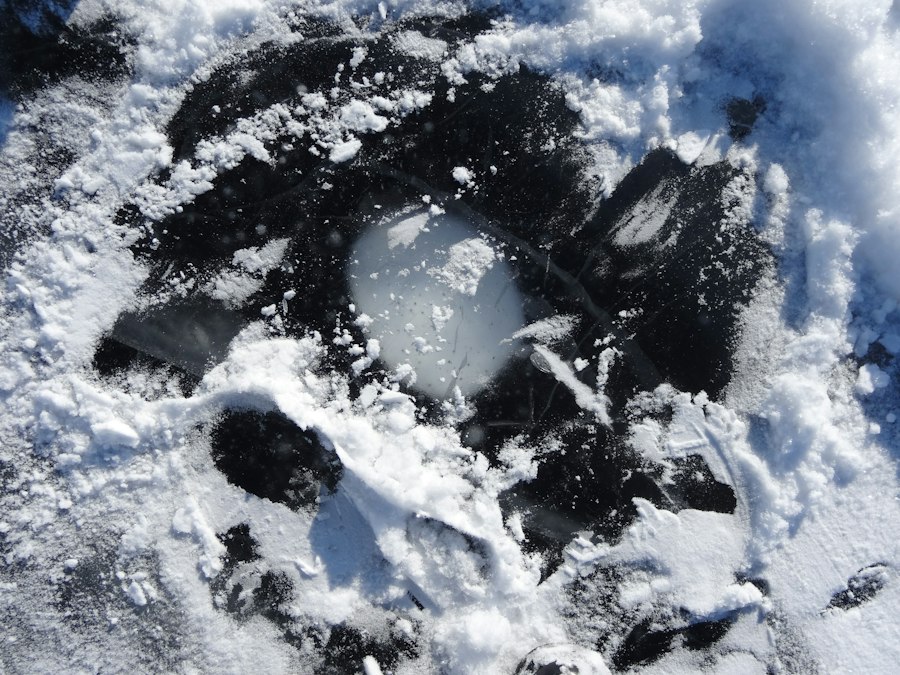
The fundamental question driving the Odyssey mission was whether life, as we understand it, could exist beyond Earth. Europa’s subsurface ocean, with its abundant liquid water and potential for chemical energy, represented a prime candidate for such a discovery. The spacecraft was equipped with instruments specifically designed to detect the tell-tale signs, or biosignatures, that could indicate the presence of microbial life. This was the most ambitious and speculative aspect of the mission, representing a profound leap in humanity’s search for its place in the cosmos.
Recent advancements in spacecraft technology have opened new possibilities for exploring celestial bodies with icy surfaces, such as Europa and Enceladus. These missions aim to uncover the secrets hidden beneath the ice, which could potentially harbor life. For more insights into the challenges and innovations in landing on these frigid terrains, you can read a related article on this topic at Freaky Science. Understanding the complexities of landing on such surfaces is crucial for the success of future exploratory missions.
Identifying Biomarkers in Ice and Water Samples
The Odyssey carried a suite of highly sensitive instruments for detecting organic molecules and other potential biosignatures. These included a gas chromatograph-mass spectrometer (GC-MS) capable of separating and identifying complex organic compounds, and a Raman spectrometer for analyzing the vibrational properties of molecules, which can reveal their structure and composition. If the Voyager rover successfully collected ice samples from areas with suspected plume deposition or subsurface access, these would be the primary targets for detailed biosignature analysis.
The scientists were looking for specific types of organic molecules that are commonly associated with biological processes on Earth, such as amino acids, fatty acids, and specific nucleic acid bases. However, they were also prepared for the possibility of detecting entirely novel organic chemistry, which could still be indicative of life, albeit life that evolved under very different conditions. Furthermore, the isotopic ratios of certain elements within organic molecules could provide strong evidence for biological activity. Life on Earth often preferentially utilizes certain isotopes, leading to distinct isotopic signatures that can be detected through sophisticated analysis.
Analyzing Potential Microbial Structures
Beyond chemical signatures, the mission also aimed to search for direct evidence of microbial life, such as fossilized cells or intact microbial structures. The Odyssey carried high-resolution microscopic imagers that could analyze the fine details of ice and potential regolith samples. While detecting living organisms directly was highly improbable, identifying structures that strongly resembled known microbial forms, especially if found in conjunction with other compelling biosignatures, would be a groundbreaking discovery.
The challenge in identifying biosignatures is immense. Abiotic (non-biological) geological processes can sometimes mimic biological signatures, creating what are known as false positives. Therefore, any potential biosignature detection would require rigorous verification and corroboration from multiple instruments and analytical techniques. The mission plan included a stringent set of criteria for declaring a discovery, emphasizing a high degree of confidence and requiring peer review of all data. The scientific community understood the profound implications of such a discovery, and the burden of proof would be exceptionally high. The search for life on Europa was not just a scientific endeavor; it was a quest for answers to some of humanity’s oldest and most profound questions.
Future Implications and Next Steps
The successful landing and initial operations of the Odyssey on Europa represent a monumental achievement, but they are also the beginning of a much longer journey. The data collected by the spacecraft will fuel scientific research for years to come, and the mission’s success opens up new avenues for future exploration of the outer solar system. The implications of finding evidence of life, or even the potential for life, on an alien world are far-reaching, impacting our understanding of biology, our place in the universe, and the potential for life elsewhere.
Informing Future Mission Architectures and Technologies
The lessons learned from the Odyssey mission, from the challenges of landing on a dynamic icy surface to the intricacies of operating scientific instruments in the harsh Europan environment, will be invaluable in designing future missions. Engineers will refine landing systems, radiation shielding, and communication protocols based on the spacecraft’s performance. The scientific community will use the data to identify new targets for exploration, perhaps focusing on other moons with subsurface oceans like Enceladus, or even more direct methods of sampling Europa’s ocean.
The Odyssey mission has also demonstrated the efficacy of advanced robotic exploration, paving the way for more ambitious endeavors. The development of more autonomous systems, improved power sources for extended operations, and miniaturized yet powerful scientific instrumentation will all be influenced by this mission’s successes and challenges. The potential for sample return missions, where pristine samples from Europa are brought back to Earth for even more detailed analysis, is also a significant long-term goal that this mission helps to lay the groundwork for.
Expanding the Search for Life in the Cosmos
The discovery of even microbial life on Europa would revolutionize astrobiology and profoundly alter humanity’s perspective on its uniqueness. It would strongly suggest that life is not a rare fluke of planetary evolution but a common phenomenon that can arise wherever the necessary conditions exist. This would embolden the search for life on exoplanets orbiting distant stars, shifting the focus from mere detection of potentially habitable worlds to actively searching for biosignatures.
Furthermore, understanding the biochemistry and genetics of Europan life, if found, could reveal alternative evolutionary pathways and biochemical mechanisms. This would expand our definition of what life is and how it can function, providing invaluable insights into the fundamental principles of biology. The implications extend beyond pure science, potentially inspiring new fields of research in fields as diverse as biochemistry, medicine, and even philosophy. The quest for answers about life beyond Earth is a fundamental human drive, and the Odyssey‘s landing on Europa has brought us immeasurably closer to understanding whether we are truly alone in the vast expanse of the cosmos. The data pouring in from this distant, icy world promises to reshape our understanding of life itself and its potential to flourish in the most unexpected of places.

Water Boiled While Ice Formed. Could a Lander Sink Into It?
FAQs
1. How do spacecraft land on icy surfaces?
Spacecraft landing on icy surfaces typically use a combination of retro-rockets, landing legs, and sometimes even drills or harpoons to safely touch down on the icy terrain.
2. What are the challenges of landing on an icy surface?
Landing on an icy surface presents challenges such as low visibility due to ice and snow, potential slippery conditions, and the need for specialized landing gear to prevent the spacecraft from sliding or sinking into the ice.
3. Why are icy surfaces of interest for spacecraft landings?
Icy surfaces are of interest for spacecraft landings because they may contain valuable scientific data about the history of the solar system, such as evidence of water or organic compounds that could provide insights into the origins of life.
4. How do scientists prepare for spacecraft landings on icy surfaces?
Scientists prepare for spacecraft landings on icy surfaces by conducting extensive simulations, testing landing equipment in icy conditions, and studying the composition and topography of the icy surface to ensure a safe and successful landing.
5. What are some examples of spacecraft that have successfully landed on icy surfaces?
Some examples of spacecraft that have successfully landed on icy surfaces include NASA’s Mars Phoenix lander, which touched down on the icy plains of Mars, and the European Space Agency’s Rosetta mission, which landed a probe on the icy surface of a comet.