
## The Allure of the Unseen: Why Humans Venture into the Unknown
Humanity’s story is one of perpetual motion, a relentless drive to push beyond the familiar horizon. From the earliest hominids venturing out of Africa to the astronauts gazing back at Earth from orbit, the act of exploring the unknown has been a defining characteristic of our species. This innate curiosity, coupled with the promise of discovery, sustenance, and advancement, fuels a deep-seated desire to tread on uncharted terrain. The allure of the unseen is not merely a romantic notion; it is a fundamental evolutionary imperative, a catalyst for progress, and a testament to the enduring human spirit. This drive compels individuals and societies to dedicate resources, courage, and intellect to the pursuit of knowledge and the expansion of our understanding of the universe. Whether it is the deep sea, the vastness of space, or the complex intricacies of the human genome, the call of the unknown beckons, promising revelation and transformation. The very act of setting foot on new ground, be it terrestrial or metaphorical, ignites a spark of possibility, a chance to redefine boundaries and discover what lies beyond.
### The Biological and Psychological Underpinnings of Exploration
The impulse to explore is deeply embedded within our biological makeup. Evolutionary biologists suggest that our ancestors who possessed a greater propensity for exploration were more likely to discover new food sources, escape environmental dangers, and find suitable habitats. This adventurous trait, therefore, would have been naturally selected for, becoming ingrained in our genetic code. Beyond biology, psychology plays a significant role. The sensation of novelty triggers the release of dopamine in the brain, a neurotransmitter associated with pleasure and reward. This creates a positive feedback loop, making exploration inherently satisfying. Furthermore, the challenge and perceived risk associated with venturing into the unknown can foster a sense of accomplishment and self-efficacy upon successful navigation. This psychological reward system encourages repeated engagement with unfamiliar environments and situations. The thrill of the unknown can be a powerful motivator, overriding caution and driving individuals to confront their fears and push their limits. This inherent drive, coupled with the potential for significant gains, has shaped human history and continues to propel us forward.
### Societal Motivations for Expansion and Discovery
Beyond individual drives, societies have historically been motivated to explore for a multitude of reasons. The quest for resources, whether it be land, minerals, or trade routes, has been a primary driver of exploration throughout history. Empires have risen and fallen on the ability to access and control valuable commodities found in distant lands. Scientific curiosity and the pursuit of knowledge for its own sake also play a crucial role. The desire to understand the universe, our place within it, and the fundamental principles governing existence fuels ambitious scientific endeavors. Technological advancement is another significant factor. The challenges presented by exploring unknown frontiers often necessitate the development of new tools, techniques, and technologies, which then have broader applications in society. Furthermore, the human need for connection and understanding drives exploration, as it allows us to encounter different cultures, perspectives, and ways of life, fostering empathy and global awareness. The narrative of discovery often intertwines with national pride and the desire to be at the forefront of human achievement, further fueling investment in ambitious exploratory missions.
Exploring unknown terrain can be both thrilling and daunting, as it presents unique challenges and opportunities for discovery. For those interested in the science behind navigating unfamiliar landscapes, a related article can provide valuable insights and tips. You can read more about the intricacies of landing on unknown terrain in this informative piece at Freaky Science, which delves into the techniques and technologies that aid adventurers and researchers alike in their quests for exploration.
## The Mechanics of Entering the Unknown: Tools, Techniques, and Preparation
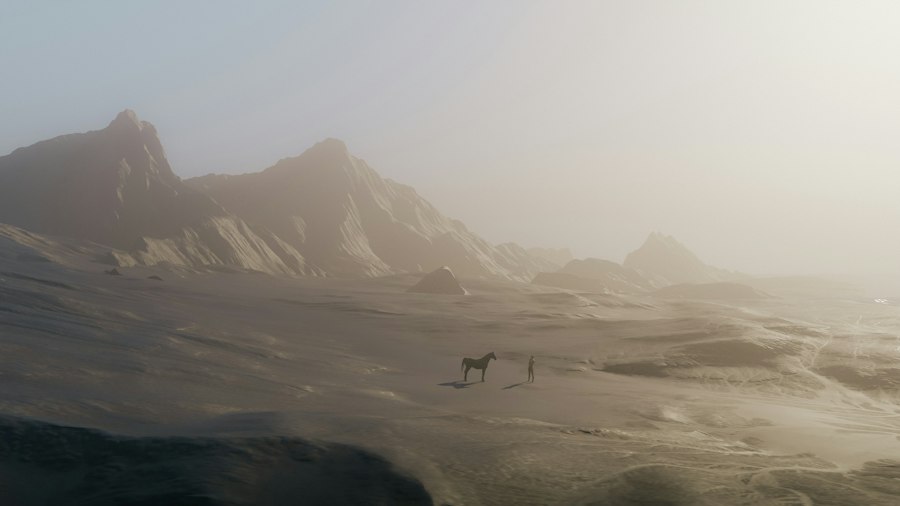
Venturing into uncharted territory is rarely a spontaneous act. It is a carefully orchestrated endeavor that relies on sophisticated tools, meticulous preparation, and innovative techniques. The nature of the terrain dictates the specific methods employed, but a common thread of rigorous planning and adaptation runs through all forms of exploration. The success of any expedition hinges on understanding the inherent risks and developing robust strategies to mitigate them. This involves not only the physical aspects of travel but also the mental and emotional fortitude required to face unforeseen challenges.
### Technological Enablers of Modern Exploration
The 21st century has witnessed an unprecedented surge in our ability to explore thanks to advancements in technology. From sophisticated satellite imagery that maps vast swathes of the planet to advanced robotics capable of probing the deepest oceans and most distant planets, technology has become our extended senses and tireless explorers. In terrestrial exploration, drones equipped with high-resolution cameras and sensors provide detailed topographical data, while GPS technology ensures precise navigation. For underwater exploration, remotely operated vehicles (ROVs) and autonomous underwater vehicles (AUVs) equipped with sonar, cameras, and sampling instruments allow us to peer into the abyssal plains. Space exploration is arguably the most technologically driven frontier, with reusable rockets, advanced life support systems, and powerful telescopes like the James Webb Space Telescope pushing the boundaries of our reach and observational capabilities. These technological marvels are not just tools for passive observation; they are active agents that enable us to interact with and understand environments that were previously inaccessible. The miniaturization of electronics and the development of powerful computing capabilities have further revolutionized exploration, allowing for real-time data analysis and more informed decision-making in the field.
### The Art of Risk Assessment and Mitigation
Before any expedition into the unknown, a comprehensive risk assessment is paramount. This involves identifying potential hazards, evaluating their likelihood and severity, and developing strategies to minimize their impact. For terrestrial expeditions, this might include understanding weather patterns, geological stability, and potential encounters with dangerous wildlife or indigenous populations. For deep-sea exploration, the risks involve extreme pressure, low temperatures, and limited visibility. Space exploration introduces the immense dangers of vacuum, radiation, and the unforgiving nature of orbital mechanics. Mitigation strategies range from rigorous training and specialized equipment to contingency planning and robust communication systems. Redundancy in critical systems is a cornerstone of risk mitigation in any high-stakes exploration. This might involve carrying backup navigation devices, multiple power sources, or emergency shelters. Furthermore, the development of predictive modeling and simulation software allows explorers to anticipate potential scenarios and practice responses before they are faced with them in real-time, significantly enhancing preparedness.
### Essential Skills and Training for the Explorer
The explorer of today requires a diverse skill set, extending far beyond basic survival. In addition to physical endurance and resilience, modern explorers often need expertise in fields such as geology, biology, navigation, first aid, and communication. For scientific expeditions, specialized knowledge relevant to the specific environment being studied is crucial. For instance, an astrobiologist venturing to Mars will need proficiency in sample collection and analysis techniques, while a deep-sea biologist might need to operate specialized sampling equipment. Technical skills in operating advanced equipment, from drones to submersibles, are increasingly important. Furthermore, mental fortitude, adaptability, and the ability to work effectively in a team under stressful conditions are non-negotiable. Rigorous training, including simulated environments and survival courses, is often a prerequisite for undertaking challenging expeditions. This training not only equips individuals with the necessary technical skills but also fosters the psychological resilience required to cope with isolation, uncertainty, and potential setbacks. The collaborative nature of modern exploration also emphasizes teamwork and communication, ensuring that all members of an expedition can work harmoniously towards a common goal.
## Charting the Unseen: The Process of Discovery and Documentation

The act of exploration is intrinsically linked to the process of discovery and the subsequent documentation of those findings. It is through meticulous observation, careful data collection, and clear communication that the unknown becomes known, contributing to the collective knowledge of humanity. This process is iterative, with each discovery opening new avenues for further inquiry.
### Methods of Data Acquisition and Analysis
In uncharted territories, data acquisition is the lifeblood of discovery. This can range from traditional methods like sketching and note-taking to highly sophisticated techniques utilizing sensors, spectrometers, and imaging technologies. On land, geological surveys, botanical collection, and wildlife monitoring are standard practices. In the ocean, sonar mapping, water sampling, and video surveys are employed to understand the marine environment. For space exploration, telescopes gather electromagnetic radiation, while landers and rovers collect in-situ data on atmospheric composition, soil properties, and potential biosignatures. The analysis of this acquired data is as critical as its collection. Scientists employ a range of statistical, computational, and qualitative methods to interpret the findings, identify patterns, and draw conclusions. Machine learning algorithms are increasingly being used to sift through vast datasets, identifying anomalies and potential discoveries that might be missed by human observation alone. The integration of data from multiple sources and across different disciplines is also key to achieving a holistic understanding of the explored environment.
### The Importance of Accurate Mapping and Navigation
Accurate mapping and navigation are fundamental to exploring any new terrain. Without them, expeditions risk getting lost, missing crucial discoveries, or failing to establish a repeatable framework for future study. Historically, this involved celestial navigation and triangulation, but today, advanced technologies like GPS, inertial navigation systems, and lidar have revolutionized our ability to precisely locate ourselves and map our surroundings. For terrestrial exploration, creating detailed topographical maps, identifying geological features, and marking significant discoveries are crucial. In underwater exploration, sonar provides bathymetric data, creating maps of the seafloor. In space, orbital mechanics and precise trajectory calculations are essential for navigation and for determining the position of celestial bodies. The process of mapping is not just about creating a visual representation; it is about encoding spatial relationships, allowing for the systematic study and understanding of an environment. The development of Geographic Information Systems (GIS) has further empowered explorers by allowing them to layer different types of data onto maps, creating rich, interactive visualizations that aid in analysis and decision-making.
### Communicating Discoveries: From Field Notes to Global Dissemination
The ultimate purpose of exploration is to share the knowledge gained with the wider world. This process begins with meticulous documentation in the field – detailed notes, sketches, photographs, and audio recordings. Upon return, this raw data is processed, analyzed, and synthesized into scientific papers, reports, and presentations. For groundbreaking discoveries, the dissemination process can involve press conferences, documentaries, and public lectures, aiming to educate and inspire a global audience. The digital age has transformed how discoveries are shared, with open-access journals, online databases, and social media platforms allowing for rapid and widespread dissemination of information. This democratization of knowledge accelerates scientific progress by allowing researchers worldwide to build upon each other’s findings. The ethical considerations of communication are also important, ensuring that discoveries are presented accurately and responsibly, respecting any cultural sensitivities or intellectual property rights. The visual aspect of communication, through high-quality imagery and videos, plays a vital role in conveying the wonder and significance of exploration to a broad audience.
## Navigating the Perils: Challenges and Dangers of Uncharted Frontiers
The very definition of uncharted territory implies an inherent lack of knowledge, which invariably brings with it a spectrum of dangers. These challenges can range from the environmental and physical to the psychological and logistical. Successfully navigating these perils requires not only preparedness but also resilience, adaptability, and often, a significant degree of luck.
### Environmental Hazards and Survival Strategies
The environments that remain uncharted are often so due to their extreme nature. Deep oceans present crushing pressures, frigid temperatures, and absolute darkness. Remote deserts are characterized by searing heat, lack of water, and treacherous sandstorms. Arctic and Antarctic regions pose extreme cold, limited visibility, and the constant threat of frostbite. High-altitude mountains present thin air, unpredictable weather, and the risk of altitude sickness. Even seemingly benign environments can harbor hidden dangers, from poisonous flora and fauna to unstable geological formations. Survival strategies in these environments are highly specialized and often involve a combination of advanced equipment, extensive training, and a deep understanding of the local ecology. This can include specialized protective clothing, portable life support systems, advanced water purification techniques, and the knowledge to identify edible plants and avoid dangerous ones. For expeditions in particularly hostile environments, redundant safety systems and robust emergency protocols are essential, ensuring that even in the face of unforeseen events, the survival of the team remains the paramount concern.
### Psychological Toll of Isolation and Uncertainty
Beyond the physical dangers, the psychological toll of exploring uncharted frontiers can be immense. Extended periods of isolation, far from family, friends, and familiar comforts, can lead to feelings of loneliness, anxiety, and depression. The constant uncertainty of what lies ahead, the inability to predict outcomes, and the pressure of responsibility can create significant mental strain. The need to maintain focus and make critical decisions under duress, often with limited information, can be exhausting. Team dynamics can also become strained under prolonged periods of stress and isolation, requiring skilled leadership and effective conflict resolution strategies. Developing coping mechanisms, maintaining strong interpersonal relationships within the team, and having access to psychological support, even remotely, are crucial for mitigating these psychological challenges. The ability to adapt to changing circumstances, maintain a positive outlook, and find moments of respite and connection are vital for maintaining mental well-being on extended expeditions.
### Logistical Nightmares and Resource Management
The logistical challenges of mounting an expedition into uncharted territory are often as formidable as the environmental ones. Transporting personnel and equipment to remote locations, establishing reliable supply lines, and managing dwindling resources are complex undertakings. Communication can be unreliable or non-existent, making coordination and emergency response incredibly difficult. The need for self-sufficiency is paramount, requiring careful planning of food, water, fuel, and medical supplies. Unexpected setbacks, such as equipment failure or adverse weather conditions, can quickly turn a well-planned expedition into a crisis. Effective resource management, including strict rationing and the ability to improvise solutions when necessary, is critical for success. The development of robust contingency plans, including evacuation procedures and backup communication strategies, is essential to address unforeseen challenges. The efficient management of limited resources, from battery power to oxygen, often dictates the duration and success of an exploratory mission.
Exploring unknown terrain can be both exhilarating and daunting, as adventurers often face unpredictable challenges that test their skills and resilience. A recent article discusses the importance of preparation and adaptability when navigating unfamiliar landscapes, providing valuable insights for those eager to embark on such journeys. For more information on this topic, you can read the article here: exploring unknown terrain can lead to unexpected discoveries and personal growth.
## The Legacy of the Unknown: Impact and Future Frontiers
| Metric | Description | Typical Values | Importance |
|---|---|---|---|
| Surface Composition | Type of material making up the terrain (rock, sand, ice, soil) | Rocky, Sandy, Icy, Dusty | High – affects landing stability and equipment durability |
| Surface Slope | Angle of the terrain surface relative to horizontal | 0° to 30° | High – steep slopes increase risk of tipping or sliding |
| Surface Roughness | Measure of terrain irregularities and obstacles | Low, Medium, High | Medium – affects landing gear stress and mobility |
| Gravity | Gravitational acceleration at the landing site | 0.1g to 1g (Earth standard) | High – influences descent speed and landing impact |
| Atmospheric Density | Density of the atmosphere at landing altitude | 0 to 1.2 kg/m³ (Earth sea level) | Medium – affects parachute or thruster performance |
| Temperature | Ambient temperature at the landing site | -150°C to 50°C | Medium – impacts equipment function and material properties |
| Landing Accuracy | Distance from intended landing coordinates | 0 to 100 meters | High – critical for mission success and safety |
| Touchdown Velocity | Vertical speed at moment of landing | 0 to 5 m/s | High – affects structural integrity and crew safety |
The act of exploring uncharted frontiers leaves an indelible mark on human civilization. The discoveries made shape our understanding of the world, inspire innovation, and often, pave the way for future endeavors. The legacy of exploration is not static; it is a continuously unfolding narrative that propels us towards new horizons.
### Scientific Advancement and Technological Innovation
Every expedition into the unknown, whether it be to the deepest trench or the furthest star, yields invaluable scientific data. This data expands our knowledge base, challenges existing paradigms, and sparks new lines of inquiry. The need to overcome the unique obstacles presented by these frontiers drives technological innovation. The development of materials science, navigation systems, life support technologies, and data analysis techniques has often been directly spurred by the demands of exploration. For instance, advancements in miniaturization and robotics for space exploration have found applications in medicine and industry. Similarly, research into extremophiles in unique environments has led to breakthroughs in biotechnology. The scientific insights gained from studying novel ecosystems, geological formations, or celestial bodies contribute to a deeper understanding of fundamental scientific principles, from the origins of life to the evolution of the universe. This iterative cycle of scientific curiosity, exploratory action, and technological refinement is a powerful engine for human progress.
### Cultural Exchange and Human Perspective
Exploration often brings humans into contact with new cultures, ways of life, and perspectives. This can lead to profound cultural exchange, fostering understanding, empathy, and a broadening of human horizons. Encounters with indigenous populations, for instance, have enriched our understanding of human diversity, traditional knowledge systems, and sustainable living practices. Even when encountering no sentient life, the exploration of alien worlds can offer a powerful new perspective on our own planet and humanity’s place in the cosmos. Seeing Earth from afar, as astronauts have, provides a humbling and unifying perspective on our shared existence. The narratives and artifacts brought back from uncharted territories contribute to our collective cultural heritage, inspiring art, literature, and philosophy. This exchange is not always seamless, and requires careful consideration of ethical implications and the potential for exploitation, but when conducted respectfully, it leads to a richer and more nuanced understanding of the human experience.
### The Perpetual Call of the Next Horizon
The history of exploration is a testament to the fact that once a frontier is charted, the human spirit immediately seeks out the next unknown. From the mapping of continents to the exploration of the deep sea, each achievement simply reveals new frontiers to conquer. The digital realm, with its vast and largely unexplored territories of data and artificial intelligence, represents a new frontier for exploration. The ongoing quest to understand consciousness, the mysteries of quantum physics, and the potential for life beyond Earth continue to beckon. As technology advances, our ability to probe deeper and further increases, promising new discoveries and challenges. The allure of the unseen remains a potent force, ensuring that humanity will continue to venture onto uncharted terrain, driven by curiosity, ambition, and the enduring desire to understand the boundless possibilities of the universe. The ongoing exploration of exoplanets, the search for dark matter and dark energy, and the quest to understand the origins of life are just a few examples of the many horizons that await our intrepid explorers in the coming centuries.

Water Boiled While Ice Formed. Could a Lander Sink Into It?
FAQs
What are some challenges of landing on unknown terrain?
Some challenges of landing on unknown terrain include not knowing the surface conditions, potential obstacles, and the presence of hazards that could affect the landing.
How can pilots prepare for landing on unknown terrain?
Pilots can prepare for landing on unknown terrain by conducting thorough pre-flight planning, studying maps and satellite images of the area, and being aware of any potential emergency landing sites.
What are some tips for a successful landing on unknown terrain?
Some tips for a successful landing on unknown terrain include maintaining situational awareness, staying calm under pressure, and being prepared to make quick decisions based on the conditions of the terrain.
What equipment is essential for landing on unknown terrain?
Essential equipment for landing on unknown terrain includes a reliable GPS system, emergency communication devices, survival gear, and any tools necessary for assessing the terrain upon landing.
What should pilots do after landing on unknown terrain?
After landing on unknown terrain, pilots should assess the situation, secure the aircraft, check for injuries, and establish communication with search and rescue authorities if needed.