
The vast, enigmatic expanse of space continues to offer celestial bodies that challenge our understanding of planetary formation and the potential for life beyond Earth. Among these, Jupiter’s moon Europa stands out as a prime candidate for harboring an extraterrestrial ocean, a possibility that hinges significantly on the characteristics of its icy shell. This frozen crust, a seemingly impenetrable barrier, is in fact a dynamic interface between the moon’s potential subsurface ocean and the harsh vacuum of space. Understanding the thickness of Europa’s ice shell is therefore not merely an academic exercise in geophysics; it is a crucial step in assessing the habitability of this Jovian moon and guiding future exploration efforts. The very nature of this shell dictates the feasibility of accessing the ocean, the mechanisms by which heat and material are exchanged, and the potential for geological activity that could sustain life. Scientists have employed a variety of ingenious methods and sophisticated instruments to probe this frozen frontier, each offering unique insights into its depth, composition, and evolution.
Probing the Depths: Methods for Estimating Europa’s Ice Thickness
Determining the precise thickness of Europa’s ice shell is a formidable scientific challenge. Unlike terrestrial planets with accessible rock outcrops and direct geological sampling, Europa’s surface is shrouded in an icy veneer, making direct measurement impossible. Consequently, researchers rely on indirect methods, drawing upon observations from spacecraft missions and theoretical modeling. These techniques, while indirect, have provided a range of estimates, sparking ongoing debate and driving further investigation. The diversity of these methods underscores the complexity of the problem and highlights the need for a multi-pronged approach to unraveling Europa’s subsurface secrets.
Radar Sounding: Peering Through the Ice
Perhaps the most direct method for inferring ice shell thickness relies on radar sounding. Instruments, such as those flown on the Galileo mission and planned for future missions like Europa Clipper, emit radio waves that penetrate the ice. The depth to which these waves travel before reflecting off a different material – presumably the underlying ocean or a different ice layer – provides a measure of the ice shell’s thickness. The properties of the reflected signal, including its strength and travel time, are analyzed to determine the distance. Different frequencies of radar are employed to probe different depths and densities within the ice. Lower frequencies can penetrate deeper but offer lower resolution, while higher frequencies provide finer detail but are attenuated more quickly by the ice. Interpreting these radar echoes requires sophisticated data processing to account for variations in ice composition, temperature, and the presence of brines or impurities that can affect wave propagation.
Magnetic Field Measurements: An Indirect but Powerful Clue
Another significant line of evidence for estimating ice shell thickness comes from analyzing Europa’s interaction with Jupiter’s powerful magnetic field. As Europa orbits Jupiter, its metallic core generates induced electrical currents. If a conductive layer exists beneath the ice shell, such as a salty ocean, it will generate its own magnetic field that counteracts Jupiter’s. Spacecraft like Galileo carried magnetometers that detected these induced magnetic fields. By studying the strength and pattern of these magnetic field variations, scientists can infer the presence and conductivity of subsurface layers. A highly conductive layer, like a saltwater ocean, would produce a stronger induced magnetic field, and the depth to this layer is directly related to the thickness of the overlying non-conductive ice shell. Models are used to correlate the observed magnetic field signatures with different ice shell thicknesses and ocean properties. This method provides a large-scale constraint on the global ice shell thickness.
Surface Geology and Tectonics: Clues from a Fractured Surface
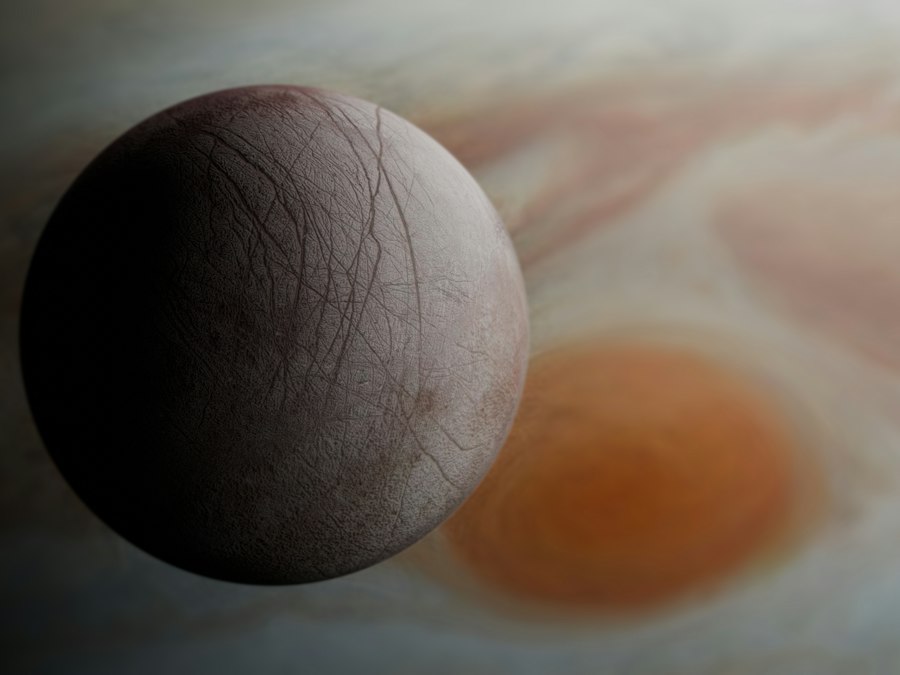
Europa’s surface is a canvas of cracks, ridges, and disrupted terrain, providing tantalizing clues about the processes occurring beneath. The nature and extent of these geological features can be interpreted to infer the thickness and behavior of the ice shell. For instance, features like chaos terrain, where large blocks of ice have been disrupted and reoriented, suggest significant interaction between the ocean and the ice shell. The scale and spacing of these disruptions can be modeled to estimate the thickness of the ice, as a thicker shell might support larger, more isolated blocks, while a thinner shell could lead to more pervasive fragmentation. The formation of ridges, often interpreted as upwelling or extensional features, also provides constraints. If the ice shell is very thin, magma plumes from the interior could more readily reach the surface, leading to different surface expressions than if the shell is substantially thicker.
Recent studies on the ice shell thickness of Europa, one of Jupiter’s moons, have provided intriguing insights into the potential for subsurface oceans and the moon’s habitability. For a deeper understanding of the complexities surrounding Europa’s icy surface and the implications for astrobiology, you can explore a related article at Freaky Science. This article delves into the latest research findings and theories regarding the moon’s icy crust and its potential to harbor life beneath.
The Ice-Ocean Interface: Dynamic Interactions and Their Implications
The boundary between Europa’s icy shell and its presumed subsurface ocean is not a static interface but a dynamic zone of interaction. Heat, chemical constituents, and geological forces are constantly exchanged across this boundary, profoundly influencing both the ocean’s habitability and the evolution of the ice shell itself. Understanding these interactions is paramount to comprehending Europa’s potential as a cradle for life.
Heat Flow and Convection: Driving Ocean Circulation
The presence of a subsurface ocean on Europa is strongly supported by evidence of internal heat. This heat, likely generated by tidal forces from Jupiter, keeps the ocean liquid and drives complex convective processes within both the ocean and the ice shell. Heat flowing from the moon’s interior heats the base of the ice shell, potentially causing melting or increased salinity in the adjacent ocean water. This warmer, less dense ocean water may then rise towards the base of the ice shell, while cooler, denser water sinks. This convective circulation within the ocean is crucial for distributing nutrients and oxygen (if any exists) and is a key factor in habitability. Similarly, within the ice shell itself, convection of briny water or ice can occur, influencing the shell’s thickness and structure over geological timescales. The rate of heat flow and the efficiency of convection are directly tied to the thickness of the ice shell, acting as an insulator.
Material Exchange: Bridging the Gap Between Ocean and Surface
The dynamic interaction between the ocean and the ice shell also facilitates the exchange of materials. Hydrothermal vents on the seafloor, if they exist, could release chemical compounds from the moon’s interior into the ocean, providing essential nutrients for potential life. These chemicals could then be transported upwards, potentially reaching the base of the ice shell. Processes like cryovolcanism, where plumes of water or ice are ejected from the surface, strongly suggest a direct connection between the ocean and the exterior. The nature of these plumes, their composition, and their frequency are all influenced by the thickness of the ice shell, dictating how easily ocean material can breach the icy barrier. Understanding the pathways and mechanisms of this material exchange is fundamental to assessing whether the ocean can sustain a biosphere.
Salinity and Brine Pockets: Complexities within the Ice
The presence of dissolved salts and brines within Europa’s ice shell further complicates our understanding of its thickness and structure. These briny layers or pockets are not uniform and can significantly affect the mechanical properties and thermal conductivity of the ice. They can also influence the radar signals used to probe the ice, requiring careful consideration during data interpretation. The formation and distribution of these brines are thought to be linked to the interaction with the underlying ocean and to processes of salt rejection during ice formation. The existence of numerous brine pockets within the shell could also imply a more complex internal structure than a simple solid ice layer, with potential implications for the stability and fracturing of the shell.
Thickness Variations and Their Geological Significance

It is unlikely that Europa’s ice shell possesses a uniform thickness across its entire surface. Instead, variations in thickness are expected, driven by the same geological processes that shape the moon’s surface. These variations have profound implications for the accessibility of the ocean, the potential for cryovolcanic activity, and the distribution of heat.
Regional Differences: From Thick Polar Caps to Thinner Equatorial Bands
Scientific models suggest that Europa’s ice shell may be thicker at its poles and thinner at its equator. This is attributed to differences in tidal heating and ice dynamics. Polar regions might experience less intense tidal flexing, leading to slower ice flow and potentially thicker accumulation. Conversely, equatorial regions might be subject to greater tidal stresses, promoting fracturing and thinning. Furthermore, localized areas of upwelling from the ocean could lead to thinner ice in specific regions, while areas of ice accumulation could result in thicker sections. These regional variations are crucial for planning future missions, as areas with thinner ice may offer more accessible pathways to the subsurface ocean.
Tidal Flexing and its Impact on Shell Thickness
Jupiter’s immense gravitational pull subjects Europa to constant tidal forces. This relentless flexing of the moon’s interior generates heat and causes the solid ice shell to deform. This deformation can lead to stretching and thinning in some areas, while compression and thickening might occur in others. The continuous cycle of tidal flexing is believed to play a significant role in the fracturing and resurfacing of Europa’s ice shell, contributing to the observed geological features. The degree to which the ice shell can deform without fracturing is directly related to its thickness and its internal composition, including the presence of brines. Understanding these tidal effects is essential for modeling the evolution of the ice shell’s thickness over time.
Cryovolcanism and Melt-Through Events: Thinning the Ice Barrier
The phenomenon of cryovolcanism, the eruption of water and ice from beneath the surface, is a powerful indicator of a direct connection between the subsurface ocean and the exterior. These events can occur when the ice shell thins to the point where internal pressure or heat can breach the surface. Melt-through events, where plumes of warmer ocean water or brine ascend and melt through the overlying ice, are a primary mechanism for creating features like lenticulae (domal upwellings) and chaos terrain. The frequency and scale of such events are directly related to the thickness of the ice shell; thinner ice is more susceptible to breaching. Studying the distribution and characteristics of cryovolcanic features can therefore provide insights into localized thinning of the ice shell and the potential for ocean access in specific regions.
The Ice Shell’s Influence on Habitability and Life Detection
The characteristics of Europa’s ice shell are not merely an aspect of its physical structure; they are inextricably linked to the moon’s potential habitability and the challenges of detecting life. The thickness of the shell, its permeability, and its composition all play critical roles in determining whether the subsurface ocean can support life and how we might go about searching for it.
Insulating the Ocean: A Protective Layer or a Barrier to Heat and Nutrients?
The ice shell acts as a vital insulator, trapping the heat generated by tidal forces within the moon and preventing the subsurface ocean from freezing solid. This insulating property is essential for maintaining a liquid water environment, a fundamental requirement for life as we know it. However, the ice shell also acts as a barrier. Its thickness dictates the rate at which heat and chemical nutrients can be transported from the moon’s interior to the ocean. A very thick shell could limit the influx of essential elements necessary for biological processes, potentially making the ocean less habitable. Conversely, a very thin shell might lead to excessive heat loss or instability, jeopardizing the ocean’s existence. The optimal thickness for habitability likely involves a delicate balance between insulation and material exchange.
Pathways to the Ocean: Implications for Astrobiology Missions
The thickness of Europa’s ice shell is a primary consideration for the design of future astrobiology missions. If the ice shell is kilometers thick, as many estimates suggest, then direct sampling of the subsurface ocean becomes an immense engineering challenge. Missions would need to contend with the immense pressures and extreme cold of penetrating such a substantial icy layer. This might necessitate the development of advanced drilling technologies or the focus on exploring regions where the ice is thinner, such as through cryovolcanic plumes or fractured terrains. Understanding ice thickness variations is therefore critical for identifying scientifically compelling targets and for developing realistic mission architectures aimed at searching for biosignatures.
The Search for Biosignatures: Indirect Detection Through the Ice
Even if direct access to the ocean is difficult, the ice shell itself may hold clues to the presence of life. Processes like cryovolcanism can transport materials from the ocean to the surface, potentially preserving biosignatures within the ejected ice. If life exists in Europa’s ocean, it might produce organic molecules or other chemical indicators that could be preserved in the ice. Future missions could analyze ice samples for these telltale signs. Furthermore, the chemical composition of the ice shell itself, influenced by interaction with the ocean, could provide indirect evidence of biological activity. Studying the chemical gradients and mineralogy of the ice could reveal the history of exchange with the ocean and potentially indicate the presence of past or present life.
Recent studies have focused on the intriguing ice shell thickness of Europa, one of Jupiter’s moons, as it may harbor a subsurface ocean capable of supporting life. A related article discusses the implications of varying ice thickness on potential habitability and the geological processes that could be at play beneath the surface. For more insights on this fascinating topic, you can read the full article here. Understanding the dynamics of Europa’s ice shell is crucial for future exploration missions aimed at uncovering the mysteries of this icy world.
Ongoing Research and Future Prospects for Understanding Europa’s Ice Shell
| Parameter | Value | Unit | Notes |
|---|---|---|---|
| Average Ice Shell Thickness | 15 | km | Estimated from Galileo mission data |
| Minimum Ice Shell Thickness | 3 | km | Near regions of active geology |
| Maximum Ice Shell Thickness | 30 | km | In older, less active regions |
| Ice Shell Density | 920 | kg/m³ | Typical density of water ice |
| Surface Temperature | -160 | °C | Average surface temperature on Europa |
| Subsurface Ocean Depth | 15-25 | km | Depth below ice shell to ocean |
The quest to understand Europa’s ice shell is an active and evolving field of scientific inquiry. New data, improved modeling techniques, and upcoming missions promise to refine our estimates of its thickness and provide deeper insights into its composition and dynamics. The ongoing dialogue between observation, theory, and mission planning is crucial for unlocking the secrets of this captivating moon.
Refining Estimates with New Missions and Technologies
Future missions, such as NASA’s Europa Clipper and ESA’s JUICE mission, are poised to revolutionize our understanding of Europa’s ice shell. Europa Clipper, in particular, is equipped with a suite of instruments, including advanced radar and magnetic field sensors, specifically designed to map the ice shell’s thickness and structure with unprecedented detail. These missions will collect vast amounts of data, enabling scientists to refine existing models and potentially provide more definitive estimates of ice shell thickness across different regions of Europa. The development of new sensing technologies and data analysis techniques will be instrumental in extracting the maximum scientific value from these forthcoming observations.
Advancements in Geophysical Modeling
Concurrent with observational advancements, significant progress is being made in the geophysical modeling of Europa’s interior and its icy shell. These models incorporate data from past missions, theoretical understanding of tidal heating, and principles of material science to simulate the complex processes at play. By varying parameters such as heat flow, ocean salinity, and ice rheology, researchers can explore a range of scenarios that explain the observed surface features and geophysical measurements. These models help to interpret the indirect data from radar and magnetic fields, providing constraints on ice shell thickness and its potential variability. The integration of these models with observational data is a powerful approach for building a comprehensive picture of Europa’s interior.
The Interplay of Science and Engineering for Future Exploration
The ultimate goal of studying Europa’s ice shell is to determine its habitability and, if possible, to search for evidence of life. This ambitious objective requires a continuous interplay between scientific understanding and engineering innovation. As our knowledge of the ice shell’s thickness, composition, and dynamic processes grows, it directly informs the design of future exploration missions. Engineers must develop spacecraft and instruments capable of operating in this challenging environment, whether it involves penetrating thick ice, analyzing cryovolcanic plumes, or conducting in-situ measurements of the ocean. The pursuit of this scientific frontier is a testament to humanity’s enduring curiosity and our drive to explore the cosmos.

Water Boiled While Ice Formed. Could a Lander Sink Into It?
FAQs
1. How thick is the ice shell on Europa?
The ice shell on Europa is estimated to be around 10-15 miles (15-25 kilometers) thick.
2. What factors influence the thickness of Europa’s ice shell?
The thickness of Europa’s ice shell is influenced by factors such as the moon’s internal heat, tidal forces from Jupiter, and the presence of subsurface oceans.
3. How do scientists study the thickness of Europa’s ice shell?
Scientists study the thickness of Europa’s ice shell using data from spacecraft missions, such as Galileo and upcoming missions like Europa Clipper. They also use models based on gravitational measurements and surface features.
4. Why is the thickness of Europa’s ice shell important?
The thickness of Europa’s ice shell is important because it can provide insights into the moon’s potential habitability. A thinner ice shell may allow for easier access to the subsurface ocean, which could harbor life.
5. How does the thickness of Europa’s ice shell compare to other icy moons in the solar system?
Europa’s ice shell is relatively thin compared to other icy moons in the solar system. For example, Ganymede, another moon of Jupiter, has an ice shell estimated to be around 60 miles (100 kilometers) thick.