
The Silent Menace: Understanding the Dynamics of Freezing in Vacuum
The vacuum of space, a realm of stark contrasts and unforgiving conditions, presents a unique set of challenges for any object or organism that encounters it. Among the most fundamental of these challenges is the phenomenon of freezing. While often intuitively understood as the transition of a liquid to a solid due to a drop in temperature, the process of freezing in a vacuum is far more complex, involving a delicate interplay of heat transfer mechanisms and phase changes that can occur in ways not commonly observed on Earth. Understanding these dynamics is crucial for the survival of astronauts, the operation of sensitive equipment, and the very exploration of the cosmos.
At its core, freezing is a thermal process. For an object to freeze, it must lose thermal energy, causing its constituent molecules to slow down and arrange themselves into a more ordered solid structure. In a vacuum, however, the absence of an atmosphere significantly alters how this heat is lost. Unlike on Earth, where convection and conduction play substantial roles in heat transfer, vacuum environments rely primarily on radiation. This fundamental difference dictates the rate and nature of freezing, leading to a host of engineering and survival considerations. The extreme cold of space, often cited as a primary cause of freezing, is only one piece of the puzzle. The lack of atmospheric pressure also plays a critical role, influencing the boiling points of liquids and the sublimation of solids, processes that are intimately linked to freezing.
The implications of freezing in vacuum are far-reaching. For human spaceflight, unprotected exposure to the vacuum of space is rapidly lethal, with a significant portion of this lethality attributed to rapid depressurization and the subsequent boiling of bodily fluids, followed by a dramatic drop in temperature leading to freezing. For spacecraft and equipment, uncontrolled freezing can lead to material degradation, component failure, and mission abort. From the delicate instruments on scientific probes to the life support systems within a space station, preventing or managing freezing is a paramount concern. The very principles of thermodynamics are tested in these extreme environments, pushing the boundaries of our understanding and our technological capabilities.
Freezing in a vacuum environment presents unique challenges and fascinating phenomena, as the absence of air pressure can significantly alter the freezing process of various substances. For a deeper understanding of this topic, you can explore an insightful article that delves into the science behind freezing in a vacuum and its applications in various fields. To read more, visit Freaky Science.
Radiation: The Dominant Chill Factor in the Void
The most significant factor driving temperature decrease in a vacuum is radiative heat transfer. Without a surrounding atmosphere to conduct or convect heat, objects in space lose thermal energy solely by emitting infrared radiation into the void. This process is governed by the Stefan-Boltzmann law, which states that the power radiated by an object is proportional to the fourth power of its absolute temperature and its emissivity. This means that hotter objects radiate more energy, and objects with higher emissivity (a measure of how effectively a surface radiates heat) will cool down faster.
The Slow Descent of Thermal Energy
In the vacuum of space, an object’s temperature is determined by a balance between the heat it absorbs from external sources and the heat it radiates away. External heat sources can include solar radiation (direct sunlight), reflected solar radiation from planets or moons, and thermal radiation emitted by other nearby objects. If an object is not actively heated or is exposed to deep space where incoming radiation is minimal, its temperature will gradually decrease as it radiates its internal thermal energy outwards. This cooling process, driven purely by radiation, can be surprisingly slow compared to cooling in an atmosphere.
The rate of cooling is also influenced by the object’s surface properties. A highly polished, low-emissivity surface will radiate less heat and thus cool more slowly than a dark, high-emissivity surface. This principle is exploited in the design of spacecraft thermal control systems, where specialized materials are used to either retain heat or dissipate it effectively, depending on the mission requirements. For instance, a probe destined for the frigid outer solar system might be designed with highly reflective surfaces to minimize heat loss, while a component generating significant internal heat might require radiators with high emissivity to efficiently shed excess energy.
Absorbing the Sun’s Harsh Glare
While the void is cold, direct sunlight is a potent source of heat. For objects exposed to the Sun, the energy absorbed from solar radiation can counteract radiative cooling. However, this absorption is not uniform. The intensity of solar radiation decreases with the square of the distance from the Sun, meaning that planets further out receive significantly less solar energy. Furthermore, the orientation of the object relative to the Sun is critical. A surface directly facing the Sun will absorb much more energy than a surface facing away.
This duality of radiative heat transfer – emission into the cold void and absorption from celestial bodies – creates a complex thermal environment. An object in direct sunlight might remain relatively warm on its sunlit side while its shaded side radiates heat into the cold vacuum and begins to freeze. This differential heating and cooling can lead to significant thermal stresses within materials. The phenomenon of “cold soaking” occurs when an object is shielded from direct solar radiation for extended periods, allowing its temperature to drop considerably due to continuous radiative emission. This is a significant concern for components that need to operate within specific temperature ranges.
Pressure’s Role: Beyond Simple Temperature Drop
The absence of atmospheric pressure in a vacuum environment introduces a critical factor that profoundly influences the state of liquids and solids, and consequently, the freezing process. This factor is the significantly reduced ambient pressure, which drastically lowers the boiling point of liquids and can lead to sublimation of solids, even at temperatures well above their usual freezing points. Freezing, therefore, is not simply a matter of reaching a specific low temperature; it is a phase transition influenced by the pressure at which it occurs.
The Vaporization Frenzy
In a vacuum, the vapor pressure of a liquid can quickly exceed the ambient pressure. This means that even at relatively mild temperatures, the liquid can begin to boil and evaporate. This rapid vaporization is known as outgassing. If this outgassing occurs with a liquid that is crucial for maintaining a solid or liquid state (like water in biological tissues or coolant in a system), the loss of this phase can lead to rapid cooling and the solidifying of the remaining substance.
For instance, if a spacecraft carrying water experiences a sudden depressurization, the water will not simply freeze due to the cold. Instead, it will rapidly boil. The energy required for this boiling (the latent heat of vaporization) is drawn from the water itself, causing its temperature to plummet. This phenomenon, coupled with the direct radiation of heat into the vacuum, can lead to rapid freezing of the remaining water. This is a critical consideration for spacesuits, where the rapid depressurization of an unprotected astronaut would lead to a dramatic and rapid boiling of bodily fluids, followed by freezing.
Sublimation: The Solid’s Escape
The reduced pressure also affects solids. Sublimation is the process where a solid transitions directly into a gas, bypassing the liquid phase. This is common with substances like dry ice (solid carbon dioxide) at standard atmospheric pressure. In a vacuum, sublimation can occur at much lower temperatures and for a wider range of materials. For certain substances, particularly those with weaker intermolecular bonds, this sublimation can lead to a loss of mass and a cooling effect on the remaining solid.
While sublimation isn’t directly freezing, it is an important related phenomenon in vacuum environments. If a substance is near its freezing point and also prone to sublimation, the loss of mass through sublimation can further reduce its temperature, potentially leading to freezing. For example, ice exposed to vacuum will not melt into liquid water and then evaporate; instead, it will sublimate directly into water vapor. This is why ice on the Moon, in the absence of an atmosphere, does not form liquid water bodies and slowly disappears over time. Understanding sublimation is key to preserving materials and preventing unwanted mass loss in vacuum applications.
Engineering Solutions: Designing for the Cold Void
The challenges posed by freezing in vacuum environments have necessitated the development of sophisticated engineering solutions. These solutions aim to maintain optimal operating temperatures for equipment and to protect astronauts from the lethal effects of the vacuum. The design considerations are multifaceted, involving material selection, thermal control systems, and protective gear.
Thermal Control Systems: The Unsung Heroes
Spacecraft are equipped with intricate thermal control systems (TCS) designed to manage the extreme temperature fluctuations experienced in space. These systems employ a combination of passive and active techniques to maintain components within their operational temperature ranges. Passive TCS rely on the inherent properties of materials and design geometry. This includes the use of multi-layer insulation (MLI) blankets, which consist of thin, reflective layers separated by vacuum gaps to minimize radiative heat transfer. Optical solar radiators and thermal coatings are also used to control the absorption and emission of thermal radiation.
Active TCS, on the other hand, involve the use of powered components to actively regulate temperature. These can include heaters, radiators, heat pipes, and fluid loops. Heaters are used to warm components that are at risk of freezing, especially during periods of low solar illumination or when internal heat generation is insufficient. Radiators, with their high emissivity surfaces, are designed to efficiently dissipate excess heat into space. Heat pipes are passive devices that transfer heat with very high efficiency, utilizing the evaporation and condensation of a working fluid. Fluid loops, often using specialized coolants, can circulate heat from warmer components to radiators, or vice versa, to maintain stable temperatures. The precise configuration of these systems is tailored to the specific thermal requirements of each spacecraft and its mission.
Material Selection and Protection
The choice of materials is critical when designing for vacuum environments where freezing is a concern. Materials must be able to withstand extreme temperature cycles without degrading. Properties like thermal expansion, conductivity, and resistance to embrittlement at low temperatures are carefully considered. For instance, some plastics can become brittle and fracture at very low temperatures, while others are specifically designed for cryogenic applications.
Furthermore, protective coatings and encapsulations are employed to shield sensitive components from the vacuum and potential freezing. For electronics, this might involve conformal coatings that seal the circuitry from the harsh environment. For exposed components, thermal blankets or specialized housings can provide insulation. The ingress of moisture or other volatile substances into components is also a concern, as these can freeze and cause damage. Therefore, sealing and vacuum compatibility are paramount in material selection and design.
Freezing in a vacuum environment presents unique challenges and fascinating phenomena, as the absence of air pressure can significantly alter the freezing process of various substances. For a deeper understanding of this topic, you can explore an insightful article that discusses the implications of freezing in such conditions. This article provides valuable insights into the science behind the process and its applications in various fields. To learn more, visit this related article that delves into the intricacies of freezing in a vacuum.
Human Survival: The Ultimate Thermal Challenge
| Parameter | Value | Unit | Notes |
|---|---|---|---|
| Vacuum Pressure | 1 x 10⁻⁶ | Torr | High vacuum environment |
| Temperature for Freezing | -196 | °C | Liquid nitrogen temperature |
| Heat Transfer Mode | Radiation & Conduction | N/A | No convection in vacuum |
| Freezing Time | Variable (minutes to hours) | min/hr | Depends on sample size and thermal conductivity |
| Sample Mass | 0.1 – 10 | grams | Typical laboratory sample sizes |
| Thermal Conductivity of Sample | 0.1 – 2.0 | W/m·K | Varies by material |
| Freezing Point Depression | 0 – 5 | °C | Due to vacuum-induced sublimation effects |
| Pressure at Freezing Point | 0.006 | atm | Triple point pressure of water |
For human explorers in space, the threat of freezing in a vacuum is an immediate and existential one, inextricably linked to the lack of atmospheric pressure. While the extreme cold of space is a contributing factor, the rapid depressurization and subsequent physiological responses are the primary drivers of rapid temperature decline and freezing of bodily fluids. Protecting astronauts requires sophisticated life support systems that create a personal, albeit temporary, terrestrial environment.
The Lethality of Depressurization
Unprotected exposure to the vacuum of space is not instantaneously fatal due to freezing alone, but rather due to the rapid depressurization. The absence of external pressure causes the gases dissolved in the blood and tissues to bubble out, a process called ebullism. More critically, the water in the soft tissues of the body will begin to vaporize. This vaporization process requires energy, which is drawn from the body’s own heat, leading to a rapid and dramatic drop in core body temperature. Simultaneously, the body loses heat directly to the vacuum through radiation and evaporation.
The combination of rapid fluid vaporization, subsequent cooling, and direct radiative heat loss results in a cascade of physiological failure. The lungs would rupture almost immediately due to the pressure difference. The blood would boil, and the body’s core temperature would plummet. While consciousness would be lost within seconds, the process of freezing, in the sense of tissue solidification, would follow relatively quickly, albeit amidst the more immediate and catastrophic effects of depressurization and ebullism.
The Shield of the Spacesuit
The spacesuit is the astronaut’s personal spacecraft, a sophisticated system designed to maintain a habitable environment within the lethal vacuum of space. A spacesuit provides a pressurized atmosphere, breathable air, and thermal regulation. The pressurization is crucial for preventing ebullism and the vaporization of bodily fluids. The suit’s internal atmosphere is carefully controlled for temperature, pressure, and oxygen levels.
Thermal regulation is a key function. While the suit provides insulation against the cold of space, it also needs to manage the heat generated by the astronaut’s body. This is often achieved through a liquid cooling garment worn by the astronaut, which circulates a coolant to absorb excess body heat and dissipate it through a radiator on the suit’s backpack. Conversely, in environments where heat loss is a concern, the suit can provide controlled heating. The materials used in spacesuits are specifically chosen for their thermal insulation properties, durability in vacuum, and resistance to extreme temperatures. The ability of a spacesuit to prevent rapid freezing is a testament to advanced engineering and a critical component of human space exploration.
Beyond Earth: Freezing on Other Worlds
The principles of freezing in vacuum are not confined to the void between celestial bodies; they are also relevant to the surfaces of planets and moons that possess little to no atmosphere, such as the Moon and Mars. On these worlds, the absence of a significant atmosphere means that radiative heat transfer is the dominant mode of temperature regulation, and the pressure is extremely low. This creates unique freezing and temperature dynamics that differ significantly from Earth.
Lunar Ice and the Sun’s Influence
The Moon, with its almost complete lack of atmosphere, presents a stark example of vacuum-driven thermal phenomena. Temperatures on the lunar surface can swing dramatically between over 100°C (212°F) in direct sunlight and below -150°C (-238°F) in shadowed regions or during the lunar night. While liquid water cannot exist on the Moon’s surface due to the vacuum, water ice has been found in permanently shadowed craters near the poles.
The survival of this ice is a testament to the interplay of factors. In these shadowed regions, the ice is shielded from direct solar radiation, allowing its temperature to remain consistently low. However, even in shadow, it is still exposed to the vacuum. Instead of melting, the ice sublimates slowly over vast timescales, gradually disappearing into space. The presence of these ice deposits is attributed to a delicate balance of outgassing from within the Moon and infrequent delivery by comets and asteroids, where the ice is protected from direct sunlight and rapid sublimation. Understanding these dynamics is crucial for future lunar missions that aim to utilize these resources.
Martian Chill: A Thin Atmosphere’s Effect
Mars, while possessing a thin atmosphere, still experiences conditions where vacuum-like effects on freezing are significant. The Martian atmosphere is about 1% as dense as Earth’s, meaning that radiative heat transfer plays a much larger role in temperature regulation than convection or conduction. While the Martian atmosphere is sufficient to prevent instantaneous ebullism of water at typical Martian surface temperatures and pressures, it also means that water ice readily sublimes when exposed to the surface.
The freezing point of water on Mars is significantly lower than on Earth due to the reduced atmospheric pressure. While liquid water can transiently exist under specific conditions, it quickly freezes or boils away. Seasonal frost, primarily composed of carbon dioxide ice and some water ice, forms and dissipates on the Martian surface. The extreme temperature swings and low pressure mean that any free-standing liquid water would rapidly either freeze or sublimate. Therefore, understanding the thermal balance of Martian soil, the rate of sublimation, and the conditions under which water can persist in solid or even transient liquid forms are critical for the search for past or present life on the Red Planet. The study of freezing in vacuum environments, therefore, extends our understanding of planetary science and the potential for habitability beyond Earth.
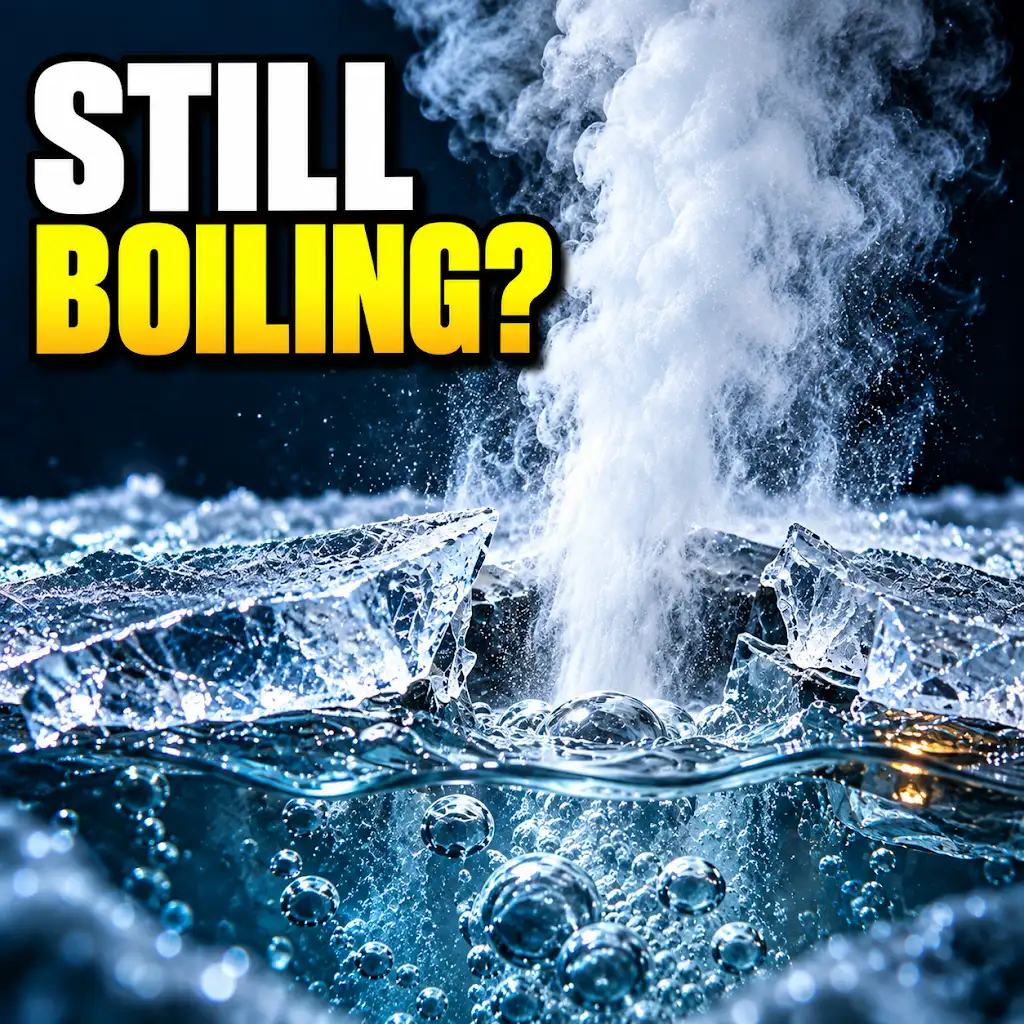
Water Boiled While Ice Formed. Could a Lander Sink Into It?
FAQs
What happens to water when it is exposed to a vacuum environment?
When water is exposed to a vacuum environment, it will freeze due to the lack of atmospheric pressure. The low pressure causes the water molecules to lose energy and slow down, eventually forming ice crystals.
Can objects freeze instantly in a vacuum environment?
Objects do not freeze instantly in a vacuum environment. The freezing process still takes time as the molecules lose heat energy and slow down to form a solid state. However, the absence of air can speed up the freezing process compared to a normal environment.
What is the role of pressure in freezing in a vacuum environment?
Pressure plays a crucial role in freezing in a vacuum environment. In a vacuum, the lack of pressure causes the molecules of a substance to lose energy rapidly, leading to a decrease in temperature and the freezing of the material.
How does freezing in a vacuum environment differ from freezing in a regular environment?
Freezing in a vacuum environment differs from freezing in a regular environment mainly due to the absence of air pressure. In a vacuum, the lack of pressure causes substances to freeze at lower temperatures and at a faster rate compared to freezing in a regular environment.
Is freezing in a vacuum environment used in any scientific or industrial applications?
Yes, freezing in a vacuum environment is used in various scientific and industrial applications. It is commonly used in freeze-drying processes to preserve food, pharmaceuticals, and other perishable items. The vacuum environment helps remove moisture from the substances without causing damage due to ice crystal formation.