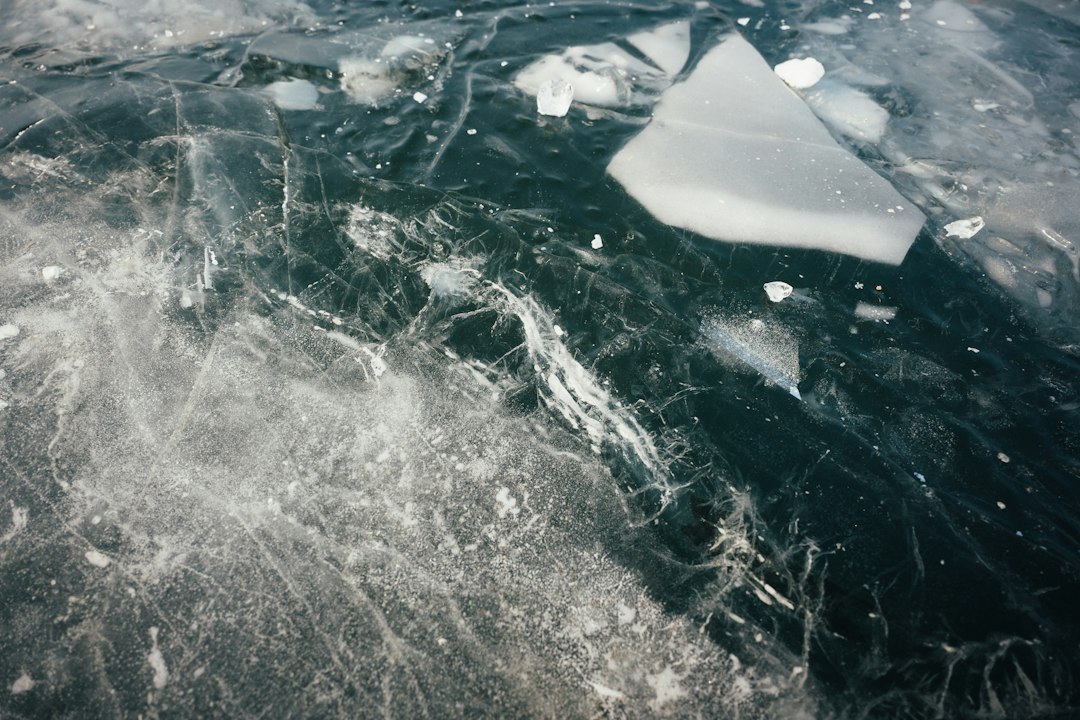
The silent, seemingly impenetrable barrier of ice can hold many secrets. One of the most fascinating, and often visually striking, is the phenomenon of vapor escaping through its frozen surface. This is not a mere trick of the light or a superficial melting; it is a dynamic process, a testament to the underlying energy and physics at play beneath the chill. Understanding this “frozen escape” reveals a complex interplay of temperature, pressure, and the unique properties of water in its solid state. It’s a reminder that even in apparent stillness, a world of subtle but powerful forces is often in motion.
The Microscopic Dance of Water Molecules
At its core, the escape of vapor through ice is a consequence of the molecular behavior of water. Even when frozen, water molecules are not entirely static. They possess kinetic energy, meaning they are in constant motion. In liquid water, this motion is vigorous, allowing molecules to overcome intermolecular forces and transition into the gaseous phase. In ice, the molecules are arranged in a crystalline lattice, held together by hydrogen bonds. While this structure restricts their movement, it doesn’t entirely eliminate it.
Vibrational Motion and Sublimation
The molecules within the ice lattice are continuously vibrating. These vibrations are more energetic at the surface of the ice, where the molecules are less constrained by their neighbors. When a surface molecule gains enough kinetic energy through these vibrations, it can overcome the attractive forces holding it within the solid structure and escape directly into the surrounding air as water vapor. This process is known as sublimation, the transition of a substance directly from the solid to the gas phase without passing through the liquid phase.
Surface Irregularities and Energetic Hotspots
The surface of ice is rarely perfectly smooth at a microscopic level. It is characterized by a multitude of irregularities, including cracks, imperfections, and variations in molecular packing. These imperfections can act as “hotspots” where molecules are already in a less stable configuration. Molecules located at these points may require less energy to break free from the ice lattice and sublimate. Thus, the escape of vapor is often not uniform across the entire surface but is concentrated at these more energetically favorable locations.
The Role of Hydrogen Bonds
Hydrogen bonds are crucial in maintaining the structure of ice. These are relatively weak attractive forces between the hydrogen atom of one water molecule and the oxygen atom of another. While these bonds are strong enough to hold the molecules in a solid lattice, they are constantly being stretched and broken by the vibrational energy of the molecules. The escape of a vapor molecule involves overcoming these hydrogen bonds, a process facilitated by the cumulative vibrational energy.
In exploring the fascinating phenomenon of vapor escaping through ice, one can gain deeper insights by reading a related article that delves into the science behind phase transitions and the behavior of gases in cold environments. This article provides a comprehensive overview of how vapor molecules interact with ice and the conditions that facilitate their escape. For more information, you can check out the article here: Vapor Dynamics in Cold Conditions.
Environmental Triggers and Driving Forces
While the intrinsic molecular motion of water is the fundamental driver of vapor escape, external environmental factors play a significant role in dictating the rate and visibility of this phenomenon. These triggers amplify or suppress the sublimation process, transforming a subtle molecular event into a noticeable emanation.
Temperature Gradients and Heat Transfer
The most influential environmental factor is the temperature difference between the ice and its surroundings. If the surrounding air is warmer than the ice, heat will transfer from the air to the ice. This influx of energy increases the kinetic energy of the water molecules within the ice, making sublimation more likely. Conversely, if the air is colder than the ice, heat will transfer from the ice to the air, slowing down sublimation. Even at sub-zero temperatures, if the air is warmer than the ice, sublimation can occur. This is why one might observe vapor escaping from ice on a cold but not frigid day, or even from snow on a winter afternoon.
Air Pressure and Humidity Levels
The atmospheric pressure also plays a role. At lower atmospheric pressures, it is easier for molecules to escape from the surface, as there are fewer air molecules to impede their outward movement. This is why sublimation is more pronounced at higher altitudes. Humidity, the amount of water vapor already present in the air, is another critical factor. If the air is already saturated with water vapor, the rate of sublimation will decrease, as the air can no longer readily accept more vapor. Conversely, dry air can facilitate a higher rate of sublimation.
Wind and Airflow Dynamics
Wind and air currents can significantly influence the visibility and rate of vapor escape. As vapor molecules sublimate from the ice surface, they are carried away by the moving air. This continuous removal of vapor from the immediate vicinity of the ice surface maintains a favorable concentration gradient, encouraging further sublimation. In still air, the vapor molecules can accumulate above the ice, creating a localized zone of high humidity that can slow down or even halt the sublimation process. Therefore, windy conditions often enhance the observable effect of vapor escaping from ice.
The Visual Manifestation: Visible Vapor Plumes
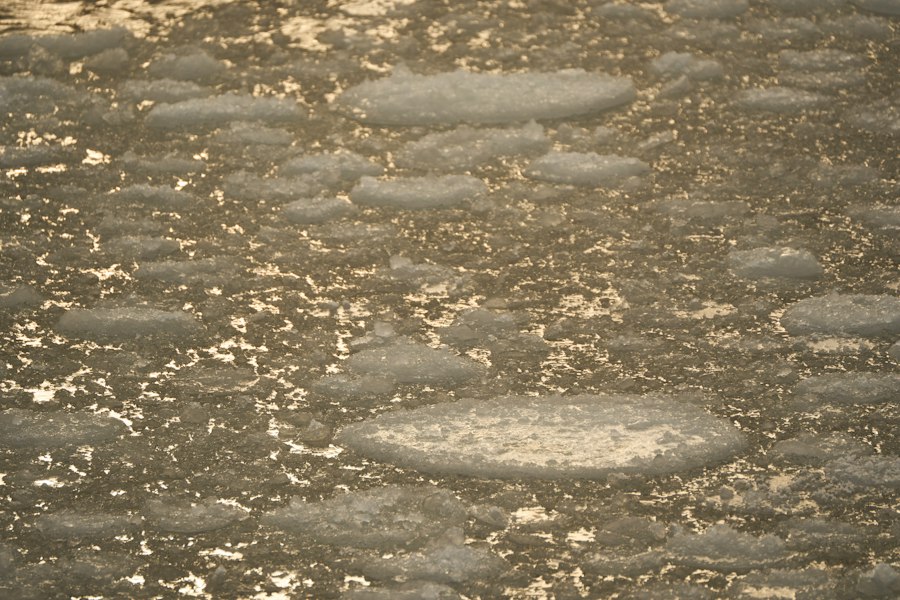
The escape of vapor from ice isn’t always directly visible. The water molecules in gaseous form are individually too small to be seen. The dramatic plumes and wisps that we associate with this phenomenon are a result of further thermodynamic processes occurring as the invisible vapor encounters the surrounding environment.
Condensation and Ice Crystal Formation
When the invisible water vapor that has sublimated from the ice surface rises into colder air, it can reach its dew point or frost point. If the surrounding air is cold enough, the vapor will condense back into tiny liquid water droplets or, more commonly at these low temperatures, directly deposit as ice crystals. These microscopic ice crystals, suspended in the air just above the ice surface, scatter light, making the vapor plumes visible. The appearance of these plumes can vary, from delicate, misty veils to more defined, frosty wisps, depending on the temperature, humidity, and air currents.
The Influence of Supercooled Water Droplets
In some instances, the vapor may not immediately form ice crystals. Instead, it can condense into supercooled water droplets if the surrounding air is below freezing but the ice crystals have not yet nucleated. These supercooled droplets can then freeze upon contact with the ice surface or existing ice crystals, contributing to the visible vapor. This process is akin to the formation of fog or mist, but originating directly from a frozen surface.
Optical Properties and Perception
The visibility of the vapor plumes is also influenced by optical conditions. Factors such as the angle of sunlight, the presence of other atmospheric particles, and the observer’s perspective can all affect how readily the ice crystals are perceived. In very bright sunlight, the delicate ice crystals might appear as sparkling points, while in diffused light, they might form a more ethereal haze. The phenomenon is a visual interpretation of microscopic events, highlighting the interaction between matter and light.
Scientific Contexts and Real-World Applications
The understanding of vapor escaping through ice, while seemingly a niche observation, has roots in fundamental scientific principles and finds relevance in various scientific and practical domains. It’s a phenomenon that bridges the gap between everyday observation and sophisticated scientific inquiry.
Thermodynamics and Phase Transitions
At its heart, the frozen escape phenomenon is a demonstration of thermodynamics and phase transitions. The escape of vapor (sublimation) and the subsequent condensation or deposition of that vapor back into ice crystals are core concepts in understanding how energy influences the state of matter. This understanding is critical in fields ranging from atmospheric science to materials engineering. Studying these processes helps refine models of heat and mass transfer, which are essential for predicting weather patterns, designing efficient refrigeration systems, and even understanding geological processes.
Cryogenics and Cold Chain Management
In cryogenics, the study and application of extremely low temperatures, controlling the loss of material through sublimation is paramount. For instance, freeze-drying, a process used to preserve food and pharmaceuticals, relies on controlled sublimation of water from frozen samples. Understanding the factors that influence sublimation rates allows for optimization of these processes to minimize material loss and maximize shelf life. Similarly, in the logistics of maintaining cold chains for perishable goods, preventing unwanted sublimation is crucial to maintaining product integrity.
Glaciology and Climate Change Research
Glaciologists study glaciers and ice sheets, and the sublimation of ice is a significant component of the mass balance of these frozen reservoirs. Understanding the rate at which ice sublimates helps scientists estimate the contribution of glaciers to sea-level rise and to understand the impact of climate change on these vital components of the Earth’s cryosphere. The visible plumes can sometimes be an indicator of higher sublimation rates in specific microclimates.
Materials Science and Surface Engineering
In materials science, controlling the interaction of surfaces with atmospheric moisture is often important. For example, in the development of low-friction surfaces or in the design of protective coatings, the understanding of how moisture can be released from or interact with frozen or ice-covered materials is a key consideration. This can influence everything from the performance of sporting equipment to the durability of aerospace components.
Recent studies have shown that vapor can escape through ice, leading to intriguing implications for our understanding of climate processes. This phenomenon highlights the complex interactions between temperature, pressure, and phase changes in frozen environments. For a deeper dive into the science behind these processes, you can explore an insightful article on the topic at Freaky Science, which discusses the mechanisms of vapor diffusion and its effects on ice stability. Understanding these dynamics is crucial for predicting changes in polar regions and their impact on global climate patterns.
Factors Influencing the Intensity and Duration of Frozen Escape
| Parameter | Value | Unit | Description |
|---|---|---|---|
| Vapor Pressure of Ice | 0.611 | kPa | Equilibrium vapor pressure at 0°C |
| Sublimation Rate | 0.1 – 0.5 | g/m²/hr | Typical range of ice sublimation under atmospheric conditions |
| Temperature | -10 to 0 | °C | Temperature range where vapor escapes through ice |
| Diffusion Coefficient of Water Vapor in Air | 2.1 x 10⁻⁵ | m²/s | At 0°C and 1 atm pressure |
| Ice Porosity | 0.1 – 0.3 | Fraction | Porosity affecting vapor escape pathways |
| Vapor Flux | 0.05 – 0.2 | g/m²/hr | Measured vapor escaping through ice surface |
The observable intensity and duration of the frozen escape phenomenon are not static. They are dynamic and highly dependent on a confluence of factors that can change rapidly, leading to variations in the visual spectacle. Observing these variations can offer insights into the prevailing environmental conditions.
Diurnal Cycles and Solar Radiation
The intensity of solar radiation plays a crucial role in the diurnal cycle of sublimation. During daylight hours, particularly when the sun is strong, the ice surface absorbs more energy, leading to increased molecular vibration and thus higher sublimation rates. This can result in more pronounced and visible vapor plumes. As the sun sets and temperatures drop, solar radiation ceases, and sublimation rates typically decrease, leading to a reduction in the observable vapor.
Seasonal Variations and Ambient Temperature
Seasonally, ambient temperatures will naturally dictate the overall potential for sublimation. During winter months, when ambient temperatures are consistently low, sublimation might be less dramatic unless specific conditions of dry air and wind are present. However, even in warmer seasons, if ice is present, localized sublimation can occur if the ice is colder than the surrounding air. Understanding these seasonal trends helps contextualize the observed frozen escape.
Surface Properties and Impurities
The physical characteristics of the ice surface itself can influence sublimation. A rougher surface, with more crevasses and imperfections, will generally exhibit higher sublimation rates than a smooth, uniform surface. The presence of impurities within the ice can also affect sublimation. For example, dirt or other materials on the ice surface can absorb more solar radiation, leading to localized melting and increased vapor release. Conversely, certain coatings or treatments applied to ice could be designed to reduce sublimation.
Ice Age and Formation History
The history of the ice itself can also play a subtle role. Ice that has been subjected to numerous freeze-thaw cycles might have a more fractured internal structure, potentially leading to slightly higher sublimation rates compared to newly formed, pristine ice. The density and crystalline structure of the ice, which can be influenced by its formation history, also contribute to its overall thermodynamic properties and its susceptibility to sublimation. These are more nuanced factors but contribute to the complex tapestry of the frozen escape phenomenon.
Water Boiled While Ice Formed. Could a Lander Sink Into It?
FAQs
What causes vapor to escape through ice?
Vapor escaping through ice is caused by a process called sublimation, where ice transitions directly from a solid to a gas without melting into a liquid first.
Is vapor escaping through ice a common occurrence?
While it may not be a daily occurrence, vapor escaping through ice is a natural phenomenon that can be observed under specific conditions, such as when the ice is exposed to sunlight or heat.
Can vapor escaping through ice be captured or harnessed for any practical purposes?
There are ongoing research efforts to explore the potential applications of vapor escaping through ice, such as in the field of cryogenics or for developing new cooling technologies.
Does the rate of vapor escaping through ice vary depending on environmental factors?
Yes, the rate at which vapor escapes through ice can be influenced by factors such as temperature, humidity, air pressure, and the surface area of the ice exposed to the surrounding environment.
Are there any environmental implications associated with vapor escaping through ice?
While vapor escaping through ice is a natural process, it can contribute to changes in the local microclimate and may have implications for ecosystems that rely on ice formations for stability or habitat.