The transformation of water, from its familiar liquid state to either a scalding vapor or a solid block of ice, is a fundamental aspect of our physical world. These dramatic shifts, boiling and freezing, are not mystical occurrences but rather direct consequences of the intricate dance of molecules responding to changes in temperature and pressure. Understanding the science behind these phenomena unlocks a deeper appreciation for the behavior of matter and the fundamental laws governing it. This article delves into the molecular mechanics and thermodynamic principles that explain why water boils and freezes.
The Molecular Ballet: Understanding States of Matter
To comprehend boiling and freezing, one must first grasp the concept of states of matter and the forces that govern them. Matter, in its most common forms, exists as solid, liquid, and gas. These states are defined by the arrangement and movement of the constituent particles, primarily atoms and molecules. In the case of water, the fundamental unit is the water molecule (H₂O), a polar molecule composed of one oxygen atom covalently bonded to two hydrogen atoms.
Intermolecular Forces: The Invisible Glue
The attractive forces between molecules, known as intermolecular forces, play a crucial role in determining the state of a substance. For water, the most significant intermolecular force is hydrogen bonding. Due to the electronegativity difference between oxygen and hydrogen, the oxygen atom in a water molecule carries a partial negative charge, while the hydrogen atoms carry partial positive charges. This polarity allows the partially positive hydrogen atom of one water molecule to form a weak attractive bond with the partially negative oxygen atom of a neighboring water molecule. These hydrogen bonds are responsible for many of water’s unique properties, including its relatively high boiling point and surface tension.
Kinetic Energy: The Engine of Change
Temperature, at its core, is a measure of the average kinetic energy of the particles within a substance. Kinetic energy is the energy of motion. As temperature increases, the molecules vibrate, rotate, and translate with greater vigor. Conversely, as temperature decreases, molecular motion slows down. The state of matter is a dynamic equilibrium between the kinetic energy of the molecules and the strength of the intermolecular forces holding them together. In a solid, kinetic energy is low, and intermolecular forces dominate, holding molecules in a fixed, ordered structure. In a liquid, kinetic energy is higher, allowing molecules to move past each other, but intermolecular forces still keep them relatively close. In a gas, kinetic energy is very high, overcoming intermolecular forces, and molecules move freely and independently.
For a deeper understanding of the fascinating processes of water boiling and freezing, you can explore the article available at Freaky Science. This resource provides a comprehensive explanation of the science behind phase changes, including the factors that influence boiling and freezing points, as well as the implications of these processes in everyday life. Whether you’re curious about the molecular dynamics at play or practical applications, this article offers valuable insights into the behavior of water in different states.
The Ascent to Boiling: Transforming Liquid into Gas
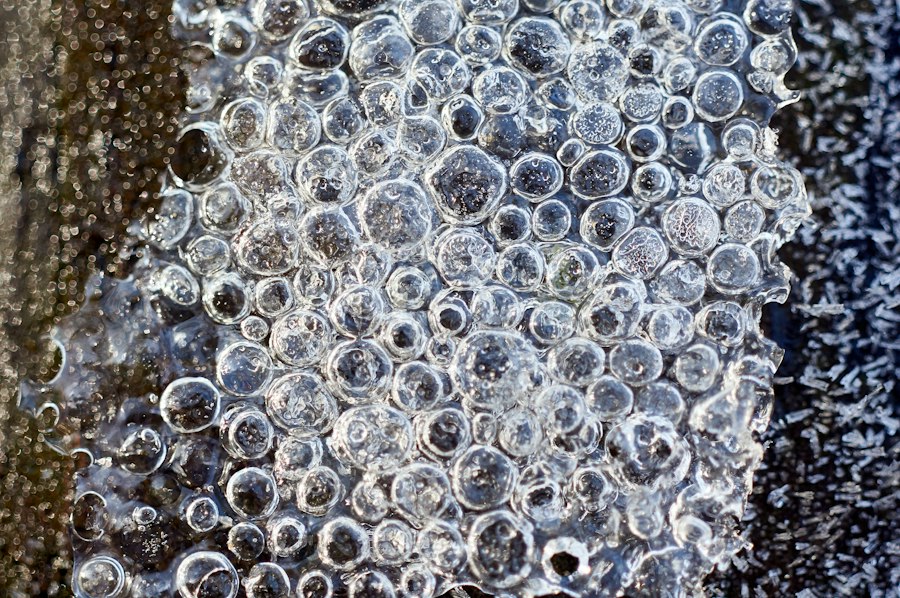
Boiling is the process by which a liquid transforms into a gas (vapor) throughout its entire volume, not just at the surface. This dramatic phase transition occurs at a specific temperature, known as the boiling point, which is dependent on atmospheric pressure. The journey from liquid water to steam is a testament to the power of heat energy to overcome the cohesive forces binding the molecules together.
The Heat is On: Adding Energy to Molecules
When heat is applied to liquid water, the added energy is absorbed by the water molecules, increasing their kinetic energy. This increased motion manifests as more vigorous vibrations and rotations. As more heat is added, the molecules gain enough energy to begin breaking free from the hydrogen bonds that hold them in a liquid state. Initially, this occurs at the surface, leading to evaporation. However, boiling is a more extensive phenomenon.
Bubble Formation: Vaporizing from Within
As the temperature of the water continues to rise, pockets of water vapor, or bubbles, begin to form within the bulk of the liquid. This happens when the vapor pressure of the water equals or exceeds the surrounding atmospheric pressure. Vapor pressure is the pressure exerted by the vapor in equilibrium with its liquid or solid phase. Inside these bubbles, water molecules have gained enough kinetic energy to overcome the intermolecular forces and have transitioned into the gaseous state. These vapor bubbles, being less dense than the surrounding liquid water, rise to the surface and escape into the atmosphere as steam.
The Boiling Point: A Delicate Balance
The boiling point of water at standard atmospheric pressure (1 atmosphere or 101.325 kilopascals) is 100 degrees Celsius (212 degrees Fahrenheit). At this temperature, the kinetic energy of the water molecules is sufficient to overcome the attractive forces of hydrogen bonding and the external pressure pushing down on the liquid. It’s crucial to understand that boiling is an isothermal process. Once boiling begins, the temperature of the water remains constant at the boiling point, even if more heat is added. The added heat energy is not used to increase the kinetic energy of the molecules further but is instead used to convert the liquid into gas – this is known as the latent heat of vaporization.
Pressure’s Influence: A Crucial Modifier
The boiling point of water is not a fixed constant but is directly influenced by external pressure. In environments with lower atmospheric pressure, such as at high altitudes, water boils at a lower temperature. This is because the reduced external pressure requires less vapor pressure from the water to initiate bubble formation. Conversely, in high-pressure environments, such as in a pressure cooker, water boils at a higher temperature. The increased external pressure necessitates greater kinetic energy for the molecules to overcome it and form vapor bubbles, thus raising the boiling point. This principle is vital in cooking, as higher temperatures accelerate the cooking process.
The Descent to Freezing: Solidifying Liquid into Ice
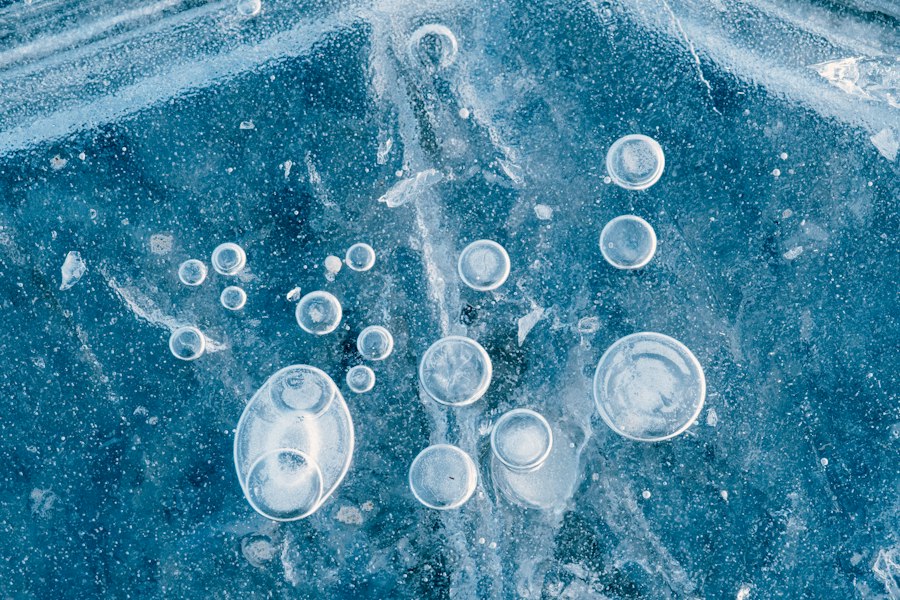
Freezing is the reverse of boiling, a phase transition where a liquid transforms into a solid. For water, this occurs at a specific temperature known as the freezing point, which is also influenced by pressure. Unlike boiling, where molecules gain energy to break free, in freezing, they lose energy and become more ordered.
The Chill Factor: Removing Energy from Molecules
As heat is removed from liquid water, the kinetic energy of its molecules decreases. The molecular motion slows down, and the water molecules begin to arrange themselves into a more ordered structure. The hydrogen bonds, which were once transient attractions allowing for molecular movement, now become more stable and rigid, forming a crystalline lattice.
Crystal Formation: The Birth of Ice
At the freezing point, water molecules begin to assemble into a highly ordered, crystalline structure characteristic of ice. This structure is an open, hexagonal lattice. Interestingly, due to the specific geometry of hydrogen bonding, this lattice structure is less dense than liquid water. This is why ice floats – a remarkable anomaly that has profound implications for aquatic life, preventing bodies of water from freezing solid from the bottom up.
The Freezing Point: A Threshold of Order
The freezing point of water at standard atmospheric pressure is 0 degrees Celsius (32 degrees Fahrenheit). At this temperature, the average kinetic energy of the water molecules is low enough for the attractive intermolecular forces, particularly hydrogen bonding, to dominate. This allows the molecules to lock into their fixed positions within the ice crystal lattice. Similar to boiling, freezing is also an isothermal process. Once freezing begins, the temperature remains constant at the freezing point until all the liquid has solidified. The energy removed during this stage is the latent heat of fusion, which is released as the water molecules transition from a higher energy liquid state to a lower energy solid state.
Supercooling: The Hesitation Before Freezing
In some circumstances, water can be cooled below its freezing point without solidifying. This phenomenon is known as supercooling. It occurs when pure water is cooled slowly and undisturbed, preventing the formation of ice crystals that would normally act as nucleation sites for freezing. In a supercooled state, the water is in a metastable equilibrium; a slight disturbance, such as introducing a tiny ice crystal or shaking the container, can trigger rapid crystallization and the release of latent heat, causing the temperature to jump back to the freezing point.
Thermodynamics and Phase Transitions: The Underlying Principles
The transitions between liquid and solid, and liquid and gas, are governed by fundamental thermodynamic principles. These principles explain the energy changes and equilibrium conditions that dictate when and how these phase changes occur.
Enthalpy and Entropy: The Driving Forces
Two key thermodynamic quantities, enthalpy and entropy, play crucial roles in phase transitions. Enthalpy (H) relates to the total heat content of a system, while entropy (S) relates to the degree of disorder or randomness within a system. Phase transitions are driven by the desire of a system to minimize its Gibbs free energy (G), which is defined by the equation: G = H – TS, where T is the absolute temperature.
From Liquid to Solid: A Decrease in Entropy
When water freezes, it transforms from a disordered liquid state to a highly ordered crystalline solid state. This results in a significant decrease in entropy (ΔS is negative). To achieve a lower Gibbs free energy, the enthalpy change (ΔH) must be negative, meaning that energy is released from the system (latent heat of fusion). At temperatures below the freezing point, the negative enthalpy change dominates, making the solid state more energetically favorable.
From Liquid to Gas: An Increase in Entropy
Conversely, when water boils, it transitions from a relatively ordered liquid to a highly disordered gaseous state. This leads to a substantial increase in entropy (ΔS is positive). For the gas phase to be energetically favorable (lower Gibbs free energy), the enthalpy change (ΔH) must also be positive, meaning that energy must be absorbed by the system (latent heat of vaporization). At temperatures above the boiling point, the positive entropy term (multiplied by the temperature) becomes significant enough to outweigh the enthalpy of vaporization, making the gaseous state more favorable.
Equilibrium and Latent Heat: The Energy of Transformation
At the boiling point and freezing point, the liquid and gaseous phases (for boiling) or liquid and solid phases (for freezing) are in equilibrium. This means that the rate of molecules transitioning from liquid to gas is equal to the rate of molecules transitioning from gas to liquid, and similarly for freezing. The latent heat involved in these transitions represents the energy required to break or form intermolecular bonds without changing the temperature. This energy is absorbed during melting and vaporization, and released during freezing and condensation.
Understanding the processes of water boiling and freezing can be quite fascinating, especially when you delve into the science behind these transformations. For a more in-depth exploration of these concepts, you can check out this informative article that explains the various factors influencing the boiling and freezing points of water. The article provides insights into how temperature and pressure play crucial roles in these physical changes. To learn more about this intriguing subject, visit this link for a detailed explanation.
Everyday Manifestations and Applications
| Property | Boiling Point | Freezing Point | Explanation |
|---|---|---|---|
| Temperature (°C) | 100°C | 0°C | Water boils at 100°C and freezes at 0°C under standard atmospheric pressure. |
| Temperature (°F) | 212°F | 32°F | Equivalent temperatures in Fahrenheit scale for boiling and freezing points. |
| Phase Change | Liquid to Gas (Vaporization) | Liquid to Solid (Freezing) | Boiling changes water from liquid to gas; freezing changes it from liquid to solid. |
| Energy Change | Endothermic (Heat Absorbed) | Exothermic (Heat Released) | Boiling requires heat input; freezing releases heat to surroundings. |
| Pressure Effect | Boiling point increases with pressure | Freezing point slightly affected by pressure | Higher pressure raises boiling point; freezing point is less sensitive to pressure changes. |
| Latent Heat (kJ/kg) | 2260 (Latent heat of vaporization) | 334 (Latent heat of fusion) | Energy required to change phase without temperature change. |
The principles of water boiling and freezing are not confined to scientific laboratories; they are evident in numerous everyday phenomena and have led to significant technological advancements.
Weather and Climate: The Water Cycle in Action
The continuous evaporation and condensation of water, driven by solar energy, forms the basis of the Earth’s water cycle. Boiling (evaporation) at the surface of oceans, lakes, and rivers leads to the formation of water vapor, which rises into the atmosphere. As this vapor cools at higher altitudes, it condenses back into liquid water or ice crystals, forming clouds. Precipitation in the form of rain, snow, or hail is the result of these condensed water droplets or ice crystals becoming heavy enough to fall back to Earth. The freezing of water in polar regions and glaciers also plays a crucial role in regulating global climate.
Culinary Arts: Precise Control of Temperature
Cooking and food preservation heavily rely on understanding boiling and freezing points. Boiling water is used for cooking a wide variety of foods, from pasta and vegetables to meats. The constant temperature of boiling water ensures even cooking. Freezing is a primary method of food preservation. By lowering the temperature below the freezing point, microbial growth and enzymatic activity are significantly slowed down, preventing spoilage and extending shelf life. The process of making ice cream, for example, involves carefully controlling the freezing process to achieve a desirable texture.
Engineering and Industry: From Refrigeration to Steam Power
The principles of phase transitions are fundamental to many industrial processes. Refrigeration systems, for instance, utilize the evaporation and condensation of refrigerants to absorb heat from a cool environment and release it into a warmer one. Steam engines and turbines, which were once the backbone of industrial revolution, harness the energy released when steam condenses back into water or the expansive power of steam itself. Understanding the boiling and freezing points of various substances is also critical in chemical engineering for separation and purification processes.
Biological Systems: The Importance of Water’s Properties
Water’s unique properties, stemming from its molecular structure and the hydrogen bonds it forms, are essential for life. The relatively high boiling and freezing points of water, compared to other molecules of similar molecular weight, allow life to exist in a wide range of temperatures on Earth. The fact that ice floats due to its lower density insulates aquatic ecosystems, preventing them from freezing solid and allowing marine life to survive. The ability of water to act as a solvent, dissolving many substances, is also crucial for biochemical reactions within living organisms.
Conclusion: A World Shaped by Molecular Dynamics
The seemingly simple phenomena of water boiling and freezing are profound demonstrations of the interplay between molecular forces, kinetic energy, and thermodynamics. These transformations are not isolated events but are integral to the functioning of our planet, from the grand cycles of weather and climate to the intricate processes of life itself. By understanding the science behind these temperature changes, we gain a deeper appreciation for the fundamental laws that govern matter and the remarkable adaptability of the natural world. The constant dance of water molecules, responding to the subtle cues of heat and pressure, shapes our environment and underpins the very existence of life as we know it.
Water Boiled While Ice Formed. Could a Lander Sink Into It?
FAQs
What is the boiling point of water?
The boiling point of water is 100 degrees Celsius (212 degrees Fahrenheit) at sea level. At higher altitudes, the boiling point is lower due to decreased atmospheric pressure.
Why does water boil?
Water boils when its vapor pressure equals the atmospheric pressure. As the temperature of water increases, the molecules gain enough energy to break free from the liquid phase and turn into vapor.
What is the freezing point of water?
The freezing point of water is 0 degrees Celsius (32 degrees Fahrenheit). When water reaches this temperature, the molecules slow down and form a crystalline structure, transitioning from a liquid to a solid state.
Can water freeze and boil at the same time?
No, water cannot freeze and boil at the same time. Freezing occurs at 0 degrees Celsius, while boiling happens at 100 degrees Celsius. These two processes are mutually exclusive and require different temperature conditions.
How does altitude affect the boiling and freezing points of water?
At higher altitudes, the atmospheric pressure is lower, causing water to boil at temperatures lower than 100 degrees Celsius. Conversely, the freezing point of water remains relatively constant regardless of altitude.