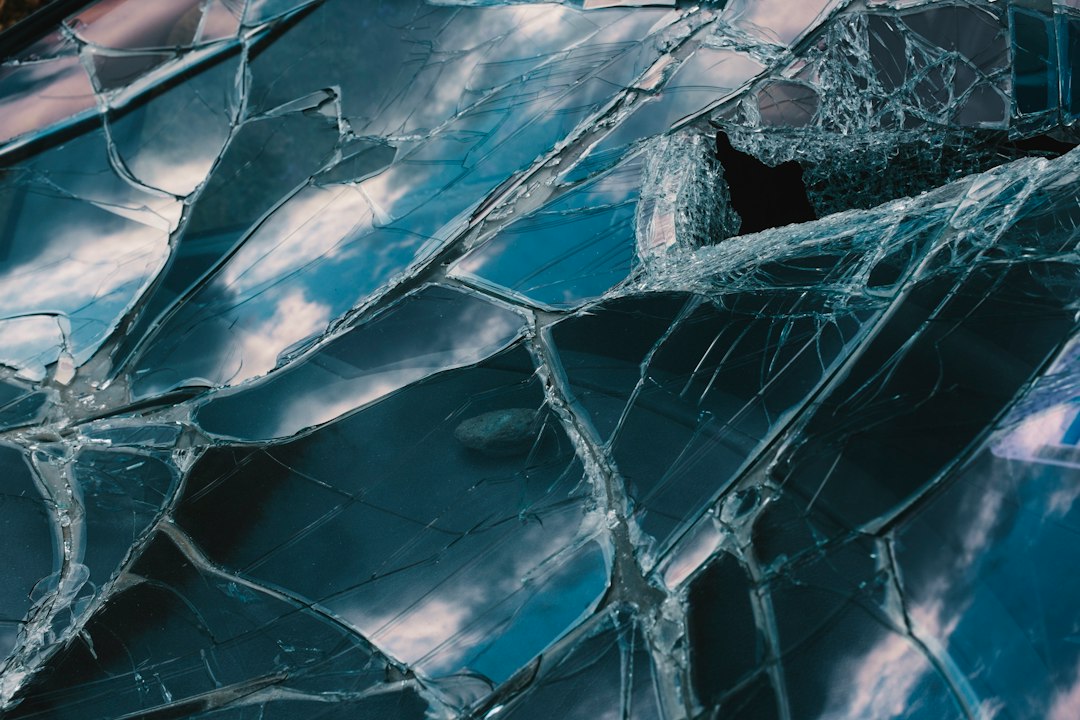
The Whisper of Shattering: Your Perspective on a Frozen Moment of Impact
You’ve seen it a thousand times, probably in movies or maybe even in real life – a car window exploding inward. It’s a sudden, violent event, a blur of motion and sound that signifies danger, escape, or sometimes, just a careless accident. But what if you could press pause on that chaos, freeze that split second, and truly see what happens? What if you could witness the delicate ballet of destruction, the breathtaking artistry of glass surrendering to force, all played out in agonizingly beautiful slow motion? That’s precisely what we’re about to explore, immersing ourselves in the visceral, almost hypnotic experience of a shattered car window’s impact, captured and replayed for your absolute fascination.
In exploring the fascinating dynamics of shattered car windows in slow motion, you might find the article on Freaky Science particularly intriguing. It delves into the science behind the shattering process and the various factors that influence how glass breaks. For a deeper understanding, you can read the full article here: Freaky Science Article.
The Anatomy of a Break: Forces and Fractures
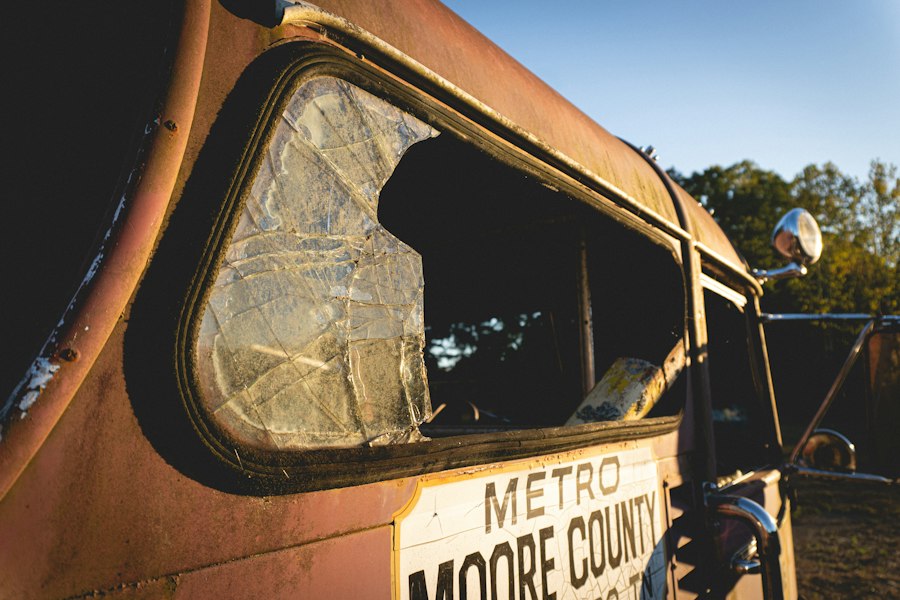
Imagine you are the car. You are the silent observer of your own demise, or at least, a piece of you. The initial contact is a shock, a sharp, piercing sensation that reverberates through your metallic frame. Before the audible crack, before the visual explosion, there’s the infinitesimal moment of pressure transfer. The object – be it a rock, a fist, a tool – meets the surface. It’s not just a collision; it’s an interrogation of the material’s integrity. The tempered glass of your window, designed for safety, has a specific molecular structure. It’s stressed, heated, and then rapidly cooled, creating internal tension. This tension is its strength, but also its ultimate vulnerability.
The First Contact: A Microscopic Event
As the impacting object makes contact, it breaches the outer surface of the glass. At this scale, it’s a tiny point of intense pressure. Think of a single droplet of water hitting a perfectly still pond. The surface tension breaks, and ripples begin to form. In the glass, it’s far more dramatic. The molecules at the point of impact are compressed, forced closer together than they can bear. This localized deformation is the genesis of the break. You, as the car, feel this as a sharp sting, a violation of your smooth, transparent skin.
The Propagation of Stress: A Network of Cracks
From that initial point, stress waves begin to radiate outwards. These aren’t just physical vibrations; they are lines of weakness being etched into the glass. Imagine a spiderweb, intricately woven. Now, imagine a single thread being tugged. The tension spreads, and other threads begin to vibrate. In the car window, these stress waves manifest as microscopic fractures, invisible to the naked eye at first. They spiderweb out from the impact zone, seeking the path of least resistance, guided by the inherent tensions within the glass itself.
The Cascade of Failure: From Micro to Macro
This is where the magic, or perhaps the terror, of slow motion truly begins. The microscopic fractures, invisible to you in real-time, start to connect. They don’t just run in straight lines; they fork, they branch, they intersect. It’s a chaotic, yet strangely ordered, process. The glass is no longer a solid, monolithic barrier; it’s a network of interconnected shards, each under immense strain. As more and more of these micro-fractures link up, the larger structure begins to weaken catastrophically. The initial impact point becomes the epicenter of a growing chaos.
The Symphony of Shattering: Sound and Vision Intertwined

The moment the window breaks is often accompanied by a sharp, percussive sound. But in slow motion, this sound is no longer a single, jarring note. It becomes a symphony of delicate pops, crackles, and tinkling whispers, each representing the fracturing of countless tiny glass fragments. Visually, the change is equally profound. What was once a clear, uninterrupted pane transforms into a dazzling, yet terrifying, display of light and movement.
The Sonic Landscape: A Chorus of Tiny Breaks
In real-time, the sound of a breaking car window is abrupt. It’s a sharp crack, often masked by other noises. Slow it down, and you hear the individual events that contribute to that single sound. You can discern the high-pitched pings as microscopic fissures appear, the sharper clicks as larger shards begin to detach, and the delicate tinkling as smaller fragments are propelled outwards. It’s a cascade of acoustic events, a testament to the rapid fragmentation of the material. Each tiny sound is a micro-explosion, a release of stored energy. You, the car, are vibrating with this sonic energy, a deep resonance within your chassis.
The Visual Ballet: A Dance of Light and Shards
The visual spectacle is, perhaps, the most captivating aspect. As the glass succumbs, it doesn’t simply fall away. Instead, it implodes, or explodes outwards, depending on the forces at play. In slow motion, you witness the creation of a complex three-dimensional sculpture of glass. Shards, no longer constrained by the integrity of the pane, are flung in all directions. They catch the light, reflecting it in a dazzling array of glints and sparkles. The air fills with tiny, airborne diamonds, each a testament to the violent transformation. You see the intricate patterns of the fracture lines, resembling frozen lightning bolts or delicate frost formations. The sunlight, or streetlights, refract and reflect off each individual piece, creating a mesmerizing, almost ethereal, display.
The Implosion vs. Explosion: Directionality Matters
The direction of the shattering is crucial to the visual narrative. If the force comes from the outside, you see the glass push inwards, creating a concave pattern of fractures before exploding into the interior of the car. If the force is from within, the glass will typically shatter outwards, showering the outside world. This distinction is not just about the direction of destruction; it’s about the very nature of the impact and its intended or unintended consequences. You, the car, might be experiencing the force pushing into your interior, or you might be shedding your glassy armor onto the world outside.
The Physics of Fragmentation: Energy and Momentum Unleashed
Understanding the physics behind a shattering car window in slow motion reveals a fascinating interplay of forces, energy transfer, and momentum. It’s not just about brute force; it’s about how that force is applied and how the material responds. The transformation from a solid pane to a cloud of fragments is a dramatic demonstration of energy conversion.
Energy Transfer: From Kinetic to Potential and Back
The initial kinetic energy of the impacting object is transferred to the glass. This energy causes deformation and, critically, creates internal stress within the material, storing it as potential energy. Once the stress exceeds the glass’s tensile strength, this potential energy is rapidly released, converting back into kinetic energy as the fragments are propelled outwards. This conversion is what gives the shards their velocity and makes them so dangerous. You feel this energy transfer as a jolt, then as a series of violent releases, each fragment carrying its own small portion of the initial impact’s fury.
Momentum Conservation: The Dance of the Shards
As the glass breaks, the principle of conservation of momentum comes into play. The total momentum of the system (the impacting object and the glass fragments) remains constant. This means that as the fragments are propelled outwards, they carry momentum that was originally held by the larger, intact pane. The direction and speed of each fragment are influenced by the distribution of mass and the forces acting upon it during the fracture process. You observe this as a coordinated, yet seemingly random, dispersal of glass, each piece following its own trajectory, yet all originating from a single point of origin.
The Role of Impact Velocity and Object Properties
The velocity of the impacting object and its physical properties – its mass, hardness, and shape – significantly influence the shattering pattern. A fast-moving, sharp object will create a more concentrated impact and a more violent shattering event. A slower, blunter object might cause a more diffused break or even just a large crack without complete fragmentation. The angle of impact also plays a critical role, dictating how the stress waves propagate and where the initial fractures are most likely to occur. You, the car, feel the difference between a sharp rap and a heavy thud, and the resulting fragmentation reflects that subtle, yet significant, distinction.
In a fascinating exploration of the physics behind everyday phenomena, a related article discusses the intricate details of how materials behave under stress, including the dramatic effects seen in slow-motion footage of a shattered car window. This captivating content can be found at Freaky Science, where readers can delve deeper into the science that governs such striking visual occurrences.
The Emotional Resonance: Fear, Relief, and Observation
| Metric | Value | Unit | Description |
|---|---|---|---|
| Frame Rate | 240 | fps | Frames per second used to capture the slow motion footage |
| Playback Speed | 1/8 | Normal Speed | Speed reduction factor for slow motion effect |
| Shatter Duration | 0.5 | seconds | Time taken for the window to completely shatter in slow motion |
| Glass Fragment Size | 0.5 – 3 | cm | Range of sizes of glass shards produced |
| Impact Force | 150 | Newtons | Approximate force applied to shatter the window |
| Camera Resolution | 1920 x 1080 | pixels | Resolution of the slow motion footage |
| Glass Type | Laminated | N/A | Type of car window glass used in the footage |
Witnessing a car window shatter in slow motion, even if it’s not your own car or a real-life danger, can evoke a range of emotions. There’s an inherent fascination with destruction, a morbid curiosity that draws us in. But there’s also the underlying understanding of fragility and the potential for harm.
The Fascination with Destruction: A Primal Instinct
Humans are often drawn to the dramatic and the destructive. There’s a primal instinct that finds the raw power of such an event captivating. In slow motion, this fascination is amplified. We can observe the intricate details of the breakdown, the beauty in the chaos, without the immediate threat or consequence. It allows us to appreciate the physics and the visual spectacle in a detached yet engaged manner. You, the car, might be the subject of this fascination, your vulnerability on display for all to see.
The Underlying Threat: A Reminder of Fragility
Despite the aesthetic appeal, the shattering of glass is a stark reminder of fragility. It highlights how easily something we rely on for safety and security can be compromised. The sharp edges of the fragments, the potential for injury – these are all implicit in the visual. Even in slow motion, the inherent danger is present, lending a sense of unease to the captivating display. You, the car, carry the weight of this fragility, your purpose disrupted by the sudden vulnerability.
The Moment of Transition: From Whole to Fragmented
Perhaps the most profound emotional aspect is the witnessing of a transition. You see something whole and intact transform into something broken and dispersed. This resonates with broader themes of loss, change, and the ephemeral nature of things. The car window, in its shattered state, becomes a metaphor for other things in life that can break, change, or be lost. You, the car, become a silent testament to this universal truth, your once-pristine window a symbol of what was and what now is.
The Art of the Freeze-Frame: Capturing the Implausible
The ability to capture such a fleeting, violent event in exquisite slow motion is a testament to modern technology and the human desire to understand and appreciate the world around us in unprecedented detail. These captured moments offer us a unique window, not just into the physics of a breaking object, but into the very nature of motion and transformation.
The Technology of Slowing Time: High-Speed Cameras
The magic behind these stunning visuals lies in high-speed cameras. These sophisticated devices can capture thousands of frames per second, far exceeding the capabilities of standard cameras. By recording at such an incredibly high frame rate, these cameras allow us to deconstruct moments that are too fast for the human eye to perceive. When these frames are played back at a normal speed, the illusion of slowed time is created, revealing the intricate details of the shattering process. You, the car, are immortalized in these captured moments, your destruction meticulously documented.
Unveiling Hidden Dynamics: Insights for Science and Art
These slow-motion captures are not just visually arresting; they are invaluable for scientific understanding. Engineers can analyze the exact mechanics of material failure, improving the design of safety glass and other fragile materials. Accident investigators can reconstruct events with greater accuracy. Beyond science, these images have found their way into art and design, highlighting the unexpected beauty that can be found in even the most destructive of phenomena. You, the car, become a subject of scientific inquiry and artistic appreciation, your broken window a source of valuable data and striking imagery.
The Enduring Allure of the Shattered Moment
The allure of seeing a car window shatter in slow motion lies in its ability to transform the ordinary into the extraordinary. It’s a moment of pure, unadulterated physics, played out in a way that is both terrifying and beautiful. It allows us to appreciate the forces that shape our world, the fragility of the objects we interact with, and the incredible power of technology to reveal the hidden wonders of even the most violent of events. You, the car, and your shattered window, become a symbol of this fascination, a frozen instant of impact that continues to captivate and inform.

Your Car Window Can Keep You In—Even When You Need Out
FAQs
1. How does a car window shatter in slow motion?
In slow motion, a car window shatters due to the impact of an object hitting it with force, causing the glass to break into small pieces and create a dramatic visual effect.
2. What are the common causes of a car window shattering?
Common causes of a car window shattering include accidents, break-ins, extreme temperature changes, and manufacturing defects in the glass.
3. Can slow motion footage of a shattered car window be used for analysis?
Yes, slow motion footage of a shattered car window can be used for analysis to study the behavior of the glass during impact, the direction of force, and the patterns of fracture that occur.
4. How does slow motion technology enhance the viewing experience of a shattered car window?
Slow motion technology allows viewers to see the intricate details of how a car window shatters, including the moment of impact, the propagation of cracks, and the dispersion of glass fragments in a visually captivating way.
5. Are there safety precautions to consider when filming a shattered car window in slow motion?
When filming a shattered car window in slow motion, it is important to wear protective gear such as safety goggles and gloves to prevent injuries from flying glass fragments. Additionally, ensure a safe distance from the impact area to avoid any potential hazards.