You’re in a terrifying situation. The air is thick with smoke, or perhaps you’ve just been involved in a collision and the doors are jammed. Panic is a natural instinct, but in moments like these, clear thinking and the ability to act decisively are paramount. One of the most immediate challenges you might face is escaping a vehicle, and a common barrier is a seemingly impenetrable car window. So, you ask yourself, how hard is it really to break a car window in an emergency? The answer, like many things in life, is not a simple yes or no. It depends on several factors, from the tools at your disposal to the type of glass you’re dealing with.
Understanding Your Glass Obstacle: The Varieties of Automotive Glass
Before you even consider how to break a car window, it’s crucial to understand what you’re up against. Not all car windows are created equal. The type of glass used in your vehicle dictates its strength and how it will shatter, which significantly impacts the ease of breaking it. Most modern vehicles utilize two primary types of glass: tempered glass and laminated glass. Recognizing the difference can be a life-saver.
Tempered Glass: The Shattering Shield
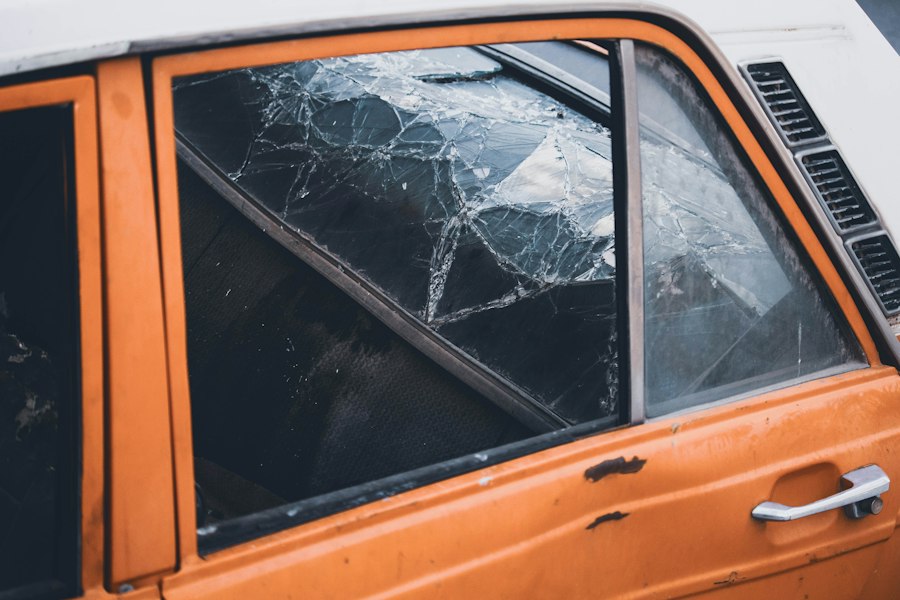
Tempered glass is the most common type of glass found in side and rear windows of cars. It’s also frequently used in sunroofs and sometimes even the rear windshield. Its defining characteristic is its increased strength compared to regular glass, achieved through a process of rapid heating and cooling. This process creates internal stresses that make it much more resistant to breakage from everyday impacts. However, when tempered glass does break, it does so in a unique and often advantageous way in an emergency. Instead of sharp, jagged shards, it disintegrates into thousands of small, relatively dull, granular pieces. This is a safety feature designed to minimize the risk of serious cuts to occupants.
The manufacturing process for tempered glass involves heating it to a high temperature (around 620°C or 1150°F) and then rapidly cooling the outer surfaces with air jets. This rapid cooling causes the outer layers to contract and solidify first, while the interior remains hot and fluid. As the interior cools and contracts, it pulls on the already solidified outer layers, creating compressive stress on the surfaces and tensile stress in the core. This internal tension is what gives tempered glass its strength. It’s about four to five times stronger than annealed (regular) glass.
Laminated Glass: The Layered Guardian
Laminated glass is predominantly used for windshields and, increasingly, for side windows in some higher-end vehicles, especially those focused on acoustics or enhanced safety. Laminated glass consists of two layers of glass with a thin, strong interlayer of polyvinyl butyral (PVB) sandwiched between them. When laminated glass breaks, it doesn’t shatter into small pieces. Instead, it typically cracks and spiderwebs, with the PVB layer holding the broken pieces together. This prevents large fragments from flying into the cabin, significantly reducing the risk of injury from flying glass.
The manufacturing of laminated glass involves bonding the glass sheets and the PVB interlayer under heat and pressure. The PVB interlayer is a thermoplastic material known for its toughness and ability to absorb impact energy. This layered structure makes laminated glass incredibly difficult to break through completely. While you can crack it and create a hole, the PVB layer will resist penetration, making it a formidable barrier. Think of it like a very strong, transparent tape holding everything together. This is why, even after a significant impact, a windshield often remains largely intact, albeit with a network of cracks.
If you’re curious about the physics behind breaking car windows and the force required to do so, you might find the article on Freaky Science insightful. It delves into the materials used in car windows and the techniques that can be employed to shatter them effectively. For more information, check out the article here: Freaky Science.
The Physics of Fracture: What It Takes to Break Glass
Breaking glass isn’t just about brute force; it’s about applying force in the right way and at the right point. The way glass breaks is governed by physics, specifically the principles of stress and fracture mechanics. Understanding these principles can give you a tactical advantage when faced with the need to break a car window.
Stress Concentration: Finding the Weak Spot
Glass is a brittle material, meaning it fractures with little deformation. When you apply force to a piece of glass, the stress isn’t distributed evenly. Instead, it tends to concentrate at points of imperfection, such as microscopic cracks or surface irregularities. This is why a tiny chip on a windshield can quickly spread into a large crack. In an emergency, you want to exploit these stress concentration points.
The most effective way to break glass is to apply a sharp, localized impact. Imagine striking a piece of thin ice with a pointed object versus a flat hand. The pointed object concentrates the force onto a very small area, creating a high stress concentration that exceeds the glass’s tensile strength, leading to fracture. This is the principle behind most glass-breaking tools.
Impact Velocity and Force: More Than Just a Whack
Simply hitting a car window with your fist, while sometimes possible with sheer determination and a lot of luck, is often ineffective and can result in serious injury to yourself. The force you can generate with an unarmed strike is rarely enough to overcome the inherent strength of automotive glass, especially laminated glass. You need to deliver a significant amount of energy in a very short period.
This energy comes from the mass of the object you’re using and the velocity at which it strikes the glass. A heavier object moving faster will deliver more energy. Furthermore, the type of impact matters. A glancing blow will be less effective than a direct, perpendicular strike. The point of impact is also crucial. While you might instinctively aim for the center, striking near an edge or corner can sometimes be more effective as these areas are naturally weaker points due to how the stress distributes.
Tools of the Trade: Improvised and Purpose-Built
When faced with a stuck car window in an emergency, your options for breaking it range from readily available everyday objects to specialized tools designed for this very purpose. The effectiveness of your chosen method will directly correlate with the tool’s ability to apply concentrated force.
Improvised Tools: Making Do with What You Have
In a true emergency, you might not have a dedicated glass breaker. Your immediate surroundings become your toolbox. Think about objects you might find in a car or on your person that have a hard, pointed, or relatively heavy edge.
- Seatbelt Cutter/Window Breaker Combo Tools: Many modern cars come equipped with a small, often red, tool that combines a seatbelt cutter with a spring-loaded or pointed window breaker. These are invaluable. Keep one easily accessible!
- Metal Objects: A car key, especially the metal end of an older style key, can be used. While not ideal, repeated, forceful jabs at a single point on tempered glass can eventually cause it to fracture. A metal tire iron or lug wrench is significantly more effective.
- Heavy Objects: A sturdy metal flashlight, particularly one with a heavy base, can be used as a blunt force instrument. Aim for the corner of tempered glass windows.
- Heel of a Shoe: If you’re wearing sturdy shoes with a hard heel, you can attempt to strike the glass. This requires significant force and is more likely to be effective on tempered glass than laminated glass.
When using improvised tools, focus on applying repeated, sharp impacts to the same small area. For tempered glass, a corner or edge is often the weakest point. For laminated glass, you’ll be trying to create a crack that can then be widened, but penetration will be very difficult.
Purpose-Built Glass Breakers: The Professional Approach
For those who want to be prepared, there are numerous purpose-built emergency tools. These are designed for maximum effectiveness and safety for the user.
- Spring-Loaded Punches: These are small, cylindrical devices with a hardened steel tip. You press the tip firmly against the glass and release a spring mechanism, which drives the tip into the glass with significant force. They are highly effective on tempered glass and relatively easy to use.
- Hammer-Style Breakers: These resemble small hammers with a very hard, pointed head. They require a direct swing to break the glass.
- Breaker/Cutter Combos: As mentioned earlier, these are common and highly recommended for their dual functionality.
The advantage of purpose-built tools is their design. They are engineered to concentrate force precisely where it’s needed. The hardened steel tips are designed to withstand repeated impacts, and the leverage or spring mechanisms amplify the force you can apply.
The Breaking Point: Techniques for Different Glass Types
The method you employ to break a car window will depend heavily on whether you’re dealing with tempered or laminated glass. Trying to break a windshield with the same technique you’d use on a side window is likely to be frustrating and unproductive.
Tackling Tempered Glass: Strategic Strikes
Tempered glass is designed to shatter. Your goal here is to initiate that shattering process.
- Choose Your Location: Aim for a corner of the window, especially the rear corners. These areas are often slightly less reinforced.
- Apply Concentrated Force: Use your chosen tool – a dedicated glass breaker, a metal object with a point, or even the heel of a sturdy shoe.
- Strike Firmly and Repeatedly: Deliver sharp, decisive blows to the same spot. Don’t just tap; hit it with intent. You’ll likely hear a crack, and then the glass should begin to fragment.
- Clear the Way: Once the glass has shattered, carefully clear away the loose pieces. Be mindful of the sharp edges, even though tempered glass breaks into smaller pieces. Use your tool to push remaining shards outward or inward, away from where you need to exit.
It’s important to remember that even tempered glass can be surprisingly resilient. Multiple strong impacts might be necessary. The key is sustained, focused force.
Confronting Laminated Glass: The Persistence Challenge
Laminated glass, primarily used in windshields, is your toughest adversary. The PVB interlayer is designed to prevent penetration.
- Initial Impact: When you strike laminated glass, you will likely see a spiderweb of cracks radiate from the point of impact. The glass layers will break, but the PVB will hold them together.
- Create a Hole: Your primary objective is to create a hole. This will require significant, repeated force. You might need to strike the same area multiple times with a very strong tool.
- Exploit the Cracks: As you create cracks, try to widen them. This is where persistence is key. You’re not aiming for a clean break, but rather to weaken the glass enough to create a gap.
- Beware the PVB: Even if you manage to break through the glass layers, the PVB interlayer will remain. You may need to cut or pry through it, which is extremely difficult without specialized tools. This is why breaking a windshield is rarely a quick or easy emergency maneuver.
For laminated glass, tools like hammer-style breakers or even a fire axe (in extreme, specialized circumstances) would be more effective than a spring-loaded punch. However, even with these, creating a usable opening can be a time-consuming and arduous process. It’s far easier to break tempered side windows than a laminated windshield.
When it comes to understanding the physics behind breaking a car window, many people are surprised by how difficult it can be. A related article explores this topic in depth, shedding light on the factors that influence the strength of car windows and the techniques that might be effective in emergencies. For those interested in learning more about this fascinating subject, you can read the full article on Freaky Science.
Safety First: Protecting Yourself During Extraction
| Material | Thickness (mm) | Impact Resistance (Joules) | Hardness (Mohs Scale) | Shatter Type | Typical Use in Car Window |
|---|---|---|---|---|---|
| Tempered Glass | 4-6 | 15-25 | 5.5-6 | Shatters into small cubes | Side and rear windows |
| Laminated Glass | 6-8 (two layers with interlayer) | 30-50 | 5.5-6 | Cracks but holds together | Front windshield |
| Polycarbonate (used in some specialty windows) | 3-5 | 70-100 | 3-4 | Does not shatter, may scratch | Specialty or aftermarket windows |
Breaking a car window is an act of necessity, but it can also be a dangerous one. The very act of breaking glass creates hazards that you need to manage to ensure your safe egress. Your well-being is paramount, and taking a few precautions can make a significant difference.
The Dangers of Flying Glass
As discussed, the type of glass significantly influences the nature of the hazard. Tempered glass shatters into thousands of small pieces, which can still cause cuts and eye injuries. Laminated glass cracks but the PVB layer holds most fragments together; however, the broken edges of the glass can still be sharp.
- Eye Protection: If you have anything to cover your eyes – sunglasses, glasses, even cupping your hands – do so. This is the most vulnerable area.
- Shielding Yourself: Try to position yourself so that the glass breaks away from you. If you are breaking a side window, the majority of the glass will likely fly outwards.
- Clearing the Opening: Once the window is broken, don’t immediately try to climb through. Use your tool to carefully push out any remaining loose shards of glass from the frame. Create a clear path.
Post-Breakage Actions: Ensuring a Safe Exit
After the window is broken and cleared, your immediate goal is to escape the vehicle.
- Mind the Edges: Even with tempered glass, the broken edges of the frame and any remaining large fragments can be sharp. Be deliberate in your movements as you climb out.
- Assistance if Available: If there are other people in the car, work together to help each other out. One person can break the window while another ensures everyone is positioned safely.
- Beware of the Vehicle’s Condition: If the reason you need to break the window is due to a collision, be aware of the structural integrity of the vehicle. Damaged cars can have unpredictable behaviors.
Ultimately, breaking a car window in an emergency is a task that can range from moderately difficult to extremely challenging, depending on the type of glass and the tools at your disposal. While a determined person with the right tool can break a tempered side window relatively quickly, a laminated windshield presents a far more formidable obstacle. Your preparedness, knowledge of glass types, and understanding of basic physics can be the deciding factors in your ability to overcome this barrier and ensure your safety.

Your Car Window Can Keep You In—Even When You Need Out
FAQs
1. How hard do you need to hit a car window to break it?
To break a car window, you typically need to apply a force of at least 30 pounds per square inch (psi) to tempered glass or 70 psi to laminated glass. This force can be achieved by using a specialized tool or object.
2. Can you break a car window with your bare hands?
Breaking a car window with bare hands is extremely difficult and can result in injury. It is not recommended to attempt breaking a car window with bare hands due to the high force required to shatter the glass.
3. What tools can be used to break a car window in an emergency?
In emergency situations, tools such as a spring-loaded center punch, a glass breaker hammer, or a ceramic glass breaker can be used to break a car window. These tools are designed to apply enough force to shatter the glass easily.
4. Is it legal to break a car window to rescue someone trapped inside?
In most jurisdictions, it is legal to break a car window to rescue someone trapped inside in an emergency situation, such as a child or pet left unattended in a hot car. However, it is important to check local laws and regulations regarding this matter.
5. How should one safely break a car window in an emergency?
To safely break a car window in an emergency, aim for the edges or corners of the window where the glass is weakest. Use a swift and forceful motion with a designated tool to shatter the glass and create an opening for rescue.