## The Silent Guardian: Deconstructing Car Window Break Force
Imagine yourself in a critical situation, a scenario where quick egress from your vehicle isn’t a matter of convenience, but survival. Perhaps it’s a sudden submersion in water, a vehicle fire, or even an accident that jams your doors. In these moments, the seemingly innocuous car window transforms into your most vital escape route. But what makes these panes of glass – or increasingly, advanced polymers – capable of being your lifeline? It all comes down to understanding car window break force. This isn’t just about brute strength; it’s a finely tuned interplay of material science, design, and rigorous safety standards, all working to ensure you can break out when you absolutely need to, but remain protected against the everyday rigors of the road.
Your car’s windows, from the windshield to the side panels and rear, are not merely transparent barriers. They are engineered components designed with a multifaceted purpose: to provide visibility, protect you from the elements and debris, contribute to the structural integrity of the vehicle, and, crucially, offer a means of escape. The ability of these windows to break under specific, controlled forces is a testament to their sophisticated design. Understanding this break force is essential, not only for those who might be designing future automotive safety features but also for you, the driver, to appreciate the technology that stands between you and potential danger.
This article will delve into the fascinating world of car window break force, exploring the materials used, the forces involved, the safety regulations that govern their performance, and the innovative technologies that continue to enhance their effectiveness. You’ll gain a comprehensive understanding of what it takes to break a car window, why it’s designed to be breakable under certain conditions, and the critical role this plays in your overall vehicle safety.
When considering the factors that influence the break force of car windows, it’s essential to explore various aspects of automotive safety and design. A related article that delves into the intricacies of this topic can be found at Freaky Science, where you can learn more about the materials used in car windows and their impact on safety during collisions. Understanding these elements can help in making informed decisions about vehicle safety features.
## The Science Behind the Shatter: Material Properties and Break Mechanics
The very nature of how a car window breaks is intrinsically linked to the materials from which it’s constructed and the way those materials behave under stress. You might picture a simple pane of glass shattering into countless sharp fragments, a chaotic and dangerous event. However, modern automotive glazing is far more nuanced, employing different materials and manufacturing processes for different purposes.
### Laminated Glass: The Windshield’s Strength and Safety
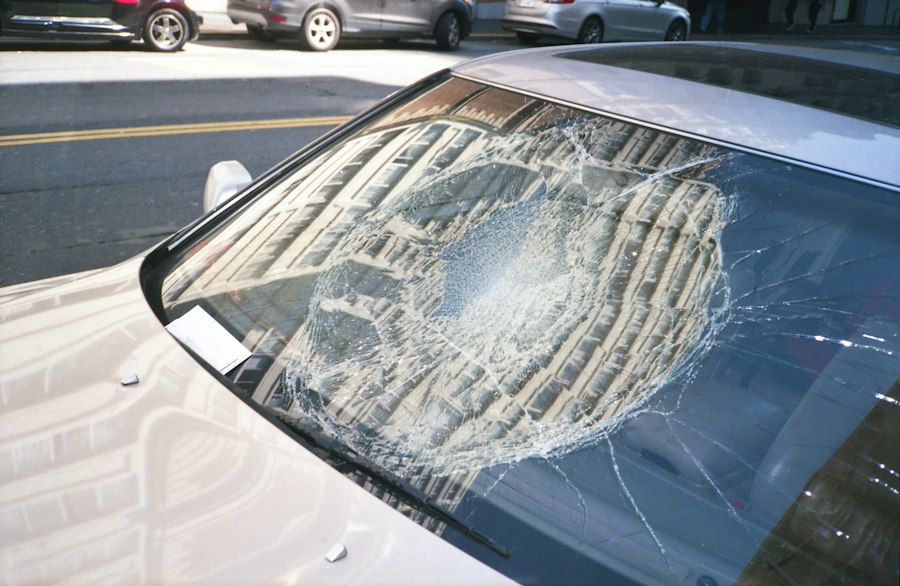
Your car’s windshield is a prime example of advanced material engineering. It’s typically made of laminated glass. This isn’t a single piece of glass but rather two layers of annealed glass bonded together by a polyvinyl butyral (PVB) interlayer. The PVB interlayer is the key to its safety. When the windshield is subjected to impact, the glass layers may crack, but they generally do not shatter and disperse. Instead, they are held together by the PVB, preventing large, sharp shards from entering the cabin.
The break force required to penetrate laminated glass is significantly higher than that of simple annealed glass. This is a deliberate design choice. The windshield is a major structural component of your car, contributing significantly to its rigidity and protecting occupants in a rollover accident. It’s designed to withstand significant impacts from road debris like stones and gravel without compromising its integrity. However, in a severe impact where the vehicle’s structure is compromised, the laminated glass is engineered to break in a manner that minimizes occupant injury. The controlled fracturing, with shards adhering to the PVB, is a crucial safety feature. The force required to actually breach the windshield, meaning to create an opening large enough for escape or ingress, is considerable and often requires specialized tools.
### Tempered Glass: The Side and Rear Window’s Controlled Fragmentation
In contrast to the windshield, your car’s side and rear windows are typically made of tempered glass, also known as toughened glass. The manufacturing process for tempered glass involves heating annealed glass to a high temperature and then rapidly cooling the surfaces. This rapid cooling creates internal stresses within the glass: the outer surfaces are in compression, while the interior is in tension.
The result is a glass that is significantly stronger than annealed glass – about four to five times stronger in terms of resistance to impact and thermal shock. The critical difference in its breaking behavior, however, is how it fractures. When tempered glass breaks, it doesn’t splinter into jagged shards. Instead, due to the stored internal stresses, it shatters into thousands of small, relatively blunt pieces. This type of fragmentation is a deliberate safety feature designed to minimize the risk of serious cuts. While still sharp, these smaller fragments are far less dangerous than the large, knife-like shards that would result from breaking annealed glass.
The break force required to shatter tempered glass is a controlled threshold. It’s designed to be strong enough to resist minor impacts and vandalism but also to break predictably and relatively easily under significant force, especially when the vehicle is in distress and escape is necessary. This is why specialized emergency escape tools often feature a hardened steel point designed to concentrate force on a small area of the tempered glass, initiating the shatter.
### Polycarbonate and Other Advanced Materials: The Future of Automotive Glazing
While glass remains the predominant material for automotive windows, advancements in material science are leading to the exploration and implementation of alternatives, particularly for specialized applications. Polycarbonate, a type of thermoplastic, is increasingly being used, especially in performance vehicles or for applications where extreme impact resistance is paramount.
Polycarbonate is exceptionally strong and virtually unbreakable by conventional means. It’s often used in bullet-resistant applications and in racing cars where extreme impact from debris or collisions is a significant concern. While its resistance to penetration is a major advantage, its inherent strength also means it requires a considerably higher break force to fracture or penetrate compared to tempered or even laminated glass. This poses a challenge for emergency escape scenarios. However, manufacturers are developing specialized tools and techniques to address this, often focusing on methods that can cut or abrade the polycarbonate rather than shatter it. The use of advanced materials like polycarbonate underscores the evolving landscape of automotive glazing, where the balance between security, weight, and emergency egress is continuously being refined.
## Quantifying the Impact: Understanding the Forces at Play
When we talk about car window break force, we’re not just referring to a qualitative assessment of “hard to break” or “easy to break.” There are quantifiable forces involved, measured in units like pounds per square inch (psi) or Newtons. These forces are influenced by a variety of factors, from the material properties we’ve already discussed to the design of the window itself and the nature of the impact.
### Impact Force and Energy: The Dynamics of Breaking
The force required to break a car window is a function of the energy applied to it and how that energy is distributed. An impact involves the transfer of kinetic energy. When a solid object strikes a window, its kinetic energy is converted into various forms of energy, including the energy required to deform and fracture the material.
A sharp, concentrated impact, such as from a pointed tool, is far more effective at initiating a break than a blunt force applied over a larger area. This is because the concentrated force creates a stress concentration at a single point, exceeding the material’s tensile strength and initiating a crack. The speed of the impact also plays a crucial role. A faster impact delivers more energy in a shorter amount of time, making it more likely to cause catastrophic failure.
The break force is not a single, static number. It’s a dynamic value that depends on the rate of loading, the temperature of the material, and the presence of any existing micro-fractures. For example, glass becomes more brittle and easier to break at lower temperatures. Understanding these dynamics is critical for designing effective emergency escape tools and for predicting how windows will behave under extreme stress.
### Stress Concentration: The Weakest Link Principle
One of the most fundamental principles in understanding how materials break is the concept of stress concentration. Even the strongest materials have microscopic imperfections – tiny flaws, variations in density, or surface irregularities. When force is applied to a material, the stress is not evenly distributed across its entire volume. Instead, it tends to concentrate around these imperfections, creating localized areas of much higher stress.
In the context of car windows, a sharp edge or a small point of impact can create a significant stress concentration. This localized stress can exceed the material’s breaking point, initiating a fracture that then propagates outwards. This is precisely why emergency escape tools are designed with a small, pointed tip. The tool focuses the applied force onto a very small area, creating an intense stress concentration that readily overcomes the material’s inherent strength, leading to a rapid break. Conversely, a broad, dull object might apply significant overall force, but without a concentrated stress point, it might deform the material without causing it to break.
### Area of Impact and Applied Force: The Engineering of Escape
The relationship between the area over which force is applied and the magnitude of that force is key to understanding break mechanics. Pressure is defined as force per unit area (P = F/A). A smaller area allows for a higher pressure to be generated with the same applied force. This is the principle behind many cutting and piercing tools.
For car windows, particularly tempered glass in side and rear applications, the force required to initiate a shatter is relatively low when applied to a small area. This is by design, ensuring that in an emergency, a person with limited strength can still break the window. Specialized escape tools are engineered to deliver this concentrated force. They often feature a hardened steel point, sometimes with a spring-loaded mechanism, designed to create a very small contact area. When pressed against the window, even with moderate pressure, the tool generates extremely high localized pressure, exceeding the breaking strength of the tempered glass and causing it to shatter.
For laminated glass, like windshields, the force required to penetrate is considerably higher due to the PVB interlayer. While the glass layers can crack, the interlayer holds them together. To create an escape opening through a windshield, one would need to apply significant, sustained force or use tools capable of cutting through both the glass and the PVB. This higher resistance is a deliberate safety feature for everyday driving, but it highlights the importance of understanding which type of glass you are dealing with in an emergency.
## Safety Standards and Regulatory Frameworks: Ensuring Your Protection
The ability to break a car window in an emergency is not an accident of design; it is a carefully regulated aspect of automotive safety. Various international and national standards bodies set stringent requirements for vehicle glazing, ensuring that windows perform their intended functions of visibility, protection, and crucially, emergency egress.
### Global Regulations for Automotive Glazing
Automated glazing is subject to a complex web of regulations that vary by region but generally aim to ensure safety and performance. In the United States, the Department of Transportation (DOT) sets Federal Motor Vehicle Safety Standards (FMVSS), with FMVSS 205 specifically addressing glazing materials. This standard mandates performance requirements for visibility, impact resistance, and the manner in which glazing breaks. It categorizes glazing into types, such as Type I (laminated) and Type II (tempered), and specifies performance criteria for each.
In Europe, the ECE R43 regulation is a key standard governing safety glazing for vehicles. This regulation outlines requirements for impact tests, abrasion resistance, and optical properties. It specifies how glass should shatter, aiming for fragmentation that minimizes injury. Similarly, countries like Japan, Australia, and many others have their own national standards that are often harmonized with international norms to ensure consistency in vehicle manufacturing and safety worldwide. These regulations are continuously updated as new materials and technologies emerge, always prioritizing occupant safety.
### Testing Procedures for Breakability and Impact Resistance
To ensure compliance with safety standards, automotive glazing undergoes rigorous testing. These tests are designed to simulate real-world conditions and extreme scenarios. For tempered glass, tests often involve dropping a pointed steel ball from a specified height onto the glass to determine the force required to initiate a shatter. This simulates the impact of a sharp object. The fragmentation pattern of the shattered glass is also analyzed to ensure it meets the criteria for small, blunt pieces.
For laminated glass, impact tests typically involve striking the glass with a heavy, spherical object at a specific velocity to assess its ability to resist penetration and hold together. Tests also evaluate the adhesion of the PVB interlayer to the glass. The effectiveness of emergency escape tools is also indirectly assessed through these standards, as the materials used must be breakable under sufficient force, often with the aid of a purpose-designed tool. The consistency of these break forces across different batches and manufacturers is crucial for ensuring predictable safety performance.
### The Role of Standards in Emergency Egress
The standards governing automotive glazing are not solely about preventing breakage; they are also about ensuring that breakage can occur when necessary. The requirement for tempered glass in side and rear windows, for instance, is directly linked to facilitating emergency egress. The controlled fragmentation ensures that a person attempting to escape through a broken window is not subjected to life-threatening cuts from large shards.
Furthermore, the design and testing of specialized emergency escape tools are often guided by the understanding of these regulatory frameworks. Manufacturers of these tools rely on knowledge of the typical break force thresholds for different types of automotive glazing to design products that are effective yet safe to use. The existence of these standards provides a baseline for ensuring that a vehicle’s windows can serve as a viable escape route in dire circumstances, contributing to a layered approach to vehicle safety.
When considering the factors that influence car window break force, it’s essential to understand the materials and technologies used in modern automotive glass. A related article that delves deeper into the science behind car windows and their durability can be found at Freaky Science. This resource provides insights into how advancements in glass manufacturing have improved safety and resistance to breakage, making it a valuable read for anyone interested in automotive engineering.
## Innovative Solutions and Future Trends in Window Technology
| Car Window Type | Material | Average Break Force (Newtons) | Break Method | Notes |
|---|---|---|---|---|
| Tempered Side Window | Tempered Glass | 1500 – 2500 | Impact | Shatters into small pieces upon break |
| Laminated Windshield | Laminated Glass (Two layers with PVB) | 3000 – 5000 | Impact | Does not shatter, holds together due to interlayer |
| Tempered Rear Window | Tempered Glass | 1500 – 2500 | Impact | Similar to side windows in break characteristics |
| Aftermarket Reinforced Window | Tempered Glass with Reinforcement | 2500 – 3500 | Impact | Higher break force due to reinforcement |
The world of automotive glazing is not static. Engineers and material scientists are constantly innovating to enhance both the protective capabilities and the emergency escape potential of car windows. As vehicles become more sophisticated, so too does the technology embedded within their glass and transparent surfaces.
### Self-Rescuing Glazing and Smart Materials
The concept of “self-rescuing glazing” is an exciting area of development. This involves incorporating technologies within the window that can be activated in an emergency to facilitate escape. One approach involves embedding micro-actuators or pre-stressed elements that, when triggered, can initiate a controlled fracture or create an opening. For instance, a system could be designed to respond to an impact or a signal from the vehicle’s safety systems, causing a localized weakening of the glass structure.
Another frontier is the development of “smart materials” for automotive glazing. This could include electrochromic glass that can change its tint on demand, or materials that can dynamically alter their strength or fracture properties. While these technologies are still largely in the research and development phase, they hold the promise of windows that can adapt to various situations, offering enhanced privacy, improved thermal management, and potentially, more sophisticated emergency egress capabilities in the future. The idea is to move beyond passive safety features to active ones that can be controlled when needed.
### Advanced Breakage Tools and Techniques
As mentioned, the development of effective emergency escape tools is closely tied to understanding break force. While traditional tools rely on a simple hardened point, newer designs are exploring more efficient and less physically demanding methods. This includes tools that utilize leverage, hydraulic pressure, or even focused vibration to induce a fracture.
Furthermore, research is ongoing into materials that are inherently easier to break in controlled emergency situations without compromising their everyday durability. This could involve novel composite materials or advanced glass formulations that respond predictably to specific types of stress. The goal is to create a window that is robust enough to withstand everyday impacts but can be reliably breached by an emergency escape tool or even by a person under extreme duress. The focus is on making the escape process as accessible and as safe as possible for a wider range of individuals.
### The Evolving Role of Glazing in Vehicle Design
Beyond their traditional functions, car windows are increasingly being integrated into the overall design and functionality of vehicles. Panoramic roofs, for instance, are becoming more common, introducing larger areas of glazing that require sophisticated engineering for both strength and safety. The trend towards autonomous vehicles also presents new possibilities, as the need for traditional driver-centric visibility might evolve, potentially leading to the use of larger, more integrated transparent surfaces that could double as displays or sensors.
The interplay between break force, material properties, and safety standards will continue to be a critical consideration as these trends unfold. Ensuring that these advanced glazing solutions can still be effectively breached in an emergency will remain a paramount concern for automotive safety engineers. The future of car windows lies in a delicate balance of advanced technology, robust performance, and the unwavering commitment to occupant safety, ensuring that the silent guardian remains a reliable protector and a dependable escape route.

Your Car Window Can Keep You In—Even When You Need Out
FAQs
What is car window break force?
Car window break force refers to the amount of force required to break a car window, typically measured in pounds or newtons.
Why is it important to know the break force of car windows?
Understanding the break force of car windows is crucial for emergency situations such as accidents or when someone is trapped inside a vehicle and needs to escape quickly.
How can the break force of car windows be tested?
The break force of car windows can be tested using specialized equipment that applies pressure to the window until it shatters, providing a measure of the force required.
What factors can affect the break force of car windows?
Factors such as the type of glass used, the thickness of the glass, and any treatments or coatings applied to the glass can all impact the break force of car windows.
Are there regulations or standards regarding the break force of car windows?
Yes, there are regulations and standards set by organizations such as the Federal Motor Vehicle Safety Standards (FMVSS) that specify the minimum break force requirements for car windows to ensure safety and compliance.