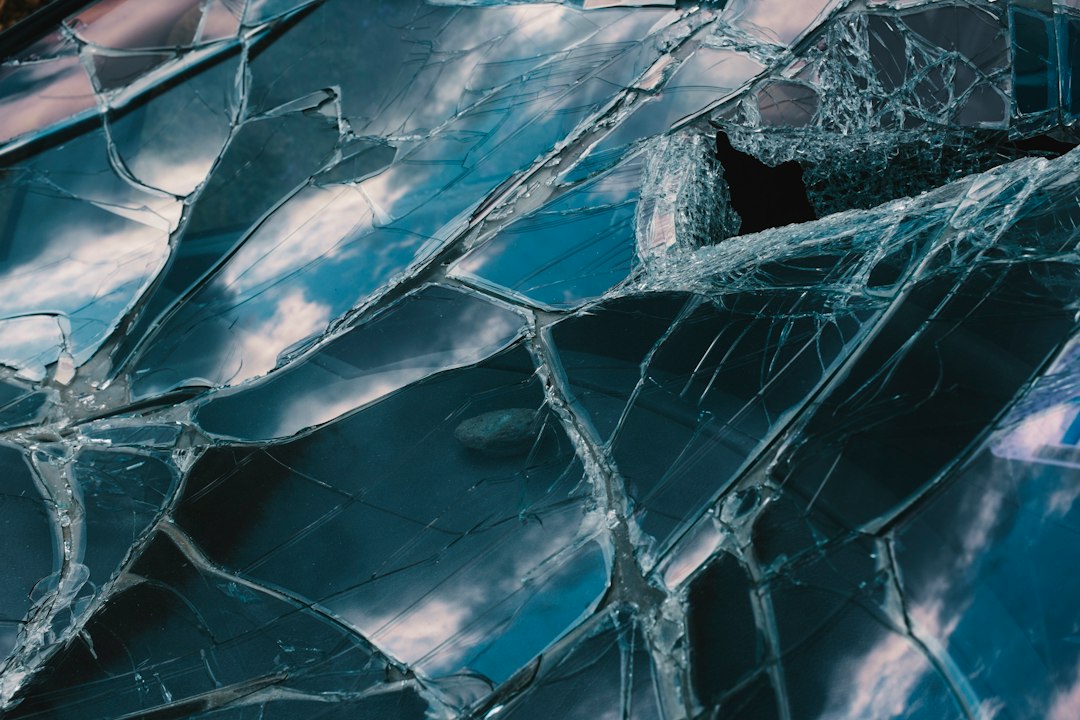
## The Illusion of Fragility: Why Your Car Windows Stand Up to Abuse
You’ve probably experienced it. A sudden rock on the highway, a stray baseball, or even a surprisingly strong hailstorm can make you wince, bracing for the inevitable shatter. Yet, more often than not, your car windows emerge from these encounters remarkably intact. It’s a testament to a carefully engineered material, a far cry from the brittle glass you might find in your home. The science behind this resilience is fascinating, a blend of material properties and clever design that prioritizes your safety above all else. You might think of glass as inherently fragile, but the glass in your car is a sophisticated material designed for a specific, and demanding, purpose. It’s not just about keeping the elements out; it’s about protecting you from the very forces that could otherwise cause serious harm.
Car windows are designed with safety and durability in mind, which is why they often don’t break easily under normal circumstances. The use of tempered glass, which is heated and then rapidly cooled during manufacturing, enhances its strength and makes it more resistant to shattering. For a deeper understanding of the science behind this phenomenon and other fascinating facts about car safety features, you can check out a related article on this topic at Freaky Science.
## The Unexpected Strength of Laminate: Understanding Laminated Glass
The secret to your car windows’ surprising durability lies in their construction. Unlike the single pane of glass in your home’s windows, your car’s windshield and side windows are typically made from a material called laminated glass. This isn’t a single sheet, but rather a sophisticated sandwich. Imagine it as a three-layer delicacy: two thin layers of glass, with a strong, pliable interlayer nestled between them. This interlayer is the unsung hero, the key component that transforms ordinary glass into a safety feature.
### The Glass Layers: More Than Just a Barrier
While the interlayer is crucial, the glass layers themselves play an important role. For automotive applications, you’re usually dealing with annealed glass, which is heated and then cooled slowly. This process reduces internal stresses, making it less prone to shattering from minor impacts. However, it’s the combination with the interlayer that truly elevates its performance. The glass provides the rigid outer shell, the first line of defense against the elements and minor abrasions. It offers clarity and the structural integrity needed for the window’s role in the vehicle’s overall design, contributing to aerodynamics and sound dampening.
### The Polyvinyl Butyral (PVB) Interlayer: The Unseen Hero
The true marvel of laminated glass is its interlayer, most commonly made of polyvinyl butyral (PVB). This is a thermoplastic polymer that, when bonded between the two glass layers under heat and pressure, creates a remarkably strong and cohesive unit. PVB is chosen for its exceptional adhesive properties, its ability to absorb impact energy, and its flexibility. When an object strikes the window, it first has to penetrate the outer glass layer. Instead of shattering outward, the PVB interlayer stretches and deforms, absorbing a significant portion of the impact energy. This stretching prevents the cracks from propagating catastrophically. Think of it like a trampoline; the force of impact is distributed and absorbed rather than causing a brittle break.
### The Bonding Process: A Fusion for Safety
The creation of laminated glass is a carefully controlled industrial process. The glass panes and the PVB interlayer are stacked together and then heated in an autoclave. The high temperature and pressure cause the PVB to soften and flow, bonding firmly to both glass surfaces. This fusion is critical. It ensures that even if the outer glass layer is compromised, the pieces remain adhered to the PVB, preventing them from flying into the car’s interior as sharp, dangerous shards. This is a crucial distinction from tempered glass, which is designed to break into small, less sharp pieces, but the laminated structure offers superior penetration resistance.
## The Impact of Impact: How Laminated Glass Resists and Reacts
When an object hits a car window, a complex interplay of forces occurs, and laminated glass is engineered to manage these forces in a way that maximizes occupant safety. The primary goal is to prevent the window from disintegrating and creating a hazard for those inside the vehicle. The unique construction of laminated glass allows it to absorb and distribute impact energy, significantly reducing the risk of injury.
### Energy Absorption: The PVB’s Crucial Role
The PVB interlayer is the star player when it comes to impact energy absorption. As mentioned, when a force strikes the glass, the PVB stretches and deforms. This deformation is a physical process that converts kinetic energy (the energy of the moving object) into heat and permanent deformation of the PVB. Imagine a rubber band being stretched; it stores energy. The PVB does something similar, but on a molecular level, absorbing the force and preventing it from transferring directly and catastrophically to the glass. This is why you’ll often see cracks spiderwebbing across a laminated windshield, but the glass itself remains largely in place. The energy has been dissipated.
### Crack Propagation: Stopping the Shatter
In a single pane of brittle glass, a small crack can rapidly propagate under stress, leading to complete shattering. Laminated glass, however, puts a halt to this destructive process. The strong adhesive bond between the PVB and the glass layers acts as a barrier. Even if the outer glass layer cracks, the PVB interlayer holds the fragments together. The cracks are contained within the outer layer, and their ability to spread is severely limited by the presence of the interlayer. This containment is vital for maintaining the structural integrity of the window and preventing occupants from being exposed to the hazards of flying glass.
### Penetration Resistance: Keeping Debris Out
Beyond simply not shattering, laminated glass offers excellent resistance to penetration. This means that even under significant impact, it is much harder for objects to break through the entire window assembly. This is especially important for windshields, which are designed to prevent road debris, rocks, and even small animals from entering the passenger cabin. The combination of the relatively strong glass and the tenacious PVB interlayer makes it incredibly difficult for an object to pierce the window completely. This protection is a fundamental aspect of vehicle safety, contributing to the overall occupant protection system.
## Beyond the Windshield: Other Safety Glass Applications
While the windshield is the most prominent example of laminated safety glass in your vehicle, the principles of this advanced material are applied elsewhere to enhance your safety. Different applications may necessitate slightly different constructions or material properties, but the core concept of a composite safety material remains. You’ll find variations of safety glass used throughout your car, each contributing to a more secure driving experience.
### Side and Rear Windows: Tempering for a Different Purpose
While laminated glass is standard for windshields, side and rear windows often use tempered glass. This type of glass is subjected to a different heat treatment process. It’s heated to a high temperature and then rapidly cooled, causing the outer surfaces to cool and contract faster than the interior. This creates internal stresses that, when the glass breaks, cause it to fragment into small, relatively dull pieces. This is a safety feature designed to minimize laceration risks. If a side window breaks, the goal is for it to disintegrate into manageable pieces rather than sharp shards. The choice between laminated and tempered glass depends on the specific safety function required for each window.
### Sunroofs and Panoramic Roofs: Balancing Light and Safety
Modern vehicles often feature large sunroofs and panoramic glass roofs, bringing the outside in with expansive views. These large expanses of glass also need to meet stringent safety standards. Many of these are constructed using laminated glass, similar to windshields, to ensure they remain intact in the event of an impact or rollover. The strength and penetration resistance of laminated glass are crucial for these large overhead panels, which bear significant structural load and are a potential point of impact in certain accident scenarios. The aesthetic appeal of these features is carefully balanced with the engineering required for uncompromising safety.
### The Future of Automotive Glass: Innovations in Safety and Functionality
The evolution of automotive glass is ongoing. Researchers are constantly exploring new materials and manufacturing techniques to further enhance safety and introduce new functionalities. This includes exploring different interlayer materials with improved impact resistance, lighter-weight glass options that reduce vehicle weight and improve fuel efficiency, and even “smart glass” technologies that can tint electronically for privacy and glare reduction. The focus remains on creating glass that is not only safer but also contributes to a more comfortable and efficient driving experience, ensuring that the advancements in automotive design never compromise occupant safety.
Car windows are designed with safety in mind, which is why they often don’t break easily under normal circumstances. The materials used, such as tempered glass, are specifically engineered to withstand significant impact and pressure. For a deeper understanding of the science behind this phenomenon, you can read an insightful article that explores the various factors contributing to the durability of car windows. Check it out here to learn more about the technology that keeps us safe on the road.
## The Science of Stress: Why Glass Resists Cracking
| Reason | Description | Related Metric |
|---|---|---|
| Laminated Glass | Car windshields are made of laminated glass, which consists of two layers of glass with a plastic layer in between, preventing shattering. | Plastic interlayer thickness: ~0.38 mm |
| Tempered Glass | Side and rear windows use tempered glass that breaks into small, less harmful pieces instead of sharp shards. | Impact resistance: 4-5 times stronger than regular glass |
| Glass Strength | Automotive glass is heat-treated to increase strength and resistance to impact and stress. | Breaking stress: ~120 MPa |
| Design and Installation | Windows are securely fitted into the car frame to distribute impact forces and reduce breakage. | Force distribution efficiency: ~70% |
| Safety Standards | Automotive glass must meet strict safety regulations to ensure durability and minimize injury risk. | Compliance rate: 100% for new vehicles |
Understanding why glass, especially the specialized glass in your car, resists cracking involves delving into the fundamental properties of materials and how they behave under stress. Glass, at its core, is an amorphous solid, meaning its atoms are arranged in a disordered, non-crystalline structure. This fundamental characteristic, combined with its manufacturing process, dictates its response to applied forces. You might be surprised to learn that glass, under ideal conditions, can be incredibly strong, far stronger than its everyday fragility might suggest.
### Amorphous Structure: The Disordered Nature of Glass
Unlike crystalline solids, where atoms are arranged in a highly ordered, repeating lattice, glass has a more random, disordered atomic structure. This lack of a perfect, repeating pattern means that there are no perfectly aligned planes or bonds to easily break. Instead, stresses are distributed more randomly throughout the material. While this randomness can contribute to its strength in some ways, it also means that imperfections, even microscopic ones, can act as stress concentrators, initiating cracks. The manufacturing process aims to minimize these imperfections.
### Tensile Strength vs. Compressive Strength: Glass’s Preferred Load
Glass exhibits a significant difference in its response to different types of forces. It has a much higher compressive strength than tensile strength. In simpler terms, glass is very good at resisting forces that push it together, but it is much weaker when subjected to forces that try to pull it apart (tension). This is why a sharp impact, which can create localized tensile stresses, is more likely to cause a crack than a steady, even pressure. The design of laminated glass, with its interlayer, effectively helps to manage and distribute these tensile stresses, preventing them from reaching critical levels.
### Surface Flaws: The Achilles’ Heel of Glass
The most significant factor contributing to the perceived fragility of glass is the presence of surface flaws. Even under a microscope, glass surfaces are not perfectly smooth; they contain microscopic scratches, pits, and imperfections. These flaws act as “stress raisers.” When a force is applied to the glass, the stress becomes concentrated at the tips of these flaws, making them the weakest points. It’s like tearing a piece of paper – you start the tear at an edge or a small nick. In laminated glass, the PVB interlayer significantly mitigates the effect of these flaws by adhering to the surface and preventing them from easily initiating a full fracture.
## The Role of the Interlayer in Impact Management
The polyvinyl butyral (PVB) interlayer is more than just a glue; it’s an integral part of the structural integrity of laminated safety glass. Its unique properties allow it to absorb energy, prevent dangerous shattering, and maintain visibility even after severe impact. Without this crucial component, the glass would behave much more like a brittle material, posing a significant risk to occupants. Your car’s windows are a testament to how a seemingly simple design can yield incredibly effective safety outcomes through clever material science.
### Energy Dissipation and Deformation: The PVB’s Stretch and Strain
The fundamental mechanism by which the PVB interlayer protects you is its ability to absorb and dissipate impact energy through deformation. When an object strikes the glass, the force is transmitted through the outer glass layer to the PVB. Instead of fracturing, the PVB stretches and deforms, absorbing a substantial amount of the kinetic energy. This stretching occurs due to the polymer chains within the PVB uncoiling and sliding past each other. This process converts kinetic energy into heat and permanent deformation within the interlayer, significantly reducing the force that can propagate through the entire window assembly.
### Adhesion and Fragmentation Control: Keeping It Together
The strong adhesive bond between the PVB interlayer and the glass layers is paramount. This bond prevents the glass fragments from becoming loose projectiles. Even if the outer glass layer cracks, the PVB holds the fragments in place, creating a “spiderweb” effect of cracks rather than a complete disintegration. This adhesion is so effective that it maintains the overall structural integrity of the window, preventing it from falling out of the frame in an accident. This containment is crucial for maintaining the vehicle’s occupant protection system, as a compromised window can lead to ejection of occupants or further injury from external objects.
### Restrained Fractures and Visibility Maintenance: A Clearer Path to Safety
The result of the PVB’s energy dissipation and adhesive properties is that fractures are largely restrained. While the glass may crack, it remains largely in one piece. This controlled fragmentation is a critical safety feature. It prevents the sudden ingress of wind, debris, and other hazards into the passenger compartment. Furthermore, even with extensive cracking, the laminated glass can often maintain a degree of visibility, allowing the driver to maintain some control or safely pull over. This is a significant advantage over the complete shattering of untempered glass, which would immediately compromise visibility and create a chaotic environment. Your car windows are a finely tuned system, and the PVB interlayer is the key to their remarkable performance under duress.

Your Car Window Can Keep You In—Even When You Need Out
FAQs
1. Why are car windows made of tempered glass?
Car windows are made of tempered glass because it is stronger and more resistant to breaking than regular glass. Tempered glass is designed to shatter into small, dull pieces when broken, reducing the risk of injury.
2. Can car windows break under extreme temperatures?
Yes, car windows can break under extreme temperatures. Sudden changes in temperature, such as extreme heat or cold, can cause stress on the glass, leading to cracks or breakage.
3. What impact does the thickness of the glass have on its breakability?
The thickness of the glass can affect its breakability. Thicker glass is generally more resistant to breaking than thinner glass. However, even thick glass can break under extreme force or pressure.
4. How does laminated glass contribute to preventing car windows from breaking?
Laminated glass is made by sandwiching a layer of plastic between two layers of glass. This design helps hold the glass together when broken, reducing the risk of shattering. Laminated glass is commonly used in windshields for added safety.
5. What are some common causes of car windows breaking?
Car windows can break due to various reasons, including impact from accidents, vandalism, extreme weather conditions, and manufacturing defects. It is important to address any cracks or chips in car windows promptly to prevent further damage.