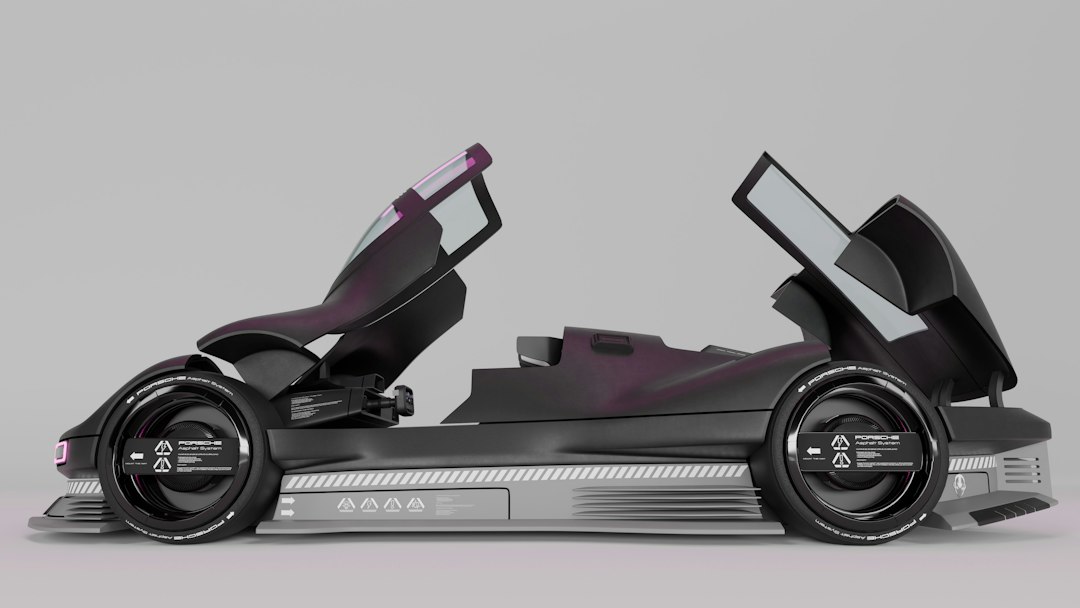
You stand before it, a gleaming silhouette. The lines are aggressive, the stance purposeful, promising a visceral connection to the asphalt. This is the dream car, the one you envisioned. But as you delve deeper, you discover the intricate dance of compromises that brought this machine into existence. Every curve, every component, represents a decision, a balancing act between conflicting desires: the allure of stunning style, the thrill of unadulterated performance, and the pragmatic reality of its cost. You, the discerning observer, are the ultimate arbiter of these trade-offs.
The Symphony of Aesthetics: Sculpting Desire
The first thing that captivates you is its appearance. The designers have strived to craft a visual narrative, a story told through form and proportion. This is where the pursuit of beauty meets the constraints of engineering, and the resulting compromises are often subtle yet significant.
The Aerodynamic Allure Versus the Practical Profile
You might admire the sweeping curves and low-slung profile, designed to slice through the air with minimal resistance. This pursuit of aerodynamic efficiency directly impacts performance, allowing the car to achieve higher speeds with less effort and improved fuel economy. However, this same aerodynamic ambition can lead to practical inconveniences. A very low ride height, while visually striking and beneficial for handling, means you’ll need to be acutely aware of speed bumps, steep driveways, and the occasional curb. The sleek, raked windshield that contributes to that sporty silhouette can also compromise outward visibility, particularly for rearward movements, necessitating more reliance on sophisticated camera systems and sensors. Similarly, aggressive spoilers and diffusers, while adding downforce for better grip at speed, can increase drag at lower speeds, subtly impacting fuel efficiency in everyday driving. The designers have to ask themselves: how much visual drama can we incorporate before it becomes a genuine impediment to the car’s usability? A particularly aggressive front splitter, for instance, might look fantastic in a wind tunnel or on a racetrack, but on your daily commute, it’s a constant hazard, a magnet for damage. This is where the trade-off becomes acutely personal for you. Do you prioritize the aggressive, track-inspired aesthetic, accepting the inherent risks and potential for costly repairs, or do you opt for a more restrained design that offers greater peace of mind in urban environments? The choice, in a way, is a reflection of your own priorities.
Material Choices: The Illusion of Substance and the Burden of Weight
The materials used in a car’s construction are fundamental to both its aesthetics and its performance. You might be drawn to the lustrous gleam of carbon fiber or the brushed sophistication of aluminum accents. These premium materials often contribute to a sense of luxury and advanced engineering, projecting an image of quality and exclusivity. However, their use is rarely purely for show. Carbon fiber, renowned for its incredible strength-to-weight ratio, is a performance enhancer, allowing manufacturers to shed precious kilograms, which in turn improves acceleration, braking, and handling. Aluminum, while not as light as carbon fiber, offers a significant weight saving over traditional steel and is often used for body panels or structural components. The aesthetic appeal is undeniable – the metallic sheen, the intricate weave of carbon fiber – it all speaks to a high-end product. Yet, the cost associated with these materials is substantial. Producing and integrating them into a vehicle requires specialized tooling and highly skilled labor, directly translating into a higher sticker price for you. Furthermore, the repair of carbon fiber components can be significantly more expensive and complex than that of steel. So, when you see those carbon fiber accents or an aluminum hood, you’re not just seeing style; you’re seeing a deliberate choice to enhance performance at a financial premium. The designers face the dilemma of how much of this desirable, yet costly, lightweight material to employ. Do they go all-in for maximum performance, knowing it will push the price beyond the reach of many, or do they strategically incorporate these materials in key areas, balancing weight savings with overall cost? Your perception of value is intrinsically linked to these decisions. You might appreciate the lightness and the associated performance benefits, but you also have to consider whether that premium is worth the added expense and potential repair costs.
Car design is often a complex tradeoff between aesthetics, functionality, safety, and cost, as highlighted in the article found at this link. Designers must balance the desire for sleek, attractive lines with the practical needs of passenger comfort and vehicle performance. Additionally, safety regulations and environmental considerations further complicate the design process, forcing manufacturers to make difficult choices that can impact the overall appeal and marketability of their vehicles. Understanding these tradeoffs is essential for appreciating the intricacies of automotive design.
The Heartbeat of the Machine: Engineering for Excitement

Beyond the visual feast, you feel the rumble of the engine, the promise of power. This is the domain of performance, where engineering prowess is put to the test, and often, where the most significant trade-offs are made.
Engine Power Versus Fuel Economy and Emissions
The engine is the soul of any performance car, and you likely yearn for a powerplant that delivers exhilarating acceleration and a thrilling soundtrack. Manufacturers understand this desire, and they invest heavily in developing engines that produce significant horsepower and torque. However, the relentless pursuit of raw power often comes at a cost to fuel efficiency and environmental impact. A large displacement, naturally aspirated V8 might offer an intoxicating rumble and immediate throttle response, but it will inevitably consume more fuel and produce higher emissions than a smaller, turbocharged four-cylinder engine. Conversely, a highly efficient, turbocharged engine might deliver impressive performance figures, but it might lack the raw, visceral character of its larger, less efficient counterparts. The engineers are constantly navigating this complex equation. They can employ advanced technologies like direct injection, variable valve timing, and cylinder deactivation to squeeze more efficiency out of powerful engines, but these innovations add complexity and cost. You might witness this in the form of a car that offers strong acceleration but demands premium fuel and still doesn’t achieve the mileage figures of more modest vehicles. The manufacturers are also under increasing pressure from regulatory bodies to reduce emissions, which further complicates the performance equation. This means that even for high-performance vehicles, there’s a growing emphasis on hybridization and electrification, which can introduce new trade-offs in terms of weight, complexity, and driving feel. You, as the consumer, are left to weigh your desire for unbridled power against the ever-increasing cost of fuel and the growing societal imperative for environmental responsibility.
Drivetrain Dynamics: All-Wheel Drive, Rear-Wheel Drive, or Front-Wheel Drive?
The way power is delivered to the road, the drivetrain, profoundly influences the car’s driving dynamics and its intended purpose. You might have a preference for the engaging feel of rear-wheel drive, the sure-footed stability of all-wheel drive, or the predictable nature of front-wheel drive. Each configuration presents its own set of advantages and disadvantages, and the choice often reflects a compromise between performance, cost, and intended use. Rear-wheel drive, often favored in sports cars, offers a purer driving experience, allowing for sharper turn-in and the ability to subtly adjust trajectory with the throttle. However, it can be more prone to oversteer, particularly in slippery conditions, and can be more expensive to engineer effectively, especially with advanced suspension systems. Front-wheel drive, commonly found in most mainstream vehicles, is generally more cost-effective to produce and offers predictable handling. However, it can suffer from torque steer under heavy acceleration and is inherently less suited for maximizing power delivery. All-wheel drive systems, while providing exceptional traction and stability, particularly in adverse weather, add significant weight and complexity to the vehicle. This extra weight can negatively impact acceleration and fuel economy, and the added mechanical components increase manufacturing costs. Furthermore, some advanced AWD systems can feel less engaging than their RWD counterparts, with a tendency to understeer when pushed to their limits. The designers must decide which drivetrain best suits the car’s character and target audience. A high-performance sedan might benefit from a sophisticated AWD system for all-weather capability, even if it means a slight compromise in ultimate handling purity compared to a pure RWD setup. Conversely, a lightweight sports car might forgo AWD entirely to prioritize agility and a more direct connection to the road, accepting the trade-off in traction. Your experience behind the wheel will directly reflect these engineering decisions, shaping how the car feels and performs in various situations.
Suspension Tuning: Comfort Versus Cornering Prowess
The suspension system is the unsung hero of a car’s performance, responsible for managing its interaction with the road surface. You likely desire a ride that is both comfortable for everyday commuting and capable of holding its own on a winding country road. This is a classic conflict, and the tuning of the suspension represents a direct trade-off between these two often opposing goals. A soft, compliant suspension will absorb bumps and imperfections, providing a plush and comfortable ride. However, it will also lead to increased body roll in corners, reducing the car’s ability to maintain a flat and composed stance during spirited driving. Conversely, a stiff, performance-oriented suspension will minimize body roll and provide excellent feedback from the road, allowing you to feel every nuance of the tires’ grip. The downside is a firmer, often jarring ride, where every pavement imperfection is transmitted directly into the cabin. Manufacturers employ various strategies to bridge this gap, such as adaptive dampers that can adjust their stiffness in real-time, or multi-link suspension designs that offer greater control over wheel movement. However, these advanced systems come with a significant cost, both in terms of initial purchase price and potential repair expenses. You might find a car that offers a decent compromise, a suspension that is firm enough for spirited driving but not so harsh as to be unbearable on a daily basis. This is the result of careful calibration, a delicate balance struck by engineers to satisfy a broad range of driving expectations. The more extreme the desired performance, the greater the compromise in comfort is likely to be. You must decide how much of your comfort you are willing to sacrifice for the thrill of dynamic capability.
The Financial Equation: Affordability and Value Proposition

Ultimately, every car you encounter is a product of a rigorous financial calculation. The designers and engineers are constantly aware of the target market and the price point at which the vehicle must be sold. This financial imperative shapes every decision, from the smallest bolt to the largest engine component.
Economies of Scale Versus Bespoke Features
When you look at a mass-produced sedan, you’re seeing the power of economies of scale at play. The manufacturer can amortize the cost of development and tooling over millions of units, allowing them to offer a feature-rich vehicle at a relatively affordable price. This means you might get advanced infotainment systems, multiple airbags, and sophisticated safety features without breaking the bank. However, this mass production also means that many of the components are shared across different models, and the overall design might be less exclusive. On the other hand, a limited-production sports car or a luxury supercar will often feature bespoke components, custom-engineered solutions, and hand-finished elements. These unique features contribute to the exclusivity and desirability of the vehicle, but they come at a significant premium. The cost of developing and manufacturing these specialized parts is far higher, and they cannot be spread across a vast customer base. You might see this in the form of unique interior trim materials, specially tuned engine variants, or advanced aerodynamic aids that are only available on that particular model. The question for the manufacturer is how much can they deviate from standard components before the price becomes prohibitive? And for you, the buyer, the question is how much value do you place on that exclusivity and those unique features? Do you prefer the well-equipped, readily available option, or are you willing to pay a premium for something truly special and tailored to your desires?
Material Costs and Manufacturing Processes: The Hidden Price of Luxury
You might be drawn to the tactile sensation of supple leather, the intricate detailing of brushed metal, or the satisfying thud of a well-engineered door closure. These elements of luxury and quality come at a price, and the manufacturing processes required to achieve them are often complex and expensive. Sourcing high-quality leather, for instance, involves selecting premium hides and employing specialized tanning and finishing techniques, which adds significantly to the cost of the interior. The same applies to exotic wood veneers, carbon fiber inlays, or precisely machined aluminum trim. Beyond the raw materials, the manufacturing processes themselves play a crucial role. Hand-stitching leather upholstery, for example, is far more labor-intensive and expensive than automated stitching. The precision required for tightly fitting body panels, the weight and feel of switches and controls, and the sound insulation used to create a serene cabin all contribute to the overall cost of production. Manufacturers have to make strategic decisions about where to invest in these costly elements. They might use genuine leather on the seats and steering wheel, where you’ll feel it most, but opt for synthetic materials on less touched areas to manage costs. Similarly, they might employ advanced sound-deadening materials in key areas for a quieter cabin, while accepting slightly more road noise in less critical zones. You, as the consumer, are indirectly making these choices when you select a particular trim level or option package. You are deciding how much you are willing to pay for those tangible elements of luxury and perceived quality.
The Ecosystem of Choice: Manufacturer Strategy and Consumer Demand
The design trade-offs you observe are not made in a vacuum. They are the result of a complex interplay between the manufacturer’s strategic goals and the demands of the consumer market.
Market Segmentation and Target Audiences
Manufacturers meticulously segment the automotive market, identifying specific groups of consumers with distinct needs and desires. A performance-oriented brand will prioritize agility, power, and driver engagement, even if it means sacrificing some ride comfort or fuel efficiency. A luxury brand will focus on refinement, comfort, and advanced technology, even if it means a higher price point and a less overtly sporty driving experience. A budget-friendly brand will aim for maximum value, prioritizing reliability and cost-effectiveness over cutting-edge performance or lavish materials. You, as a consumer, fall into one or more of these segments. When you gravitate towards a particular brand or model, you are, in essence, signaling your priorities to the manufacturer. They, in turn, design their vehicles to appeal to these specific desires. This leads to a fascinating evolution of car design where you see the emergence of sub-segments. For example, within the “performance” category, you have track-focused sports cars, grand touring coupes, and potent hot hatchbacks, each with its own unique set of trade-offs. A hardcore track car will have a stripped-out interior, minimal sound deadening, and a stiff suspension, making it unsuitable for most daily commutes. A grand tourer, on the other hand, will prioritize comfort and long-distance cruising capability, often with a more relaxed suspension and a quieter cabin, even if it means a slight compromise in ultimate cornering ability. Your understanding of these market segments will help you interpret the design choices you see and understand why certain vehicles are engineered the way they are.
Evolving Consumer Expectations and Technological Advancements
Consumer expectations are not static; they evolve with time, influenced by technological advancements, societal trends, and the availability of new options. Not long ago, a car with a touch-screen infotainment system and advanced driver-assistance features was considered cutting-edge and exclusive. Today, these are becoming increasingly common, even in more affordable vehicles. This constant pressure for innovation forces manufacturers to continually re-evaluate their design trade-offs. They must find ways to integrate new technologies and satisfy rising consumer expectations without dramatically increasing costs. You see this in the push towards electrification and hybridization, which offer potential benefits in terms of fuel economy and reduced emissions, but also introduce new challenges related to battery technology, charging infrastructure, and driving range. Furthermore, the increasing availability of data and connectivity is changing how you interact with your car. Manufacturers are responding by offering more sophisticated infotainment systems, over-the-air software updates, and personalized driving experiences. The trade-off here often lies in the complexity of these systems and the potential for software glitches or obsolescence. You are also becoming more aware of sustainability and environmental impact, which is influencing purchasing decisions. This pressure is leading manufacturers to explore the use of recycled materials and more eco-friendly manufacturing processes, even if they come with their own set of challenges and cost implications. The car you drive today is a reflection of these dynamic forces, a testament to how both technological progress and changing consumer desires shape the automotive landscape.
Car design is often a complex tradeoff, balancing aesthetics, functionality, safety, and cost. Designers must consider how each element impacts the overall performance and appeal of the vehicle, which can lead to compromises that affect everything from fuel efficiency to passenger comfort. For a deeper understanding of these challenges, you can explore a related article that delves into the intricacies of automotive design and the various factors that influence it. This insightful piece can be found here.
The Driver’s Verdict: Your Role in the Design Equation
| Design Aspect | Tradeoff Consideration | Impact on Car Design | Example Metric |
|---|---|---|---|
| Aerodynamics | Improved fuel efficiency vs. design aesthetics | Sleeker shapes reduce drag but may limit styling options | Drag Coefficient (Cd): 0.25 – 0.35 |
| Weight | Lightweight materials vs. cost and safety | Lighter cars improve performance but may increase production costs or reduce crash protection | Vehicle Weight: 1200 – 1800 kg |
| Engine Power | Performance vs. fuel economy and emissions | More powerful engines enhance acceleration but consume more fuel and emit more pollutants | Horsepower: 100 – 400 hp |
| Interior Space | Passenger comfort vs. vehicle size and weight | More cabin space increases comfort but adds weight and affects handling | Legroom: 900 – 1100 mm |
| Safety Features | Added safety vs. increased weight and cost | More airbags and reinforcements improve safety but add weight and expense | Number of Airbags: 2 – 10 |
| Cost | Advanced technology vs. affordability | High-tech features improve experience but raise price | Base Model Price Range: 20,000 – 50,000 |
You are not merely a passive observer in this intricate world of automotive design. Your choices, your preferences, and your willingness to accept certain trade-offs are the ultimate drivers of what gets built.
Informed Decision-Making: Understanding the Compromises
As you consider your next vehicle, you are now equipped with a deeper understanding of the inherent trade-offs in car design. You can look beyond the superficial appeal and appreciate the engineering decisions that have shaped the car before you. When you see a car with an aggressive spoiler, you understand it’s not just for looks; it’s a functional component that impacts handling at speed, but might also increase drag and affect fuel economy in everyday driving. When you feel the firm ride of a sports car, you recognize it as a direct consequence of the suspension tuning designed to maximize cornering performance, and you can decide if that’s a compromise you’re willing to make for a more engaging driving experience. By understanding these compromises, you can make more informed decisions that align with your personal priorities. Are you seeking the most comfortable commuter, the most exhilarating weekend warrior, or a balanced compromise that can do it all reasonably well? Your budget, your driving habits, and your personal aesthetic preferences all play a crucial role in determining which trade-offs are acceptable to you. Educating yourself on these design principles empowers you to choose a vehicle that truly fits your needs and your lifestyle, rather than simply succumbing to marketing hype.
The Future of Automotive Design: A Constant Evolution
The automotive industry is in a perpetual state of evolution, driven by technological innovation, changing consumer demands, and increasing regulatory pressures. The trade-offs you see today will likely be different tomorrow. The rise of autonomous driving technology, for instance, will undoubtedly introduce new design considerations and necessitate different compromises. Will cars become more like mobile living rooms, prioritizing comfort and entertainment over driving dynamics? How will the integration of advanced AI and sensor technology impact the visual design and interior layout? The push towards sustainable mobility will continue to drive innovation in battery technology, alternative fuels, and lightweight materials, each with its own set of engineering challenges and trade-offs. You will likely see a greater emphasis on modular design, allowing for greater customization and adaptation to evolving needs. The manufacturers will continue to strive for that elusive sweet spot, balancing the allure of cutting-edge style, the thrill of uncompromising performance, and the pragmatic reality of cost. Your role as an informed consumer will remain critical, as your choices will continue to shape the direction of automotive design, pushing the boundaries of what’s possible and influencing the trade-offs that manufacturers are willing to make. The car you drive in the future will be a testament to this ongoing dialogue between innovation, aspiration, and the enduring art of compromise.

Your Car Window Can Keep You In—Even When You Need Out
FAQs
1. What are some factors that car designers must consider when creating a new vehicle?
Car designers must consider various factors such as aerodynamics, safety regulations, cost, functionality, and aesthetics when creating a new vehicle. Each of these factors plays a crucial role in determining the final design of the car.
2. How does aerodynamics impact car design?
Aerodynamics plays a significant role in car design as it affects the vehicle’s fuel efficiency, stability at high speeds, and overall performance. Design elements such as the shape of the car, spoilers, and air vents are all influenced by aerodynamic considerations.
3. Why is there a tradeoff between aesthetics and functionality in car design?
There is a tradeoff between aesthetics and functionality in car design because certain design choices that enhance the visual appeal of a vehicle may compromise its practicality or performance. Designers must strike a balance between creating a visually appealing car and ensuring that it meets the necessary functional requirements.
4. How do safety regulations impact car design decisions?
Safety regulations play a crucial role in shaping car design decisions as designers must ensure that their vehicles meet specific safety standards. This can influence the design of features such as crumple zones, airbags, seatbelts, and visibility, all of which are essential for protecting occupants in the event of a crash.
5. What role does cost play in the tradeoffs involved in car design?
Cost is a significant factor in car design tradeoffs as designers must balance the desire to incorporate advanced features and materials with the need to keep the vehicle affordable for consumers. Cost considerations can impact decisions related to materials, technology, and manufacturing processes throughout the design process.