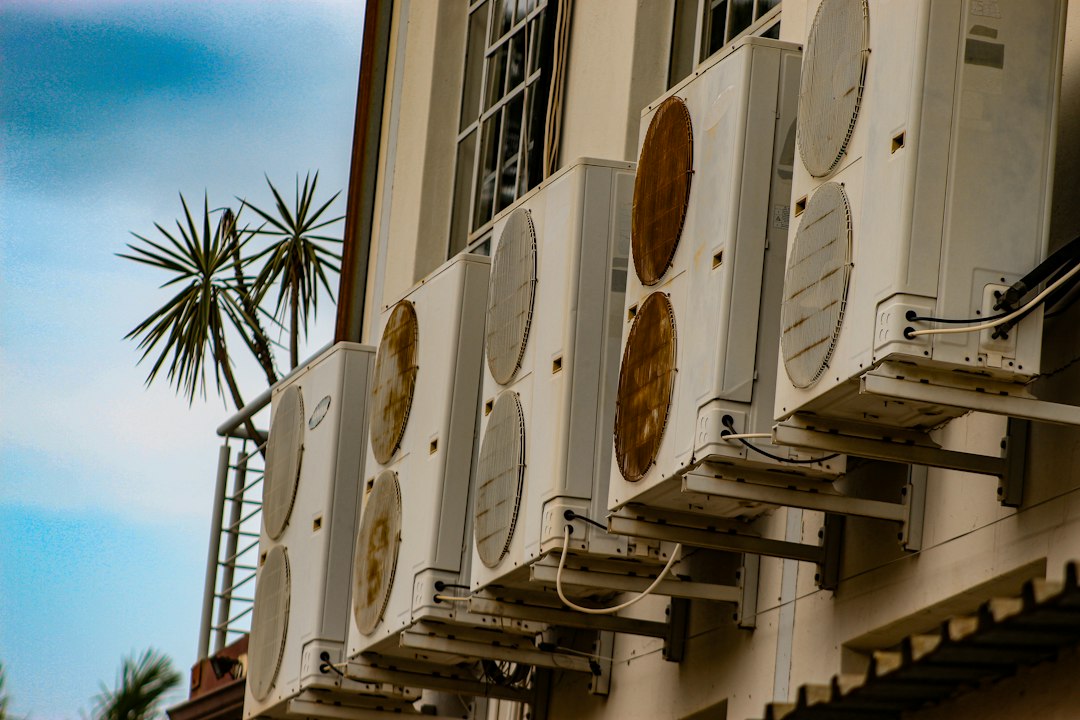
You’re standing on your porch, the summer sun beating down, and you notice your air conditioner is humming away, diligently trying to keep your home cool. You might wonder, where does all that heat it’s removing go? It doesn’t just vanish. Your AC is a sophisticated machine designed to move heat from where you don’t want it – inside your house – to where you do want it to go: the great outdoors. Understanding this process, specifically the heat transfer to outdoor air, is key to appreciating how your AC works and why it’s so crucial for your comfort.
This isn’t just about feeling a blast of warm air from the outdoor unit. It’s a complex thermodynamic dance involving refrigerants, phase changes, and the fundamental principles of heat. You’re essentially using your AC to force heat in a direction it wouldn’t naturally flow. Without a clear understanding of this heat transfer, troubleshooting cooling issues can feel like navigating a maze blindfolded. You might be tempted to fiddle with settings or even consider professional help prematurely, when a basic grasp of the physics at play could demystify the situation.
This article will guide you through the fascinating journey of heat removal and its ultimate expulsion into the atmosphere. We’ll delve into the core components responsible for this heat transfer, explore the thermodynamic principles that govern it, and discuss the factors that influence its efficiency. By the end, you’ll have a much clearer picture of how your air conditioner masters the art of taking heat from your comfortable indoor environment and depositing it into the vast expanse of the outdoor air, making your home a sanctuary from the summer heat.
The Thermodynamics of Cooling: Heat’s Journey
At its heart, air conditioning is about manipulating the flow of heat. You want your living space to be cooler than the outside environment. This means you need a system that can actively extract thermal energy from your home’s interior and reject it outdoors. This isn’t a passive process like natural convection or radiation; it’s an active, energy-driven one. Your air conditioner is essentially a heat pump, but instead of just heating, it’s primarily functioning in cooling mode, which means moving heat from a colder location (inside your house) to a warmer location (outside). This requires energy input, typically in the form of electricity to power the compressor and fans.
The Refrigeration Cycle: A Closed Loop of Heat Movement
The entire process hinges on a special fluid called a refrigerant. This substance has a unique property: it can easily change between a liquid and a gas at relatively low temperatures and pressures. This ability to switch states is what allows it to absorb and release significant amounts of heat. Your AC’s refrigeration cycle is a continuous loop where the refrigerant circulates through different components, undergoing pressure and phase changes.
Evaporation: Absorbing Indoor Heat
The cycle begins with the refrigerant in a low-pressure, low-temperature liquid state. This liquid flows into the indoor unit, specifically through a device called an evaporator coil. As the refrigerant flows through these coils, the warm indoor air is blown across them by your home’s fan. The refrigerant, being colder than the air, absorbs heat from the air. This absorbed heat causes the refrigerant to boil and evaporate, transforming from a liquid into a low-pressure gas. Think of it like water boiling and turning into steam – it needs heat to make that change. In this case, the heat is coming directly from your indoor air, thus cooling it down. This is the critical step where your AC removes the unwanted heat from your living space. The now-cooled air is then circulated back into your rooms.
Compression: Raising Temperature and Pressure
The low-pressure, low-temperature refrigerant gas, now carrying the heat it absorbed from your house, travels to the outdoor unit. Here, it encounters the compressor, the “heart” of the AC system. The compressor is an energy-consuming component that significantly increases the pressure of the refrigerant gas. As the pressure rises, so does its temperature. This is a fundamental thermodynamic principle: compressing a gas makes it hotter. So, the refrigerant gas, which was cool when it entered the compressor, leaves as a hot, high-pressure gas. This superheated gas is now ready to release its heat to the outside air.
Condensation: Releasing Heat to the Outdoors
From the compressor, the hot, high-pressure refrigerant gas flows into another set of coils in the outdoor unit, known as the condenser coils. These coils are exposed to the ambient outdoor air. A fan in the outdoor unit blows this warmer outdoor air across the condenser coils. Because the refrigerant gas is now at a higher temperature and pressure than the outdoor air, heat naturally transfers from the refrigerant to the outdoor air. This heat transfer causes the refrigerant to condense, changing back from a gas into a high-pressure liquid. This is where the heat that was absorbed from your house is finally expelled into the environment. You feel this as the warm air blowing out of your outdoor AC unit.
Expansion: Preparing for the Next Cycle
Finally, the high-pressure liquid refrigerant passes through an expansion valve. This valve reduces the pressure of the liquid refrigerant dramatically. As the pressure drops, so does its temperature. The refrigerant is now a cold, low-pressure liquid, ready to enter the evaporator coil again and begin the cycle anew, picking up more heat from your indoor air. This continuous cycle of evaporation, compression, condensation, and expansion is what allows your air conditioner to effectively move heat from inside to outside.
Air conditioning systems play a crucial role in maintaining comfortable indoor environments by transferring heat from inside a building to the outdoor air. This process involves the refrigeration cycle, where refrigerant absorbs heat from the indoor air and releases it outside. For a deeper understanding of the science behind this heat transfer and the principles of air conditioning, you can explore a related article on the topic at Freaky Science. This resource provides insights into the mechanisms of heat exchange and the efficiency of various AC systems.
The Role of Outdoor Air: The Ultimate Heat Sink

The outdoor air serves as the ultimate destination for the heat your air conditioner extracts from your home. It acts as a “heat sink,” a reservoir capable of absorbing thermal energy without a significant increase in its own temperature. This is a crucial concept because the effectiveness of your AC’s heat rejection is directly tied to the properties of the outdoor air.
Ambient Temperature: The Primary Influence
The most obvious factor influencing heat transfer to outdoor air is its temperature. On a cool day, it’s much easier for your AC to dissipate heat into the atmosphere. The greater the difference in temperature between the hot refrigerant in the condenser coils and the cooler outdoor air, the more efficiently heat will transfer. Conversely, on a scorching hot day, when the outdoor air is already close to or even hotter than the refrigerant can easily reach, heat transfer becomes more challenging. Your AC has to work harder, and its efficiency can decrease.
Pressure and Humidity: Subtle but Significant Effects
While temperature is the dominant factor, other atmospheric conditions also play a role. The pressure of the outdoor air can subtly affect heat transfer. Higher atmospheric pressure can slightly increase the rate of heat transfer. Humidity, however, can have a more noticeable impact. When the outdoor air is very humid, it has a greater capacity to hold heat. This can reduce the effectiveness of heat transfer from the condenser coils to the air. Furthermore, if the outdoor unit’s coils become fouled with dirt or debris, it can impede airflow and reduce the rate at which heat is rejected, especially on humid days when condensation might also be an issue.
Airflow Dynamics: The Importance of Ventilation
The movement of air across the outdoor condenser coils is paramount for efficient heat transfer. Your outdoor AC unit has a fan designed to pull outdoor air through the coils and expel the heated air. The volume and speed of this airflow directly impact how much heat can be removed from the refrigerant. Obstructions around the outdoor unit, such as overgrown bushes, fences, or stored items, can restrict this airflow. This restriction forces the fan to work harder and reduces the overall effectiveness of heat rejection, leading to decreased cooling performance and potentially increased energy consumption.
Maintaining Clear Pathways for Heat Escape
Ensuring that there’s ample space around your outdoor unit is a simple yet critical maintenance step. Manufacturers typically recommend a certain clearance – often several feet – from walls, fences, and any other potential obstructions. This allows the fan to draw in a sufficient volume of fresh, cooler outdoor air and efficiently expel the warmed air. Imagine trying to breathe through a straw versus an open pipe; the latter allows for much greater airflow. The same principle applies to your AC’s outdoor unit. Proper ventilation is not just about aesthetics; it’s about allowing your system to do its job effectively.
Components Driving Outdoor Heat Transfer

Several key components within your air conditioning system are specifically designed to facilitate the transfer of heat to the outdoor air. These are the workhorses of the outdoor unit, constantly battling the ambient conditions to shed the unwanted thermal energy.
The Condenser Coil: The Heat Exchanger’s Outdoor Half
The condenser coil, located in your outdoor unit, is the primary surface where heat is exchanged between the refrigerant and the outdoor air. It’s essentially a network of copper or aluminum tubing, often arranged in a serpentine pattern, to maximize surface area. This large surface area allows for a more efficient transfer of heat. The refrigerant, now a hot gas after passing through the compressor, flows through these tubes. The outdoor air, moved by the fan, passes over the fins attached to these tubes. These fins further increase the surface area exposed to the air, facilitating a more rapid and effective transfer of heat from the refrigerant to the surrounding atmosphere.
The Role of Fins: Enhancing Surface Area
The fins on the condenser coil are like miniature radiators. They are thin sheets of metal attached to the tubes, perpendicular to them. Their purpose is to greatly expand the area that comes into contact with the air. Without these fins, the surface area of the tubes alone would be insufficient to dissipate the amount of heat your AC needs to reject. Think of it this way: a single thin wire will heat up much faster than a large, flat metal plate. The fins are the “plates” that significantly boost the heat transfer capability of the condenser coil.
The Outdoor Fan: Orchestrating Airflow
The outdoor fan is the driving force behind moving the outdoor air across the condenser coils. This fan is typically a propeller-style unit powered by an electric motor. Its speed and power are designed to create sufficient airflow to efficiently cool the refrigerant and carry the heat away. The fan’s operation is crucial because even with a large condenser coil, if the air isn’t moving effectively, the heat will simply build up around the unit, reducing the temperature difference and hindering further heat transfer.
Variable Speed Fans: Optimizing Performance
Many modern air conditioning systems feature variable-speed fans. These fans can adjust their speed based on the cooling demand and ambient conditions. On milder days or when the cooling load is low, the fan might run at a lower speed, saving energy. As the temperature rises or the cooling demand increases, the fan will speed up to ensure adequate heat rejection. This intelligent control helps optimize the system’s performance and energy efficiency.
Factors Affecting Heat Transfer Efficiency
You might have noticed that your AC seems to work harder and cool less effectively on certain days. This is due to a variety of factors that can impact the efficiency of heat transfer to the outdoor air. Understanding these influences can help you appreciate the limitations and demands placed on your system.
Refrigerant Charge: The Lifeblood of Cooling
The refrigerant is the medium that carries heat. If the refrigerant charge within the system is too low, the refrigerant won’t be able to absorb enough heat in the evaporator coil to begin with, and consequently, there will be less heat to reject outdoors. Conversely, an overcharged system can lead to excessively high pressures, which can strain the compressor and reduce efficiency. A properly charged system is vital for optimal performance, and this is something that a qualified HVAC technician will ensure during installation and regular maintenance.
Signs of Incorrect Refrigerant Levels
You might not directly see the refrigerant, but there can be subtle indicators of an improper charge. If your AC is blowing warmer air than usual, frosting up on the indoor coils, or making unusual noises, it could be a sign of a refrigerant issue. These are situations where professional diagnosis is recommended.
Coil Cleanliness: The Barrier to Heat Exchange
Both the indoor evaporator coil and the outdoor condenser coil are susceptible to accumulating dirt, dust, and debris. As we’ve discussed, a clean condenser coil is essential for efficient heat transfer. When the coil fins become clogged with grime, they act as an insulator, reducing the surface area available for heat exchange and impeding airflow. This forces the fan to work harder and the compressor to run longer, both of which reduce efficiency and increase energy consumption. Regular cleaning of both indoor and outdoor coils is a critical part of routine AC maintenance.
The Impact of Indoor Air Quality
While seemingly unrelated, the cleanliness of your indoor air filters also indirectly affects the outdoor heat transfer. Clogged filters restrict airflow across the evaporator coil, reducing its ability to absorb heat from your home. This means less heat is being transported to the outdoor unit to be rejected, potentially leading to the system not cooling effectively. It also means the indoor fan has to work harder.
System Sizing and Age: Matching Needs and Capabilities
The size of your air conditioning system, measured in tons of cooling capacity, is designed to match the cooling needs of your home. If a system is undersized, it will struggle to keep up on hot days, regardless of how efficiently it transfers heat outdoors. Conversely, an oversized system might cool your home too quickly, leading to short cycling (turning on and off frequently), which is inefficient and can lead to uneven cooling. As AC units age, their components can degrade, and their efficiency can naturally decline. Older units may not be as adept at transferring heat as newer, more technologically advanced models.
The Benefits of Modern Technology
Newer AC systems often incorporate advanced features like variable-speed compressors and fans, enhanced coil designs, and improved refrigerants, all of which contribute to more efficient heat transfer and overall energy savings. When it’s time to replace an aging system, considering these advancements can lead to significant long-term benefits.
Understanding how an air conditioner transfers heat to outdoor air is crucial for optimizing its efficiency and performance. For a deeper dive into the principles of heat exchange and the science behind air conditioning systems, you can explore this informative article on Freaky Science. This resource provides valuable insights that can help you grasp the mechanics of how AC units operate and their impact on indoor climate control.
Practical Implications for Homeowners
| Metric | Description | Typical Value/Range | Unit |
|---|---|---|---|
| Heat Transfer Rate (Q) | Amount of heat transferred from indoor air to outdoor air by the AC | 3,000 – 12,000 | Watts (W) |
| Outdoor Air Temperature | Temperature of the air outside where heat is released | 15 – 40 | °C |
| Refrigerant Temperature (Condensing) | Temperature of refrigerant in the outdoor coil during heat rejection | 40 – 60 | °C |
| Airflow Rate over Condenser Coil | Volume of outdoor air passing over the condenser coil | 500 – 2,000 | Cubic meters per hour (m³/h) |
| Heat Exchanger Surface Area | Surface area of the condenser coil where heat exchange occurs | 1 – 5 | Square meters (m²) |
| Heat Transfer Coefficient (h) | Convective heat transfer coefficient between coil surface and outdoor air | 10 – 50 | W/m²·K |
| Temperature Difference (ΔT) | Difference between refrigerant temperature and outdoor air temperature | 5 – 20 | °C |
Understanding how your AC transfers heat outdoors isn’t just an academic exercise; it has direct practical implications for your comfort, your energy bills, and the longevity of your system. By applying this knowledge, you can become a more informed and proactive homeowner.
Energy Efficiency and Cost Savings
The efficiency of heat transfer to outdoor air directly impacts your energy consumption. When your AC can efficiently reject heat, it doesn’t have to run as long or as hard to maintain your desired indoor temperature. This translates directly into lower electricity bills. Simple maintenance practices, like keeping the outdoor unit clear of obstructions and ensuring clean coils, are among the most cost-effective ways to improve your AC’s efficiency.
Recognizing Peak Performance Times
You’ll notice your AC working harder during peak cooling times – the hottest parts of the day and the hottest months of the year. During these times, the outdoor air is warmer, and the temperature difference for heat transfer is smaller. Understanding this helps you manage your expectations and perhaps adjust your thermostat slightly to further reduce strain on the system during extreme conditions.
Troubleshooting Common Cooling Issues
When your AC isn’t cooling effectively, the problem often lies, at least in part, with its ability to reject heat outdoors. If you notice warm air blowing from the outdoor unit, or if the unit itself seems to be struggling or making unusual noises, it’s often related to heat transfer issues. Common culprits include blocked airflow to the condenser, dirty coils, or even a refrigerant leak.
When to Call a Professional
While understanding these concepts can empower you to perform basic maintenance like clearing debris, certain issues require the expertise of a qualified HVAC technician. Problems with the compressor, refrigerant levels, or complex electrical issues should always be handled by a professional to avoid further damage or safety hazards. They have the tools and knowledge to diagnose and repair these intricate problems.
Extending the Lifespan of Your AC Unit
Regular maintenance, informed by an understanding of heat transfer principles, can significantly extend the operational life of your air conditioning system. By ensuring proper airflow, clean coils, and a well-functioning outdoor unit, you reduce the stress and wear on its components. This preventative approach can save you from costly premature replacements and keep your system running optimally for years to come.
The Value of Annual Tune-Ups
Scheduling annual professional tune-ups is an investment in your AC’s future. A technician will inspect all components, check refrigerant levels, clean coils if necessary, and identify any potential problems before they escalate. This proactive approach is far more cost-effective than waiting for a breakdown.
Your air conditioner is a marvel of engineering, skillfully moving heat from the comfortable confines of your home to the vastness of the outdoor air. By understanding the thermodynamic principles, the roles of the various components, and the factors influencing efficiency, you gain a deeper appreciation for this essential system. This knowledge empowers you to maintain your AC effectively, troubleshoot minor issues, and ultimately, enjoy a consistently cool and comfortable home.
Your AC Blows Hot Air Outside. Is That Heat From Your Room?
FAQs
1. How does an air conditioner transfer heat to outdoor air?
An air conditioner transfers heat to outdoor air through a process called refrigeration. The refrigerant in the system absorbs heat from indoor air and releases it outside.
2. What is the role of the compressor in transferring heat to outdoor air?
The compressor in an air conditioner pressurizes the refrigerant, causing it to become hot. This hot refrigerant is then pumped to the outdoor condenser unit where it releases heat to the outside air.
3. How does the condenser coil help in transferring heat to outdoor air?
The condenser coil in the outdoor unit of an air conditioner allows the hot refrigerant to release heat to the surrounding outdoor air. As the refrigerant cools down, it changes back into a liquid state.
4. What is the function of the fan in the outdoor unit of an air conditioner?
The fan in the outdoor unit of an air conditioner helps to dissipate the heat absorbed by the refrigerant. It blows outdoor air over the condenser coil, aiding in the heat transfer process.
5. Why is it important for an air conditioner to efficiently transfer heat to outdoor air?
Efficient heat transfer to outdoor air is crucial for the proper functioning of an air conditioner. It helps maintain a comfortable indoor temperature by removing heat from the indoor space and releasing it outside.