
You’ve probably noticed it yourself. Stepping out of a building on a hot day, you might anticipate a welcome blast of cool air from the nearest air conditioning unit. Instead, you’re met with a pocket of heat that seems to amplify the already sweltering conditions. It’s a common, and often frustrating, phenomenon: the air outside your air conditioner unit feels noticeably warmer than the ambient temperature. You might scratch your head, wondering how a machine designed to cool can simultaneously create heat. It’s not a trick of the light or a figment of your overheated imagination. There are fundamental scientific principles at play, and understanding them will demystify this seemingly paradoxical situation.
The Unseen Engine of Heat Transfer
At its core, your air conditioner is a heat pump. It doesn’t magically create cold; instead, it moves heat from one place to another. Think of it as a sophisticated plumbing system for thermal energy. Inside your home, the air conditioner’s evaporator coil absorbs heat from the indoor air, making that air cooler. This absorbed heat doesn’t just vanish. It’s then transferred to a refrigerant that circulates through the system. The refrigerant, now carrying the heat, travels to the outdoor unit. This is where the magic, or rather, the science, of heat rejection happens. The outdoor unit, often called the condenser, is where the heat is released back into the environment.
The Refrigerant’s Journey: From Absorbing to Rejecting
The refrigerant is the unsung hero of this entire process. It’s a special fluid designed to boil and condense at temperatures and pressures suitable for air conditioning. Inside your house, the refrigerant flows through the evaporator coil, which is a network of narrow tubes. As the warm indoor air passes over these tubes, the heat from the air transfers to the colder refrigerant, causing it to evaporate into a gas. This gas, now warmed by the heat it has absorbed from your home, then travels through insulated pipes to the outdoor unit.
Compression: The Heat Amplifier
Once the refrigerant gas reaches the outdoor unit, it enters the compressor. This is arguably the most critical component for understanding the heat around your AC. The compressor’s job is to significantly increase the pressure of the refrigerant gas. According to fundamental thermodynamic principles, when a gas is compressed, its temperature rises dramatically. Imagine pumping up a bicycle tire – the pump gets warm. The same principle applies here, but on a much larger scale. The refrigerant, already warm from absorbing heat inside your house, becomes intensely hot after passing through the compressor.
Condensation and Heat Release: The Outdoor Unit’s Purpose
Now that the refrigerant is hot and under high pressure, it flows into the condenser coils in the outdoor unit. These coils are designed to maximize heat transfer to the surrounding air. A fan in the outdoor unit blows ambient air over these hot coils. As the hot refrigerant gas comes into contact with the cooler outside air, it releases its heat. This heat transfer causes the refrigerant to condense back into a liquid. The fan is crucial here; it ensures a continuous flow of cooler outside air to facilitate the efficient release of heat. This process is what causes the noticeable warmth radiating from your outdoor AC unit. You are essentially feeling the heat that was removed from your home, amplified by the compression process.
When discussing the phenomenon of outdoor air warming up near an air conditioning unit, it’s essential to understand the mechanics of heat exchange and airflow. For a deeper exploration of this topic, you can refer to a related article that delves into the science behind air conditioning systems and their impact on surrounding environments. This article can be found at Freaky Science, where you will discover insights into how AC units not only cool indoor spaces but also influence outdoor temperatures.
The Science of Thermodynamics in Action
The entire operation of an air conditioner is a practical application of the laws of thermodynamics, specifically the second law, which deals with the direction of heat flow and the concept of entropy. In simple terms, heat naturally flows from hotter objects to colder objects. An air conditioner uses a clever cycle to reverse this natural flow, moving heat from a colder space (your home) to a hotter space (the outside air). This requires energy input, which is why your AC unit consumes electricity.
Entropy and Engineered Heat Flow
The second law of thermodynamics states that the total entropy of an isolated system can only increase over time, or remain constant in ideal cases where the system is in a steady state or undergoing a reversible process. In practical terms, this means that processes tend towards disorder, and it takes work to create order. In the context of an air conditioner, the “order” is the cooler air inside your home. To achieve this, you must expend energy to move heat against its natural gradient, from the cooler interior to the warmer exterior. The heat you feel around the outdoor unit is a consequence of this energy expenditure and the forced transfer of heat.
The Refrigeration Cycle: A Closed-Loop System
The refrigerant’s journey through the evaporator, compressor, condenser, and expansion valve forms a continuous, closed loop. The expansion valve is another key component, located just before the evaporator coil. As the high-pressure liquid refrigerant passes through the expansion valve, its pressure drops dramatically. This sudden drop in pressure causes the refrigerant to become very cold, preparing it to absorb heat in the evaporator coil inside your home. This cyclical process ensures that heat is continuously extracted from your home and expelled outdoors.
Beyond the Compressor: Other Contributors to Outdoor Heat
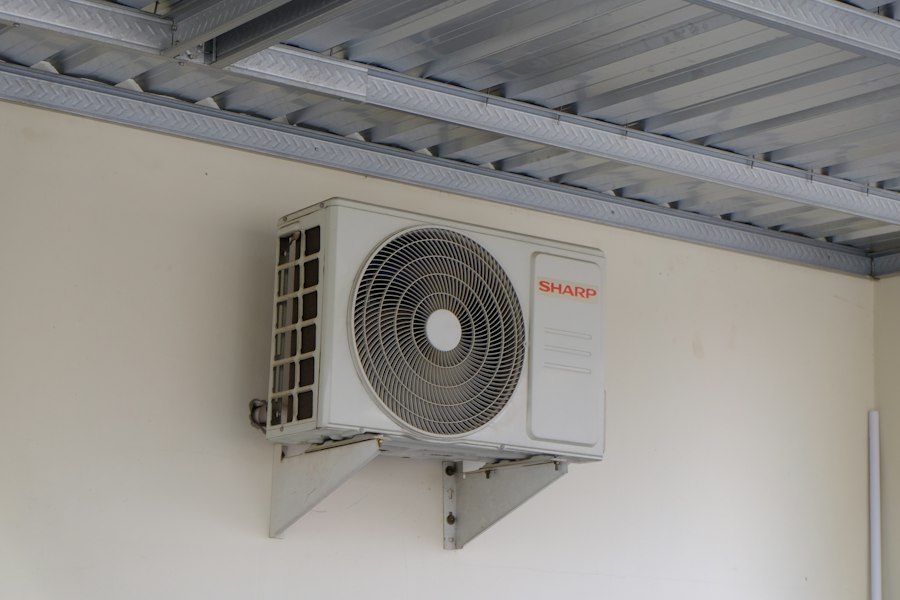
While the compressor is the primary driver of the increased temperature around your outdoor AC unit, other factors also play a role in the overall heat signature. The condenser coils themselves, even before the compression, are already warmer than the ambient air because they are designed to absorb heat. The fan, while moving air, also generates some heat from its motor. These contribute to the overall thermal output of the unit, but the compressor’s effect is the most significant and is responsible for the feeling of significantly warmer air.
The Condenser Coils: A Surface of Heat Exchange
The condenser coils are a large surface area designed for efficient heat dissipation. Think of them like radiators for your air conditioner. As the hot refrigerant flows through these coils, heat is transferred to the metal of the coils. The fan then blows ambient air across these coils, picking up that heat and carrying it away. Even without the compressor, the coils would be warmer than the surrounding air because they are acting as a conduit for heat removal from your home.
The Fan Motor: A Small But Present Heat Source
Every electric motor generates some heat as a byproduct of its operation. The fan in your outdoor unit is no exception. While the heat generated by the fan motor is relatively small compared to the heat being expelled from the refrigerant, it still contributes to the overall thermal output of the unit. On a very hot day, this small contribution can add to the already significant heat you feel.
Environmental Factors Influencing Perceived Heat
The ambient temperature outside your home plays a crucial role in how much warmer the air near your AC unit feels. On a scorching 95-degree Fahrenheit day, the heat expelled by your AC unit is being added to an already high temperature. This means the resulting temperature gradient will be more pronounced and feel more intense than if the outdoor temperature were, say, 70 degrees Fahrenheit. The relative humidity also influences how that heat is perceived, with higher humidity making heat feel more oppressive.
Ambient Temperature: The Baseline for Your Comfort
Imagine your air conditioner is designed to lower the temperature of the air by 20 degrees Fahrenheit. If the outside temperature is 75 degrees Fahrenheit, the air expelled might be around 95 degrees Fahrenheit, which is noticeable but not extreme. However, if the outside temperature is 95 degrees Fahrenheit, the expelled air could reach 115 degrees Fahrenheit. This significant difference is what makes the air around your AC unit feel like an oven. The hotter it is outside, the hotter the air being expelled will be, and the more pronounced the effect will be.
Humidity’s Role in Amplifying the Sensation
While humidity doesn’t directly change the temperature of the air expelled by your AC, it significantly impacts how that heat feels to you. High humidity means there’s more moisture in the air, which hinders the evaporation of sweat from your skin. Evaporation is your body’s natural cooling mechanism. When sweat can’t evaporate efficiently, you feel hotter and more uncomfortable, even at the same temperature. So, on a humid, hot day, the heat from your AC unit will feel even more intense and oppressive.
When discussing the phenomenon of outdoor air warming up near an air conditioning unit, it’s interesting to note how the heat exchange process works. As the AC unit expels warm air from inside a building, it can create a noticeable temperature difference in the surrounding outdoor environment. This effect is not only intriguing but also has implications for local weather patterns. For a deeper understanding of the science behind this and other related topics, you can explore this informative article on Freaky Science.
Why You Might Feel Hotter Than Expected
| Factor | Description | Impact on Outdoor Air Temperature | Typical Measurement |
|---|---|---|---|
| Heat Rejection from AC Unit | AC units expel heat absorbed from indoors to the outside environment. | Increases outdoor air temperature near the unit. | 5-15°C temperature rise near exhaust vents |
| Compressor Operation | The compressor compresses refrigerant, generating heat that is released outside. | Contributes to localized warming of outdoor air. | Heat output of 1-3 kW per ton of cooling |
| Airflow from Condenser Fan | Fan blows warm air from condenser coils into the surrounding outdoor air. | Distributes heat, causing a noticeable warm air plume. | Air velocity 2-5 m/s near unit |
| Ambient Temperature | Higher outdoor temperatures reduce heat dissipation efficiency. | Amplifies warming effect near AC unit. | Outdoor temp range 25-40°C |
| Proximity to Walls or Enclosures | Restricted airflow can trap heat near the unit. | Increases local outdoor air temperature. | Temperature rise up to 10°C in confined spaces |
The sensation of heat is subjective and influenced by a combination of factors. The direct expulsion of heat from the condenser coils, amplified by the compressor and the fan, creates a localized zone of significantly higher temperature. This heat is radiating outwards, and when you walk through it, your body experiences this concentrated thermal energy. It’s not just the ambient temperature you’re contending with; it’s the added heat load from your own cooling system.
The Physics of Radiant Heat
Heat can be transferred through conduction, convection, and radiation. The air coming out of your AC unit is hot due to convection (the movement of heated air). However, the hot metal of the condenser coils also emits radiant heat. This means you can feel the heat even if you’re not directly in the path of the expelled air. Radiant heat travels in waves and can warm surfaces it encounters, including your skin. This adds to the overall feeling of increased temperature.
The Illusion of “More Heat”
It’s important to remember that your air conditioner is not creating heat in the sense of adding energy to the environment that wasn’t there before. It is moving heat. The energy it consumes is used to facilitate this transfer. The heat you feel is the heat that was removed from your home, plus the heat generated by the mechanical and electrical processes of the unit. So, while it feels like the AC is making things hotter, it’s actually a consequence of its operation in expelling heat from your living space. The perceived increase in temperature is a testament to the efficiency of your AC in doing its job of cooling your home. The warmer air is the exhaust of your home’s cooling system, a necessary byproduct of keeping your indoor environment comfortable.

Your AC Blows Hot Air Outside. Is That Heat From Your Room?
FAQs
1. Why does outdoor air warm up near an AC unit?
Outdoor air warms up near an AC unit because the unit releases hot air as a byproduct of the cooling process. This hot air mixes with the surrounding outdoor air, causing the temperature to rise.
2. How does an AC unit work to cool indoor air?
An AC unit works by removing heat from indoor air and releasing it outside. This is done through a process of refrigeration, where the refrigerant in the system absorbs heat from indoor air, cools it, and then releases the heat outside.
3. Does the warm air released by an AC unit affect the outdoor temperature?
Yes, the warm air released by an AC unit can affect the outdoor temperature in the immediate vicinity of the unit. The hot air mixes with the outdoor air, causing a localized increase in temperature.
4. Can the warm air from an AC unit impact the overall outdoor climate?
The warm air released by an AC unit is typically localized and does not have a significant impact on the overall outdoor climate. However, in densely populated urban areas with high concentrations of AC units, the collective release of warm air can contribute to the urban heat island effect.
5. Are there any ways to mitigate the warming effect of outdoor air near an AC unit?
To mitigate the warming effect of outdoor air near an AC unit, it is recommended to ensure proper ventilation and spacing around the unit to allow the hot air to dissipate more effectively. Additionally, using energy-efficient AC units and implementing green spaces and trees in the surrounding area can help offset the warming effect.