You’re standing in your living room, and the air feels… still. It’s not exactly cold, but there’s a noticeable chill that wasn’t there an hour ago. You might be wondering how this happens. How does the air in your room, warmed by your body heat, the sun filtering through the window, or the electronics humming away, suddenly decide to cool down? It’s not magic, and it’s not just the absence of heat. It’s a complex interplay of physics, primarily involving heat transfer and the behavior of molecules. Let’s dive into the fascinating science behind how your room air cools down, and how you can influence it.
The Invisible Dance of Heat and Molecules
You probably think of heat as something you feel, something that emanates from a stove or a radiator. But at its core, heat is just kinetic energy – the energy of motion. Everything around you, including the air in your room, is made up of tiny particles called molecules. These molecules are constantly in motion, vibrating, rotating, and moving around. The hotter something is, the faster these molecules are moving. Conversely, when something cools down, it means the average speed of its molecules is decreasing.
When you think about your room cooling down, you’re essentially observing a reduction in the average kinetic energy of the air molecules within that space. This reduction doesn’t happen in a vacuum. It’s driven by processes that allow this kinetic energy to be transferred away from the air, or for the air itself to lose energy through various mechanisms. Understanding these mechanisms is key to grasping how your room gets that pleasant, cooler feel.
The Fundamental Principle: Thermodynamics
At the heart of all heat transfer lies the fundamental laws of thermodynamics. The first law, the law of conservation of energy, states that energy cannot be created or destroyed, only transferred or changed in form. This means the heat that leaves your room doesn’t just disappear; it goes somewhere else. The second law is particularly relevant here: it states that in any natural thermodynamic process, the total entropy of an isolated system will tend to increase over time. In simpler terms, heat naturally flows from hotter objects to colder objects. Your room air will always seek thermal equilibrium with its surroundings. So, if the walls, the windows, or the outside air are cooler than the air in your room, heat will naturally transfer from the warmer air to these cooler surfaces.
Molecular Collisions: The Microscopic Transfer
On a microscopic level, this heat transfer happens through collisions. Imagine a bustling crowd of people, each representing a molecule. The faster the people are moving (hotter), the more energetic their interactions. When fast-moving air molecules bump into slower-moving molecules, they transfer some of their kinetic energy. This is like a fast runner bumping into a slow walker – the fast runner’s momentum is reduced, and the slow walker gets a little push. In your room, the air molecules are constantly colliding with each other and with the surfaces around them. If a molecule with high kinetic energy collides with a molecule with lower kinetic energy, energy is transferred, leading to a more even distribution of energy over time. This is the essence of conduction within the air itself and from the air to surrounding objects.
The Unseen Force: Convection Currents
While conduction explains how heat moves through direct molecular contact, convection is a different beast. It’s about heat transfer through the movement of fluids – in this case, air. When air near a heat source gets warmer, it expands and becomes less dense. This less dense, warmer air then rises, while cooler, denser air sinks to take its place. This creates a continuous circulation pattern called a convection current.
Consider a radiator. It heats the air directly above it. This warm air rises, carrying its heat upwards. As it spreads and cools, it becomes denser and sinks, eventually being drawn back towards the radiator to be heated again. In your room, even without an obvious heat source, there are subtle temperature differences. The air near the ceiling might be warmer than the air near the floor due to rising warm air. If a window is cooler than the room air, it can cool the air immediately adjacent to it. This cooled air, being denser, will then sink, creating a downward flow. This is a crucial mechanism for how air can cool down in localized areas, and how that coolness can then spread throughout the room as the cycle repeats.
To understand how warm room air becomes cooler, it’s essential to explore the principles of heat transfer and air circulation. A related article that delves deeper into this topic can be found at Freaky Science, where various scientific concepts are explained in an engaging manner. This resource provides insights into how temperature changes occur in indoor environments and the factors that influence air cooling, making it a valuable read for anyone interested in the science behind temperature regulation.
The Role of Surfaces: Absorption and Emission
Your room is not just a volume of air; it’s an enclosed space with walls, a ceiling, a floor, furniture, and windows. These surfaces play a critical role in how your room air cools down. They are both recipients of heat and emitters of heat.
Absorbing the Heat: Surfaces as Heat Sinks
When the air in your room is warmer than the surrounding surfaces, heat will transfer from the air to those surfaces through conduction. Think about touching a cool wall on a warm day. Your hand feels cooler because heat is transferring from your warmer skin to the cooler wall. Similarly, the air molecules in your room, as they move and collide with cooler surfaces like walls, windows, or furniture, transfer their kinetic energy to these objects. These surfaces then absorb this heat, becoming slightly warmer themselves. The larger the surface area and the greater the temperature difference, the more efficiently this heat transfer occurs.
Radiating the Coolness: Surfaces as Heat Emitters
But surfaces aren’t just passive absorbers; they are also emitters of heat. All objects above absolute zero temperature emit thermal radiation, primarily in the form of infrared waves. If the surfaces in your room are cooler than the air, they will emit infrared radiation. This radiation travels outwards, and if it encounters something with a lower temperature, it will be absorbed, leading to cooling. More importantly for our discussion, if these surfaces are cooler than the air, they will absorb heat from the air through radiation. This means that even if the air itself is warm, if the surfaces it’s in contact with (or the surfaces it can “see” via radiation) are cooler, the air will lose energy to them. This is why you can feel a draft of cool air even if the air temperature itself hasn’t dropped dramatically – it’s the sensation of heat leaving your body to a cooler surface.
The Insulating Effect: Trapping or Releasing Heat
The materials that make up your walls, windows, and furniture have different thermal properties. Some are good insulators, meaning they resist the flow of heat. Others are good conductors, allowing heat to pass through them more easily. In the context of cooling, insulation is about preventing heat from entering or leaving the room. If your walls are well-insulated, they will prevent warm air from the outside from heating up your room, and they will also help to retain any coolness you’ve managed to create inside. Conversely, poorly insulated walls can act like a sieve, allowing heat to seep in from warmer external environments, making it harder for your room to cool down. The type of windows you have also makes a significant difference. Single-pane windows are poor insulators and can allow a lot of heat transfer, both in and out. Double or triple-pane windows with gas fills offer much better insulation, helping to maintain a stable temperature.
The External Influence: Nature’s Air Conditioning
The air in your room doesn’t exist in isolation. It’s part of a larger system, and the external environment has a profound impact on its temperature. Understanding these external influences is crucial to understanding why your room cools down, or why it struggles to do so.
The Great Outdoor Thermometer: Ambient Air Temperature
The most direct external influence is the ambient air temperature outside your home. If the outside air is cooler than the air inside your room, then there’s a natural tendency for heat to flow from your warmer room to the cooler outside. This can happen through various pathways, most notably through open windows or doors, or through the walls and roof if they are not adequately insulated. When you open a window on a cool evening, you’re essentially allowing the cooler outside air to mix with the warmer inside air, lowering the overall temperature of your room. This is a direct and effective way to cool down your living space.
The Sun’s Fierce Gaze: Solar Radiation
The sun is a powerful source of heat. Direct sunlight hitting your windows can significantly warm up the air inside your room. This is why rooms that face the sun for a large part of the day often feel hotter, even on a generally cool day. Conversely, when the sun sets, the solar radiation stops, and the surfaces that have absorbed solar heat begin to radiate it away. If the outside air is cooler than these surfaces, they will cool down, and in turn, cool the air in their vicinity. This is a key reason why temperatures often drop after sunset.
The Wind’s Breath: Air Movement and Ventilation
Wind is essentially the movement of air. When the outside air is cooler than your room air, wind can significantly accelerate the cooling process by bringing in fresh, cool air and carrying away warmer air. This is the principle behind natural ventilation. Opening windows and doors on opposite sides of a room or house can create a cross-breeze, effectively flushing out warm air and replacing it with cooler air. Even a gentle breeze can make a noticeable difference in how quickly your room cools down. If you’ve ever stood on a breezy porch on a warm day and felt a distinct chill, you’ve experienced the cooling power of air movement.
The Evaporative Effect: Moisture and Cooling
Water has a remarkable property: it absorbs a significant amount of heat when it evaporates. This is called the latent heat of vaporization. When water molecules transition from a liquid to a gas, they need energy to break free from their liquid bonds. This energy is drawn from the surrounding environment, thus cooling it down. This is why sweating cools your body. In your room, if there’s a source of moisture, like damp clothes drying or even just the natural humidity in the air, and if there’s airflow, evaporation can contribute to cooling. Air conditioners exploit this principle through refrigeration cycles.
Active Cooling: The Science of Air Conditioning
While natural processes can cool your room, sometimes you need a more robust solution. This is where air conditioning comes in. Air conditioners don’t create cold; they actively move heat from inside your room to the outside. This process involves a clever application of thermodynamics and phase changes of a special fluid called a refrigerant.
The Refrigeration Cycle: A Continuous Heat Pump
At its core, an air conditioner is a heat pump working in reverse. It utilizes a refrigeration cycle, which involves four key components: an evaporator, a compressor, a condenser, and an expansion valve. The refrigerant, a fluid that can easily change between liquid and gas states, circulates through these components.
- Evaporation (Inside the Room): In the evaporator coil, located inside your room, the liquid refrigerant is at low pressure. As warm room air is blown over these coils, the refrigerant absorbs heat from the air. This absorption of heat causes the refrigerant to evaporate, turning into a low-pressure gas. This is where the cooling of your room air happens – the refrigerant is literally sucking the heat out of the air.
- Compression (Outside the Unit): The low-pressure refrigerant gas then travels to the compressor, typically located in the outdoor unit. The compressor does work on the refrigerant, squeezing it and increasing its pressure and temperature. It turns the low-pressure gas into a high-pressure, hot gas.
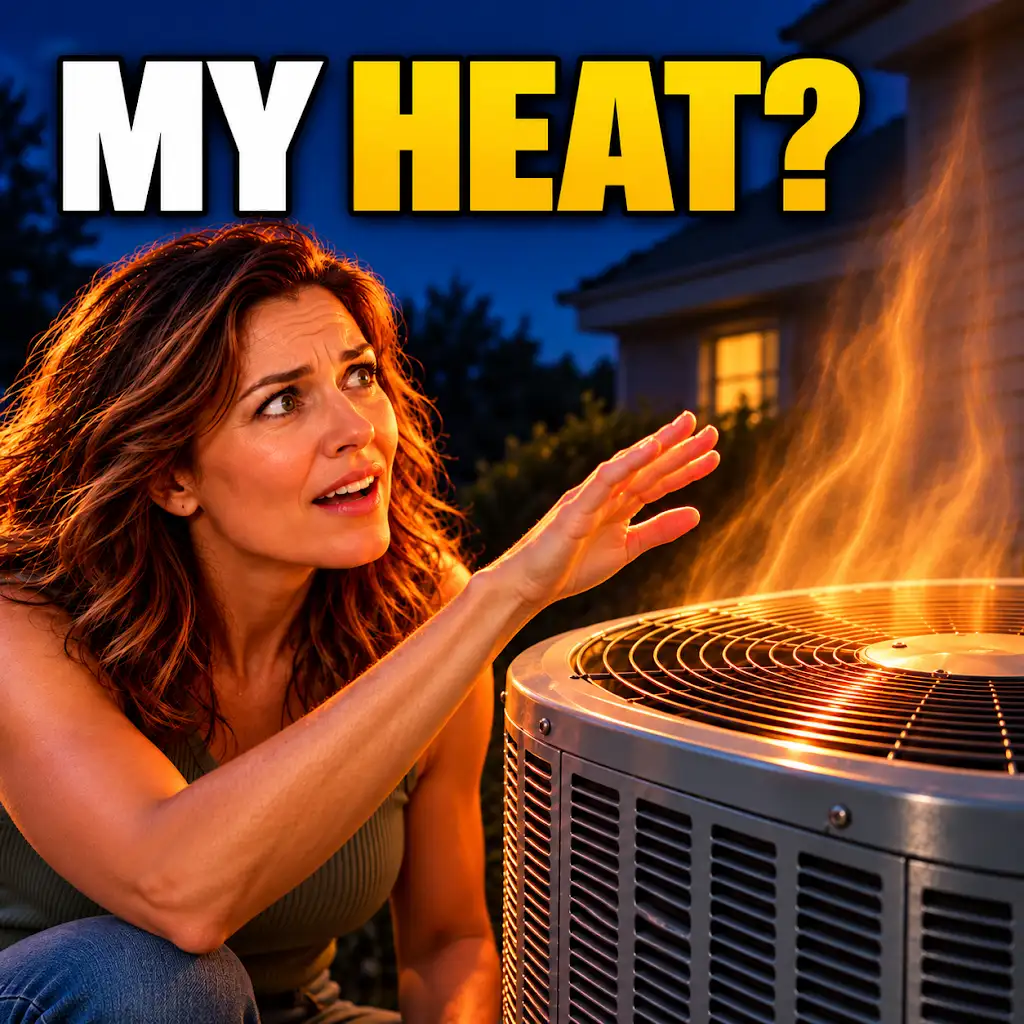
- Condensation (Outside the Room): This hot, high-pressure gas then flows into the condenser coils, also located in the outdoor unit. Here, a fan blows outside air over the coils. Because the refrigerant gas is now hotter than the outside air, it transfers its heat to the outside air and condenses back into a high-pressure liquid. This is why you feel warm air coming from the outdoor unit of an air conditioner.
- Expansion (Leading Back Inside): Finally, the high-pressure liquid refrigerant passes through an expansion valve. This valve restricts the flow, causing a sudden drop in pressure. As the pressure drops, the refrigerant becomes very cold and is ready to return to the evaporator, starting the cycle anew. The continuous circulation of the refrigerant effectively pumps heat from inside your room to the outside.
Dehumidification: A Welcome Side Effect
As the warm, humid air from your room passes over the cold evaporator coils in an air conditioner, something else happens. Moisture in the air condenses on the cold surface of the coils, much like water droplets forming on a cold glass of iced tea. This condensed water is then collected and drained away, effectively removing humidity from the air. While the primary goal is cooling, this dehumidification process also makes the air feel cooler and more comfortable, as less humid air allows sweat to evaporate more efficiently from your skin.
Beyond the AC: Other Active Cooling Methods
While central air conditioning is the most common, other active cooling methods exist. Fans, while not actively removing heat, create airflow that enhances evaporation from your skin and can create a sensation of coolness. Evaporative coolers, also known as swamp coolers, use the principle of water evaporation to cool air. They draw in warm, dry outside air, pass it through water-soaked pads, and then blow the cooled, humidified air into the room. These are most effective in dry climates.
When considering how warm room air becomes cooler, it’s fascinating to explore the principles of heat transfer and the role of ventilation in maintaining comfortable indoor temperatures. For a deeper understanding of these concepts, you might find this article on the science of temperature regulation particularly enlightening. It discusses various methods and technologies that can effectively cool indoor environments, making it a great resource for anyone interested in improving their home comfort. You can read more about it in this related article.
Creating Your Personal Climate: Influencing the Cooling Process
| Process | Description | Effect on Air Temperature | Example |
|---|---|---|---|
| Convection | Warm air rises and cooler air moves in to replace it, promoting air circulation. | Helps distribute cooler air, reducing overall room temperature. | Using a ceiling fan to circulate air. |
| Evaporation | Moisture absorbs heat from the air to evaporate, removing heat energy. | Decreases air temperature by removing heat. | Using a humidifier or evaporative cooler. |
| Radiation | Heat radiates from warm surfaces to cooler surroundings. | Heat loss from room surfaces lowers air temperature. | Heat radiating from walls to cooler windows. |
| Heat Exchange via Air Conditioning | Warm air passes over cold coils, transferring heat to refrigerant. | Air temperature drops as heat is removed. | Air conditioner cooling a room. |
| Ventilation | Warm indoor air is replaced with cooler outdoor air. | Reduces indoor air temperature. | Opening windows or using exhaust fans. |
You’re not entirely at the mercy of the weather. There are several strategies you can employ to help your room cool down more effectively, or to maintain a cooler temperature for longer.
Sealing the Deal: Preventing Heat Ingress
One of the most effective ways to keep your room cool is to prevent heat from getting in. This involves sealing any gaps or cracks where warm air can infiltrate. Check around windows and doors for drafts. Weatherstripping and caulking can make a significant difference. Ensure your attic and walls are properly insulated. This acts like a thermal blanket, keeping the heat out in the summer and in during the winter.
Strategic Shading: Blocking the Sun’s Rays
Sunlight is a major contributor to indoor heat gain. During the hottest parts of the day, close your curtains or blinds, especially on windows that receive direct sunlight. For even more effective shading, consider using blackout curtains, which are designed to block out light and heat. External shading, such as awnings or strategically planted trees, can also be very effective in preventing sunlight from reaching your windows in the first place.
Ventilation Wisely: Timing is Everything
Don’t just open windows randomly. Observe the temperature outside. If the outside air is cooler than the air inside your room, open your windows. This is particularly effective in the evenings and early mornings when temperatures naturally drop. Create cross-ventilation by opening windows on opposite sides of the room or house to encourage airflow. However, if the outside air is warmer than inside, keep your windows and doors closed to trap the cooler air.
Leveraging Technology: Smart Cooling Choices
Beyond traditional air conditioners, modern technology offers more nuanced ways to manage your room’s temperature. Smart thermostats can learn your habits and optimize cooling schedules, so you’re not wasting energy cooling an empty room. Ceiling fans can help circulate air and create a cooling effect, allowing you to potentially set your thermostat a few degrees higher without sacrificing comfort. Portable air conditioners and window units offer localized cooling solutions for specific rooms.
The Role of Humidity: Keeping It Comfortable
As we’ve discussed, high humidity can make a room feel warmer than it actually is. If you’re struggling with a sticky, uncomfortable room, consider a dehumidifier. This will remove excess moisture from the air, making it feel cooler and more pleasant, even if the temperature doesn’t change drastically. Conversely, in very dry climates, evaporative coolers can add a touch of moisture while cooling.
Your room’s temperature is a dynamic entity, constantly influenced by the dance of molecules, the characteristics of surfaces, and the ebb and flow of the outside world. By understanding these fundamental principles and employing smart strategies, you can effectively manage your indoor climate, creating a comfortable and cool sanctuary, even on the warmest of days. You have the power to influence the invisible forces that govern your comfort.
Your AC Blows Hot Air Outside. Is That Heat From Your Room?
FAQs
1. How does warm room air become cooler?
Room air becomes cooler through a process called convection, where warm air rises and cooler air sinks. This creates a natural circulation of air that helps distribute the heat evenly throughout the room.
2. What role do windows play in cooling down warm room air?
Windows play a crucial role in cooling down warm room air by allowing for ventilation. Opening windows can help release hot air and bring in cooler air from outside, helping to lower the overall temperature in the room.
3. How do fans help in cooling down warm room air?
Fans help in cooling down warm room air by circulating the air and creating a wind-chill effect. This helps to evaporate sweat from the skin, making us feel cooler. Fans do not actually lower the temperature of the room, but they can make it feel more comfortable.
4. What is the role of air conditioning in cooling down warm room air?
Air conditioning systems work by removing heat from the air inside a room and releasing it outside. This process involves compressing and expanding refrigerant gases to absorb and release heat, resulting in cooler air being circulated back into the room.
5. Are there any other methods to cool down warm room air besides ventilation, fans, and air conditioning?
Other methods to cool down warm room air include using evaporative coolers, also known as swamp coolers, which work by evaporating water to cool the air. Additionally, using heat-reflective window coverings, such as blinds or curtains, can help block out sunlight and reduce heat gain in the room.