You step inside, the oppressive heat of the day a stark contrast to the refreshing coolness that washes over you. You sigh, a silent thank you to the whirring machine on the wall. But have you ever stopped to truly consider this marvel of modern engineering? Does your air conditioner actually make cold air, or is it performing a more subtle, yet equally effective, trick? The answer, as with many things in science, is a bit more nuanced than a simple yes or no. You see, your air conditioner isn’t a magical portal to the arctic; instead, it’s a sophisticated system that expertly manipulates the properties of a special fluid to extract heat from your indoor environment and expel it elsewhere.
The Underlying Physics of Cooling
The fundamental principle behind air conditioning is the concept of heat transfer. Heat, a form of energy, naturally flows from warmer objects to cooler objects. Your air conditioner capitalizes on this natural tendency, but it does so in a controlled and cyclical manner. It’s not about creating cold, but rather about removing heat. Think of it like this: you can’t conjure up darkness; you can only turn off the light source. Similarly, an air conditioner doesn’t create cold; it effectively removes the heat that makes your room feel warm. This process relies on a special substance called a refrigerant, which has unique thermodynamic properties allowing it to absorb and release heat efficiently. This refrigerant undergoes a continuous cycle of phase changes – from liquid to gas and back again – each phase change accompanied by significant heat absorption or release.
The Refrigerant’s Crucial Role
At the heart of every air conditioning system lies the refrigerant. This isn’t just any liquid; it’s a carefully engineered chemical compound designed to boil at a low temperature and exert a significant vapor pressure. Common refrigerants you might encounter include R-410A and R-32, which have replaced older, environmentally less friendly options like R-22. The refrigerant’s ability to transition between liquid and gas states at relatively low pressures and temperatures is what makes it the indispensable workhorse of your AC. When it’s in its liquid state, it has a low boiling point, meaning it readily absorbs heat from its surroundings and turns into a gas. Conversely, when it’s compressed and forced back into a liquid, it releases the heat it has absorbed. This continuous cycle of evaporation and condensation, driven by pressure changes, is the engine that drives the cooling process.
Understanding Phase Changes and Heat Exchange
The magic of an air conditioner truly lies in its mastery of phase changes. When the refrigerant is a liquid and flows through the evaporator coil (the indoor unit), it is at a low pressure. This low pressure allows it to absorb heat from the warmer indoor air that is blown over the coil. As the refrigerant absorbs heat, it begins to boil and turns into a gas. This evaporation process is what cools the air. Now, this gaseous refrigerant, carrying the absorbed heat, travels to the compressor. The compressor, a powerful motor, squeezes the gaseous refrigerant, significantly increasing its pressure and temperature. This superheated gas then flows to the condenser coil (the outdoor unit). Here, the refrigerant, now much hotter than the outside air, releases the heat it absorbed indoors. As it releases heat, it cools down and condenses back into a liquid. This liquid refrigerant then flows back to the expansion valve, where its pressure is reduced, preparing it to enter the evaporator coil again and repeat the cycle.
If you’re curious about how air conditioners work and whether they actually produce cold air, you might find this article on Freaky Science insightful. It delves into the science behind air conditioning systems, explaining the principles of heat exchange and how these devices create a cooler environment. For more information, you can read the article here: Freaky Science.
The Journey of Heat: From Inside to Out
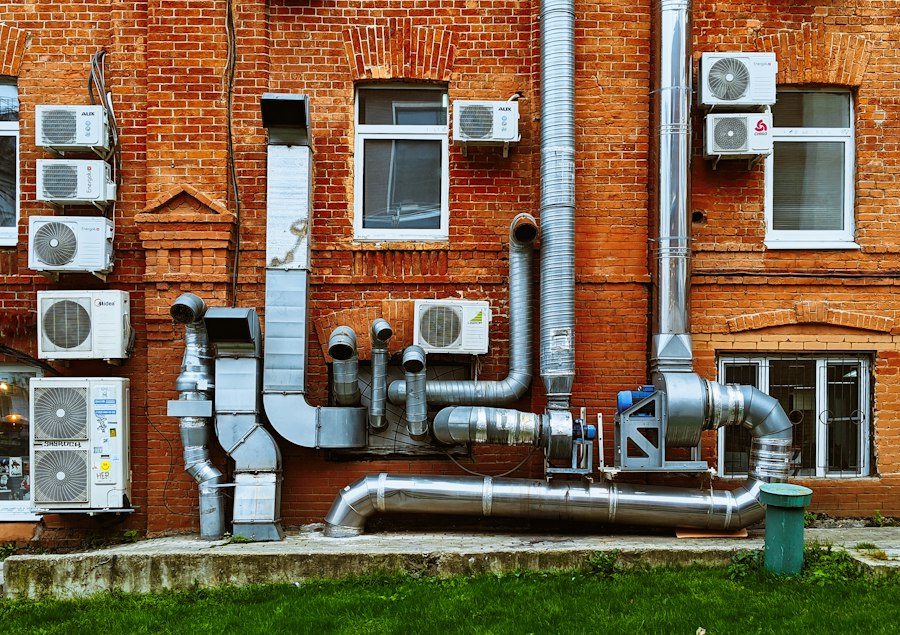
The entire operation of your air conditioner can be visualized as a journey for heat. It’s a one-way ticket, from the comfort of your living space to the less forgiving environment outside. This intricate dance between the indoor and outdoor units ensures that heat is constantly being removed from where you want it cool and expelled where it won’t be noticed. The refrigerant acts as the transport vehicle, carrying the thermal energy on this crucial journey. Without this continuous movement and transformation of the refrigerant, the cooling effect would cease to exist.
The Evaporator Coil: The Heat Sponge
The evaporator coil, typically located within your indoor air handler or behind the wall-mounted unit, is where the cooling actually begins to feel palpable. As your thermostat calls for cooling, a fan begins to draw warm, humid air from your room across this coil. The refrigerant flowing through the evaporator coil is in a low-pressure, liquid state, and it’s significantly colder than the air being blown over it. This temperature difference creates a gradient that encourages heat transfer. The warmer indoor air transfers its heat energy to the colder refrigerant. As the refrigerant absorbs this heat, it begins to boil and vaporize, turning from a liquid into a gas. This process of evaporation is endothermic, meaning it absorbs heat from its surroundings. As the heat is drawn out of the air, the air itself becomes cooler and drier (as moisture from the air condenses on the cold coil). This cooled, dehumidified air is then blown back into your room, lowering the indoor temperature.
The Condenser Coil: The Heat Disperser
After absorbing heat and transforming into a gas in the evaporator, the refrigerant embarks on its journey to the outdoor unit. Here, it encounters the condenser coil and a powerful fan. The compressor has done its job of increasing the refrigerant’s pressure and temperature, making it hotter than the ambient outside air. Now, as the outdoor fan blows air across the condenser coils, the heat from the hot refrigerant is transferred to the cooler outside air. This process is exothermic, meaning it releases heat. As the refrigerant releases its heat, it cools down and condenses back into a liquid. This is why you feel warm air being expelled from the outdoor unit of your air conditioner. The heat that was once inside your home is now being efficiently dissipated into the atmosphere.
The Role of the Compressor and Expansion Valve
These two components, though seemingly small, are critical for orchestrating the refrigerant’s transformation and enabling the entire cooling cycle. The compressor acts as the engine, driving the pressure changes that are essential for the refrigerant to do its job. The expansion valve, on the other hand, is the gatekeeper, precisely controlling the flow and pressure of the refrigerant as it re-enters the low-pressure side of the system.
The Compressor: The Heartbeat of the System
The compressor is arguably the most vital component of your air conditioner. It’s a motor-driven pump that is responsible for increasing the pressure and temperature of the refrigerant vapor. Imagine it as the engine that pushes the refrigerant through the system. When the gaseous refrigerant arrives from the evaporator coil, it’s at a relatively low pressure. The compressor takes this low-pressure gas and compresses it, forcing the molecules closer together. This compression process requires energy, and as the gas is squeezed, its temperature rises dramatically. This superheated, high-pressure gas is then sent to the condenser coil, where it can effectively release its heat to the outside environment. Without the compressor, the refrigerant would not be able to undergo the necessary pressure and temperature changes to complete the cooling cycle.
The Expansion Valve: Regulating the Flow
The expansion valve, also known as a throttling device, plays a crucial role in regulating the flow and pressure of the refrigerant. After the refrigerant has condensed back into a high-pressure liquid in the condenser coil, it needs to be prepared to absorb heat again in the evaporator. The expansion valve’s job is to suddenly reduce the pressure of this liquid refrigerant. As the high-pressure liquid passes through the narrow opening of the expansion valve, it experiences a dramatic drop in pressure. This sudden depressurization causes some of the refrigerant to instantly vaporize, leading to a significant drop in its temperature. This supercooled liquid and vapor mixture then enters the evaporator coil, ready to absorb heat from your indoor air and continue the cooling cycle. The precise control of this pressure drop is essential for maintaining the correct temperature difference between the refrigerant and the indoor air, thus ensuring efficient cooling.
Beyond Simple Cooling: Dehumidification’s Contribution
While your air conditioner’s primary function is temperature reduction, it also performs another vital service: dehumidification. This aspect of its operation is often overlooked but is crucial for your comfort. The same process that cools the air also removes moisture, making the air feel even more pleasant.
Condensation on the Evaporator Coil
As warm, humid air from your room is drawn across the cold evaporator coil, it not only transfers its heat to the refrigerant but also undergoes a process of condensation. The temperature of the evaporator coil is below the dew point of the indoor air, meaning that the moisture in the air can no longer remain in a gaseous state. Tiny water droplets begin to form on the surface of the coil, much like condensation forms on a cold glass of water on a hot day. These water droplets then collect and are drained away, typically through a condensate drain line, effectively removing moisture from your indoor environment. This dehumidification process is essential for making your home feel comfortable, as high humidity can make even moderate temperatures feel much hotter and more oppressive. It also helps to prevent the growth of mold and mildew.
The Impact on Perceived Temperature
The removal of humidity significantly impacts how you perceive the temperature. When the air is dry, your body’s natural cooling mechanism – evaporation of sweat – works much more efficiently. On a humid day, sweat evaporates slowly, leaving you feeling sticky and uncomfortable. By reducing the humidity, your air conditioner allows your sweat to evaporate more readily, providing a more effective cooling sensation. This is why a room with a lower humidity level at a given temperature often feels cooler and more comfortable than a room with higher humidity at the same temperature. So, while your air conditioner is indeed removing heat, its simultaneous dehumidification action plays a vital role in achieving that feeling of refreshing coolness you experience.
Many people wonder how air conditioners work and whether they truly produce cold air. In reality, air conditioners do not create cold air; instead, they remove heat from the indoor environment and circulate cooler air. This process is explained in detail in a related article that delves into the science behind air conditioning systems and their efficiency. For more insights, you can read the article here. Understanding this mechanism can help you make informed decisions about your cooling needs.
Addressing Common Misconceptions
| Metric | Description | Typical Value | Notes |
|---|---|---|---|
| Air Temperature Drop | Difference between indoor air temperature before and after AC operation | 5-15°C (9-27°F) | Depends on AC capacity and room size |
| Refrigerant Temperature | Temperature of refrigerant inside evaporator coil | 0-10°C (32-50°F) | Refrigerant absorbs heat from indoor air |
| Airflow Rate | Volume of air moved by the AC per minute | 200-500 CFM (cubic feet per minute) | Higher airflow improves cooling efficiency |
| Humidity Reduction | Percentage decrease in indoor relative humidity | 10-30% | AC also dehumidifies air, enhancing comfort |
| Coefficient of Performance (COP) | Ratio of cooling output to electrical energy input | 3-5 | Higher COP means more efficient cooling |
| Surface Temperature of Vents | Temperature of air coming out of AC vents | 10-15°C (50-59°F) | Feels cold due to heat extraction from indoor air |
Despite the ubiquity of air conditioning, there are still common misunderstandings about how it operates. Many people imagine a device that actively generates cold, like a miniature ice machine. Understanding the thermodynamic principles at play helps to dispel these myths and appreciate the ingenuity of the technology.
The “Making Cold” Myth
The most prevalent misconception is that air conditioners actively make cold air. This is akin to saying that refrigeration makes things cold. In reality, refrigeration, and by extension, air conditioning, is about the removal of heat. Cold is not a substance that can be generated; it is the absence or relative lack of heat. Your air conditioner doesn’t create cold; it diligently transfers heat from inside your home to the outside. Think of it as a heat pump operating in reverse. Just as a heat pump can move heat from a cooler environment to a warmer one for heating, an air conditioner moves heat from a warmer environment (your home) to a cooler one (the outdoors). The perception of “cold air” is simply the result of heat being effectively extracted from the indoor air.
The Importance of Maintenance for Efficiency
Another aspect that often leads to confusion is the decline in perceived cooling performance over time. This isn’t necessarily because the air conditioner has stopped “making cold” but rather because its efficiency has diminished. Dirty filters, clogged coils, or refrigerant leaks can all impede the heat transfer process. A dirty air filter, for instance, restricts airflow across the evaporator coil, reducing its ability to absorb heat. Similarly, a dirty condenser coil outdoors can hinder the release of heat, forcing the system to work harder and less efficiently. Regular maintenance, including cleaning filters, checking refrigerant levels, and ensuring proper airflow, is crucial for maintaining the air conditioner’s ability to efficiently remove heat and provide consistent cooling. This proactive approach ensures that your air conditioner continues to perform its vital function effectively, keeping you comfortable and preventing more costly repairs down the line.

Your AC Blows Hot Air Outside. Is That Heat From Your Room?
FAQs
1. How does an air conditioner work to cool the air?
An air conditioner works by removing heat from the air inside a room and releasing it outside. This process involves a refrigerant that absorbs the heat from the indoor air, which then cools down and is circulated back into the room.
2. Does an air conditioner actually make cold air?
No, an air conditioner does not actually produce cold air. Instead, it removes heat from the air, which makes the air feel cooler. The refrigerant in the air conditioner absorbs the heat from the indoor air, resulting in cooler air being circulated back into the room.
3. What is the ideal temperature setting for an air conditioner to cool a room effectively?
The ideal temperature setting for an air conditioner to cool a room effectively is around 78 degrees Fahrenheit (25.5 degrees Celsius). This temperature setting provides a balance between comfort and energy efficiency.
4. Can an air conditioner cool a room too much?
Yes, an air conditioner can cool a room too much if the temperature setting is set too low. Overcooling a room can lead to discomfort, health issues, and increased energy consumption. It is important to set the air conditioner to a moderate temperature to avoid overcooling.
5. Are there any factors that can affect the cooling efficiency of an air conditioner?
Yes, several factors can affect the cooling efficiency of an air conditioner, including the size of the room, insulation, air leaks, air filter cleanliness, and the age and maintenance of the air conditioner. It is important to consider these factors to ensure optimal cooling performance.