The Intriguing Link Between Blue Eyes and Feline Hearing
The allure of a cat with striking blue eyes is undeniable. These captivating orbs, often reminiscent of glacial lakes or the deepest sapphires, lend an air of mystique and elegance to their feline companions. However, beyond their aesthetic appeal, blue eyes in cats have long been associated with a specific health concern: deafness. This phenomenon, while not universal, is a well-documented genetic trait that deserves a closer examination. Understanding the relationship between blue eyes and deafness in cats is crucial for prospective owners, breeders, and anyone who loves these enigmatic creatures. This article will delve into the science behind this correlation, explore the genetic mechanisms at play, discuss the implications for cat care, and provide guidance on how to best manage and care for a blue-eyed, potentially deaf cat.
Recent studies have explored the intriguing connection between blue eyes and deafness in cats, suggesting that certain genetic factors may influence both traits. For a deeper understanding of this phenomenon, you can read more about it in the article available at Freaky Science. This resource provides insights into the genetics of feline coloration and hearing, shedding light on why some cats with blue eyes may be more prone to deafness.
Unraveling the Genetics of Blue Eyes and Deafness
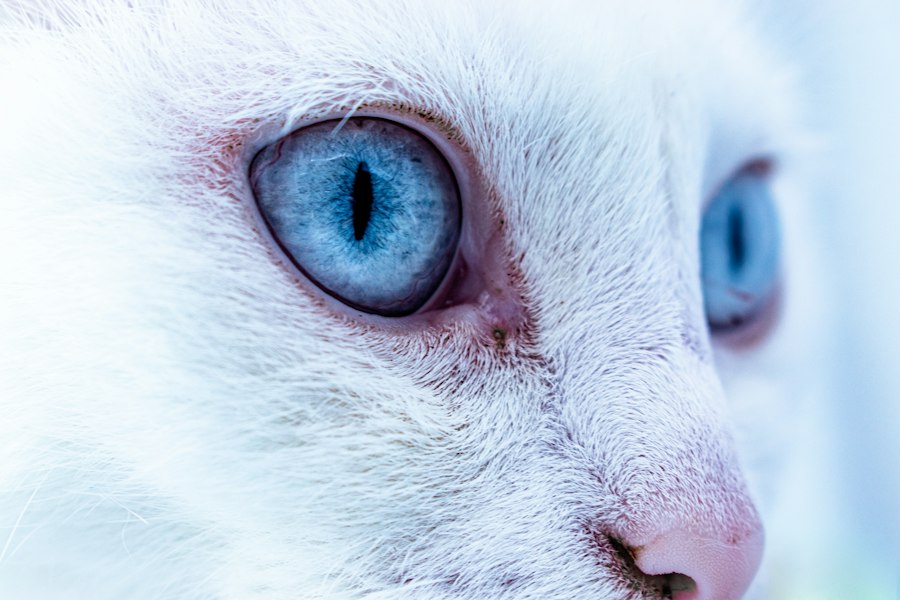
The connection between blue eyes and deafness in cats is rooted in complex genetics, specifically involving the gene responsible for coat color and pigmentation. This gene, often referred to as the W gene (for piebaldism or white spotting), plays a pivotal role. The W gene is dominant, meaning that if a cat inherits just one copy of this gene from either parent, it can result in white spotting. When this gene is expressed in a particular way, it can lead to a completely white coat and, consequently, blue eyes.
The Role of the White Domino Gene
The white domino gene (W) is a dominant gene that can cause a cat to be entirely white or have large patches of white fur. This gene is pleiotropic, meaning it affects multiple traits. One of the most significant effects of the W gene is its influence on the development of the inner ear and the melanocytes, which are the pigment-producing cells in the body.
How Melanocytes Relate to Hearing
Melanocytes are responsible for producing melanin, the pigment that gives color to fur, skin, and eyes. During embryonic development, melanocytes also migrate to the inner ear, where they play a crucial role in the development and function of the cochlea, the spiral-shaped cavity of the inner ear that contains the organs of hearing. Specifically, these melanocytes are involved in the maintenance of the stria vascularis, a tissue within the cochlea that produces endolymph, an essential fluid for hearing.
The Pigmentation-Hearing Connection
When the W gene is responsible for a cat’s white coat and blue eyes, it often signifies a lack of melanocytes in the skin and fur. Critically, this same lack of melanocytes can also affect the inner ear. If the melanocytes fail to migrate properly to the stria vascularis, or if they are deficient in number or function, the cochlea may not develop correctly. This developmental issue can lead to sensorineural deafness, which is the most common type of deafness in cats and is characterized by damage to the inner ear or the auditory nerve.
The intensity of the blue color in a cat’s eyes can sometimes offer clues. While not a definitive predictor, deeper or more intense blue coloration can sometimes be associated with a higher likelihood of deafness, as it might indicate a more profound lack of melanocytes. However, it is important to emphasize that this is not a foolproof indicator, and many blue-eyed cats have perfect hearing.
Inheritance Patterns and White Spotting
The inheritance of the W gene follows simple Mendelian genetics. A cat with two copies of the W gene (WW) will always be white and often deaf. A cat with one copy of the W gene (Ww) can also be white or have significant white spotting, and carries a higher risk of deafness. A cat with no copies of the W gene (ww) will have pigmentation and will not be predisposed to deafness due to this specific genetic mechanism.
It is important to distinguish the W gene from other genes that can cause white fur, such as the S locus (white spotting). While S locus can cause patches of white, it does not typically have the same direct impact on melanocyte migration to the inner ear that the W gene does. Therefore, a cat with small white paws or a white chest due to the S locus is not at the same elevated risk of deafness as a white cat with blue eyes potentially due to the W gene.
The Spectrum of Deafness in Blue-Eyed Cats
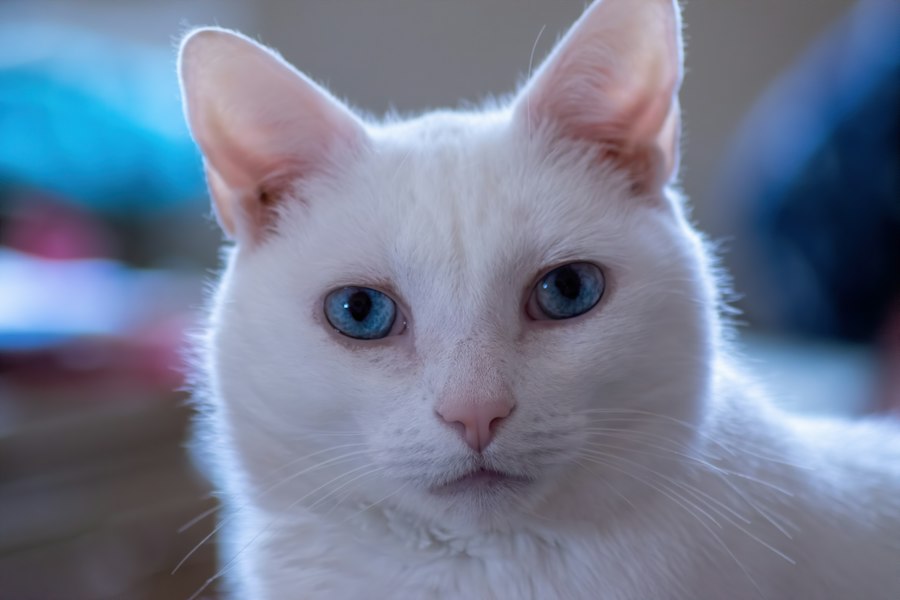
It is a common misconception that all blue-eyed cats are deaf. While there is a significant correlation, the reality is more nuanced. Deafness in blue-eyed cats exists on a spectrum, and the degree of hearing loss can vary considerably.
Unilateral vs. Bilateral Deafness
The most crucial distinction to make is between unilateral and bilateral deafness. Unilateral deafness means the cat is deaf in one ear, while bilateral deafness means the cat is deaf in both ears.
Understanding Unilateral Deafness
Unilateral deafness is more common in cats with one blue eye and one eye of a different color (heterochromia) or in cats with two eyes that are not entirely blue, but have some pigmentation. In these cases, the genetic defect affecting melanocyte migration may only impact one ear. A cat with unilateral deafness may not show obvious signs of hearing impairment in everyday life, as they can compensate with their hearing in the unaffected ear. However, they might be more startled by approaching from their deaf side or have difficulties locating the source of sounds from that direction.
The Impact of Bilateral Deafness
Bilateral deafness, where the cat is deaf in both ears, presents a more significant challenge. These cats will not respond to sounds that a hearing cat would readily detect, such as their name being called, the crinkle of a treat bag, or a knocking at the door. While visually striking, the lack of auditory input can lead to them being more easily startled and less aware of their surroundings, which can pose safety risks, especially if they are allowed to roam outdoors.
The Influence of Other Genes and Factors
While the W gene is a primary culprit, other genetic factors and even environmental influences can play a role in feline hearing. Certain breeds, like the Turkish Van and the Turkish Angora, are known for their predisposition to white coats and blue eyes, and thus, a higher incidence of deafness. However, even within these breeds, not all individuals will be deaf. Conversely, a cat might have blue eyes due to other genetic reasons not related to the W gene and still possess normal hearing. It is also worth noting that hearing loss can occur in any cat due to age, illness, injury, or exposure to loud noises, regardless of eye color.
Assessing Hearing in Blue-Eyed Cats
Determining whether a blue-eyed cat is deaf, and to what degree, requires careful observation and sometimes professional assessment. Simply observing their reaction to everyday sounds can be a starting point. However, more definitive tests can be conducted by veterinary professionals.
The BAER Test
The most accurate method for assessing hearing in cats is the Brainstem Auditory Evoked Response (BAER) test. This non-invasive test measures the electrical activity in the brainstem in response to auditory stimuli. It can precisely determine if a cat has normal hearing, unilateral deafness, or bilateral deafness. For breeders and owners of blue-eyed cats, especially those with white coats, the BAER test is an invaluable tool for understanding their cat’s auditory capabilities.
Practical Implications for Owners and Breeders
The knowledge that blue eyes can be linked to deafness carries significant practical implications for those who own or plan to acquire a blue-eyed cat, as well as for cat breeders. Responsible ownership and ethical breeding practices are paramount in ensuring the well-being of these animals.
Responsible Acquisition and Care
For prospective owners, understanding the potential for deafness is essential. If acquiring a blue-eyed kitten, it is advisable to inquire about the parents’ hearing status and consider having the kitten BAER tested, especially if it has a white coat or is predominantly white. While deafness does not diminish a cat’s capacity for love and companionship, it does require adjustments in care and environment to ensure their safety and quality of life.
Creating a Safe Environment
A deaf cat, particularly one with bilateral deafness, needs a safe and secure environment. This means keeping them indoors to protect them from traffic, predators, and other outdoor hazards. Visual cues become paramount for communication. Owners can use hand signals, vibrations, or even a flashlight to get their cat’s attention. Feeding times, grooming, and playtime should be consistent to help the cat anticipate events.
Communication and Training
Training a deaf cat can be incredibly rewarding. Positive reinforcement methods using treats and praise are highly effective. Owners can teach their cats a range of cues, from coming when called (using vibrations or a visual signal) to basic commands. Building a strong bond based on trust and understanding is key.
Ethical Breeding Practices
For breeders, the genetic link between white coats, blue eyes, and deafness presents an ethical dilemma. Responsible breeders will prioritize the health and well-being of their cats over purely aesthetic traits. This involves:
Genetic Testing and Counseling
Breeding cats with the W gene, especially for homozygous white cats, should be done with extreme caution. Breeders should understand the genetics involved and consider BAER testing all kittens, particularly those with white coats and blue eyes, before they are placed in new homes. Genetic counseling can also help breeders make informed decisions about which cats to breed.
Avoiding Predatory Breeding
It is crucial to avoid predatory breeding practices that solely focus on desirable traits like blue eyes without considering the potential for associated health issues. Breeders should strive to produce healthy, well-adjusted cats and educate potential buyers about the specific needs of blue-eyed cats.
Recent studies have explored the intriguing connection between blue eyes and deafness in cats, suggesting that certain genetic factors may play a significant role in this phenomenon. For a deeper understanding of this topic, you might find it interesting to read a related article that discusses various genetic traits in pets and their implications on health. This article can provide valuable insights into how eye color and hearing abilities are interconnected in felines. You can check it out here.
Beyond the Blue: Other Factors Affecting Feline Hearing
| Metric | Data/Value | Notes |
|---|---|---|
| Prevalence of Deafness in Blue-Eyed Cats | Approximately 40-50% | Higher incidence compared to other eye colors, especially in white cats |
| Prevalence of Deafness in Non-Blue-Eyed Cats | Less than 5% | Significantly lower than blue-eyed cats |
| Genetic Link | Strong correlation with white coat gene (W gene) | Blue eyes often result from the W gene, which is linked to deafness |
| Unilateral Deafness in Blue-Eyed Cats | About 20-30% | One ear deaf, often in cats with one blue eye |
| Bilaterally Deaf Blue-Eyed Cats | Approximately 20% | Both ears affected, more common in cats with two blue eyes |
| Blue Eyes as a Predictor | Moderate to Strong | Blue eyes alone do not guarantee deafness but indicate higher risk |
| Other Factors Influencing Deafness | Genetics, coat color, breed | White coat and W gene are primary contributors |
While the correlation between blue eyes and deafness is a significant one, it is vital to remember that it is not the only factor influencing a cat’s hearing. Numerous other elements can contribute to hearing loss in felines, regardless of their eye color.
Age-Related Hearing Loss
As cats age, just like humans, their hearing can decline. This gradual loss of auditory function is a natural part of the aging process. Older cats may appear to be less responsive to sounds, sleep more soundly, or have difficulty locating their food bowls. This is often referred to as presbycusis.
Medical Conditions and Illnesses
Several medical conditions can impact a cat’s hearing. Infections, particularly ear infections (otitis), can cause temporary or permanent hearing loss if left untreated. Neurological disorders, such as feline infectious peritonitis (FIP) or certain types of tumors, can also affect the auditory pathways. Certain medications, especially some antibiotics, can have ototoxic side effects, meaning they can damage the inner ear and lead to hearing loss.
Trauma and Injury
Physical trauma to the head or ears can also result in hearing impairment. Falls, fights with other animals, or even accidents involving loud noises can damage the delicate structures of the ear. Exposure to prolonged or extremely loud noises can also cause damage to the hair cells in the cochlea, leading to noise-induced hearing loss.
Congenital Conditions Beyond the W Gene
While the W gene is the most well-known genetic cause of deafness linked to white coats and blue eyes, other less common genetic mutations can also lead to congenital deafness. These can occur in cats of any coat color or eye color and are often breed-specific. For example, some genetic lines within certain breeds might have a predisposition to hearing loss due to other inherited factors.
The Importance of Holistic Feline Health
Ultimately, understanding the link between blue eyes and deafness is part of a broader appreciation for the multifaceted health of our feline companions. While specific genetic predispositions exist, a cat’s overall well-being is influenced by a complex interplay of genetics, environment, nutrition, and veterinary care.
Recognizing Signs of Hearing Loss
It is incumbent upon all cat owners to be observant of their pets’ behavior. Subtle changes can be indicative of hearing loss. These might include:
- Appearing startled more easily: A deaf cat might not hear someone approaching and therefore be more easily surprised.
- Increased vocalization or unusual vocalizations: Some deaf cats may vocalize more, or their meows may sound different, as they cannot hear their own vocalizations.
- Sleeping more soundly: A deaf cat may sleep more deeply as they are not disturbed by everyday noises.
- Lack of response to auditory cues: This is the most obvious sign, such as not reacting when their name is called or food is being prepared.
- Difficulty locating the source of sounds: If a cat consistently looks in the wrong direction when you are speaking to them, it could indicate hearing issues.
The Role of Veterinary Care
Regular veterinary check-ups are essential for monitoring a cat’s overall health, including their hearing. Veterinarians can identify potential ear infections or other medical conditions that could affect hearing. For owners of blue-eyed cats with white coats, discussing the possibility of deafness and the appropriateness of a BAER test with their vet is a proactive step towards ensuring their cat’s well-being.
A Different Kind of Communication
Deafness in a cat does not equate to a diminished capacity for love or companionship. In fact, many deaf cats develop incredibly strong bonds with their owners, often communicating through touch, scent, and visual cues. They can lead full, happy, and enriched lives when provided with a safe environment and understanding care. The “prediction” of deafness by blue eyes, therefore, should not be seen as a deterrent to ownership, but rather as an opportunity to provide a specialized and deeply rewarding form of companionship. By understanding the science, embracing responsible practices, and focusing on holistic feline health, owners can ensure that all cats, blue-eyed or otherwise, live their lives to the fullest.

Which Cat Color Lives Longest? The Research Has a Twist
FAQs
What is the connection between blue eyes and deafness in cats?
Blue eyes in cats are often associated with a higher likelihood of being deaf. This is due to a genetic link between the gene responsible for blue eye color and the gene responsible for white coat color, which can also lead to deafness.
How common is deafness in cats with blue eyes?
Deafness is more common in cats with blue eyes compared to cats with other eye colors. Studies have shown that up to 65-85% of white cats with blue eyes are deaf in one or both ears.
Can all cats with blue eyes be deaf?
Not all cats with blue eyes are deaf, but the likelihood of deafness is higher in cats with this eye color. Deafness can occur in one or both ears, and the severity can vary from partial to complete deafness.
Are there ways to test a cat’s hearing if they have blue eyes?
There are tests available to determine a cat’s hearing ability, such as the Brainstem Auditory Evoked Response (BAER) test. This test measures the brain’s response to sounds and can help determine if a cat is deaf or has hearing loss.
Can deafness in cats with blue eyes be managed?
Deafness in cats can be managed by making adjustments to their environment, such as using visual cues instead of auditory ones. It’s important to provide a safe and secure living space for deaf cats to ensure their well-being and quality of life.