
The faint whisper of the universe’s infancy, a relic of its fiery birth, saturates all of space. This is the Cosmic Microwave Background (CMB), a uniform glow of radiation that is arguably the most profound piece of evidence for the Big Bang theory. More than just a passive echo, the CMB is a treasure trove of cosmological information, meticulously studied by scientists to paint a remarkably detailed picture of the universe’s earliest moments and its subsequent evolution. Unveiling its secrets has revolutionized our understanding of everything from the universe’s age and composition to the very nature of cosmic structure formation.
The Echo of Creation: Genesis of the CMB
The Cosmic Microwave Background radiation is the afterglow of the Big Bang, a snapshot of the universe when it was merely about 380,000 years old. Before this epoch, the universe was a dense, opaque plasma of charged particles – electrons and protons – and photons. Photons, the particles of light, were constantly scattering off these charged particles, preventing them from traveling any significant distance. Imagine a thick fog; light cannot penetrate it. This state is known as the “photon epoch” or the “plasma era.”
As the universe expanded, it cooled. Eventually, it reached a critical temperature, around 3,000 Kelvin. At this temperature, the protons and electrons had lost enough kinetic energy to combine and form neutral hydrogen atoms. This process is called “recombination.” Suddenly, the photons were no longer constantly scattering off free electrons. They were free to travel unimpeded across the vast expanse of the cosmos. This moment is often referred to as the “era of decoupling” or “last scattering.” The photons that were released at this time have been traveling ever since, redshifting as the universe continues to expand. Today, these ancient photons are observed as the Cosmic Microwave Background radiation, with a temperature of approximately 2.7 Kelvin. Their spectrum perfectly matches that of a blackbody, a theoretical object that absorbs all incident electromagnetic radiation and emits radiation based solely on its temperature, a crucial prediction of the Big Bang model.
Early Discoveries and Theoretical Foundations
The theoretical underpinnings for the CMB’s existence were laid in the mid-20th century by physicists like George Gamow, Ralph Alpher, and Robert Herman. They predicted that if the Big Bang theory were correct, a residual radiation from the early hot universe should still be detectable today, albeit significantly cooled. Their calculations suggested a temperature of a few Kelvin.
The serendipitous discovery of the CMB occurred in 1964 by Arno Penzias and Robert Wilson, two radio astronomers at Bell Labs. While working on a highly sensitive microwave antenna, they detected a persistent, uniform background noise that they could not eliminate. They initially suspected it was interference from terrestrial sources or even pigeon droppings within their equipment. However, after meticulously ruling out all mundane explanations, they realized they had stumbled upon something far more significant. Coincidentally, Robert Dicke and his colleagues at Princeton University were actively searching for this very radiation, and when they heard about Penzias and Wilson’s findings, they immediately recognized its cosmological importance. The Nobel Prize in Physics was awarded to Penzias and Wilson in 1978 for their groundbreaking discovery.
The Uniformity and the Seeds of Structure
Upon its discovery, the CMB appeared remarkably uniform across the entire sky. This uniformity was a powerful confirmation of the Big Bang model, suggesting that the early universe was indeed very homogeneous. However, as observational techniques improved and more sensitive instruments were deployed, subtle variations, or anisotropies, were detected within the CMB. These tiny temperature fluctuations, on the order of parts per hundred thousand, are incredibly important. They represent regions of slightly higher and lower density in the early universe.
These minuscule density variations, imprinted on the CMB, are the seeds from which all the structure we observe in the universe today – galaxies, galaxy clusters, and superclusters – eventually grew. In regions of slightly higher density, gravity had a stronger pull, attracting more matter. Over billions of years, these overdense regions collapsed under their own gravity, forming the cosmic web of structures we see. Conversely, underdense regions became the vast voids that separate these structures. The distribution and amplitude of these anisotropies provide crucial information about the conditions in the early universe.
The Cosmic Microwave Background (CMB) provides profound insights into the early universe, revealing information about its age, composition, and the fundamental physics that governed its evolution. For a deeper understanding of the implications of the CMB and its significance in cosmology, you can explore a related article that discusses these concepts in detail. Check it out here: What Does the CMB Tell Us?.
Peering Through the Cosmic Fog: Observing the CMB
Observing the Cosmic Microwave Background radiation is a challenging endeavor. The radiation is incredibly faint and permeates all of space. Furthermore, Earth’s atmosphere itself emits microwave radiation, which can interfere with observations. To overcome these obstacles, scientists employ various strategies, including placing detectors on high-altitude balloons, in specialized aircraft, and most importantly, in space.
The first dedicated satellite mission to map the CMB was the Cosmic Background Explorer (COBE) satellite, launched in 1989. COBE’s primary instruments provided a precise measurement of the CMB’s blackbody spectrum, confirming its thermal origin, and also detected large-scale temperature anisotropies. The discovery of these anisotropies, particularly their characteristic pattern, was a major triumph for cosmology. COBE’s findings were so significant that they led to a Nobel Prize in Physics for John Mather and George Smoot in 2006.
Precision Measurements: From COBE to Planck
Following COBE, subsequent missions have built upon its legacy, providing increasingly precise measurements of the CMB. The Wilkinson Microwave Anisotropy Probe (WMAP), launched in 2001, delivered a more detailed map of the CMB anisotropies, revealing finer structures and improving the accuracy of cosmological parameters. WMAP’s observations allowed scientists to refine estimates of the universe’s age, its composition, and the rate of its expansion.
The most recent and arguably the most powerful mission to date was the Planck satellite, operated by the European Space Agency (ESA) and NASA. Launched in 2009, Planck mapped the CMB with unprecedented resolution and sensitivity. Its observations have provided the most detailed and accurate picture of the CMB to date, revealing subtle features that have allowed cosmologists to test and constrain various theoretical models of the universe. Planck’s data has been instrumental in solidifying our understanding of the standard cosmological model, often referred to as the Lambda-CDM model.
Ground-Based and Balloon-Borne Experiments
While space-based observatories have provided the most comprehensive data, ground-based and balloon-borne experiments have also played vital roles in CMB research. These experiments often focus on specific regions of the sky or particular aspects of the CMB, such as its polarization. Instruments like the Atacama Cosmology Telescope (ACT) and the South Pole Telescope (SPT) are located in dry, high-altitude environments where atmospheric interference is minimized. Balloon experiments, such as the Boomerang experiment, have also contributed valuable data by flying above the majority of the Earth’s atmosphere. These complementary approaches help to cross-check results and push the boundaries of our knowledge.
Unlocking Cosmic Secrets: What the CMB Reveals

The detailed maps of the CMB’s temperature fluctuations, especially those from WMAP and Planck, have been instrumental in addressing fundamental questions about the universe. By analyzing the statistical properties of these anisotropies, cosmologists can determine a suite of critical cosmological parameters that describe the universe’s fundamental characteristics.
Age, Composition, and Geometry of the Universe
One of the most significant revelations from CMB observations is the precise determination of the universe’s age. The characteristic patterns of the anisotropies, particularly the relative strengths of different angular scales, are sensitive to the expansion history and the age of the universe. Current estimates place the age of the universe at approximately 13.8 billion years.
Furthermore, the CMB data allows us to determine the composition of the universe. The relative heights and positions of the “acoustic peaks” in the CMB power spectrum – a statistical representation of the temperature variations – are directly related to the proportions of different components in the universe. These observations have revealed that the universe is predominantly composed of dark energy (about 68%) and dark matter (about 27%), with ordinary baryonic matter (the stuff we can see and interact with) making up only about 5%. This finding has profoundly shaped our understanding of cosmology, highlighting the enigmatic nature of dark energy and dark matter.
The CMB also provides insights into the geometry of the universe. The angular size of the largest fluctuations in the CMB depends on the curvature of space. Observations from missions like WMAP and Planck have shown that the CMB is consistent with a spatially flat universe, meaning that parallel lines remain parallel and the sum of angles in a triangle is 180 degrees. This finding has significant implications for the ultimate fate of the universe.
Evidence for Inflation and the Nature of Primordial Fluctuations
The remarkable uniformity of the CMB across vast distances, known as the horizon problem, posed a challenge for early Big Bang models. How could causally disconnected regions of the early universe have such similar temperatures? The theory of cosmic inflation offers a compelling solution. Inflation proposes a period of extremely rapid exponential expansion in the universe’s first fraction of a second. This rapid expansion would have stretched tiny quantum fluctuations to macroscopic scales, explaining the homogeneity and providing the seeds for structure formation.
The CMB observations provide strong support for the inflationary paradigm. The pattern of anisotropies, particularly the near scale-invariance of the fluctuations (meaning they are roughly the same size across different scales), aligns beautifully with predictions from inflationary models. Moreover, the detection of these primordial fluctuations, originating from quantum processes in the earliest moments of the universe, is a profound testament to our ability to probe the very fabric of reality.
Probing the Early Universe and Testing Cosmological Models
The CMB acts as a unique probe of the early universe, offering a window into a time long before the first stars and galaxies formed. By studying the subtle features within the CMB, scientists can test various cosmological models and theories. The precise measurements from Planck, for instance, have allowed for stringent tests of the standard Lambda-CDM model, confirming its remarkable success in describing the universe’s evolution.
However, the CMB also presents intriguing puzzles. While the standard model is highly successful, there are some persistent anomalies in the CMB data that hint at possible physics beyond our current understanding. These include unexpected alignments of large-scale temperature patterns and subtle deficits in certain fluctuations. While some of these might be statistical flukes or systematic errors, others continue to be areas of active research, potentially pointing towards new physics or refinements to our cosmological models.
The Polarization of Light: A Deeper Cosmic Signature
Beyond temperature variations, the Cosmic Microwave Background radiation also exhibits polarization. Polarization refers to the orientation of the electric field oscillations of the light waves. The CMB is polarized due to Thomson scattering off free electrons in the early universe. There are two main types of CMB polarization: E-modes and B-modes.
E-modes are a type of polarization that is analogous to the divergence of a vector field and can be generated by density fluctuations and gravitational lensing. B-modes, on the other hand, are a type of polarization analogous to the curl of a vector field. Their detection is a particularly significant goal in cosmology because B-modes are expected to be generated by gravitational waves from inflation.
Searching for Inflationary Gravitational Waves
The detection of B-modes in the CMB would provide direct evidence for the existence of primordial gravitational waves, a key prediction of most inflationary models. These gravitational waves would have been generated during the period of rapid expansion and would have imprinted a distinct signature on the polarization of the CMB.
Experiments like the POLARBEAR experiment and the South Pole Telescope’s polarization program have been actively searching for B-modes. While some tantalizing hints have emerged, a definitive detection of B-modes from inflation remains one of the most sought-after discoveries in modern cosmology. Confirming their existence would not only validate inflation but also open a new window onto the physics of the very early universe, potentially revealing information about the energy scale of inflation.
Constraints on Cosmological Parameters and New Physics
Measuring CMB polarization, both E-modes and B-modes, provides additional information that can further constrain cosmological parameters. For example, measurements of E-modes can help to disentangle the contributions from different sources of CMB anisotropies and improve the precision of existing parameters. The detection and characterization of B-modes would offer a unique probe of gravitational waves and could shed light on the specific models of inflation.
Moreover, anomalies or deviations from predicted polarization patterns could signal the presence of new physics beyond the standard cosmological model. This could include the existence of extra relativistic species in the early universe, the properties of neutrinos, or even exotic dark matter candidates. The quest to understand CMB polarization is therefore a crucial frontier in our ongoing exploration of the cosmos.
The Cosmic Microwave Background (CMB) provides crucial insights into the early universe, revealing information about its formation and evolution. For a deeper understanding of the implications of the CMB, you can explore a related article that discusses its significance in cosmology. This article delves into how the CMB has shaped our current understanding of the universe’s structure and history. To read more about this fascinating topic, visit Freaky Science.
The Future of CMB Cosmology: Next Steps and Unanswered Questions
| Metric | Description | What It Tells Us |
|---|---|---|
| Temperature Fluctuations | Variations in the Cosmic Microwave Background (CMB) temperature on the order of microkelvins | Information about the density fluctuations in the early universe that led to the formation of galaxies and large-scale structures |
| Power Spectrum | Graph showing the intensity of temperature fluctuations as a function of angular scale | Helps determine the geometry of the universe, the amount of dark matter, dark energy, and the overall composition of the cosmos |
| Polarization Patterns | Orientation of the CMB light waves, including E-modes and B-modes | Provides evidence for inflation theory and gravitational waves from the early universe |
| Average Temperature | Approximately 2.725 K | Confirms the universe has cooled down from a hot, dense state, supporting the Big Bang model |
| Acoustic Peaks | Peaks in the power spectrum corresponding to sound waves in the early universe plasma | Gives insight into the baryon density and the physics of the early universe |
The study of the Cosmic Microwave Background radiation has been a remarkably successful endeavor, transforming our understanding of the universe. However, the journey of CMB cosmology is far from over. Scientists are continuously developing new instruments and techniques to push the boundaries of precision and sensitivity, aiming to answer remaining questions and uncover new mysteries.
Advanced Observatories and Next-Generation Experiments
The future of CMB cosmology promises exciting new discoveries with the development of next-generation observatories. Projects like the Simons Observatory and CMB-S4 are designed to achieve unprecedented sensitivity and angular resolution, allowing for more detailed mapping of the CMB and a more thorough search for B-modes. These experiments will be crucial for refining our measurements of cosmological parameters, testing inflationary models with greater rigor, and potentially uncovering subtle deviations from the standard Lambda-CDM model.
There is also ongoing interest in exploring different frequency ranges and polarization techniques to extract even more information from the CMB. Future missions might focus on mapping the diffuse emission from our own galaxy more precisely to better subtract it from CMB signals, or on developing novel ways to detect and analyze the faintest CMB signals.
Lingering Puzzles and the Road Ahead
Despite the immense progress, several profound questions about the universe remain unanswered, and the CMB continues to be a vital tool in addressing them. The nature of dark energy, the mysterious force driving the accelerated expansion of the universe, is still a major puzzle. While the CMB confirms its existence and abundance, it doesn’t reveal its fundamental nature. Future CMB observations, combined with data from other cosmological probes, might offer clues to the physics behind dark energy.
Similarly, the identity of dark matter, the invisible substance that constitutes a significant portion of the universe’s mass, remains elusive. While CMB data constrains the amount of dark matter, it doesn’t tell us what particles it’s made of. New experiments designed to detect dark matter directly or indirectly will complement CMB studies in this ongoing quest.
Furthermore, the potential anomalies in the CMB data continue to spark debate and inspire new theoretical frameworks. Are these statistical fluctuations, or do they hint at a more complex early universe or even new fundamental forces? The ongoing investigation into these anomalies, armed with increasingly precise CMB data, holds the promise of revealing profound insights into the fundamental laws of physics. The CMB, the faint whisper from the universe’s dawn, continues to speak volumes, guiding us towards a deeper and more complete understanding of our cosmic home.
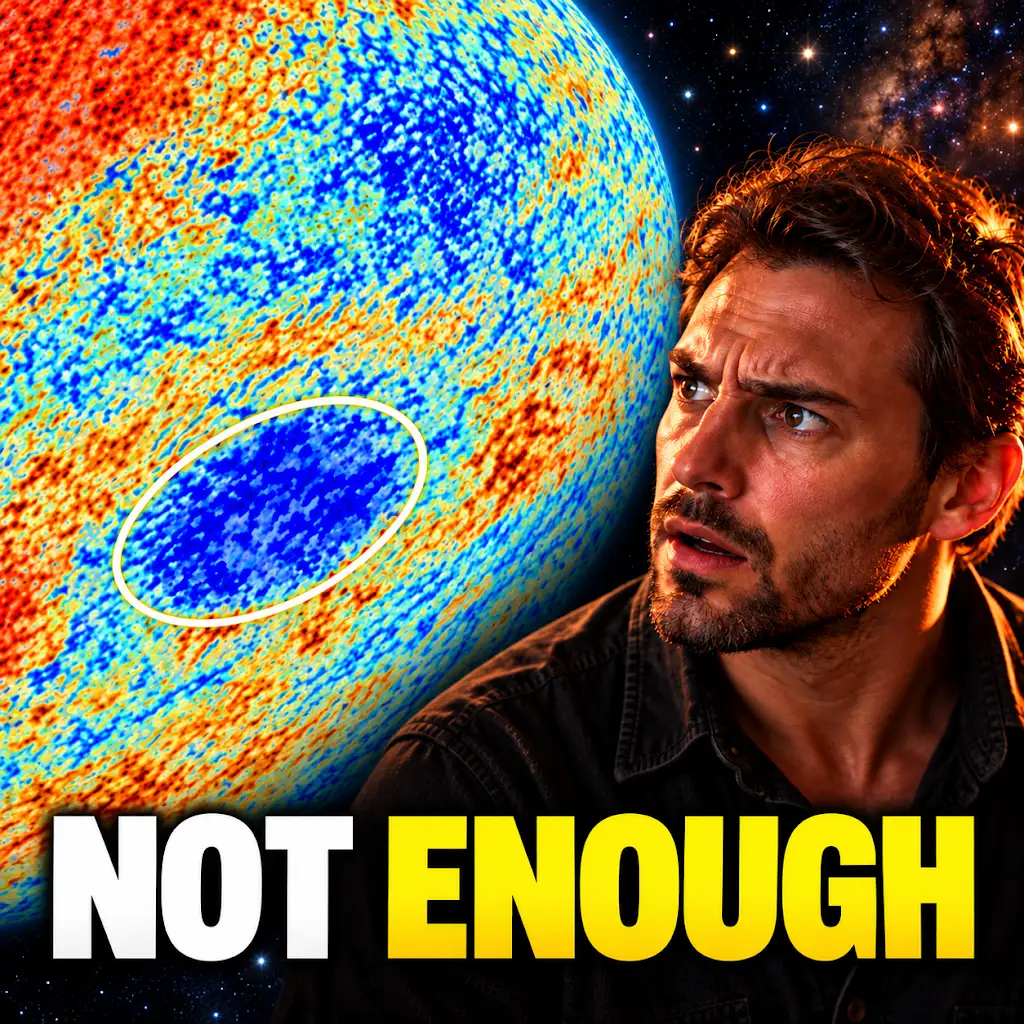
The Universe’s Cold Spot Has an Explanation. It’s Not Enough.
FAQs
What is the CMB?
The CMB, or Cosmic Microwave Background, is the afterglow of the Big Bang, which is the oldest light in the universe.
What does the CMB tell us about the universe?
The CMB provides valuable information about the early universe, such as its age, composition, and rate of expansion.
How is the CMB detected?
The CMB is detected using specialized instruments, such as telescopes and satellites, that can measure the faint microwave radiation coming from all directions in the sky.
What are some key discoveries made using the CMB?
Some key discoveries made using the CMB include the confirmation of the Big Bang theory, the presence of dark matter and dark energy, and the overall geometry of the universe.
How does studying the CMB help us understand the universe’s evolution?
Studying the CMB helps scientists understand how the universe evolved from its early hot, dense state to its current large-scale structure, providing insights into the formation of galaxies, stars, and other cosmic structures.