
The universe, in its infancy, was a place unlike any we can imagine today. It was a scorching, opaque inferno, a plasma of fundamental particles and radiation, far too hot and dense for atoms to form or light to travel freely. This primordial soup, however, did not remain in this state forever. As the cosmos expanded and cooled, a pivotal moment arrived, a cosmic dawn that would forever illuminate the universe’s history. This epoch, marking the liberation of light, is what scientists refer to as the Age of the Cosmic Microwave Background, a period and a phenomenon that offer unparalleled insights into the origins and evolution of everything we see and know.
The Crucible of the Early Universe
To understand the significance of the Cosmic Microwave Background (CMB), one must first grasp the conditions that prevailed in the universe’s earliest moments. For the first few hundred thousand years after the Big Bang, the universe was a remarkably different place. The extreme temperatures meant that electrons and protons were in a perpetual state of collision, preventing the formation of stable, neutral atoms. This state of matter, known as a plasma, was opaque to light. Photons, the particles of light, were constantly scattering off charged particles, much like light struggling to penetrate a dense fog. This made the early universe a place devoid of clear vision, where observers would see only a uniform, blinding glow. The energy density of this radiation was immense, dominating the universe’s composition and dictating its expansion rate. The universe was essentially a vast, hot, and energetic soup, a far cry from the structured cosmos of galaxies and stars we inhabit.
The Big Bang’s Immediate Aftermath
The immediate aftermath of the Big Bang, a period often termed the Planck epoch and the subsequent Grand Unification epoch, was characterized by energies far beyond anything achievable in terrestrial laboratories. In these fleeting moments, the fundamental forces of nature may have been unified, and exotic particles may have existed. As the universe expanded and cooled, these forces separated, and the familiar forces of gravity, electromagnetism, and the strong and weak nuclear forces emerged. During this intensely energetic phase, the universe was a crucible, forging the very fabric of spacetime and the elementary constituents of matter. The rapid expansion, known as inflation, smoothed out initial inhomogeneities and set the stage for the large-scale structure we observe today. Even though direct observation of these earliest moments is impossible due to their extreme nature, their effects are imprinted on the CMB, providing indirect evidence for these fundamental processes.
The Era of Recombination and Decoupling
The universe continued to expand and cool, and as the temperature dropped to around 3,000 Kelvin (approximately 2,700 degrees Celsius), a remarkable transformation occurred. This temperature was low enough for electrons to finally combine with protons and helium nuclei to form neutral atoms. This process is known as recombination. Once neutral atoms formed, the free electrons, which had been the primary scatterers of photons, were largely bound within these atoms. With significantly fewer free charged particles, the photons were no longer constantly impeded. They were set free, able to travel unimpeded across the cosmos. This event is called decoupling, and it marks the moment when the universe transitioned from an opaque plasma to a transparent gas. The light that was released at this time, approximately 380,000 years after the Big Bang, is what we now observe as the Cosmic Microwave Background radiation. This ancient light has been traveling across the universe for billions of years, carrying with it a snapshot of the universe at this crucial juncture.
The cosmic microwave background (CMB) radiation is a remnant from the early universe, providing crucial insights into its age and evolution. For a deeper understanding of the CMB and its significance in cosmology, you can read the related article available at Freaky Science. This article explores the origins of the CMB, its discovery, and what it reveals about the universe’s infancy, helping to contextualize its age and the implications for our understanding of cosmic history.
The Whispers of Creation: The Cosmic Microwave Background Radiation
The Cosmic Microwave Background radiation is more than just leftover heat; it is a treasure trove of cosmological information. Discovered serendipitously in 1964 by Arno Penzias and Robert Wilson, this faint glow permeating all of space is a near-perfect blackbody spectrum at a temperature of about 2.7 Kelvin. Its discovery provided strong evidence for the Big Bang theory, explaining the origin of this pervasive radiation. However, the true power of the CMB lies not in its uniformity but in its subtle anisotropies – tiny variations in temperature across the sky. These minute temperature fluctuations, on the order of parts per 100,000, are the imprints of quantum fluctuations that existed in the very early universe, stretched to cosmic scales by inflation and the subsequent expansion. They represent the seeds from which all the structure in the universe, from galaxies to galaxy clusters, eventually grew.
The Accidental Discovery
The discovery of the CMB was a paradigm shift in cosmology. Penzias and Wilson, working at Bell Labs, were trying to eliminate a persistent hiss in their microwave antenna. They meticulously ruled out all possible terrestrial and man-made sources, including pigeon droppings inside the antenna, which famously became a humorous anecdote. The residual noise, however, remained stubbornly present, coming from all directions in the sky with equal intensity. Simultaneously, a team of physicists at Princeton University, led by Robert Dicke, was actively searching for evidence of the Big Bang, including the theorized residual radiation. When the two groups learned of each other’s work, the connection was undeniable. Penzias and Wilson had stumbled upon the very relic radiation that the Princeton group was seeking. This accidental discovery earned Penzias and Wilson the Nobel Prize in Physics and cemented the Big Bang as the prevailing cosmological model.
The Signature of Early Universe Fluctuations
The near-perfect uniformity of the CMB is a testament to the astonishing smoothness of the early universe. However, the slight variations, the anisotropies, are what truly intrigue cosmologists. These temperature differences, though minuscule, are incredibly significant. They represent regions of slightly higher and lower density in the primordial plasma. Where the density was slightly higher, gravity had a slightly stronger pull, leading to the eventual formation of more matter, and hence, galaxies and clusters of galaxies. Conversely, regions of slightly lower density became the vast voids that separate these cosmic structures. Understanding the pattern and magnitude of these anisotropies allows scientists to probe the fundamental physics of the early universe, including the nature of dark matter and dark energy, and to constrain various cosmological parameters.
Probing the Universe’s Infancy: Observational Missions
The study of the Cosmic Microwave Background has been a driving force behind numerous ambitious space missions. Satellites equipped with highly sensitive instruments have been launched to map the CMB with unprecedented precision, capturing its faint signals and revealing its intricate patterns. These missions have moved beyond simply detecting the CMB to meticulously charting its temperature fluctuations across the entire sky. By analyzing the statistical properties of these fluctuations – their size, distribution, and intensity – cosmologists can test and refine their models of the universe. The data collected from these missions have been instrumental in determining fundamental cosmological parameters such as the age of the universe, its expansion rate, and its composition.
COBE: The Pioneer’s Gaze
The Cosmic Background Explorer (COBE) satellite, launched in 1989, was the first mission dedicated to precisely measuring the CMB across the entire sky. COBE’s primary objective was to confirm the blackbody spectrum of the CMB and to search for anisotropies. COBE spectacularly succeeded in both. It confirmed that the CMB has a near-perfect blackbody spectrum, providing robust evidence for its thermal origin from a hot, dense early universe. Even more remarkably, COBE detected the predicted temperature fluctuations, the very seeds of cosmic structure. This detection was a watershed moment in cosmology, solidifying the Big Bang theory and opening a new window into the universe’s infancy. The data from COBE, though less precise than later missions, were revolutionary and earned John Mather and George Smoot the Nobel Prize in Physics.
WMAP: A More Detailed Map
Following the success of COBE, the Wilkinson Microwave Anisotropy Probe (WMAP) was launched in 2001. WMAP was designed to provide a much more detailed and precise map of the CMB anisotropies than COBE. Equipped with more sensitive instruments and a longer observation period, WMAP was able to resolve smaller angular scales of the fluctuations, revealing a much richer tapestry of cosmic features. WMAP’s data allowed cosmologists to determine the universe’s age to within a few percent, measure its expansion rate with greater accuracy, and significantly constrain the relative proportions of ordinary matter, dark matter, and dark energy. The mission’s findings provided strong support for the Lambda-CDM model, the standard model of cosmology, which describes a universe dominated by dark energy and dark matter. WMAP’s detailed maps revealed the characteristic pattern of acoustic peaks in the CMB power spectrum, providing crucial insights into the composition and evolution of the early universe.
Planck: The Ultimate Precision
The European Space Agency’s Planck satellite, launched in 2009, represented the next leap in CMB observation. Planck’s mission was to map the CMB with unprecedented angular resolution and sensitivity, capturing even finer details of the temperature fluctuations. Planck’s instruments were designed to detect the polarization of the CMB radiation as well, which provides additional information about the early universe, particularly about the epoch of reionization. The data from Planck have delivered the most precise measurements to date of cosmological parameters, further refining our understanding of the universe’s composition, geometry, and history. Planck’s observations have helped to tighten constraints on inflationary models, provided evidence for the existence of exotic physics in the early universe, and continue to be a cornerstone for cosmological research. The meticulous detail in Planck’s maps allows scientists to probe the very fabric of spacetime and the fundamental laws governing our universe.
Unveiling Cosmic Secrets: What the CMB Tells Us
The Cosmic Microwave Background is not merely a relic; it is a living testament to the universe’s grand narrative. The subtle patterns etched into this ancient light are a cosmic Rosetta Stone, unlocking a wealth of information about the universe’s fundamental properties, its composition, and its evolutionary trajectory. By meticulously studying the CMB, cosmologists can deduce the age of the universe, its geometric curvature, and the relative abundance of its constituent components, including the enigmatic dark matter and dark energy that dominate the cosmic landscape. The detailed analysis of the CMB’s anisotropies allows for rigorous testing of theoretical models of the early universe and the fundamental forces that shaped it.
The Universe’s Age and Geometry
One of the most profound pieces of information gleaned from the CMB is the age of the universe. By measuring the rate of expansion and tracing the light back to its source at decoupling, cosmologists have determined that the universe is approximately 13.8 billion years old. The CMB also provides crucial evidence about the universe’s geometry. The angular scale of the largest fluctuations in the CMB is directly related to the curvature of spacetime. The observations from WMAP and Planck have strongly indicated that the universe is spatially flat, meaning that parallel lines will remain parallel forever and that the total energy density of the universe is very close to the critical density required for a flat geometry. This flatness has significant implications for the ultimate fate of the universe, suggesting that it will continue to expand indefinitely.
The Cosmic Recipe: Dark Matter and Dark Energy
The CMB has been instrumental in revealing the universe’s dominant constituents. The relative heights and positions of the peaks in the CMB power spectrum are sensitive to the proportions of baryonic matter (ordinary matter made of protons and neutrons), dark matter, and dark energy. The data consistently show that ordinary matter makes up only about 5% of the universe’s total energy density. Dark matter, a mysterious substance that interacts gravitationally but does not emit or absorb light, accounts for approximately 27%. The remaining 68% is attributed to dark energy, an even more enigmatic force driving the accelerated expansion of the universe. The CMB provides strong evidence for the existence and relative abundance of these unseen components, which are crucial to our understanding of cosmic evolution.
The Echoes of Inflation
The theory of cosmic inflation, a hypothetical period of extremely rapid expansion in the universe’s first fraction of a second, predicts that the CMB should exhibit a specific pattern of anisotropies. These predictions are largely consistent with the observations made by COBE, WMAP, and Planck. The smoothness of the CMB across vast distances, which poses a challenge to the standard Big Bang model without inflation, is naturally explained by this rapid expansion. Furthermore, inflation predicts that the initial density fluctuations should be nearly scale-invariant, meaning they have similar amplitude across different scales, a feature that is observed in the CMB. While direct detection of primordial gravitational waves, another prediction of inflation, remains a key goal, the CMB anisotropies provide compelling indirect evidence for this transformative early epoch.
The cosmic microwave background (CMB) radiation is a remnant from the early universe, providing crucial insights into its age and evolution. For those interested in exploring this topic further, a related article can be found on the fascinating aspects of cosmic history. You can read more about it in this detailed exploration of cosmic phenomena, which delves into the significance of the CMB and its implications for our understanding of the universe.
The Future of CMB Research and Unanswered Questions
| Metric | Value | Unit | Description |
|---|---|---|---|
| Age of the Cosmic Microwave Background (CMB) | 13.8 | billion years | Time since the CMB photons were emitted, marking the recombination era |
| Redshift of CMB | ~1100 | dimensionless | Redshift corresponding to the time when the CMB was released |
| Temperature of CMB today | 2.725 | Kelvin | Current average temperature of the CMB radiation |
| Time of recombination | 380,000 | years after Big Bang | Epoch when electrons and protons combined to form neutral hydrogen, releasing the CMB |
| Age of Universe | 13.8 | billion years | Current estimated age of the universe, same as the age of the CMB |
The study of the Cosmic Microwave Background has transformed our understanding of the universe, but it is far from a finished story. While current and past missions have provided incredibly precise measurements, there are still fundamental questions that remain at the forefront of cosmological inquiry. The pursuit of these answers continues to drive the development of next-generation instruments and theoretical frameworks, promising further revelations about the universe’s deepest mysteries. The ongoing exploration of the CMB is a testament to humanity’s enduring curiosity and our unyielding quest to comprehend our place within the vast cosmic expanse.
Searching for Primordial Gravitational Waves
One of the most sought-after signatures in the CMB is the imprint of primordial gravitational waves, which are predicted by many inflationary models. These gravitational waves would leave a specific pattern of polarization in the CMB, known as B-modes. Detecting these B-modes would provide direct evidence for cosmic inflation and offer invaluable insights into the physics of the very early universe, potentially revealing the energy scale at which inflation occurred. While tentative detections have been made, they have yet to be definitively confirmed and separated from foreground contamination. Future experiments, such as the Simons Observatory and CMB-S4, are designed with enhanced sensitivity and sophisticated techniques to definitively search for these elusive primordial gravitational waves.
Refining Cosmological Models and Exploring New Physics
The precision of CMB measurements has pushed the boundaries of our standard cosmological model, the Lambda-CDM model. While this model has been remarkably successful, subtle discrepancies and unexplained phenomena continue to emerge, prompting cosmologists to explore potential extensions or modifications. For instance, there are persistent tensions between CMB-derived values of certain cosmological parameters and those measured through other cosmological probes, such as the Hubble constant. These tensions could point towards new physics beyond the Standard Model of particle physics or new components in the universe. The CMB continues to serve as a crucial benchmark for testing theoretical predictions and for guiding the search for new physics, from the nature of dark matter to the possibility of extra dimensions.
The Epoch of Reionization and Beyond
The CMB also carries information about later epochs in cosmic history, such as the epoch of reionization. This period, when the first stars and galaxies formed and their ultraviolet radiation reionized the neutral hydrogen that filled the universe, left its mark on the CMB. Studying the polarization of the CMB can help to pinpoint when this crucial transition occurred. Beyond reionization, the CMB serves as a fundamental reference point for understanding the distribution and evolution of cosmic structures. As observational techniques improve and theoretical models become more sophisticated, the CMB will undoubtedly continue to unlock further secrets of the universe, from its earliest moments to its ongoing evolution, solidifying its role as our most powerful window into cosmic history.
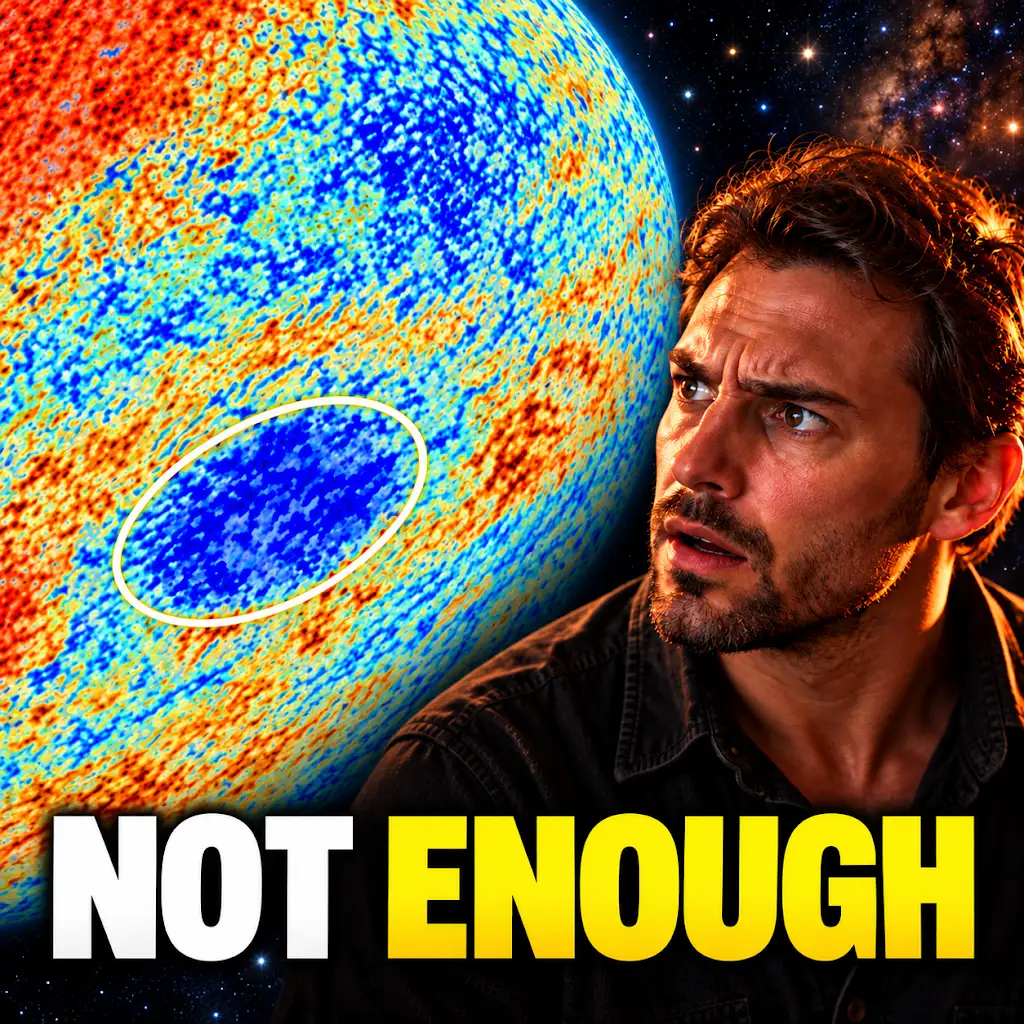
The Universe’s Cold Spot Has an Explanation. It’s Not Enough.
FAQs
What is the cosmic microwave background?
The cosmic microwave background (CMB) is the afterglow of the Big Bang, which is the oldest light in the universe.
How old is the cosmic microwave background?
The cosmic microwave background is approximately 13.8 billion years old, which is the age of the universe itself.
How was the cosmic microwave background discovered?
The cosmic microwave background was accidentally discovered in 1965 by Arno Penzias and Robert Wilson, who were awarded the Nobel Prize in Physics for their discovery.
What does the cosmic microwave background tell us about the early universe?
Studying the cosmic microwave background provides valuable insights into the early universe, such as its temperature, density, and composition shortly after the Big Bang.
How has the study of the cosmic microwave background contributed to our understanding of the universe?
The study of the cosmic microwave background has helped confirm the Big Bang theory, provided evidence for the expansion of the universe, and supported the formation of structures like galaxies and galaxy clusters.