The cosmos, in its unfathomable expanse, presents phenomena that defy ordinary comprehension, pushing the boundaries of our understanding and sparking endless curiosity. Among these cosmic enigmas, black holes, dark matter, and quasars stand out as particularly perplexing and profoundly influential. They represent extreme manifestations of physics, remnants of cosmic evolution, and fundamental components of the universe’s grand structure, yet their true nature remains shrouded in mystery. Delving into these “Universe’s Oddities” offers a glimpse into the most powerful forces and the most elusive substances that shape the reality we inhabit.
The Event Horizon’s Embrace: Unraveling Black Holes
Black holes are perhaps the most iconic of cosmic oddities, conceived from Einstein’s theory of general relativity and later confirmed through observation. They are regions of spacetime where gravity is so strong that nothing, not even light, can escape. This extreme gravitational pull originates from an immense concentration of mass packed into an infinitesimally small point known as a singularity. The boundary beyond which escape is impossible is called the event horizon, a one-way membrane that marks the point of no return.
Formation and Stellar Demise
The most common type of black hole, stellar black holes, are born from the catastrophic collapse of massive stars. When a star many times the mass of our Sun exhausts its nuclear fuel, it can no longer withstand the outward pressure generated by fusion against the inward pull of its own gravity. The core implodes under its own weight, triggering a supernova explosion that blasts the star’s outer layers into space. If the remaining core is massive enough, it will continue to collapse, crushing itself into a singularity and forming a black hole. This process is a dramatic testament to the violent lifecycle of stars and the extreme consequences of gravity’s dominion.
Supermassive Black Holes: The Galactic Anchors
Beyond stellar black holes, the universe hosts supermassive black holes, entities of extraordinary scale residing at the centers of most, if not all, galaxies, including our own Milky Way. These behemoths can have masses millions or even billions of times that of our Sun. Their formation is still a subject of active research, with theories ranging from the gradual accretion of matter over cosmic timescales to the rapid collapse of vast gas clouds in the early universe, or even the merger of smaller black holes. Regardless of their origin, supermassive black holes play a crucial role in galactic evolution, influencing the star formation rates and overall dynamics of their host galaxies through their powerful gravitational influence and the energetic outflows they can produce.
The Accretion Disk and Relativistic Jets
As matter falls towards a black hole, it doesn’t plunge directly in. Instead, it forms a swirling disk of gas and dust around the black hole, known as an accretion disk. Friction within this disk heats the material to incredibly high temperatures, causing it to emit intense radiation across the electromagnetic spectrum, from radio waves to X-rays. This radiation is what allows astronomers to detect and study black holes, as the black hole itself is invisible. In some cases, the immense gravitational forces and magnetic fields at play near the black hole can accelerate particles to near the speed of light, launching powerful jets of plasma outward, perpendicular to the accretion disk. These relativistic jets can extend for hundreds of thousands of light-years, impacting their galactic environment.
Hawking Radiation and the Mystery of the Singularity
While black holes are often thought of as eternal cosmic traps, theoretical physics, particularly through the work of Stephen Hawking, suggests they might not be so. Hawking radiation proposes that black holes slowly lose mass over time through quantum effects near the event horizon. This process is incredibly slow for stellar and supermassive black holes, taking vastly longer than the current age of the universe. However, it raises profound questions about the ultimate fate of matter that falls into a black hole and the nature of information preservation in these extreme environments. The singularity at the heart of a black hole remains a point of intense theoretical debate, as our current laws of physics break down at this infinitely dense point.
The universe is full of strange and fascinating phenomena that continue to baffle scientists and ignite the imagination of enthusiasts. One such exploration into the peculiarities of the cosmos can be found in the article “Oddities of the Universe” on Freaky Science. This piece delves into various anomalies, from dark matter to black holes, and examines how these mysteries shape our understanding of the universe. To learn more about these intriguing topics, you can read the full article here: Oddities of the Universe.
The Unseen Architect: Exploring Dark Matter

If black holes represent the ultimate concentration of visible mass, dark matter represents its complete opposite – an invisible, enigmatic substance that constitutes an estimated 85% of the total matter in the universe. It is “dark” because it does not interact with light or any other form of electromagnetic radiation, making it undetectable by conventional telescopes. Its existence is inferred solely through its gravitational effects on visible matter.
The universe is filled with fascinating oddities that challenge our understanding of reality, from black holes to dark matter. For those intrigued by the peculiarities of the cosmos, a related article can be found at Freaky Science, where you can explore even more astonishing phenomena that defy conventional wisdom. These cosmic mysteries not only captivate our imagination but also push the boundaries of scientific inquiry, revealing just how little we truly know about the vast expanse beyond our planet.
Gravitational Lensing: Bending Light’s Path
One of the most compelling pieces of evidence for dark matter comes from the phenomenon of gravitational lensing. According to general relativity, mass warps spacetime, causing light to bend as it passes by. When light from distant galaxies travels through regions of space containing large amounts of dark matter, its path is deflected. This bending can distort the images of these distant galaxies, creating multiple images or arcs. By analyzing the degree of lensing, astronomers can map the distribution of mass, revealing that there is far more mass present than can be accounted for by visible stars and gas.
Galactic Rotation Curves: A Galactic Discrepancy
Another crucial piece of evidence lies in the rotation of galaxies. If galaxies were composed solely of the visible matter we can observe, the stars on the outer edges would orbit the galactic center much slower than those closer in, much like planets in our solar system. However, observations consistently show that stars in the outer regions of galaxies orbit at nearly the same speed as those closer to the center. This discrepancy indicates the presence of a significant amount of unseen mass, a halo of dark matter, extending far beyond the visible boundaries of the galaxy, providing the extra gravitational pull to keep these outer stars in their swift orbits.
The Cosmic Web: Dark Matter’s Large-Scale Influence
On the largest scales, dark matter is thought to be the scaffolding upon which the universe is built. Cosmological simulations show that the distribution of visible matter, the galaxies and clusters of galaxies we observe, is not random. Instead, they are clustered in vast filamentary structures, forming what is known as the cosmic web. These structures are predicted to arise from the gravitational attraction of dark matter in the early universe. Regions of higher dark matter density would have acted as gravitational seeds, pulling in ordinary matter and leading to the formation of these large-scale cosmic structures.
Candidate Particles: Searching for the Elusive
The nature of dark matter remains one of the biggest unsolved mysteries in physics. Scientists have proposed various candidates, but none have been definitively identified. Among the leading contenders are Weakly Interacting Massive Particles (WIMPs), hypothetical particles that interact only through gravity and the weak nuclear force. Other theories involve axions, even lighter particles, or primordial black holes formed in the very early universe. Experiments around the world are actively searching for these elusive particles through direct detection (looking for faint interactions with ordinary matter), indirect detection (searching for annihilation products like gamma rays), and collider experiments (trying to produce dark matter particles).
Cosmic Beacons of Youth: The Brilliance of Quasars
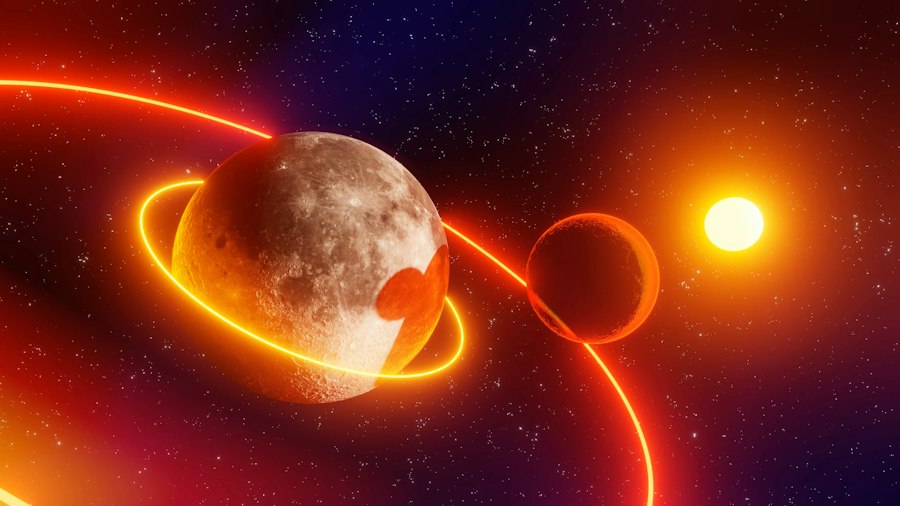
Quasars, short for quasi-stellar radio sources, are among the most luminous and distant objects in the observable universe. These intensely bright nuclei of active galaxies are powered by supermassive black holes at their centers, actively feeding on surrounding matter. Their immense luminosity makes them visible across billions of light-years, offering us a window into the universe’s younger epochs.
The Engines of Quasars: Accretion and Luminosity
The extreme brightness of quasars is attributed to the process of accretion onto their central supermassive black holes. As gas, dust, and even stars are pulled towards the black hole, they form a superheated accretion disk. The immense gravitational forces and the churning of matter generate prodigious amounts of energy, radiating across the electromagnetic spectrum. This radiant output can outshine the entire host galaxy, making the quasar the dominant observable feature. The rate at which the black hole consumes matter directly correlates with the quasar’s luminosity; the faster it feeds, the brighter it shines.
Redshift and Cosmic Distances: Looking Back in Time
Quasars are characterized by their extremely high redshifts. Redshift is the phenomenon where light from distant objects is stretched to longer, redder wavelengths as the universe expands. A high redshift indicates that the light has traveled a vast distance, meaning we are observing the quasar as it was billions of years ago. This makes quasars invaluable tools for studying the early universe, its composition, and the processes that shaped it during its formative stages. They act as cosmic lighthouses, illuminating the conditions of the universe when it was much younger.
Evolution of Galaxies: Quasars as Galactic Architects
The study of quasars provides crucial insights into the evolution of galaxies. In the early universe, galaxies were likely more chaotic and prone to mergers and interactions. These events would have fueled their central supermassive black holes, triggering quasar activity. As galaxies matured and stabilized, their fuel supply for quasars would have diminished, leading to the quiescent state observed in most galaxies today. Therefore, quasars are seen as transient phases in the life of galaxies, marking periods of intense activity and rapid growth. Understanding quasars helps us piece together the story of how galaxies formed and evolved into the diverse structures we see today.
Jets and Their Cosmic Impact
Similar to black holes in general, quasars can also produce powerful relativistic jets. These jets, often carrying enormous amounts of energy and charged particles, can travel for immense distances and significantly impact their surrounding intergalactic medium. They can heat up gas, influence star formation in nearby galaxies, and even contribute to the large-scale structure of the universe. The interplay between the quasar’s central engine, its accretion disk, and its powerful jets is a complex dance that shapes the cosmic landscape on grand scales.
The Interconnected Tapestry: Unifying the Oddities
While black holes, dark matter, and quasars may appear as distinct phenomena, they are deeply interconnected and play vital roles in the grand cosmic narrative. Their existence and interactions sculpt the universe, driving its evolution and presenting profound questions for physicists and astronomers alike.
Gravity: The Universal Architect
The common thread weaving through these oddities is gravity. It is the relentless force that crushes stars into black holes, holds galaxies together through the unseen influence of dark matter, and fuels the immense power of quasars by drawing in matter towards supermassive black holes. Understanding gravity, especially in its extreme manifestations, is key to deciphering these cosmic puzzles. General relativity provides the framework for understanding black holes and the gravitational lensing attributed to dark matter, while the dynamics of accretion disks and jets in quasars are also governed by its principles.
The Early Universe and Cosmic Structures
These oddities were particularly influential in the early universe. The seeds of large-scale structures, the cosmic web, are believed to have originated from density fluctuations in dark matter. Supermassive black holes, likely forming relatively early in cosmic history, would have been highly active as quasars, influencing the formation and evolution of the first galaxies. The very existence of these extreme objects suggests a dynamic and violent early universe, vastly different from the more settled cosmos we observe today.
Ongoing Mysteries and Future Explorations
Despite significant advancements, the fundamental nature of dark matter remains elusive, and the precise mechanisms of supermassive black hole formation and quasar ignition are still subjects of intense research. The singularity within a black hole continues to challenge our understanding of physics. Future observatories, both ground-based and space-borne, coupled with theoretical advancements, promise to shed more light on these cosmic enigmas. The James Webb Space Telescope, for instance, is providing unprecedented views of distant quasars, while experiments designed to detect dark matter continue to push the boundaries of sensitivity. The ongoing exploration of these “Universe’s Oddities” is not just a pursuit of knowledge for its own sake; it is a journey to understand the fundamental laws that govern our existence and the ultimate fate of the cosmos. Each discovery, each unanswered question, propels us further into the astonishing grandeur and profound mysteries of the universe.
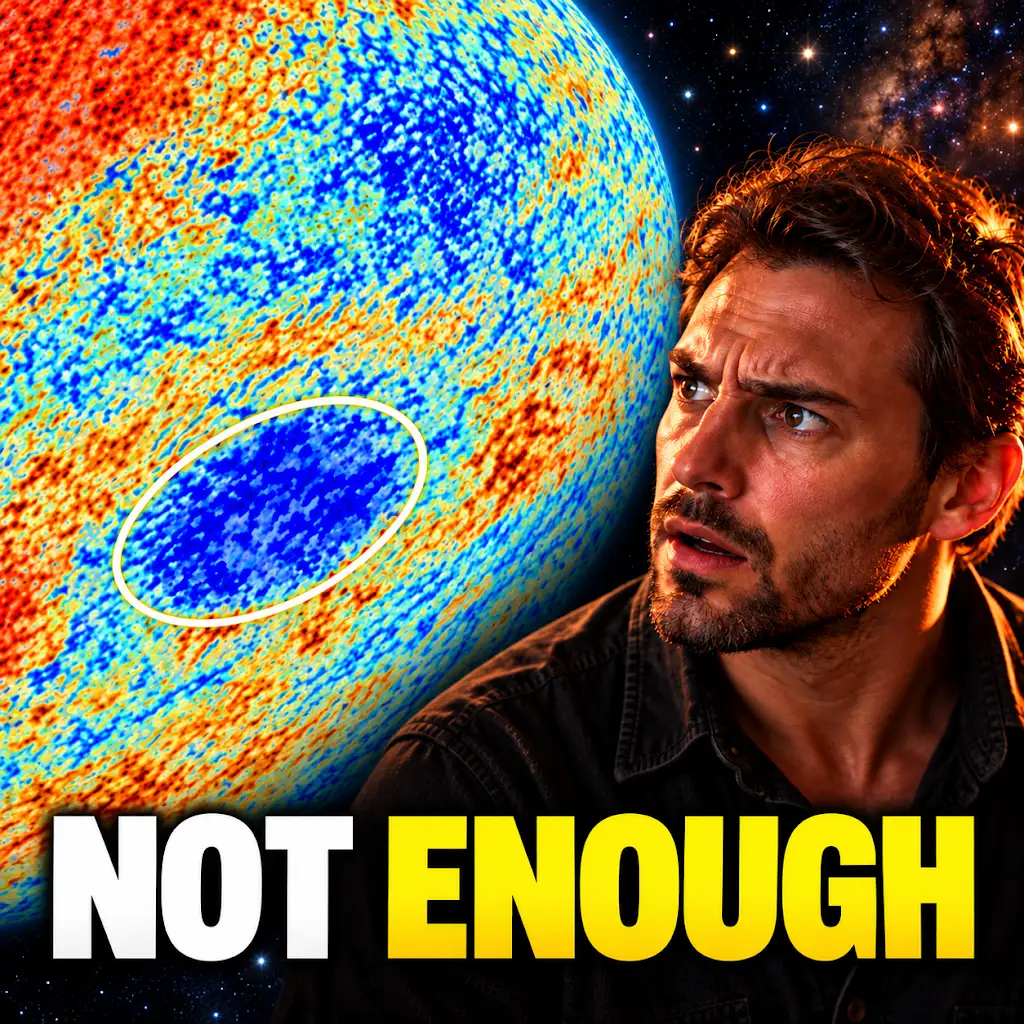
The Universe’s Cold Spot Has an Explanation. It’s Not Enough.
FAQs
What are some examples of oddities in the universe?
Some examples of oddities in the universe include black holes, dark matter, and quasars.
How do black holes defy our understanding of physics?
Black holes defy our understanding of physics by having such strong gravitational forces that not even light can escape from them, leading to a singularity at their center.
What is dark matter and why is it considered an oddity?
Dark matter is a mysterious substance that makes up about 27% of the universe, yet it does not emit, absorb, or reflect light, making it invisible and difficult to detect directly.
What are quasars and why are they considered oddities?
Quasars are extremely bright and distant objects powered by supermassive black holes. They are considered oddities because of their high energy output and their location at the centers of galaxies.
How do these oddities of the universe contribute to our understanding of the cosmos?
Studying these oddities of the universe helps scientists expand their knowledge of physics, cosmology, and the fundamental forces that govern the universe, leading to new discoveries and advancements in our understanding of the cosmos.