
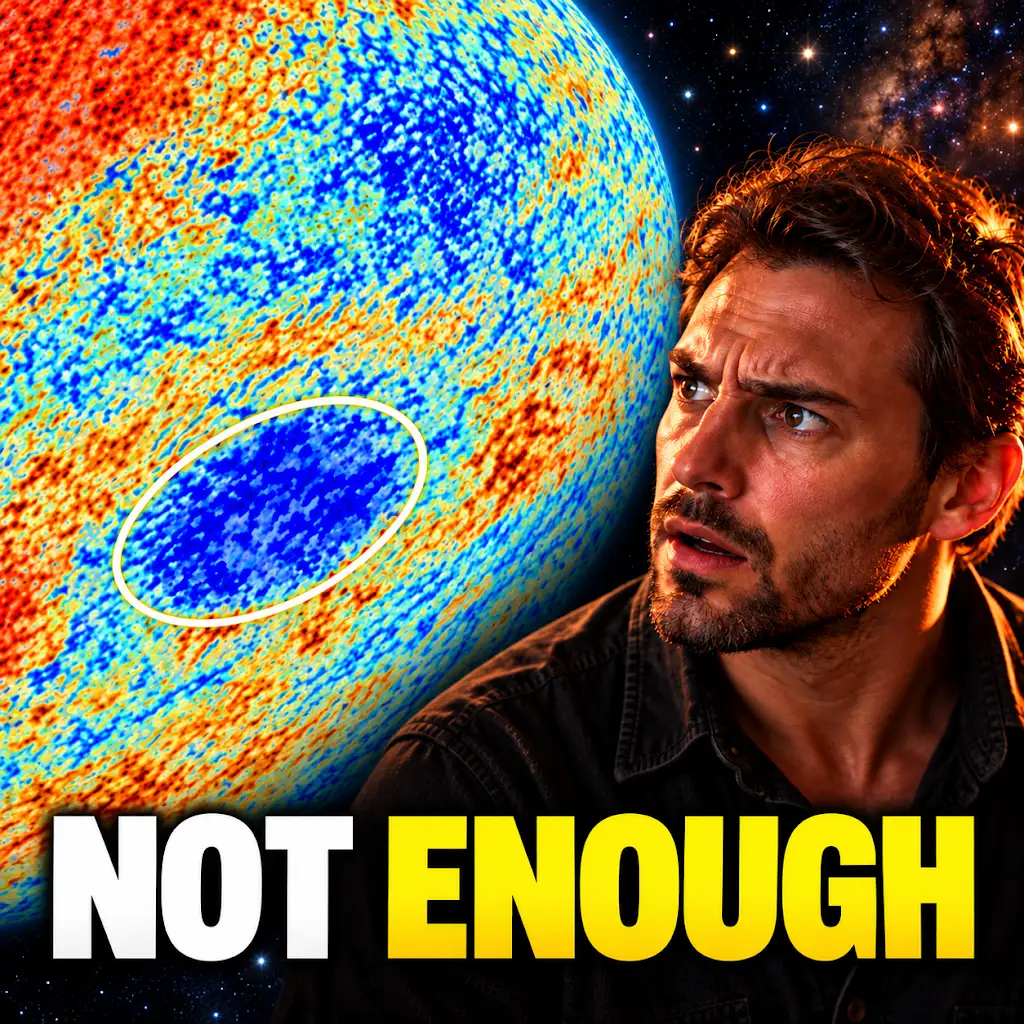
The vast expanse of the cosmos, a tapestry woven with starlight and cosmic dust, holds within it a profound mystery: the Cold Spot in the Cosmic Microwave Background (CMB). This enigmatic region, significantly colder than its surroundings, challenges our current understanding of the universe and the fundamental physics that govern it. For decades, scientists have been meticulously studying this anomaly, poring over the faint whispers of ancient light that have traveled billions of years to reach us. The exploration of the CMB Cold Spot is not merely an academic pursuit; it is a quest to unravel the very origins and evolution of the universe, pushing the boundaries of our knowledge and inspiring new theoretical frameworks.
The CMB, often referred to as the afterglow of the Big Bang, is a faint bath of radiation that permeates all of space. It is a snapshot of the universe when it was only about 380,000 years old, a time when the cosmos had cooled enough for atoms to form, allowing photons to travel freely for the first time. This ancient light, observed across the entire sky, exhibits remarkably uniform temperature, with tiny fluctuations that represent the seeds of the large-scale structures we observe today, such as galaxies and galaxy clusters. However, amidst this near-perfect uniformity, the CMB Cold Spot stands out as a glaring deviation, a vast area where the temperature dips by a few millikelvins below the average. Its sheer size, spanning several degrees across the celestial sphere, makes it one of the most significant anomalies detected in the CMB. The implications of this anomaly are far-reaching, potentially hinting at phenomena beyond the standard cosmological model.
Unveiling the Cosmic Microwave Background
The Cosmic Microwave Background is a cornerstone of modern cosmology, providing irrefutable evidence for the Big Bang theory. Its discovery in 1964 by Arno Penzias and Robert Wilson, while they were working on microwave receivers, was a serendipitous breakthrough that revolutionized our understanding of the early universe. The CMB is not a uniform entity; it is imbued with subtle temperature variations, or anisotropies, that are incredibly informative. These anisotropies, measured with exquisite precision by missions like the Wilkinson Microwave Anisotropy Probe (WMAP) and the Planck satellite, are crucial for understanding the initial conditions of the universe, its composition, and its evolution over time. The power spectrum of these anisotropies, a statistical representation of their intensity across different angular scales, aligns remarkably well with the predictions of the Lambda-CDM model, the prevailing paradigm of cosmology. This model describes a universe composed of dark energy, dark matter, and ordinary matter, expanding at an accelerating rate.
The Genesis of the CMB
The story of the CMB begins in the fiery crucible of the Big Bang. In the nascent moments of the universe, the cosmos was an incredibly hot and dense plasma, a soup of fundamental particles. Photons, the particles of light, were constantly interacting with charged particles like electrons and protons, preventing them from traveling far. As the universe expanded and cooled, it reached a critical point known as the epoch of recombination, approximately 380,000 years after the Big Bang. At this stage, the temperature dropped sufficiently for electrons and protons to combine, forming neutral hydrogen atoms. This process rendered the universe transparent to photons, allowing them to propagate freely through space. These liberated photons, stretched and cooled by the ongoing expansion of the universe, are what we observe today as the CMB. Their temperature, initially around 3000 Kelvin, has since cooled to about 2.7 Kelvin due to the expansion.
Anomalies in the CMB Landscape
While the CMB is largely consistent with theoretical predictions, certain anomalies have emerged from high-precision observations, posing intriguing puzzles for cosmologists. The CMB Cold Spot is perhaps the most prominent of these. Other notable anomalies include the “axis of evil,” a curious alignment of some large-scale features in the CMB that appears to correlate with the plane of our solar system, and the “hemispherical power asymmetry,” where one hemisphere of the CMB appears to have slightly more power than the other. These anomalies, while statistically improbable, are not considered definitive proof of new physics. They could, in some cases, be statistical fluctuations or artifacts of our observing methods. However, their persistence and the sheer magnitude of the Cold Spot warrant serious investigation.
Recent studies have highlighted the existence of the largest cold spot in the Cosmic Microwave Background (CMB), which has intrigued cosmologists and astrophysicists alike. This anomaly, often referred to as the “Cold Spot,” raises questions about the early universe and the distribution of cosmic structures. For a deeper understanding of this phenomenon and its implications for our comprehension of the universe, you can read more in this related article on Freaky Science: Freaky Science.
The Enigma of the Cold Spot

The CMB Cold Spot, also known as the WMAP cold spot or the Planck cold spot, depending on the instrument that first characterized it, is a region of the sky where the CMB temperature is significantly lower than the average. Its detection has been a subject of intense scrutiny and debate within the scientific community. While its existence is well-established by multiple observational missions, its origin remains a profound mystery. The statistical significance of the Cold Spot is high enough that it cannot be easily dismissed as a random fluctuation within the standard cosmological model. This has led to a proliferation of theoretical explanations, ranging from the mundane to the exotic.
Characteristics and Discovery
The CMB Cold Spot was first identified in data from the WMAP satellite and later confirmed with higher resolution and sensitivity by the Planck satellite. It is a vast, roughly circular region located in the constellation Eridanus, covering an area of approximately 1.5 billion light-years in diameter. Within this region, the CMB temperature is about 0.2 millikelvin cooler than the average background temperature of 2.725 Kelvin. To put this into perspective, the temperature difference is equivalent to a change of about 0.01% of the total temperature. While this might seem small, in the context of the remarkably uniform CMB, it is a substantial deviation. The sheer size of the Cold Spot is also remarkable, making it one of the largest individual features observed in the CMB.
Statistical Significance and Challenges to Standard Cosmology
The statistical significance of the CMB Cold Spot is a key factor driving the interest in its origin. According to the standard Lambda-CDM model, the probability of observing a cold spot of such a large angular size and temperature deficit is extremely low. This has led some cosmologists to speculate that the Cold Spot might be evidence for physics beyond the standard model. These challenges often revolve around the assumption of homogeneity and isotropy on the largest scales, which is a fundamental tenet of the Big Bang theory. If the Cold Spot is indeed a real cosmic structure with an exotic origin, it could force a reevaluation of our understanding of the universe’s fundamental properties. However, it is crucial to remember that statistical anomalies, while intriguing, require rigorous verification and exploration of all plausible conventional explanations before invoking new physics.
Hypotheses for the Cold Spot’s Origin

The perplexing nature of the CMB Cold Spot has spurred a multitude of theoretical hypotheses, each attempting to explain this cosmic anomaly. These proposed solutions span a wide spectrum, from relatively straightforward astrophysical explanations to more speculative concepts rooted in the frontiers of theoretical physics. Scientists are exploring every avenue, from the possibility of vast cosmic structures to the potential existence of parallel universes.
The Supervoid Hypothesis
One of the most widely discussed explanations for the CMB Cold Spot is the existence of a “supervoid.” A supervoid is an enormous region of space that contains far fewer galaxies and matter than the cosmic average. According to the Sachs-Wolfe effect, photons traveling through a gravitational potential well, such as that created by a concentration of matter, gain energy and become hotter. Conversely, photons traveling out of a region of lower density, like a supervoid, lose energy and appear cooler. If the CMB Cold Spot is indeed caused by a supervoid, it would imply the existence of an unprecedentedly large and underdense region in the universe. While supervoids are known to exist, the scale and emptiness required to explain the Cold Spot are significantly larger than any previously observed.
The Loma-Bonita Supervoid
A specific candidate supervoid that has been linked to the CMB Cold Spot is the Loma-Bonita supervoid, located in the direction of the Cold Spot. While this void is vast, current estimates of its depth and extent suggest it may not be sufficient on its own to fully account for the observed temperature anomaly. However, ongoing research continues to refine our understanding of this and other potential voids, and it remains a leading conventional explanation.
Exotic Explanations and New Physics
Beyond the realm of conventional astrophysics, several more speculative hypotheses have been proposed to explain the CMB Cold Spot. These explanations often involve venturing into uncharted territories of theoretical physics, exploring phenomena that are not yet directly observed or experimentally verified.
Cosmic Strings
Cosmic strings are hypothetical one-dimensional topological defects that could have formed during phase transitions in the early universe. These incredibly dense and thin objects are predicted by some theories of particle physics. If a cosmic string were to pass through the line of sight of the CMB, it could, under certain circumstances, create a deficit in the observed temperature. However, the required properties of such a string and its precise configuration to produce the observed Cold Spot remain highly speculative.
Collisions with Other Universes
Perhaps the most mind-bending hypothesis suggests that the CMB Cold Spot could be the imprint of a collision with another universe. This idea arises from theories of the multiverse, which propose the existence of numerous other universes beyond our own. If our universe had a “bump” with another universe early in its history, the resulting gravitational disturbance could potentially manifest as a cold spot in the CMB. This concept is highly theoretical and currently lacks any direct observational evidence.
Variations in Dark Energy or Dark Matter
Another avenue of exploration involves potential variations in the properties of dark energy or dark matter. While these enigmatic components are believed to dominate the universe’s mass-energy content, their exact nature remains unknown. Some theoretical models propose that their density or behavior might not be perfectly uniform across space or time. If there were unusual concentrations or fluctuations in dark energy or dark matter in the region of the Cold Spot, it could, in principle, influence the CMB temperature.
Observational Efforts and Future Missions
The ongoing quest to understand the CMB Cold Spot relies heavily on increasingly sophisticated observational techniques and the development of new, more sensitive instruments. Scientists are continuously refining their methods to gather more precise data and to rule out alternative explanations. The continuous improvement in our ability to observe the universe allows for more detailed mapping and analysis of the CMB, shedding light on anomalies like the Cold Spot.
The Role of the Planck Satellite
The European Space Agency’s Planck satellite has been instrumental in providing the most detailed maps of the CMB to date. Its high sensitivity and angular resolution allowed for a precise characterization of the CMB Cold Spot, confirming its existence and defining its properties with unprecedented accuracy. Planck’s data has been crucial in setting constraints on various theoretical models attempting to explain the anomaly, effectively narrowing down the possibilities. The legacy of Planck’s observations continues to be a rich source of data for cosmological research.
Upcoming Observational Projects
The exploration of the CMB Cold Spot is far from over. Future observational projects are poised to provide even more detailed insights. Missions like the Simons Observatory and CMB-S4 aim to achieve even higher sensitivity and angular resolution, allowing for a more thorough investigation of the CMB’s fine structures. These next-generation experiments will be capable of mapping the polarization of the CMB, which can provide additional clues about the universe’s earliest moments and the nature of any exotic phenomena that might be at play. The quest to understand the Cold Spot is a testament to the iterative nature of scientific discovery, where each new observation builds upon the last, pushing the boundaries of our knowledge.
Recent studies have highlighted the intriguing phenomenon of the largest cold spot in the Cosmic Microwave Background (CMB), which has sparked discussions among astrophysicists regarding its implications for our understanding of the universe. For a deeper insight into this topic, you can explore a related article that delves into the mysteries surrounding this cold spot and its potential connections to cosmic inflation theories. This exploration can be found in more detail at this article, which provides a comprehensive overview of the current research and theories in the field.
Implications for Cosmology and Fundamental Physics
| Metric | Value | Unit | Description |
|---|---|---|---|
| Angular Size | 5-10 | Degrees | Approximate diameter of the largest cold spot in the CMB |
| Temperature Deviation | -70 | μK (microkelvin) | Temperature difference from the average CMB temperature |
| Location (Galactic Coordinates) | l = 207°, b = -57° | Degrees | Approximate position of the cold spot in the sky |
| Redshift | ~1 | Dimensionless | Estimated redshift of structures possibly associated with the cold spot |
| Significance | 2-3 | σ (sigma) | Statistical significance of the cold spot anomaly |
| Discovery | 2004 | Year | Year when the cold spot was first reported in WMAP data |
The CMB Cold Spot, regardless of its ultimate explanation, holds significant implications for our understanding of cosmology and fundamental physics. Whether it represents a subtle deviation within the standard model or a harbinger of new physics, its study pushes the limits of our current scientific paradigms. The resolution of this anomaly promises to deepen our comprehension of the universe’s evolution and the fundamental forces that govern it.
Refining Cosmological Models
The existence and properties of the CMB Cold Spot provide a critical test for existing cosmological models, particularly the Lambda-CDM model. If a conventional explanation, such as a particularly large supervoid, is confirmed, it would reinforce the validity of the standard model while highlighting the existence of even larger structures than previously thought. Conversely, if exotic explanations gain traction, it could necessitate a significant revision or even a replacement of the current cosmological framework. The pursuit of a definitive answer to the Cold Spot mystery is thus a powerful driver for the refinement and evolution of cosmological theories.
Probing the Limits of Our Knowledge
The ongoing investigation into the CMB Cold Spot serves as a potent reminder of the vastness of the unknown in cosmology. It challenges us to contemplate phenomena that lie beyond our current observational capabilities and theoretical grasp. The persistence of such a significant anomaly underscores the fact that our understanding of the universe, while advanced, is still incomplete. The exploration of the Cold Spot is a journey into the frontiers of physics, where the most profound discoveries often lie hidden within the most perplexing cosmic enigmas. It inspires new theoretical avenues of research and motivates the development of more powerful tools to explore the universe’s most fundamental questions. The CMB Cold Spot, in its enigmatic coldness, beckons us to delve deeper into the cosmic tapestry, seeking answers that could reshape our perception of reality itself.
The Universe’s Cold Spot Has an Explanation. It’s Not Enough.
FAQs
What is the largest cold spot in the CMB?
The largest cold spot in the Cosmic Microwave Background (CMB) is known as the “Cold Spot” and it is a region of the sky that has a significantly lower temperature compared to its surroundings.
How large is the largest cold spot in the CMB?
The largest cold spot in the CMB is approximately 1.8 billion light-years across, making it one of the largest structures in the observable universe.
What causes the largest cold spot in the CMB?
The exact cause of the largest cold spot in the CMB is still a topic of debate among scientists. Some theories suggest that it could be a remnant of the early universe, while others propose that it may be the result of interactions with dark energy or exotic physics.
What significance does the largest cold spot in the CMB hold for cosmology?
Studying the largest cold spot in the CMB can provide valuable insights into the early universe, the nature of dark energy, and the overall structure of the cosmos. It offers a unique opportunity to test different cosmological models and theories.
How do scientists study the largest cold spot in the CMB?
Scientists use telescopes and satellites to observe the CMB radiation and map out temperature fluctuations across the sky. By analyzing the data collected, researchers can study the properties of the largest cold spot and gain a better understanding of its origins and implications for cosmology.