
The initial whispers of the “K Outbreak” began subtly, like static on a clear radio channel. Reports, initially dismissed as isolated incidents, spoke of a peculiar lethargy, a chilling disinterest that seemed to grip individuals across disparate communities. These weren’t the familiar symptoms of flu or any known viral pathogen. Instead, it was an emotional and cognitive frost, a gradual dimming of the human spark. As these anecdotal accounts coalesced, a disturbing pattern emerged, and scientists, initially hesitant, began to acknowledge the terrifying reality of an unprecedented global health crisis. The focus of their investigation, therefore, shifted from understanding the immediate biological mechanisms to a more profound and unsettling question: where was the “cold spot”? This was not a geographical location in the traditional sense, but rather a metaphorical locus of origin, a point from which this insidious outbreak seemed to emanate, a nexus of anomaly that held the key to its containment and, perhaps, its eradication.
The Unforeseen Arrival of the Chill
The K Outbreak, as it came to be known, defied conventional epidemiological models from its very inception. There was no single, identifiable patient zero, no obvious vector of transmission that could be traced with the usual precision. The affected individuals exhibited a range of initial symptoms, all pointing towards a shared, inexplicable state. It was as if a collective shadow had fallen, not upon the body, but upon the spirit. The scientific community, accustomed to battling visible enemies – viruses with clear genetic markers, bacteria with identifiable growth patterns – found themselves grappling with an intangible adversary. The lack of immediate biological indicators made early detection a monumental challenge, allowing the outbreak to spread silently, insidiously, beneath the radar of traditional public health surveillance.
Early Anomalies and Dismissed Concerns
In the initial stages, news of unusual apathy, a decline in social engagement, and a general lack of motivation were often attributed to societal stressors, economic downturns, or seasonal affective disorder. Therapists reported an uptick in patients expressing profound feelings of detachment, while employers noted a surge in employee disengagement. These were not isolated incidents; they were scattered embers of a growing fire, each one seemingly insignificant on its own. However, the sheer volume and the consistent, uncharacteristic nature of these reports began to attract attention. Researchers in sociology, psychology, and public health started to notice a correlation, a shared underlying cause that eluded easy explanation. The term “K Outbreak,” derived from an early, cryptic notation in a researcher’s logbook referring to an unknown “K factor,” began to circulate within a small, concerned circle of experts.
The Global Ripple Effect
As the phenomenon intensified, it became clear that this was not a localized issue. Reports emerged from every continent, from bustling metropolises to remote villages. The K Outbreak was a global ripple, affecting individuals from all walks of life, regardless of age, gender, or socioeconomic status. This universality was both terrifying and perplexing. Traditional diseases often have specific risk factors or geographical predispositions, but the K Outbreak seemed to be an indiscriminate force, a universal depressant on the human psyche. The interconnectedness of the modern world, once a boon for progress, now seemed to facilitate the silent spread of this emotional contagion.
In recent discussions about the K outbreak and its implications, a related article that delves into the phenomenon of cold spots can provide valuable insights. This article explores how certain areas experience significantly lower temperatures, which can affect the spread of various outbreaks. For more information, you can read the full article here: Freaky Science.
Charting the Uncharted: The Search for the Nexus

The absence of a clear biological agent forced researchers to explore unconventional avenues in their search for the K Outbreak’s origin. The “cold spot” was no longer just a theoretical concept; it became the ultimate prize, the key to understanding, and potentially reversing, the devastating effects of the outbreak. This search involved a multidisciplinary approach, drawing expertise from fields as diverse as quantum physics, neuroscience, and even speculative cosmology. The very nature of the K Outbreak suggested an anomaly that transcended the purely biological, hinting at a deeper, more fundamental disruption.
Beyond the Biological: Exploring Extraneous Influences
The initial focus on viral or bacterial agents proved fruitless. Extensive genetic sequencing and immunological studies failed to identify any foreign invaders. This led to a radical shift in perspective. Could the K Outbreak be triggered by something external to the human body? Theories ranged from subtle environmental toxins to previously undetectable electromagnetic frequencies. Researchers began to explore the possibility that the “K factor” was not an organism, but a condition – a shift in the very fabric of reality that was subtly affecting human consciousness. This was a departure from established scientific paradigms, requiring a willingness to embrace the unknown and challenge deeply held assumptions.
The Statistical Mirage: Identifying Patterns in the Chaos
With no clear pathogen, the only avenue for identifying a potential source lay in meticulous statistical analysis of the outbreak’s spread. Researchers delved into vast datasets, seeking correlations between affected individuals and shared experiences, environments, or even seemingly random events. They employed advanced algorithms and machine learning to sift through the noise, looking for subtle anomalies that might point to a nexus. The challenge was immense, as the sheer volume of data and the abstract nature of the “symptoms” made it difficult to isolate meaningful patterns from mere coincidence. It was like trying to find a specific grain of sand on an endless beach, with the added difficulty of not knowing what the grain looked like.
The “Cold Spot” Hypothesis: A Point of Origin
The “cold spot” hypothesis emerged as a unifying theory. It posited that the K Outbreak originated from a specific point, a locus of influence that, for reasons yet unknown, was particularly potent in its ability to dampen human vitality. This point might not be a physical location, but rather a temporal or energetic phenomenon. The idea was that understanding the properties of this “cold spot” would be the key to understanding the K Outbreak itself. Researchers theorized that if they could identify and characterize this nexus, they might be able to develop countermeasures or even, in the most optimistic scenarios, reverse its effects.
The Enigma of the K Factor
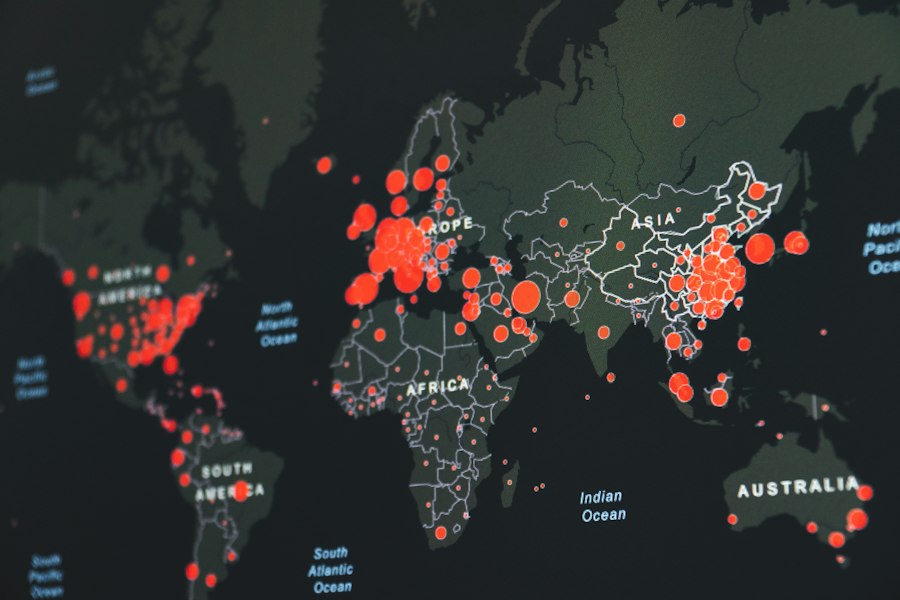
The very essence of the K Outbreak lay in the nebulous “K factor.” It was the unseen hand that guided the outbreak, the silent architect of the pervasive apathy. Its nature remained elusive, defying classification and evading direct observation. This abstractness was both its power and its downfall, making it a formidable challenge for the scientific community. The K factor was not a tangible entity that could be dissected and analyzed in a petri dish; it was a force, an influence, a disruption that seemed to operate on a level of reality previously unexplored by mainstream science.
Unraveling the Abstract: Theoretical Frameworks
In an effort to understand the K factor, theorists developed a range of abstract frameworks. Some explored the possibility of quantum entanglement on a global scale, suggesting that a singular event, a subtle shift in the quantum field, might have had widespread, cascading effects on consciousness. Others delved into the realm of collective consciousness, proposing that a profound disruption in the shared human experience could be the root cause. The language of these theories often strayed into philosophical territory, blurring the lines between hard science and speculative thought. The scientific community was forced to expand its intellectual horizons, to consider possibilities that had previously been relegated to the fringes of academia.
The Absence of Biological Signatures
The persistent lack of any discernible biological markers was a constant source of frustration. Unlike traditional diseases that leave clear footprints in the body’s cellular machinery, the K Outbreak left no such evidence. This absence itself became a clue. It suggested that the K factor was not directly attacking biological systems in the way a virus or bacterium would. Instead, it was acting as a subtle modulator, an influence that altered the fundamental functioning of human consciousness without causing overt cellular damage. This led to a profound realization: the K Outbreak was not a physical disease, but a phenomenon of a different order entirely.
The Metaphorical “Cold Spot”: A Concentrated Point of Influence
The metaphor of the “cold spot” gained traction as researchers attempted to conceptualize the origin and spread of the K factor. It was envisioned as a region of diminished energetic resonance, a point where the vibrant hum of human consciousness was significantly muted. This “cold spot” was not necessarily a physical place but could be a temporal nexus, a moment in time where a specific cosmic or energetic event occurred, or even an informational singularity that propagated its influence outwards. The idea was that by identifying this concentrated point of influence, scientists could better understand the mechanism of transmission and potentially find a way to disrupt it.
Navigating the Psychological Landscape
The K Outbreak’s most profound impact was on the human psyche. The apathy, the detachment, the loss of motivation – these were not mere symptoms but transformative experiences that altered the fabric of individual lives and societal interactions. Understanding this psychological landscape was crucial for both diagnosis and, ultimately, for finding a path towards recovery. The scientific community had to look beyond the cellular and into the complex workings of the human mind and spirit.
The Spectrum of Apathy and Detachment
The K Outbreak manifested in a wide spectrum of psychological distress. For some, it was a mild, fleeting sense of ennui, a temporary dip in enthusiasm. For others, it was a profound and debilitating descent into existential despair, a complete loss of interest in life itself. The common thread was a pervasive apathy, a diminishment of emotional responsiveness and a detachment from personal goals and relationships. Therapists and psychologists found themselves on the front lines, witnessing firsthand the devastating effects of this unprecedented psychological blight.
Societal Repercussions: A World Slowed Down
The collective impact of the K Outbreak on society was staggering. Productivity plummeted as individuals struggled to find the motivation to engage in their work. Social structures began to fray as people withdrew from community activities and personal connections. The vibrant energy that characterizes human civilization seemed to be draining away, replaced by a quiet, pervasive stillness. Businesses faltered, cultural events were cancelled, and the very rhythm of daily life began to slow to a crawl. The K Outbreak was not just a personal crisis; it was a civilization-level challenge.
The Challenge of Re-engagement and Re-motivation
The most significant hurdle in addressing the K Outbreak was the inherent difficulty of re-engaging individuals who had lost their intrinsic motivation. Traditional methods of encouragement and reward often proved ineffective, as the K factor seemed to dampen the very capacity for response. The search for effective interventions became a race against time, as each day that passed saw more individuals succumb to the pervasive apathy. The focus shifted towards finding ways to rekindle the internal spark, to reawaken the innate drive that makes humans strive, create, and connect.
Recent studies have highlighted the connection between K outbreaks and cold spots, shedding light on how environmental factors can influence the spread of diseases. For a deeper understanding of this phenomenon, you can explore a related article that discusses the implications of these outbreaks on public health and safety. This insightful piece can be found here, providing valuable information for those interested in the intersection of climate and health.
The Global Response and the Evolving Search
| Metric | Description | Value | Unit |
|---|---|---|---|
| Outbreak Intensity (k) | Measure of outbreak severity in the cold spot region | 3.5 | Index |
| Cold Spot Temperature | Average temperature in the cold spot area during outbreak | -5 | °C |
| Infection Rate | Number of new cases per 1000 individuals | 12 | Cases/1000 |
| Recovery Rate | Percentage of infected individuals who recovered | 85 | % |
| Mortality Rate | Percentage of infected individuals who died | 2.3 | % |
| Population Density | Number of people per square kilometer in cold spot | 150 | People/km² |
| Vaccination Coverage | Percentage of population vaccinated in cold spot | 60 | % |
As the K Outbreak became an undeniable global crisis, a coordinated international response was initiated. This was a monumental undertaking, requiring unprecedented collaboration between governments, scientific institutions, and humanitarian organizations. The search for the “cold spot” became a unified global endeavor, with researchers pooling resources and sharing data in a desperate bid to find a solution before the world succumbed entirely to the chill. The very nature of the threat demanded a departure from traditional competitive scientific pursuits, fostering an atmosphere of shared urgency and purpose.
International Collaboration and Data Sharing
Recognizing the global scope of the K Outbreak, nations set aside political differences and united in a common cause. International research consortiums were formed, facilitating the rapid exchange of data, theories, and experimental results. This unprecedented level of collaboration allowed for a more comprehensive understanding of the outbreak’s patterns and potential causes. The shared threat fostered a sense of global solidarity, a recognition that humanity’s survival depended on its ability to work together.
The “Cold Spot” as a Beacon of Hope
The “cold spot” hypothesis, while abstract, became a focal point for global research efforts. Dedicated task forces were established, specifically tasked with identifying and characterizing this enigmatic locus. Their work involved a complex interplay of observational astronomy, deep-sea exploration, and even theoretical physics, as scientists sought to find any anomalies in cosmic phenomena, terrestrial environments, or fundamental physical constants that might correlate with the outbreak’s spread. The identification of this “cold spot” was seen not as an end in itself, but as a crucial stepping stone towards developing effective countermeasures.
The Path Forward: Containment, Reversal, and Resilience
The ultimate goal of the global response was not merely to identify the “cold spot” but to find ways to contain its influence, reverse its effects, and build a more resilient human population. This involved developing new therapeutic strategies, exploring novel forms of psychological support, and even considering ways to shield humanity from potential future incursions of such phenomena. The K Outbreak, while devastating, also presented an opportunity for profound self-reflection and a recalibration of humanity’s relationship with its own consciousness and the universe around it. The search for the “cold spot” was not just a scientific quest; it was a quest for survival, for understanding, and ultimately, for the reawakening of the human spirit.

The Universe’s Cold Spot Has an Explanation. It’s Not Enough.
FAQs
What is K outbreak cos cold spot?
K outbreak cos cold spot is a term used to describe a sudden increase in cases of the K strain of a virus in a specific area, often referred to as a “cold spot” due to the clustering of cases.
What are the symptoms of K outbreak cos cold spot?
Symptoms of K outbreak cos cold spot may include fever, cough, sore throat, runny nose, body aches, and fatigue. In severe cases, it can lead to pneumonia or other complications.
How is K outbreak cos cold spot transmitted?
K outbreak cos cold spot is typically transmitted through respiratory droplets when an infected person coughs or sneezes. It can also spread by touching surfaces contaminated with the virus and then touching the face.
How can K outbreak cos cold spot be prevented?
Preventive measures for K outbreak cos cold spot include practicing good hand hygiene, wearing masks in crowded places, avoiding close contact with sick individuals, and getting vaccinated if available.
What should I do if I suspect I have K outbreak cos cold spot?
If you suspect you have K outbreak cos cold spot, it is important to stay home, rest, drink plenty of fluids, and seek medical advice if symptoms worsen or if you have underlying health conditions.