
The Cosmic Tapestry: An Introduction to “Unraveling the Universe”
“Unraveling the Universe: A Cosmology Science Documentary” embarks on a breathtaking journey through the cosmos, aiming to demystify the grandest questions about our existence. The documentary, produced by Stellar Dynamics Films, promises to be a visual and intellectual feast, exploring the fundamental principles that govern the universe from its fiery birth to its potential, enigmatic future. It is not merely a collection of facts but a narrative woven with scientific inquiry, cutting-edge visualization, and the enduring human desire to comprehend our place within the vast cosmic expanse. The film tackles the most profound mysteries: the Big Bang, the nature of dark matter and dark energy, the formation of galaxies, and the very possibility of other life in the universe. It seeks to bridge the gap between complex cosmological theories and the understanding of the general viewer, employing engaging storytelling and stunning visual effects to bring abstract concepts to life. The narrative structure is designed to build upon itself, starting with the foundational principles of modern cosmology and progressively delving into more intricate and speculative areas of research. This approach ensures that viewers, regardless of their prior scientific knowledge, can follow the progression of ideas and appreciate the monumental scale of the universe’s story. The documentary features interviews with leading astrophysicists, cosmologists, and theoretical physicists, offering direct insights from the very individuals pushing the boundaries of our understanding. These experts are not just reciting data; they are sharing their passion, their struggles, and their moments of profound realization. Their personal anecdotes and explanations add a human element to the often-abstract nature of cosmology, reminding viewers that these grand theories are the product of human curiosity and ingenuity. The visual language of the documentary is as crucial as its narrative. It utilizes state-of-the-art CGI to reconstruct the early universe, visualize the invisible forces of dark matter, and simulate the majestic dance of galaxies. These visuals are not mere embellishments; they are essential tools for comprehension, transforming theoretical models into tangible, awe-inspiring imagery. The journey begins with the genesis of everything, the singular point from which our universe expanded.
Echoes of Creation: The Big Bang and Beyond
The documentary dedicates a significant portion to the Big Bang theory, the prevailing cosmological model for the universe’s earliest known periods. It meticulously illustrates the rapid inflation that occurred milliseconds after the Big Bang, a period of exponential expansion that set the stage for the universe as we know it. The film doesn’t shy away from the inherent complexities, explaining concepts like the cosmic microwave background radiation (CMB) as the residual heat from this primordial explosion. Viewers are taken on a journey to understand how scientists have used the CMB, a faint afterglow detectable across the entire sky, as a snapshot of the universe when it was just a few hundred thousand years old. The subtle temperature fluctuations within the CMB are presented not as random noise, but as the seeds of the large-scale structures that would later form, such as galaxies and galaxy clusters. The documentary elaborates on the evidence supporting the Big Bang, including the observed expansion of the universe, quantified by Hubble’s Law, and the abundance of light elements like hydrogen and helium, which are consistent with predictions of Big Bang nucleosynthesis. The challenges and ongoing debates within cosmology are also addressed, such as the singularity problem and the question of what, if anything, preceded the Big Bang. The film explores theoretical frameworks attempting to reconcile these issues, like string theory and loop quantum gravity, presenting them as active areas of research rather than definitive answers. The narrative carefully distinguishes between established theories and speculative hypotheses, fostering a sense of scientific rigor. The visual representations of the early universe are particularly striking, moving from a state of extreme density and temperature to a cooling, expanding expanse filled with primordial plasma. The formation of the first atoms, a crucial step in the universe’s transition from an opaque plasma to a transparent gas, is depicted with clarity and scientific accuracy. This transition is key to understanding why the CMB appears as it does. The documentary also touches upon the concept of cosmic inflation, a theoretical period of rapid expansion in the first fraction of a second after the Big Bang. This concept, though not directly observable, elegantly explains several cosmological puzzles, such as the flatness and homogeneity of the universe. The visual metaphors used to explain inflation, such as a balloon rapidly inflating, are designed to be intuitive and memorable for a broad audience.
For those interested in the fascinating field of cosmology, a related article that delves into the mysteries of the universe is available at this link: Freaky Science. This article explores various aspects of cosmic phenomena, including the origins of the universe, the nature of black holes, and the potential for extraterrestrial life, making it a perfect companion to any science documentary on cosmology.
The Invisible Architects: Dark Matter and Dark Energy
One of the most compelling aspects of “Unraveling the Universe” is its in-depth exploration of the universe’s “dark” components: dark matter and dark energy. These enigmatic entities, which constitute the vast majority of the universe’s mass-energy content, remain largely invisible to direct observation, yet their gravitational influence is undeniable. The documentary meticulously explains how astronomers first inferred the existence of dark matter by observing the unexpected rotation speeds of galaxies. Galaxies spin much faster than they should based on the visible matter they contain, suggesting the presence of an unseen gravitational pull from a form of matter that does not interact with light. The film delves into the various candidate particles for dark matter, such as WIMPs (Weakly Interacting Massive Particles) and axions, and the ongoing experimental efforts to detect them directly. These experiments, often housed deep underground to shield them from cosmic rays, are depicted with a sense of the scientific endeavor’s meticulous nature and the significant challenges involved. The narrative highlights the importance of understanding dark matter for galactic formation and evolution. Without its gravitational scaffolding, galaxies would not have formed in the way we observe them. The documentary then pivots to the even more perplexing phenomenon of dark energy. It explains how the discovery of the accelerating expansion of the universe, a Nobel Prize-winning breakthrough, pointed towards the existence of a force counteracting gravity on cosmic scales. The film explores the leading theories for dark energy, including the cosmological constant, originally proposed by Einstein, and more dynamic explanations like quintessence. The implications of dark energy are profound, suggesting a future where galaxies move ever further apart, potentially leading to a “Big Freeze” or “Big Rip” scenario. The visuals here are particularly powerful, depicting galaxies receding from each other at ever-increasing speeds, a stark and unsettling image of the universe’s ultimate fate. The documentary emphasizes that while dark matter provides structure, dark energy seems to be driving the universe apart, a cosmic tug-of-war playing out on the grandest possible scale. The distinction between these two dark components is clearly articulated, with dark matter acting as a gravitational binder and dark energy acting as a repulsive force. The film makes it clear that unraveling the nature of these dark components is one of the paramount challenges in modern cosmology, a frontier where our current understanding is pushed to its limits. The visual effects used to illustrate the invisible gravitational effects of dark matter, such as gravitational lensing, are both beautiful and informative, showcasing how scientists can indirectly “see” the influence of this mysterious substance.
Galactic Chronicles: The Formation and Evolution of Cosmic Structures
“Unraveling the Universe” then guides viewers through the grand narrative of cosmic structure formation. It explains how the tiny density fluctuations observed in the CMB, amplified by gravity over billions of years, led to the clumping of matter and the birth of stars, galaxies, and galaxy clusters. The documentary explores the hierarchical model of structure formation, where smaller structures like dwarf galaxies merge to form larger ones. Viewers are shown simulations of this process, illustrating the violent collisions and mergers that have shaped the cosmic landscape. The formation of our own Milky Way galaxy is presented as a case study, with the film detailing its growth through the accretion of smaller galaxies. The documentary also delves into the life cycles of stars, explaining how they are born in nebulae, fuse elements in their cores, and eventually die as supernovae or white dwarfs. These stellar processes are crucial for enriching the universe with heavier elements, the very building blocks of planets and life. The role of supermassive black holes at the centers of galaxies is also examined. These cosmic behemoths are shown to play a significant role in regulating galaxy growth, influencing star formation rates through powerful outflows of energy. The documentary takes viewers on a visual tour of diverse galactic morphologies, from the elegant spirals of the Andromeda galaxy to the irregular shapes of interacting galaxies. The vastness of cosmic voids, the enormous regions of space largely devoid of galaxies, is also highlighted, emphasizing the foamy, web-like structure of the universe. The film discusses how the distribution of galaxies on the largest scales provides crucial clues about the nature of dark matter and dark energy, acting as a cosmic fossil record. The formation of the first stars and galaxies, occurring several hundred million years after the Big Bang, is depicted as a pivotal moment in the universe’s evolution. This era, known as the “Cosmic Dawn,” marks the transition from a dark, neutral universe to one illuminated by starlight. The documentary uses sophisticated visualizations to represent the intense radiation and energetic processes of this period. The complex interplay between gravity, gas dynamics, and magnetic fields in shaping galaxies is explained, making the seemingly chaotic process of galactic evolution understandable. The journey through cosmic structures emphasizes the sheer scale of time and space involved, offering a profound perspective on our own brief existence within this vast cosmic tapestry. The formation of galaxy clusters, the largest gravitationally bound structures in the universe, is also a key focus, illustrating how these massive collections of galaxies are formed through the accretion of smaller groups over cosmic timescales.
The Search for Companions: Exoplanets and the Prospects for Life
A particularly captivating section of “Unraveling the Universe” is dedicated to the burgeoning field of exoplanet research and the profound question of whether we are alone in the universe. The documentary traces the history of this search, from early speculative ideas to the revolutionary discoveries made possible by advanced telescopes like Kepler and the James Webb Space Telescope. Viewers are introduced to the various methods used to detect exoplanets, such as the transit method and the radial velocity method, explained with clear visual analogies. The film showcases the stunning diversity of exoplanets discovered, from scorching hot Jupiters to potentially Earth-like worlds orbiting distant stars. The concept of the “habitable zone,” the region around a star where liquid water could exist on a planet’s surface, is explained as a key criterion in the search for life. The documentary highlights the ongoing efforts to characterize the atmospheres of exoplanets, searching for biosignatures – chemical indicators that could suggest the presence of life. This includes the detection of gases like oxygen, methane, and water vapor. The film doesn’t shy away from the immense challenges involved in this endeavor, emphasizing the vast distances separating us from these distant worlds. The narrative also explores the philosophical and societal implications of discovering extraterrestrial life, regardless of its form. It touches upon the Fermi paradox, the apparent contradiction between the high probability of extraterrestrial civilizations and the lack of evidence for them. The documentary presents various proposed solutions to this paradox, ranging from the idea that advanced civilizations are rare to the possibility that they are deliberately hiding. The scientific search for life is presented not just as an astronomical pursuit but as a fundamental human quest to understand our uniqueness or lack thereof. The film may even touch upon the concept of astrobiology, the interdisciplinary study of the origins, evolution, and distribution of life in the universe. The exploration of exoplanets is framed as a direct continuation of humanity’s curiosity about the cosmos, a drive to map not just the physical universe but also its potential biological inhabitants. The documentary’s visual representation of various exoplanetary systems, with artist’s conceptions of alien worlds bathed in the light of their parent stars, is designed to ignite the imagination and inspire a sense of wonder about the possibilities that lie beyond our solar system. The ongoing development of new telescope technologies, promising even more sensitive detection capabilities and the ability to study exoplanet atmospheres in greater detail, is also discussed, offering a glimpse into the future of this exciting field.
In the fascinating realm of cosmology, understanding the origins and structure of the universe is a captivating journey that many documentaries explore. One such insightful resource can be found in a related article that delves into the latest discoveries and theories in the field. For those interested in expanding their knowledge, this article offers a comprehensive overview of the subject. You can read more about it in this informative piece that highlights key concepts and breakthroughs in modern cosmology.
The Cosmic Horizon: Future Theories and the Unknown
The final section of “Unraveling the Universe” boldly looks towards the future, exploring the frontiers of cosmological research and the remaining grand mysteries. The documentary delves into speculative but scientifically grounded theories that aim to explain phenomena currently beyond our grasp. This includes discussions on the nature of consciousness in the universe, the possibility of multiverses, and the ultimate fate of our own universe. The film presents the concept of eternal inflation, where new universes are constantly budding off from existing ones, as a potential framework for understanding the multiverse. The implications of such a scenario for our own existence and the fine-tuning of our universe’s constants are explored. The documentary also revisits the concept of the universe’s ultimate fate, expanding on the “Big Freeze” scenario and introducing other possibilities such as a “Big Crunch” or a “Big Rip,” depending on the behavior of dark energy. The ongoing quest to unify quantum mechanics and general relativity, the two pillars of modern physics, is highlighted as a major theoretical challenge. Theories like string theory and loop quantum gravity are presented as potential pathways towards a unified understanding of all fundamental forces and particles. The film acknowledges that many of these future theories are highly theoretical and await experimental verification. However, it emphasizes that this speculative nature is inherent to scientific progress, pushing the boundaries of what we can currently comprehend. The documentary concludes by underscoring the importance of continued scientific inquiry, exploration, and education. It leaves viewers with a sense of awe and wonder, not just at the vastness of the universe but also at the remarkable human capacity to ponder its deepest secrets. The final images often serve to reinforce the interconnectedness of all things, from the smallest subatomic particles to the largest cosmic structures, leaving the audience with a profound appreciation for the ongoing journey of “Unraveling the Universe.” The film’s closing remarks often echo the sentiment that our current understanding is merely a snapshot, a stepping stone in an endless quest for knowledge, and that the universe continues to hold countless more wonders waiting to be discovered. The emphasis is on the ongoing nature of science, the dynamic process of questioning, hypothesizing, and testing that defines our pursuit of cosmic understanding.
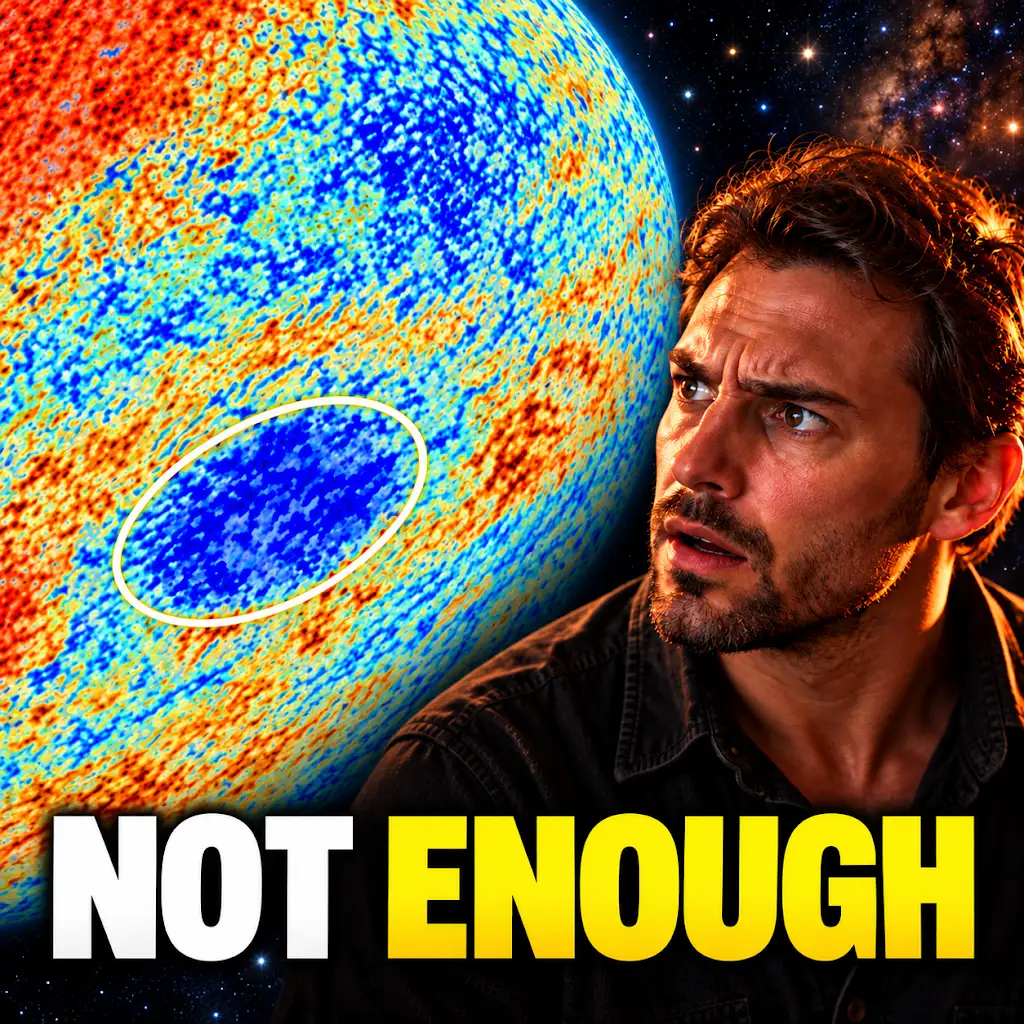
The Universe’s Cold Spot Has an Explanation. It’s Not Enough.
FAQs
What is cosmology?
Cosmology is the scientific study of the origin, evolution, and eventual fate of the universe.
What is a science documentary on cosmology?
A science documentary on cosmology is a film or television program that explores various aspects of cosmology, such as the Big Bang theory, dark matter, dark energy, and the formation of galaxies.
Why are science documentaries on cosmology important?
Science documentaries on cosmology help to educate the public about the latest discoveries and theories in the field of cosmology, making complex scientific concepts more accessible and engaging for a wider audience.
How are science documentaries on cosmology made?
Science documentaries on cosmology are typically produced by teams of filmmakers, scientists, and researchers who work together to present accurate information in an engaging and visually compelling way.
Where can I watch science documentaries on cosmology?
Science documentaries on cosmology can be found on streaming platforms, television networks, and online video channels dedicated to science and education.